.webp)
Between employee classifications, tax deductions, benefits management, and compliance reporting, manual payroll processing can easily consume dozens of hours each month.
This is where automated payroll processing changes the game. Automation simplifies every stage of payroll from capturing attendance to generating payslips while ensuring compliance with ever-changing federal and state regulations. It helps companies eliminate manual errors, save time on administrative tasks, and maintain complete transparency across payroll workflows.
For U.S. businesses and CPA firms, automation also supports scalable offshore payroll management. It bridges time zones, reduces costs, and guarantees compliance under both U.S. and Indian standards.
This guide explains automated payroll processing - how it works, what technology powers it, its benefits and challenges, and why automation combined with human expertise delivers the most dependable results.
Automated payroll processing refers to the use of software systems and digital workflows that handle payroll operations, salary computation, benefits, deductions, and reporting with minimal manual effort.
These systems connect HR, accounting, and tax compliance into a single automated pipeline.
Automation reduces dependence on individual staff members and ensures consistency even during high-volume processing periods such as year-end tax filings or seasonal hiring.
Having defined automated payroll processing, let’s now look at how it works step by step to streamline payroll management for companies.
Automated payroll isn’t just about pressing a button; it’s a systematic workflow that integrates data, compliance, and payments into one digital process. The following steps explain how the process unfolds:
Employee information, including salary structure, tax details, and benefits, is entered once. The system retains it securely and uses it for future cycles.
Automated time-tracking software or biometric systems sync attendance data directly to payroll. For remote teams, integration with project management or HR tools ensures accuracy.
The system calculates gross pay, deductions (tax, benefits, retirement), and net pay instantly. It automatically applies the latest federal, state, and local tax tables.
Before disbursing payments, the software cross-checks data for FICA, FUTA, and state compliance. This ensures taxes are filed correctly and on time, reducing the risk of IRS penalties.
Once validated, the system triggers direct deposits through integrated ACH systems or banking APIs. Employees receive e-payslips through secure portals.
Reports like Form W-2 summaries, tax filings, and payroll journals are stored digitally for audits and year-end reporting.
Example:
A 20-person firm using Gusto or QuickBooks Payroll can process salaries for all employees in under 90 minutes compared to 8–10 hours of manual processing.
Also read: Financial Reporting Best Practices Guide
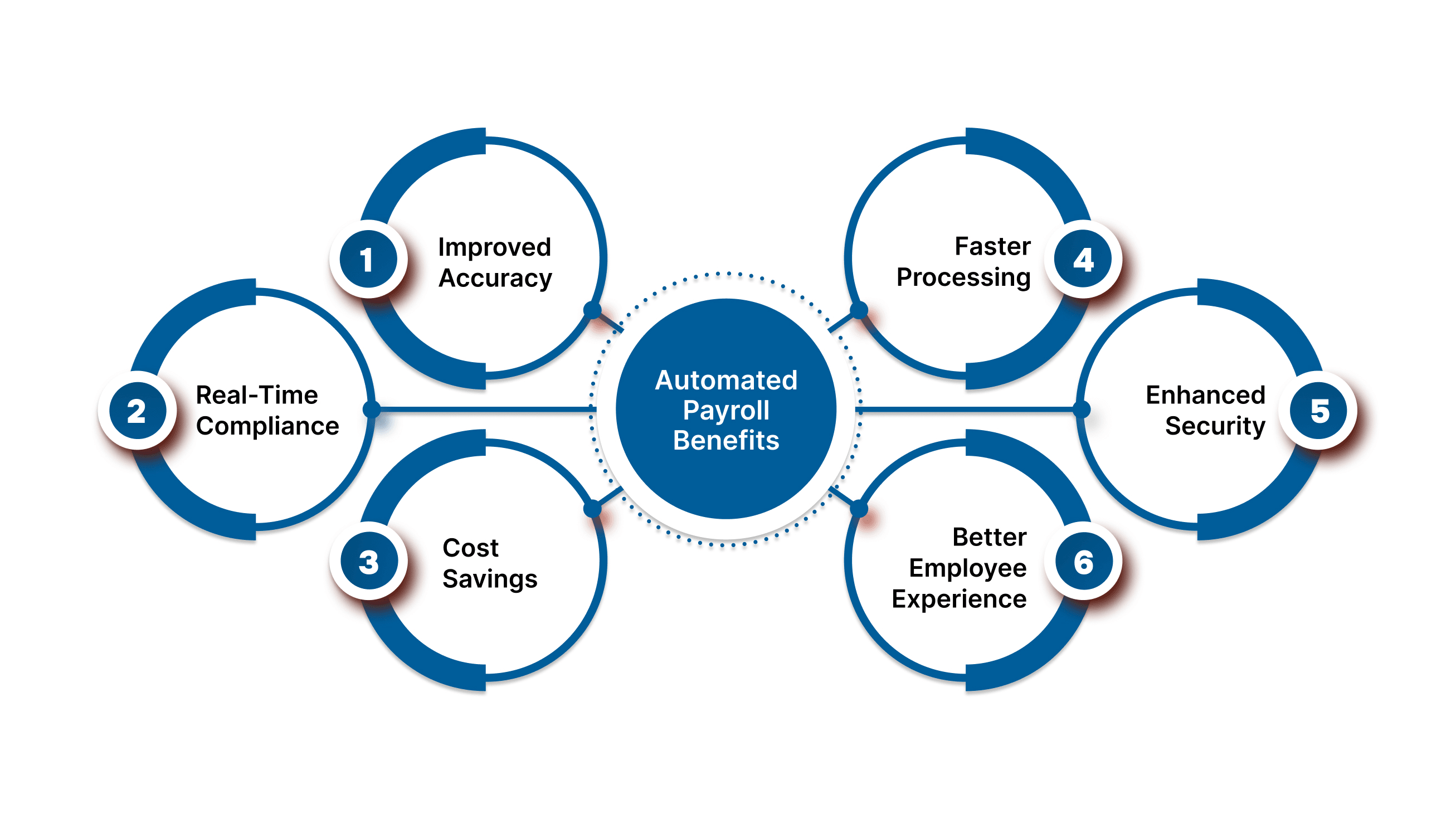
Now that we’ve broken down how automated payroll systems work, let’s explore the tangible benefits they deliver in terms of accuracy, compliance, and overall efficiency.
For companies managing teams or operations across the US, automated payroll services streamline complex, cross-border payroll tasks while ensuring full compliance with regional tax and labour laws. By integrating data, payments, and compliance into a single system, businesses can achieve greater accuracy, faster processing, and reduced administrative effort.
Also read: Top Benefits of Outsourcing Bookkeeping and Payroll
The powerful combination of cloud computing, AI, and RPA drives these benefits. Let’s look at the core technologies behind automated payroll systems that enable such efficiency and accuracy.
Automation integrates multiple technologies into one payroll ecosystem. These include:
Solutions like QuickBooks Online, Xero, ADP, and Gusto provide centralized access from anywhere, enabling CPA firms and business owners to manage payroll remotely.
AI verifies data accuracy and flags anomalies such as duplicate payments or missing deductions, reducing the need for post-processing corrections.
RPA bots perform repetitive tasks like report generation, reconciliation, and data entry between payroll and accounting systems.
APIs connect payroll systems with HR, accounting, and banking platforms to maintain synchronized, up-to-date records.
Visual dashboards provide insights into total payroll costs, overtime trends, tax liabilities, and compliance alerts.
These technologies reduce dependence on internal staff, enhance transparency, and scale easily as businesses expand across geographies.
While automation streamlines internal payroll processes, some businesses prefer outsourcing to gain greater efficiency and expert oversight. Let’s compare the two approaches to see which best fits different organizational needs.
As businesses scale, managing payroll efficiently becomes a strategic decision. While automated payroll systems use software to streamline internal processes, outsourced payroll services combine automation with professional expertise for end-to-end management. Understanding the difference between the two helps companies choose the right model based on their size, compliance needs, and cross-border operations between the US and India.
Businesses purchase and manage payroll software internally. It’s efficient but requires trained staff for maintenance and compliance monitoring.
A third-party provider manages payroll using automation tools and dedicated professionals, combining technology and human oversight for maximum reliability.
Best of Both Worlds: The Hybrid Model
Leading firms like VJM Global combine automation tools with professional oversight. Automation handles routine calculations, while human accountants verify accuracy, apply compliance checks, and interpret data insights.
Combine automation and expert oversight with VJM Global, your ultimate partner for end-to-end payroll management powered by advanced automation tools.
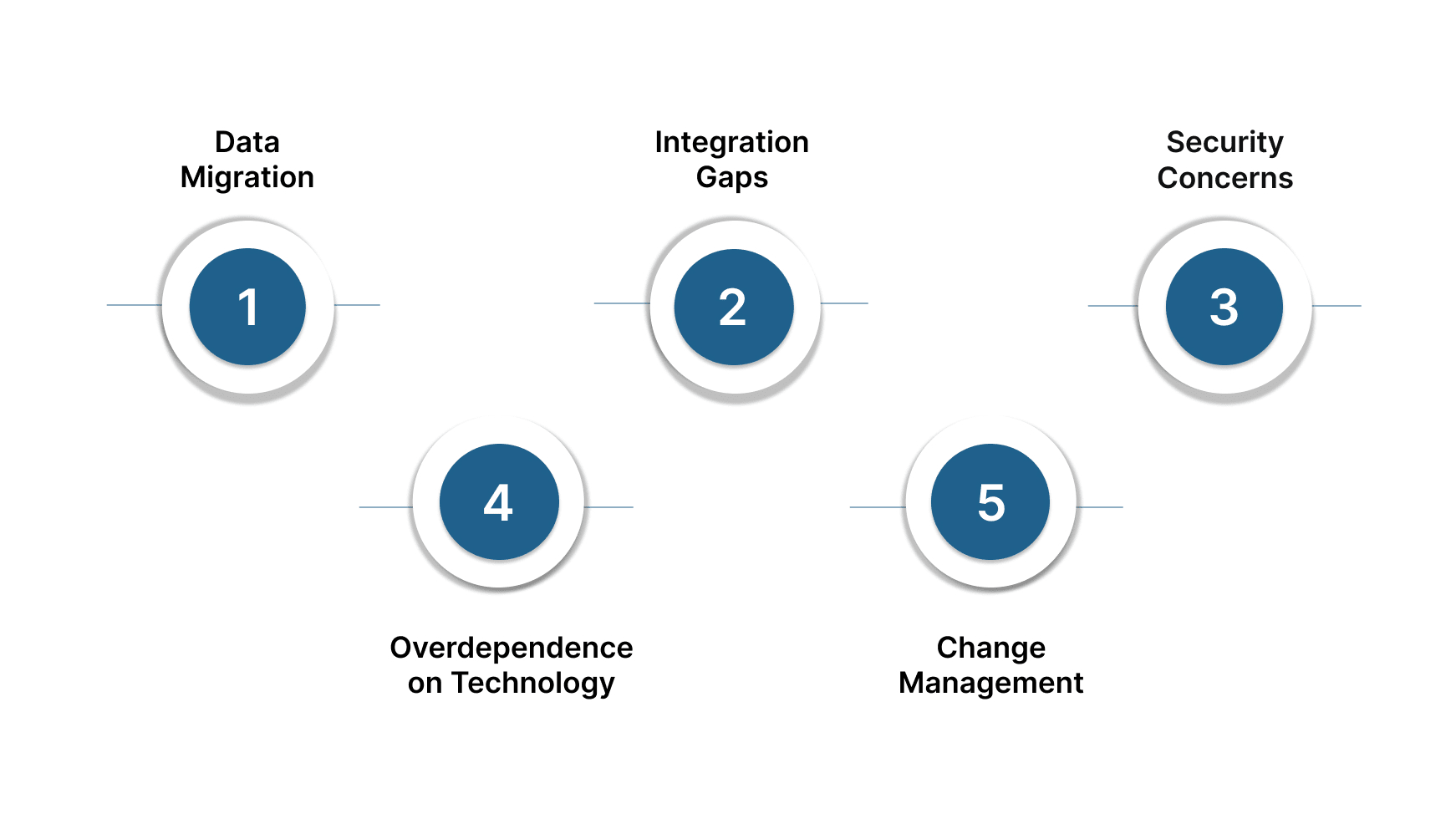
Automation can transform payroll management, but successful implementation requires careful planning, integration, and oversight. Here are some common challenges businesses face when adopting automated payroll systems and how to overcome them:
1. Transferring employee and tax records from legacy systems requires careful data cleaning and testing.
2. Older HR or ERP systems may lack compatibility with modern payroll APIs.
3. Businesses must ensure encryption, secure servers, and restricted data access.
4. Automation should be supported by periodic human review to identify context-based discrepancies.
5. Finance teams may resist adapting to new systems. Training and clear documentation are vital.
Best Practice Tip:
Combine automation with experienced accountants to ensure compliance even as technology evolves.
For businesses facing integration and compliance hurdles, outsourced automated payroll services in India offer an ideal solution combining automation, accuracy, and cross-border expertise under one roof.
Overcoming implementation challenges often leads businesses to explore outsourced automated payroll services in India, a solution that delivers both cost efficiency and global compliance through advanced automation and expert management.
1. Cost Savings - U.S. companies save largely on labour costs by outsourcing to India while maintaining compliance and data security.
2. Skilled Workforce - Indian professionals are well-versed in U.S. GAAP, IRS rules, and payroll regulations, with many holding CPA and CA credentials.
3. Advanced Infrastructure - Outsourcing firms use cloud-based systems, RPA, and AI tools that match global standards.
4. 24/7 Workflow - The time zone advantage enables continuous operations and faster payroll cycles.
5. Dual Compliance - VJM Global ensures compliance with both U.S. payroll laws and Indian outsourcing regulations, which are critical for cross-border entities.
Also read: Outsourcing Accounting Services for USA: Why It’s the Best Decision You Can Make
Choosing the right payroll partner means finding the balance between technology, compliance, and trusted expertise. VJM Global offers that balance through a model built on automation, accuracy, and professional oversight.
In essence: VJM Global transforms payroll automation into a reliable, intelligent, and fully compliant process powered by technology, strengthened by expertise.
Automated payroll processing is no longer optional; it’s the foundation of efficient business management in 2025. It reduces manual effort, accelerates payments, and ensures compliance in a constantly evolving regulatory environment.
However, technology alone isn’t enough. The most effective payroll systems blend automation with human expertise, with accountants validating data, overseeing compliance, and interpreting reports.
That’s exactly what VJM Global offers: intelligent payroll automation powered by trained accountants, backed by CPA/CA oversight, and delivered securely from India to U.S. firms.
Partner with VJM Global today for your payroll and financial management and make it intelligent, compliant, and worry-free.
Implementation timelines depend on company size, data volume, and existing systems. For small firms, setup can take 1–2 weeks, while larger organizations with legacy integrations may need 4–6 weeks to complete migration, testing, and training.
Absolutely. Automated payroll systems are designed for distributed workforces, integrating remote attendance data and supporting multi-currency payments. This is especially useful for US companies managing offshore teams in India or other regions.
Most service providers offer ongoing support, including real-time monitoring, compliance updates, troubleshooting, and software upgrades. When outsourcing, firms like VJM Global also provide dedicated accountant oversight to ensure every payroll cycle runs smoothly.
Top-tier payroll systems automatically update in line with the latest IRS, FICA, FUTA, and state laws. For cross-border businesses, providers also integrate Indian tax and labour updates (TDS, PF, ESIC) to maintain dual compliance.
During migration, payroll and employee data, such as pay history, benefits, and tax records, are securely imported into the new platform. Reputed providers perform data validation, sandbox testing, and encryption to ensure zero data loss or duplication during transition.