The right treatment depends on who you are (employee, sole trader, company, investor), the income year, whether the expense is partly private, your GST position and your records. Get any of these wrong and the claim can unravel.
This guide walks through four steps: identify the expense, gather evidence and separate private use, calculate the allowable amount, then report and retain. It then covers which deductions are available, common mistakes and when to get help. It is general information, not personalised tax advice.
Key Takeaways
- A deduction needs a direct link to earning income, must not be private, and must not be reimbursed.
- Mixed-use items such as cars, phones and home offices must be apportioned.
- Keep records before you lodge, not after the ATO asks.
- Capital purchases, GST credits and tax offsets follow different rules from ordinary expenses.
- Check current ATO figures each income year, as several rules change from 1 July 2026.
How to Claim Tax Deductions in Australia
Step 1: Identify the taxpayer, income year and expense
Start with who is claiming. An employee claims in their individual return. A sole trader reports business income and expenses in the individual return plus the Business and professional items schedule. Partnerships, trusts and companies lodge their own returns, and rental or investment claims are reported by the legal owner.
The ATO's general tests are simple. You paid for it yourself and weren't reimbursed, it directly relates to earning income, and you have a record. Business expenses must also be for business, not private use.
Then classify the item. Is it a deduction, a tax offset (which reduces tax payable, not taxable income), a GST credit, a capital asset or a decline-in-value claim? Misclassifying it at this stage causes most downstream errors.
Note the income-year labels too. The 2025-26 year runs 1 July 2025 to 30 June 2026. From 1 July 2026, eligible residents with labour income can take an automatic standard deduction of up to $1,000 without expense records. It doesn't apply to 2025-26.
Step 2: Gather records and separate private use
Collect what proves the claim:
- Receipts or invoices showing the supplier, amount and what was bought
- Logbooks, kilometre records and travel diaries
- Calculations showing your work or business-use share
- A note of the income-producing purpose
A bank statement alone usually isn't enough, because it doesn't show what you bought. Most business records are kept for 5 years. Individuals generally keep written evidence for 5 years from lodging.
For 2025-26 only, a $300 exception lets you claim total work expenses of $300 or less without written evidence, but you must show how you calculated the claim. It excludes car, travel and overtime meal allowance expenses. From 2026-27 this exception ends.
Travel diaries are generally needed for work trips of 6 or more consecutive nights. Donations need a receipt, except bucket donations of $10 or less in total.
Step 3: Calculate the allowable deduction
Claim only the income-earning portion of mixed-use costs, using a fair and reasonable method, and keep the calculation. You can't claim 100% of a phone just because you use it for work.
Three common methods:
- Cents per kilometre: 88 cents/km for 2025-26 (91 cents for 2026-27), capped at 5,000 work kilometres per car, with no other car costs added.
- Logbook: claims the work-use share of actual costs. The logbook generally covers at least 12 continuous, representative weeks and lasts 5 years.
- Working from home, fixed rate: 70 cents per hour for 2025-26, covering electricity, gas, phone, internet and stationery. Keep a record of actual hours for the full year. Confirm the 2026-27 hourly rate with the ATO before lodging.

Separate running costs from capital purchases. For 2025-26 the ATO lists a $20,000 instant asset write-off for eligible small businesses (turnover under $10 million). From 1 July 2026 it becomes a permanent threshold, and the asset's cost must be less than $20,000. Assets that miss out are generally pooled at 15% in the first year and 30% after.
For GST-registered businesses, exclude the GST you can claim back as a credit. You can't deduct it as an expense too.
Step 4: Report, review and retain
Enter each claim in the right place. Individual 2026 return labels include D1 (car), D2 (travel), D3 (clothing and laundry), D4 (self-education), D5 (other work expenses), D9 (gifts) and D10 (cost of managing tax affairs). Business claims go in the entity's own return or schedule.
Before lodging, reconcile against your bookkeeping, bank statements, payroll records and asset register. Prefill data is usually available by late July, but it can be incomplete. Review it and add what's missing.
If you find an error, amend it. Individuals generally have 2 years from the notice of assessment. Sole traders have 4 years from 2024-25 onward, as do businesses with turnover under $50 million.
Which Deductions Can You Claim and What Affects the Result?
Don't claim something just because it appears on a generic list. Your circumstances decide what is deductible.
Employee and work-related expenses
Common categories include work travel, tools, uniforms, working from home, self-education, union or professional fees and income-protection premiums.
- Travel in performing duties may qualify. Ordinary commuting is generally private.
- Clothing must be a compulsory, distinctive uniform or meet ATO work-clothing rules. Conventional clothing doesn't qualify just because an employer requires it.
- Self-education needs a sufficient connection to your current job.
- Income-protection premiums are deductible to the extent the policy replaces income, but not if paid through super.
Sole-trader and business operating expenses
Day-to-day costs incurred in carrying on the business may be deductible. Each must meet the income-purpose test and be apportioned if partly private.
Typical costs include:
- Advertising and software
- Professional fees and insurance
- Rent, wages and utilities
- Repairs and business-loan interest
- Business travel
Entity matters. A sole trader's drawings aren't deductible. A company claims its own deductions in its own return, and private spending can't be pushed through it.
Home office, vehicle and travel
Apportion phone, internet, vehicle and home-office costs between work and private use. Watch these traps:
- Claiming ordinary commuting
- Treating a family or private component of a trip as business travel
- Using unsupported estimates
- Claiming costs your employer or client already reimbursed
Capital assets, depreciation and decline in value
A repair remedies wear or damage and may be deductible immediately. An improvement, a replacement of an entirety, or fixing damage that existed when you bought a rental property is capital.
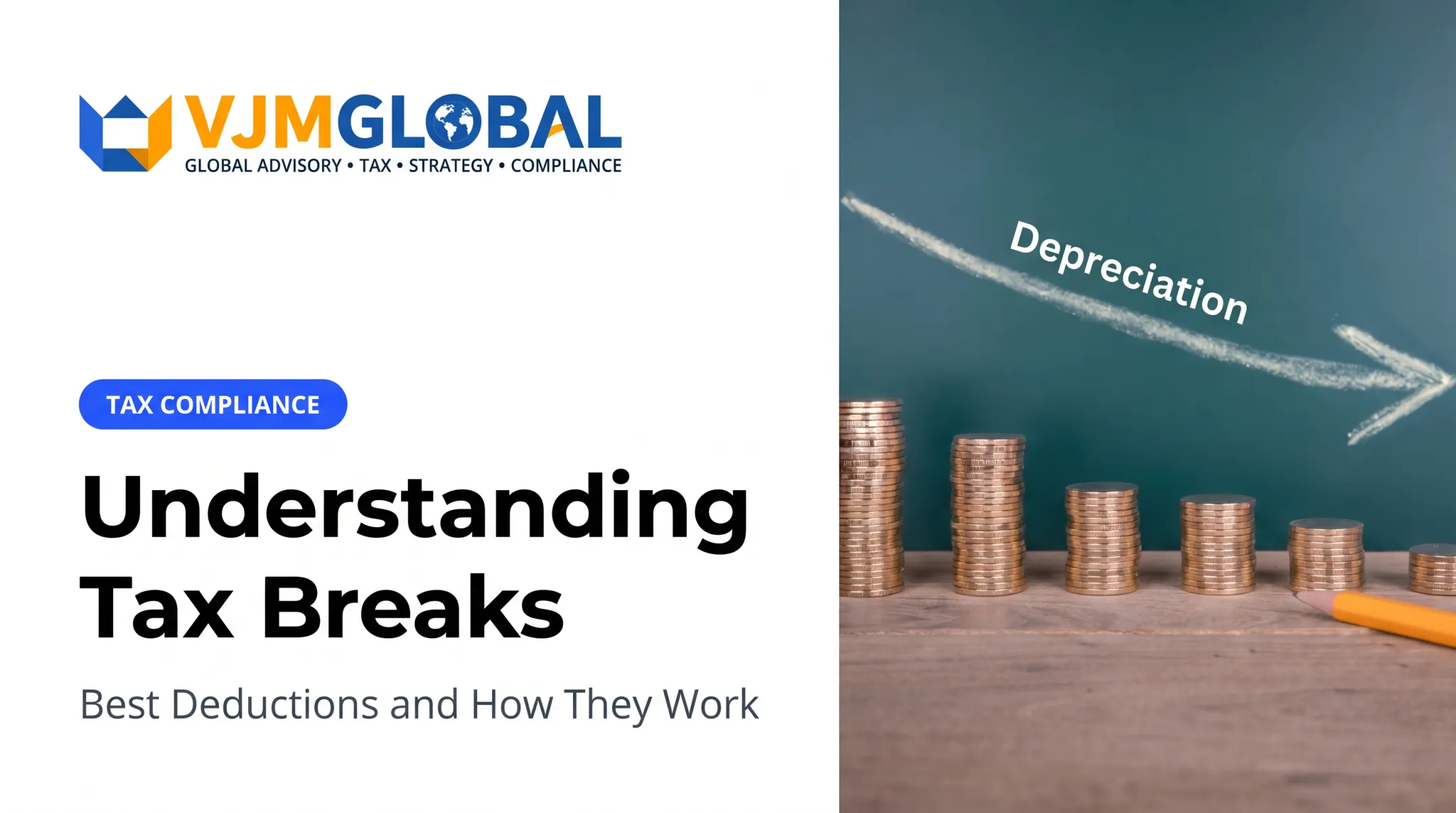
Capital items claim decline in value over their effective life, using the Commissioner's determination or your own assessment. Prime-cost and diminishing-value methods are available, and the choice generally can't be changed later. Only the business-use proportion counts.

Personal, investment and less obvious deductions
- Donations: the recipient must hold deductible gift recipient status, and the gift must be genuine with no material benefit. The former $2 minimum is removed from 1 July 2026, backdated to eligible gifts from 1 July 2024.
- Tax affairs (D10): includes eligible tax agent fees. Rental management fees go under rental expenses instead.
- Investment costs: account fees and expenses to earn interest or dividends, for the income-producing share only.
- Never deductible: private or domestic expenses and traffic fines.
When claiming is appropriate, and the alternatives
Ordinary business costs are generally claimed in the year incurred, meaning when you have a legal obligation to pay. Eligible small businesses can use the 12-month prepayment rule for an immediate deduction.
A deduction isn't interchangeable with an offset, a reimbursement or a super concession. For a personal super contribution deduction, lodge a valid notice of intent with your fund and get its acknowledgement before claiming.
Claiming is risky when:
- Records are thin
- The expense is private or reimbursed
- The income link is uncertain
- GST is mishandled
- You're applying an outdated rule
Common Mistakes and Troubleshooting
The ATO's random enquiry sample of 1,090 returns found adjustments in 68% of cases, and about 44% of adjustments were work-related expenses. That sample isn't representative of all returns, but it shows where errors cluster.

- Claiming private, reimbursed or mixed-use costs at 100%. Review the purpose, reimbursement status, usage evidence and apportionment.
- Treating capital purchases as ordinary expenses. Check your asset register and bookkeeping category.
- Double-counting GST. Reconcile claims to your BAS.
- Using a small-business concession without checking eligibility. Confirm turnover and the current threshold.
- Not apportioning rental interest after private redraws or refinancing. Apportion so only the income-producing share is claimed.
- Missing records and unsupported estimates. A complete copy or qualifying substitute may replace a lost record, but ATO relief is limited. Reduce, omit or amend any unsupported claim.
These errors can trigger shortfall penalties. ATO shortfall penalties start at 25% of the shortfall for failure to take reasonable care, 50% for recklessness and 75% for intentional disregard.
Complex situations call for a professional review: companies, trusts, rental portfolios, payroll, GST, cross-border activity or multiple entities. VJM Global supports Australian businesses with accounting outsourcing, tax compliance, financial reporting and advisory assistance, including BAS and GST-claim processing.
Conclusion
Deductions work best when the expense is tied to assessable income, correctly classified, fairly apportioned and backed by reliable records.
Most avoidable problems come from:
- Private-use claims
- Wrong timing
- Capital-versus-operating mix-ups
- Duplicated GST treatment
- Outdated thresholds
Check current ATO guidance each year, especially with the 1 July 2026 changes. If your structure, international activity, GST position or records make a claim hard to assess, get qualified advice before you lodge.
Frequently Asked Questions
How to get the best tax write-offs?
Identify every eligible expense, use the correct claim method, keep evidence and avoid aggressive or unsupported claims. "Write-off" generally just means a tax deduction.
What expenses can I deduct on my taxes?
Work-related, business, investment and other income-producing expenses you paid for yourself. Private, reimbursed and unsupported expenses generally can't be claimed.
What are the most overlooked tax deductions?
Tax agent fees, working-from-home costs, income-protection premiums, donations and business software. Each only applies where ATO rules and your records support it.
What things are 100% tax deductible?
Some directly income-producing expenses may be fully deductible. Mixed-use, private, reimbursed, capital and GST-related items usually need apportionment or different treatment.
What gives you the biggest tax break?
It depends on the deductible amount, your marginal tax rate, structure and eligibility. A deduction reduces taxable income, while an offset reduces tax payable, so no saving is guaranteed.
What are the four major deductions?
There's no official set of four. Common areas are work-related, business, investment or rental, and capital or decline-in-value claims, each with separate rules.