IRS Form 7004 gives eligible businesses extra time to file certain federal business returns. It does not generally give extra time to pay. This guide covers who uses Form 7004, how it differs from Form 4868, current deadlines, how to e-file, and the payment mistakes that cost businesses money.
Key Takeaways
- Form 7004 automatically extends filing time for eligible business and information returns.
- It does not extend the time to pay tax owed.
- Corporations and partnerships use Form 7004; sole proprietors and disregarded single-member LLCs use Form 4868.
- File by the original due date, use the right return code, and keep your proof of filing.
What Is Form 7004 and Who Should Use It?
What Form 7004 does
Form 7004 is the IRS application for more time to file certain business returns. Its official title is "Application for Automatic Extension of Time To File Certain Business Income Tax, Information, and Other Returns." The current version was revised in December 2025.
"Automatic" means you don't explain why you need more time. The form must still be complete, timely, and tied to the correct return. Per the IRS Form 7004 instructions, a properly completed and timely application gives the maximum extension allowed for that return.
Which business returns commonly use it
- Form 1120: C corporations
- Form 1120-S: S corporations
- Form 1065: partnerships, including most multi-member LLCs
- Form 1041: estates and trusts
- Form 1120-F: foreign corporations
A multi-member LLC defaults to partnership treatment and follows the Form 1065 process. An LLC that elected corporate treatment follows the return for that election. The Part I return code table in the current instructions lists every eligible return, so check it before filing.
One exception: Form 990-T is extended with Form 8868, not Form 7004.
Who should use Form 4868 instead
Sole proprietors and owners of disregarded single-member LLCs report business income on their personal Form 1040. They extend that return with Form 4868.
An owner may need both forms. If a business files its own entity return and the owner also needs more time on a personal return, each return needs its own extension. Neither form extends the other.
Form 7004 versus Form 4868
| Item | Form 7004 | Form 4868 |
|---|---|---|
| Who files | Corporations, partnerships, estates, trusts, and others | Individuals, including sole proprietors and disregarded LLC owners |
| Return extended | Entity or business return, one application per return | Individual Form 1040 |
| Example original due date | March 15, 2027 (1065, 1120-S, calendar year 2026) | April 15 |
| Payment | Not extended | Not extended |

The choice depends on which return you're extending and how the entity is taxed. The label "LLC" doesn't decide it.
Form 7004 Deadlines by Business Return
How the deadlines work
File Form 7004 by the original due date of the return you're extending. The extension period depends on the return. Most get 6 months, but some, like estates and trusts, get less.
Weekend and holiday due dates shift to the next business day under IRC §7503. Fiscal-year filers should calculate from their actual year-end.
Calendar-year returns
These dates apply to calendar-year 2026 returns, filed in 2027, based on the IRS due date chart:
| Return | Original deadline | Extended deadline |
|---|---|---|
| Form 1065 | March 15, 2027 | September 15, 2027 |
| Form 1120-S | March 15, 2027 | September 15, 2027 |
| Form 1120 | April 15, 2027 | October 15, 2027 |
| Form 1041 | April 15, 2027 | September 30, 2027 (5.5 months) |
| Form 1120-F (no U.S. office) | June 15, 2027 | December 15, 2027 |

S corporations and partnerships file earlier than C corporations because their income flows through to owners. That makes their timing matter beyond the entity itself.
S corporations, partnerships, and Schedule K-1
A calendar-year S corporation requests its extension on Form 7004 using the Form 1120-S return code. The extended due date for calendar-year 2026 is September 15, 2027.
Late K-1s hold up the owners' personal returns. Shareholders and partners who can't finish by April 15 should file Form 4868 separately. For partnerships, Rev. Proc. 2019-32 addresses furnishing K-1s by the extended date.
Fiscal-year and special situations
- Enter your actual tax year beginning and ending dates on the form.
- A corporation's short year ending in June is treated as ending June 30.
- A June 30 year-end C corporation with a tax year beginning before January 1, 2026, may get 7 months. For years beginning in 2026, it's 6 months.
- Certain foreign corporations and specified partnerships under Reg. §1.6081-5 get an automatic extension to the 15th day of the sixth month without filing Form 7004. A further request on Form 7004 extends filing only.
State and local deadlines
A federal extension doesn't automatically cover state returns. New York, for example, requires Form CT-5.4 for S corporation extensions, along with an estimated payment. Check each state's rules.
How to File Form 7004 Easily
Prepare the information
Gather these before you start:
- Legal business name, address, and EIN
- Tax year and beginning and ending dates
- Entity classification and the return being extended
- The Part I return code
- Year-end books, prior payments, and credits for a good-faith tax estimate
Complete the return code and tax estimate
Part I, line 1 identifies the return. Part II asks for expected total tax, payments and refundable credits, and the balance due. Use the current revision, not an old copy. No signature is required.
Make the estimate in good faith. Filing the extension doesn't replace the duty to pay the estimated balance by the original due date.
Submit electronically or by mail
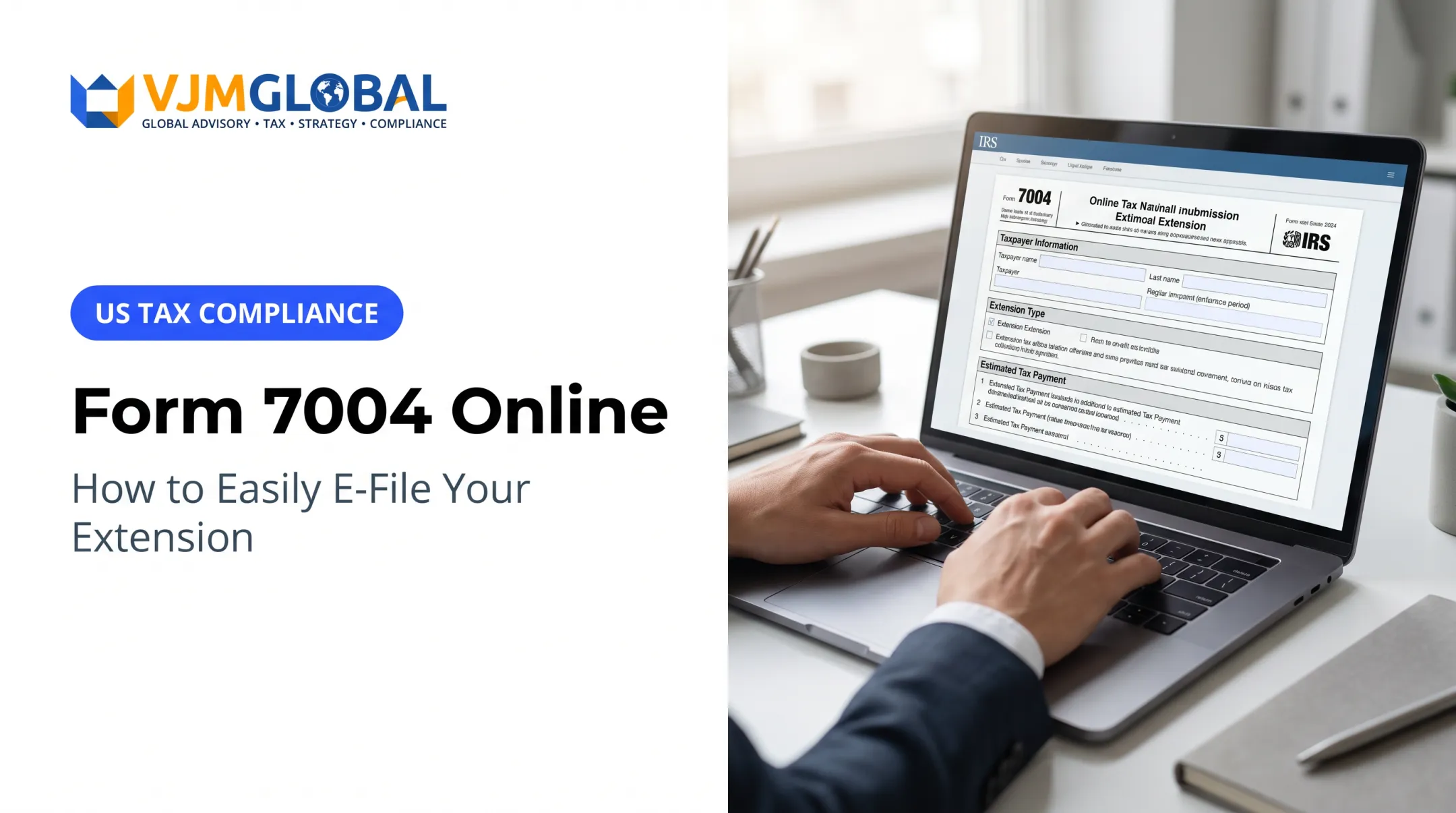
Form 7004 is filed through IRS Modernized e-File using authorised software or a tax professional. See the IRS e-file guidance for the full list of exceptions. E-filing isn't available for:
- Late or reasonable-cause requests
- Refund requests
- NOL carryback situations
- Submissions with an attached Form 2848
- Early-filed returns
- Short-period extensions after S corporation status terminates
For paper filing, match your form and location to the IRS "Where to File Form 7004" table. Kansas City and Ogden addresses vary by return. Mail early. Registered or certified mail gives statutory proof of timely mailing under IRC §7502.
Avoid duplicate or incomplete submissions
- File a separate Form 7004 for each return. One request doesn't cover every return the business files.
- Check the EIN, return code, tax year, and period before transmitting.
- Confirm the submission date falls on or before the original due date.

Save proof of filing
The IRS no longer sends an approval notice. It contacts you only if the request is disallowed. Keep:
- The e-file acceptance acknowledgment and submission ID
- Payment confirmation
- Certified-mail receipts for paper filings
If an e-filed Form 7004 is rejected, fix the error right away. The transmission perfection period is only 5 calendar days after the rejection notice, and it never gets extended.
Cross-border businesses often struggle with return codes, entity classification, and coordinating owners' returns. VJM Global's U.S. tax compliance professionals help foreign-owned businesses identify the correct return, estimate tax, submit the extension, and prepare the full return. VJM Global isn't affiliated with the IRS.
Payments, Mistakes, and Next Steps
Pay on time, even with an extension
Interest runs from the original due date on any unpaid tax, even with a valid Form 7004. For extended C corporation returns, the IRS generally does not charge the late-payment penalty when you pay at least 90% of the tax shown on the return by the original due date. Pay the balance by the extended due date.
Typical penalties:
- Failure to pay: 0.5% of unpaid tax per month or part of a month, up to 25%
- Failure to file (general rule): 5% per month, up to 25%, reduced by the failure-to-pay penalty in months where both apply
- 1065 and 1120-S late filing (2025 returns due in 2026): $255 per partner or shareholder per month, up to 12 months, per the Form 1120-S instructions

Don't carry the $255 figure to a different year without checking that year's inflation-adjusted amount.
Common mistakes
- Using Form 4868 for a separate business return
- Using Form 7004 for a sole proprietor's personal return
- Picking the wrong return code
- Filing after the original deadline
- Overlooking fiscal-year rules
- Assuming the federal extension covers state filings
If you missed the deadline
File the return as soon as possible and pay what you can. Keep records of what happened. Then consider these penalty relief options:
- Reasonable cause: based on facts showing ordinary business care and prudence.
- First-time abatement: may apply to certain failure-to-file penalties, including those under §§6698 and 6699, depending on a clean compliance history over the prior three years.
- Small partnerships: Rev. Proc. 84-35 relief generally covers partnerships with 10 or fewer partners that meet its conditions.
Work with a qualified professional to build the request.
Frequently Asked Questions
How do I file Form 7004 and can it be e-filed online?
Gather the entity details, return code, and tax estimate, then file by the original due date. Most returns can be e-filed through IRS-authorized providers. Check the IRS exceptions list for your situation.
What is Form 7004 and which business tax returns does it extend?
It's the application for an automatic extension to file certain business returns, including Forms 1120, 1120-S, 1065, and 1041. The current IRS instructions list the full set.
How do S corporations get an extension, and what's the extended due date for Form 1120-S?
S corporations file Form 7004 using the Form 1120-S return code by the original due date. For a calendar-year 2026 return, the original date is March 15, 2027 and the extended date is September 15, 2027.
What's the difference between Form 7004 and Form 4868?
Form 7004 extends business and entity returns. Form 4868 extends an individual's Form 1040, including those of sole proprietors and disregarded single-member LLC owners. Neither extends the time to pay.
What is the penalty for filing S corp taxes late after the extension?
For 2025 Form 1120-S returns due in 2026, it's $255 per shareholder per month or part of a month, up to 12 months. Late-payment penalties and K-1 penalties may also apply, though reasonable-cause relief is possible.