This guide is for U.S. citizens, green card holders and other taxpayers living in Australia who have made large gifts, transferred property or are weighing gift splitting. It covers who must file, how to prepare the return, and the deadline and penalty rules.
Key Takeaways
- Form 1040 reports income; Form 709 reports certain lifetime gifts and generation-skipping transfers.
- You can owe a Form 709 return even when no gift tax is payable.
- A Form 1040 extension also extends Form 709 filing, but not payment.
- Spouses each file their own Form 709; there is no joint version.
- Australia-based filers need to check U.S. status and convert and value assets carefully.
Form 709 vs. Form 1040: What Each Form Does
What Form 1040 reports
Form 1040 is the annual U.S. individual income tax return. It captures wages, business and investment income, deductions and credits. Making a gift is not income to you, and receiving one is generally not reported on your 1040 either.
What Form 709 reports
Form 709 is the donor's return. It reports taxable gifts, gift-splitting elections, certain generation-skipping transfers and use of the lifetime exemption.
The direct answer: filed separately
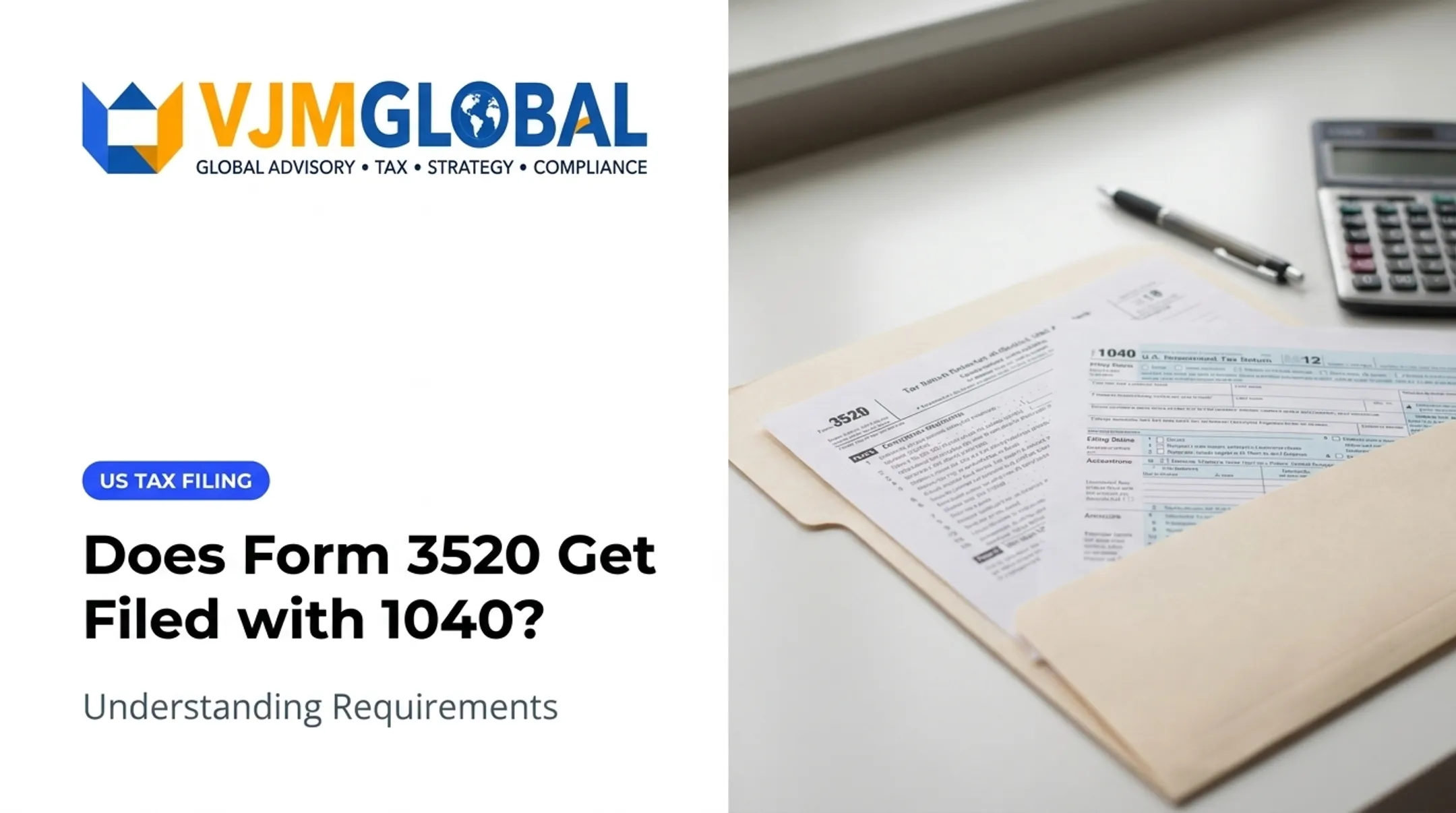
Form 709 is its own annual return. The IRS instructions tell donors to report each calendar year's gifts on one Form 709 and file a separate one for every year with reportable gifts. It isn't attached to your 1040.
How the two filings are connected
The same person often files both, and an income tax extension can carry over to Form 709. Otherwise they belong to different tax systems, are prepared separately and should be kept as separate IRS filings.
Other points on who files:
- The donor generally files and is liable for any tax. The recipient generally does not file.
- Married couples can't file a joint Form 709. With gift splitting, each spouse files individually, and the consenting spouse signs a Notice of Consent attached to the donor's return.

Who Must File Form 709?
Gifts above the annual exclusion
Add up everything you gave each person during the calendar year. The annual exclusion is $19,000 per recipient for gifts made in 2025, and the same for 2026. Exceed it for a non-spouse recipient and you generally must file.
Future-interest and trust gifts
The exclusion only covers present-interest gifts, where the recipient gets immediate use or enjoyment. A gift into a trust that delays access, for instance, may need a return even if it's under $19,000.
Gift splitting between spouses
Splitting lets spouses treat one spouse's gift as made half by each. You must be married to each other when the gift is made, and consent covers the whole calendar year. Each spouse files a Form 709, whatever the amount.
Community property is treated as half given by each spouse, so both file. Property held as joint tenants or tenants by the entirety works the same way.
Other reportable transfers
Possible gifts include:
- Non-cash transfers, real estate and business interests
- Debt forgiveness
- Below-value sales
- Interest-free or reduced-interest loans
These are not automatic triggers. Value, consideration and exclusions all matter, and valuation-sensitive transfers deserve professional advice.
Situations that generally don't require filing
- Present-interest gifts within the annual exclusion
- Qualifying gifts to a U.S.-citizen spouse (unlimited marital deduction)
- Tuition paid directly to the school, and medical payments paid directly to the provider
- Qualifying gifts to charities and government bodies
Watch the exceptions. A gift to a spouse who isn't a U.S. citizen gets no unlimited marital deduction; the annual exclusion for qualifying outright gifts is $190,000 for 2025. Tuition covers fees only, not books or room and board.
Reportable gift versus tax due
Filing doesn't mean you owe tax. A taxable gift generally reduces your lifetime exemption instead. The 2026 basic exclusion amount is $15,000,000, and the GST exemption is the same. Most donors file and pay nothing.

How to Prepare and File Form 709
Gather your records
- Date and type of each gift
- Recipient names and details
- Cash records and account statements
- Deeds or transfer documents
- Trust documents
- Prior Forms 709
- Spouse consent information
- Valuation or appraisal records
Report gifts and valuations accurately
Gifts are reported at fair market value on the date of transfer. Do not use a forced-sale price.
Regulations also require adequate disclosure, including the valuation method and rationale. Get appraisals for Australian property, private company shares and other hard-to-value assets.
Adequate disclosure matters because a properly disclosed gift starts the usual three-year assessment period. Section 6501 leaves an inadequately disclosed gift open indefinitely.
Complete the schedules
The 2025 form includes:
- Schedule A: computes taxable gifts from your gift records.
- Schedule B: lists gifts from prior periods.
- Schedule C: covers deceased spousal unused exclusion (DSUE) and restored exclusion.
- Schedule D: computes generation-skipping transfer tax.
Totals flow from Schedule A and prior gifts into the tax computation on the form's first page.

Submit it independently from Form 1040
- E-file: the IRS Modernized e-File system accepts the 2025 Form 709 through approved providers.
- Paper: mail to Department of the Treasury, Internal Revenue Service Center, Kansas City, MO 64999. Private delivery services use 333 W. Pershing Road, Kansas City, MO 64108.
- Payment: use EFTPS for electronic payment, or pay by check.
Keep proof of submission and a full copy of the return.
Final review checklist
- Any omitted gifts?
- Correct valuation dates?
- Spouse consent attached?
- Schedules complete?
- Prior-year exemption figures consistent?
- Future interests treated correctly?
- Records match the rest of your tax file?
When to get professional help
If you live in Australia and hold foreign property, trusts, business interests, or are considering gift splitting, VJM Global's U.S.-compliant tax professionals can provide cross-border support.
Deadlines, Extensions, Penalties and Australia Checks
Due dates and extensions
Form 709 is generally due April 15 of the year after the gift. For 2025 gifts, the deadline is April 15, 2026. A weekend or holiday moves it to the next business day.
- A Form 1040 extension, including Form 4868, automatically extends Form 709.
- Form 8892 gives an automatic six-month extension (generally to October 15) if you aren't extending your income tax return.
- Extensions never extend the time to pay.
- U.S. citizens and residents abroad may get an automatic two-month income tax extension to June 15. Payment of gift or GST tax is still due on the original date.
Penalties
Under IRC section 6651:
- Failure to file is generally 5% of the tax due per month, capped at 25%
- Failure to pay is 0.5% per month, also capped at 25%
- Reasonable cause can excuse both penalties
- Interest accrues from the original due date
If no tax is due, the penalty exposure is smaller, but the return still discloses the gift and starts the assessment clock.
Australia-based checks
- Confirm your status. Gift tax follows U.S. citizenship or domicile at the time of the gift, not only green card or income tax residence.
- Nonresident filers. Nonresident noncitizens generally face U.S. gift tax only on U.S.-situated real and tangible property, and use Form 709-NA.
- Convert currency. The IRS 2025 yearly average is 1.551 AUD per USD, but Form 709 still requires gift-date fair market value.
- Value local assets. Get appraisals for Australian property or businesses.
- Check Australian rules. Australia has no gift tax, but a below-market family transfer can trigger capital gains tax. The 1982 U.S.-Australia treaty does not cover gift or GST taxes, so do not assume treaty relief.
- Keep records. Maintain supporting documents in both countries.

Frequently Asked Questions
Do I file Form 709 with my 1040?
No. Form 709 is generally a separate return. The two may share a deadline or extension.
How do I file a 709 gift tax return?
Confirm you must file, gather gift records, complete the schedules, and submit by paper or approved e-file. Pay any tax and keep proof.
Which relatives are exempt from gift tax?
No relative is exempt by relationship alone. Exemptions depend on the transfer type, recipient status (such as a U.S.-citizen spouse) and exclusions.
What is the penalty for not filing Form 709?
Penalties depend on whether tax was due, how late the return is and whether the gift was adequately disclosed. Check the current IRS rules.
Does filing Form 709 mean I owe gift tax?
Not usually. Filing often records a reportable gift and exemption use, with no tax payable.
When is Form 709 due if I live in Australia?
Generally April 15 of the following year. Overseas residents may extend filing, but payment stays due on the original date. Confirm with the current IRS instructions.