Introduction
Tax credits show up on most U.S. federal returns and many state returns. They apply when you earn income, raise children, pay tuition, buy health coverage, or make eligible energy purchases.
The confusion is predictable. Many taxpayers know a credit lowers their tax but don't know how it differs from a deduction, whether it always means a refund, or how income limits change the final number.
For scale, the IRS says about 24 million workers and families received roughly $70 billion in EITC for tax year 2024, according to IRS EITC statistics. This guide covers eligibility, calculation, filing, refund treatment, documentation, and where to find reliable current-year guidance.
Key Takeaways
- A credit cuts your tax bill directly; a deduction cuts the income that gets taxed.
- Refundable credits can produce a refund; nonrefundable ones stop at zero tax.
- Your amount depends on the credit, filing status, income, dependents, expenses, and tax year.
- You claim credits on your return with the right forms and records.
- Check IRS or state guidance each year, since limits change.
What Is a Tax Credit?
A tax credit is an amount you subtract directly from the income tax you owe, generally dollar for dollar. Governments use credits to lower the cost of certain activities or to support particular groups: working families, students, parents, homeowners, businesses, and people who already paid tax to another country.
A credit is not automatically a cash payment. It is not a deduction from gross income. And the advertised maximum is not a guarantee. Your income, filing status, and expenses can shrink it or eliminate it.
Credit vs. Deduction
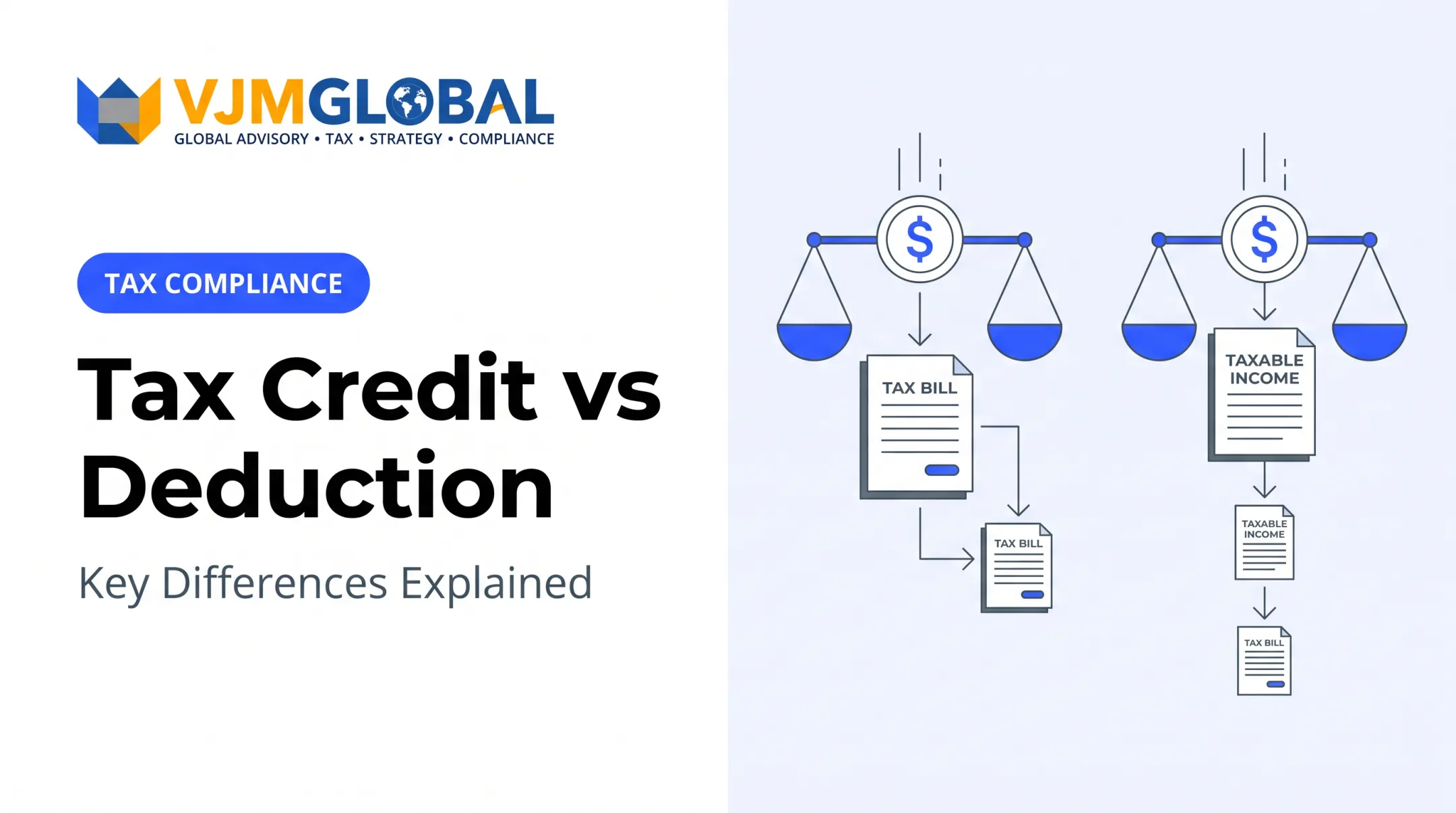
Say you're in the 22% bracket. A $2,000 deduction lowers your tax by about $440 (22% of $2,000). A $2,000 credit lowers it by $2,000.
A deduction's value rises with your tax rate. A credit's value doesn't. The IRS describes the same split in its tax credits and deductions overview.
Tax Credit Types
The type of credit decides what happens when the credit is bigger than your tax.
- Nonrefundable: reduces your tax to zero, and the excess is lost. The Child and Dependent Care Credit and the Credit for Other Dependents work this way.
- Refundable: any excess comes back to you as a refund. The Earned Income Tax Credit (EITC) is the best-known example.
- Partially refundable: only a set portion can be refunded. The American Opportunity Tax Credit (AOTC) allows up to 40% of the credit, to a maximum of $1,000, to be refundable.
Carryovers, Phaseouts, and Limits
Carryover rules differ by credit. Foreign tax credits generally carry back one year and forward ten. The general business credit carries back one year and forward 20. Many personal credits don't carry over at all.
Phaseouts, spending caps, and unused-credit rules also vary. Check them for your tax year before you plan around any credit.
How Does a Tax Credit Work?
Every credit follows roughly the same sequence:
- Identify a qualifying situation.
- Confirm you meet the eligibility rules.
- Calculate the allowable credit.
- Apply it against your tax liability.
- Report it correctly on your return.

Eligibility and Initiation
Start with your facts: income, filing status, dependents, residency or citizenship requirements, work activity, education status, insurance coverage, and qualifying expenses. Taxes paid to another country can matter too.
Gather records early. Typical ones include:
- W-2s, 1099s, and other income documents
- Dependents' names and Social Security numbers
- Tuition statements (Form 1098-T)
- Care provider names and taxpayer IDs
- Receipts or purchase certificates
- Proof of foreign taxes paid
Credit Calculation
Credits are built in different ways. Some are fixed amounts, some are a percentage of expenses, and some depend on earned income or the number of children.
Current-year figures (tax year 2026, per IRS guidance; some forms are still in draft, so confirm final versions):
| Credit | Key 2026 figures |
|---|---|
| Child Tax Credit | Up to $2,200 per child under 17; up to $1,700 refundable (ACTC) |
| Credit for Other Dependents | Up to $500 per dependent, nonrefundable |
| Child and Dependent Care | Expenses capped at $3,000 (one person) or $6,000 (two or more); rate 50% down to 20% |
| AOTC | Up to $2,500 per student; phases out at $80,000–$90,000 MAGI (single) |
| Lifetime Learning Credit | 20% of up to $10,000 in expenses; $2,000 max per return |
| Adoption Credit | Up to $17,670; up to $5,120 refundable |
The EITC varies most with family size. Per Revenue Procedure 2025-32, the 2026 maximums are:
| Qualifying children | Maximum credit |
|---|---|
| 0 | $664 |
| 1 | $4,427 |
| 2 | $7,316 |
| 3 or more | $8,231 |

The Child Tax Credit begins phasing out at $200,000 of modified AGI ($400,000 for joint filers), shrinking by $50 for every $1,000 above that line.
Applying the Credit
Credits apply after your tax is calculated. They reduce what you owe until it hits zero. Withholding and estimated payments are different: those are prepayments of tax, not credits.
A quick example. Your tax comes to $1,800, and you qualify for a $2,200 credit.
- Nonrefundable: your tax drops to $0 and the extra $400 is lost (unless that credit allows a carryforward).
- Refundable: your tax drops to $0 and you get $400 back.
- Partially refundable: you get back only the refundable share of the leftover.
If the credit were only $1,000, your bill would fall to $800 under any of the three.
Refund or Unused Balance
A refundable credit can push you past zero into a refund. A nonrefundable credit can't. A partially refundable credit returns only its allowed portion.
Unused amounts expire unless the law lets them carry to another year. Don't assume they do.
Your final refund also reflects withholding and estimated payments, so a big refund isn't always a big credit.
Filing and Result
You report credits on Form 1040, usually with a credit-specific form or schedule: Schedule 8812 for child credits, Form 2441 for care expenses, Form 8863 for education, Form 5695 for residential energy, Form 8962 for the Premium Tax Credit, and Form 1116 for foreign taxes. Schedule 3 collects many additional credits.

The result might be a lower balance due, a larger refund, or no benefit if you don't qualify or can't use the whole credit.
Before you file, review the return for:
- Duplicate claims for the same child
- Wrong dependent names or SSNs
- Missing forms or schedules
- Expenses you can't document
- Differences between federal and state treatment
One timing note: under the PATH Act, the IRS can't issue refunds before mid-February if you claim the EITC or ACTC, and the hold covers the whole refund. See the IRS refund timing guidance.
Where Tax Credits Apply
Credits exist at both the federal and state level. Eligibility, formulas, forms, and refundability can differ, so check the rules for your state and tax year.
State EITCs show the range. Many are a percentage of the federal credit:
- District of Columbia: 70%, refundable
- Hawaii: 40%, refundable
- Delaware: 20%, nonrefundable
- South Carolina: 125%, nonrefundable
Common Individual and Family Credits
Think by life situation rather than memorizing a list:
- Working: EITC, Saver's Credit (Form 8880)
- Raising kids: Child Tax Credit, Credit for Other Dependents, Child and Dependent Care, Adoption Credit
- Studying: AOTC, Lifetime Learning Credit
- Health coverage: Premium Tax Credit (Form 8962). Repayment caps on excess advance payments are eliminated for 2026.
- Energy and vehicles: Home improvement, residential clean energy, and clean vehicle credits (subject to 2025 end dates)
Under 2025 legislation, the Energy Efficient Home Improvement Credit ended for property placed in service after Dec. 31, 2025, and the Residential Clean Energy Credit ended for expenditures after that date. Clean vehicle credits ended for vehicles acquired after Sept. 30, 2025. Earlier purchases may still count under specific conditions.
You can qualify for one credit and not another even when the expense looks similar. The AOTC and Lifetime Learning Credit, for example, can't both be claimed for the same student in the same year.
Business and Cross-Border Credits
Businesses may use the research credit (Form 6765), which feeds into the general business credit on Form 3800. The Work Opportunity Tax Credit's authorization lapsed for work after Dec. 31, 2025, though unused earlier credits may carry forward.
Individuals who paid income tax to another country may claim the foreign tax credit on Form 1116. Paying foreign tax doesn't automatically make it creditable; the tax and income must meet U.S. rules and limits.
For U.S. companies setting up or operating in India, VJM Global provides tax compliance, accounting, and advisory support for cross-border operations. It doesn't replace IRS guidance, and no adviser can promise a specific credit outcome.
Finding and Claiming the Right Credit
Use this checklist:
- Confirm the tax year you're filing for.
- Read current IRS and state tax agency guidance. The IRS Interactive Tax Assistant and EITC Assistant can help you check eligibility.
- Gather income, expense, and dependent records.
- Test your income against the limits and phaseouts.
- Use the required forms and schedules.
- Keep supporting records, generally three years.

Mistakes are costly. The Treasury Inspector General for Tax Administration estimated a 32.7% EITC improper-payment rate for fiscal 2025. Common causes include nonqualifying children, duplicate claims, and SSN mismatches.
When to Consult a Tax Professional
Get help if any of these apply:
- Self-employment income
- Income in multiple states
- Foreign income or foreign taxes
- Business activities
- An amended return (Form 1040-X, generally within three years of filing)
- Complex dependent situations
- Doubts about whether a credit is refundable
Check a preparer's qualifications and avoid anyone who charges fees based on your refund.
Conclusion
A tax credit reduces your tax directly, but what you actually get depends on the credit's rules, your circumstances, and whether it's refundable.
Check eligibility, use current-year figures, keep complete records, and file correctly. That's how you avoid missed credits, rejected claims, surprise balances, and unrealistic refund expectations.
Frequently Asked Questions
How much do you get for a tax credit?
There's no universal amount. The value depends on the specific credit, tax year, income, filing status, expenses, dependents, and limits. The 2026 EITC, for instance, ranges from $664 to $8,231.
Do you get money back from a tax credit?
Only if the credit is refundable, or the refundable part of a partial credit. Nonrefundable credits stop at zero tax. Your refund may also include withholding or estimated payments.
How does the tax credit work?
An eligible credit applies directly against your tax liability. It can lower what you owe, eliminate it, or produce a refund when it's refundable.
What is the difference between a tax credit and a tax deduction?
A credit reduces your tax directly. A deduction reduces taxable income before tax is calculated, so its value depends on your tax bracket.
How do you claim a tax credit?
Confirm eligibility, complete the required form and schedules, and attach or keep your supporting records. Follow the current-year IRS or state instructions.