Introduction
The filing-status box on Form 1040 looks like a simple tick. It isn't. It drives your tax rates, standard deduction, credit eligibility and even whether you must file at all.
The right answer depends on your legal and household facts, not on which option looks cheapest. Many taxpayers, especially those living abroad, pick a status by habit or guesswork and discover the error later.
This guide covers the five federal statuses, the December 31 test, dependant and household-support rules, joint versus separate filing, cross-border issues for Australian readers, and what to do if you've already filed under the wrong status.
Key Takeaways
- Your status generally follows your marital and household facts on December 31.
- Status affects tax brackets, the standard deduction, credits and filing thresholds.
- Married couples should compare joint and separate filing on tax, liability and credits.
- Australians should first confirm whether Form 1040 or Form 1040-NR applies.
What Filing Status Means on Form 1040
Filing status is the taxpayer category you select on Form 1040. It tells the IRS which rate table to use and which deduction and credit limits apply. The IRS filing status page confirms it is generally based on your marital status on the last day of the tax year.
It is not the same as citizenship, immigration status, tax residency or marital status under Australian law. A U.S. federal filing status and your Australian tax obligations are separate questions.
Check your U.S. tax classification first
If you have international ties, work out which group you fall into before choosing a status:
- U.S. citizen (taxed on worldwide income, wherever you live)
- Resident alien (green card test or substantial presence test)
- Nonresident alien (generally taxed on U.S.-source income)
- Dual-status taxpayer (resident and nonresident in the same year)
- Taxpayer claiming a treaty position
Nonresident aliens generally file Form 1040-NR, not Form 1040. Citizens and resident aliens use Form 1040.
The Five IRS Filing Statuses Explained
Single
Single generally applies if you were unmarried, divorced or legally separated under a final decree on December 31. If you also qualify for Head of Household or Qualifying Surviving Spouse, assess those first.
Registered domestic partnerships and civil unions are generally not marriages for federal tax purposes. Same-sex marriages validly entered into are recognised under Rev. Rul. 2013-17.
Married Filing Jointly
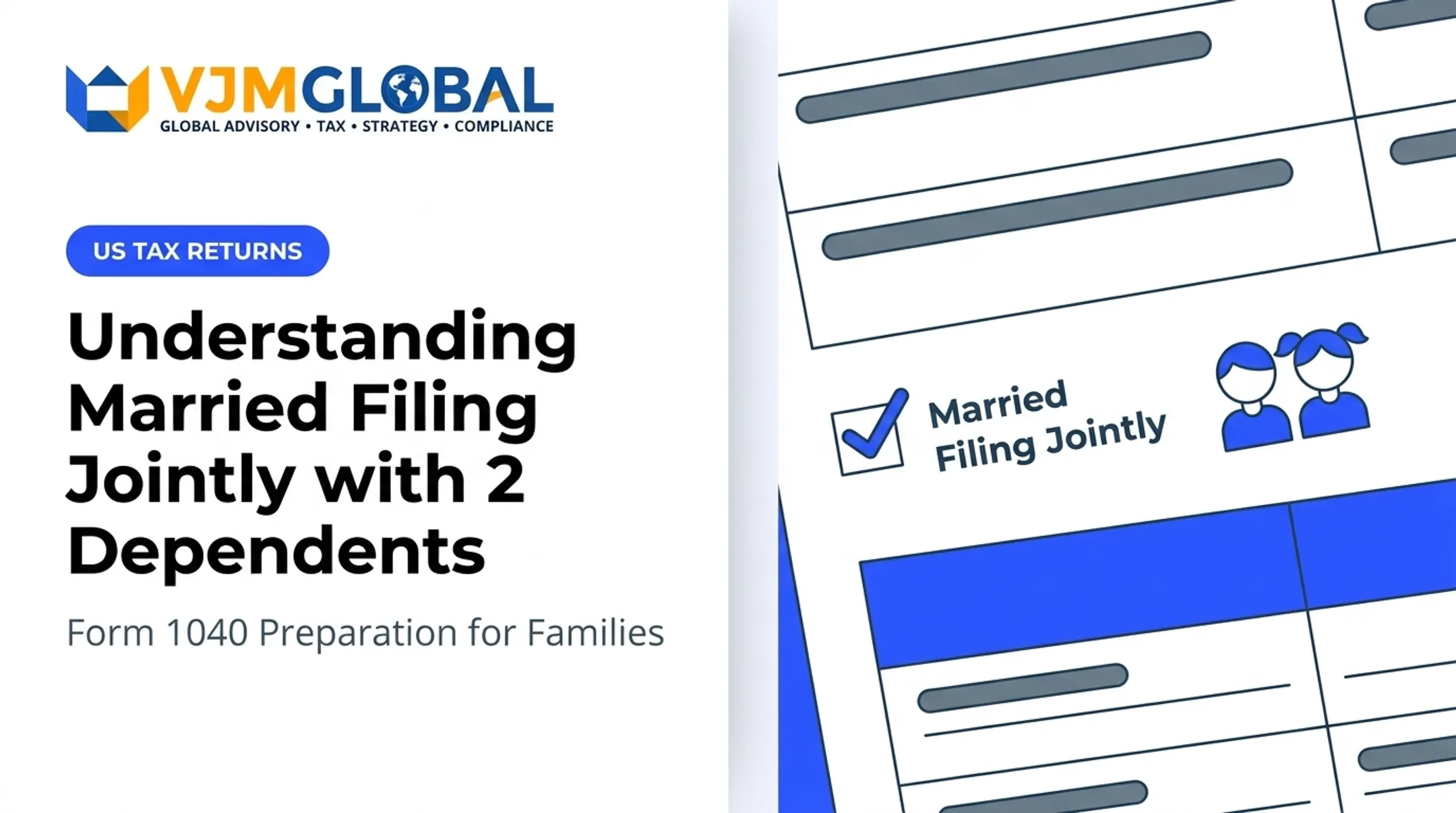
Spouses combine income, deductions, credits and payments on one return. This works even when only one spouse earned income.
The catch is joint and several liability. Each spouse can be liable for the entire tax, interest and penalties, and divorce doesn't erase that. Relief options such as innocent spouse relief exist but are not automatic.
Married Filing Separately
Each spouse reports their own income and deductions. This is not Single, even if you keep separate finances or live apart without a final decree.
People consider it for:
- Liability concerns
- Separation
- Privacy
- A spouse's tax problems
The trade-off: many credits and deductions shrink or disappear.
Head of Household
You generally must be unmarried or considered unmarried, pay more than half the cost of keeping up your home, and have a qualifying person.
- Household costs include rent, mortgage interest, property tax, insurance, repairs, utilities and food eaten at home
- Clothing, education, medical costs and transport don't count
- A parent can qualify without living with you if you can claim them as a dependant and pay more than half the cost of their main home
- A nonresident alien spouse cannot be your qualifying person
Check the current tax year's rules before relying on any age, income or support test.
Qualifying Surviving Spouse
This status may apply for the two years after the year of a spouse's death. You must meet all of these conditions:
- Have a child or stepchild who lives with you all year
- Pay more than half the home's upkeep
- Not remarry before year-end
In the year of death you generally file jointly. After the two years end, you move to Single or Head of Household if eligible.
How to Determine the Correct Filing Status
Start with your marital status on December 31
Work through these situations:
- Unmarried: Single, unless another status fits
- Married: joint or separate
- Final divorce or separate-maintenance decree by December 31: unmarried for the whole year
- Separated without a final decree: still married
- Annulled: unmarried, and affected open years may be amended
- Common-law marriage: counts if recognised in the relevant U.S. state
- Widowed: check the joint and Qualifying Surviving Spouse rules
Check dependants, household support and living arrangements
Gather details on where each person lived, who paid household costs, and whether someone else could claim the same dependant. Being the sole earner, or paying some bills, is not enough for Head of Household or Qualifying Surviving Spouse.
Compare every status you qualify for
Run the numbers under each eligible status using current IRS tables or reliable software. For reference, the 2026 standard deduction is $16,100 for Single and $32,200 for joint filers, with Head of Household at $24,150.

The lowest immediate tax isn't the only factor. Joint liability, future amendments, benefit eligibility and state tax treatment all matter.
Account for cross-border circumstances
Australians with U.S. citizenship or residency, foreign spouses, dual-status years and foreign income need extra care. A nonresident alien spouse can be treated as a resident through an election under IRC section 6013, which requires a joint return and worldwide income reporting from both spouses.
Treaty residence matters too. Under the U.S.-Australia treaty tie-breaker, a person resident in both countries may be treated as a nonresident alien and file Form 1040-NR with Form 8833 to claim treaty benefits.
Foreign tax credits and the foreign earned income exclusion are separate provisions, and no credit applies to tax on income you exclude.

U.S. citizens abroad also get an automatic two-month filing extension, though interest still runs from the regular due date.
Use current IRS resources and keep records
Start with the Form 1040 instructions, Publication 501 and the IRS Interactive Tax Assistant for citizens and resident aliens. Keep proof of marital status, dependant eligibility, household expenses, residence, spouse details and your calculations.
Married Filing Jointly vs. Married Filing Separately
How each status works
| Feature | Joint | Separate |
|---|---|---|
| Returns | One combined | Two |
| Income | Combined | Each reports own |
| Signatures | Both | Each own return |
| Liability | Joint and several | Own return |
| Deductions | Shared | If one itemises, the other cannot take the standard deduction |
Living apart doesn't make you Single. If you meet the federal definition of married for that year, you still choose joint or separate filing.
Why couples file jointly
Joint filing often brings:
- Wider tax brackets
- A larger standard deduction
- Access to more credits
Compare the actual figures; a lower bill isn't guaranteed. One return is also simpler to coordinate. The trade-off is joint and several liability for your spouse's errors.
Why some couples file separately
- One spouse has unresolved tax debts or disputes
- Separation without a final decree
- Income-driven student-loan repayment, where Federal Student Aid bases most plans on the borrower's income alone if you file separately
- One spouse has unusually high medical or other deductible expenses
The cost can be steep. Married filing separately generally loses the education credits and student-loan interest deduction, and the child and dependent care credit is unavailable in most cases.

State, community-property and cross-border rules
Community-property states include Arizona, California, Idaho, Louisiana, Nevada, New Mexico, Texas, Washington and Wisconsin. Separate filers there generally report half of community income and attach Form 8958. State returns may add their own rules.
For Australians, foreign income, foreign tax credits, treaty positions and a nonresident spouse all call for current professional review.
Can a filed return be changed?
- Separate to joint: generally possible with Form 1040-X within three years of the original due date
- Joint to separate: generally not allowed after the original due date, with limited exceptions such as a personal representative for a decedent
Confirm the current Form 1040-X instructions before assuming a change is possible.
Final Checklist and When to Seek Professional Help
Before submitting Form 1040
- Marital status on December 31
- Dependant and qualifying-person details with SSNs
- Who paid household costs
- Spouse information
- All income documents, including foreign income
- Whether Form 1040 or Form 1040-NR applies
- FBAR (filed separately) and Form 8938 obligations, if any
Common mistakes to avoid
- Choosing Single when Head of Household applies
- Claiming Head of Household without a qualifying person or enough household costs (the IRS lists this among its common filing errors)
- Treating Married Filing Separately as Single
- Reusing last year's status without checking current facts
- Overlooking cross-border reporting
When to get specialist help
Seek a professional review if any of these apply:
- You live outside the U.S., or hold U.S. citizenship or residency
- You are a nonresident alien or have a foreign spouse
- You earn business income or rely on a treaty position
- You filed an incorrect return before
VJM Global prepares Form 1040 and Form 1040-NR returns and advises on cross-border tax compliance and DTAA matters. You can enquire about our international taxation support if your situation spans the U.S. and Australia.
Frequently Asked Questions
What are the rules for filing status with the IRS?
There are five statuses: Single, Married Filing Jointly, Married Filing Separately, Head of Household and Qualifying Surviving Spouse. Eligibility generally rests on marital status on December 31, dependents and household support.
Should I file jointly or separately?
Compare tax, credits, deductions, liability, income allocation and US state rules. Neither is always better, and cross-border facts can change the answer.
Which filing status should I use on Form 1040?
Identify your marital status, qualifying dependents and household costs. Check Head of Household and Qualifying Surviving Spouse eligibility, then compare every status you qualify for.
Does my marital status on December 31 determine my filing status?
Generally yes. Special rules apply to divorce, legal separation, a spouse's death, annulment and people considered unmarried.
Can I change my filing status after filing?
Form 1040-X can correct some errors. Separate to joint is generally allowed within three years, but joint to separate generally isn't after the due date.
Can a nonresident alien file Form 1040?
Nonresident aliens generally file Form 1040-NR. Resident aliens, dual-status taxpayers and treaty positions need individual review under current IRS rules.