One catch trips people up every year: the extension gives you more time to file, not more time to pay. Tax you owe is still due by the original deadline, and interest runs from that date.
This guide covers due dates, filing methods, payment, penalties, and special rules for people living outside the United States, including US citizens and green card holders based in Australia who still have US filing duties.
Key Takeaways
- Form 4868 extends the filing deadline for Form 1040, 1040-SR and 1040-NR, not the payment deadline.
- Submit the form, or an extension-designated payment, by the original return deadline.
- Estimate your tax, subtract payments already made, and pay as much as you can by that date.
- Keep your e-file acceptance or payment confirmation, and diarise the extended date.
What Is Form 4868 and Who Should Use It?
What Form 4868 does
Form 4868 is the "Application for Automatic Extension of Time To File U.S. Individual Income Tax Return." The IRS Form 4868 for tax year 2025 covers Forms 1040, 1040-SR and 1040-NR. You don't need to give a reason. The IRS contacts you only if it denies the request.
Who typically needs it
- Employees waiting on a corrected W-2 or 1099
- Self-employed people and investors with incomplete records
- US citizens and residents living abroad
- Anyone whose tax preparer needs more time
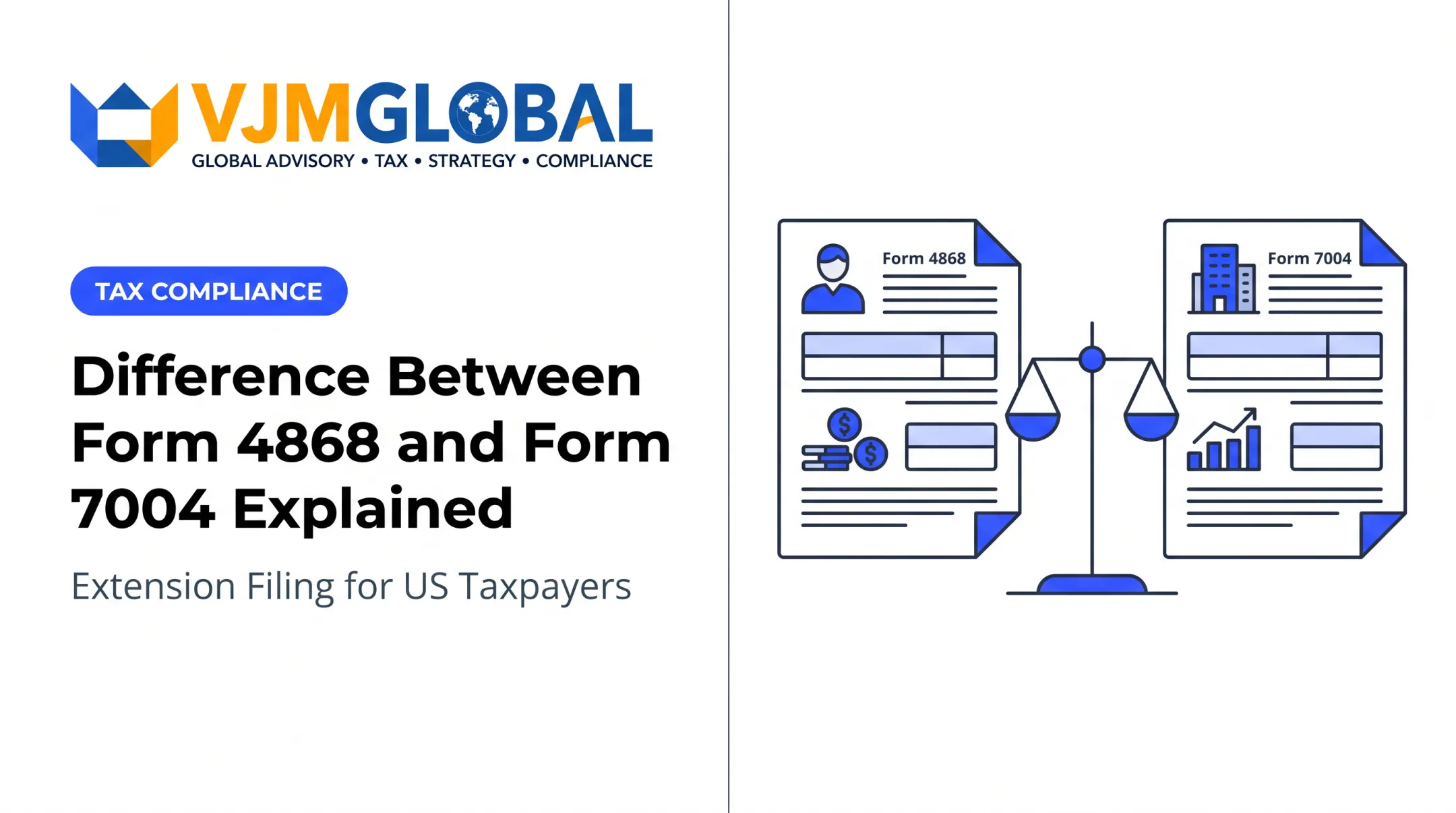
Form 4868 is for individuals only. Business, estate and trust returns generally use Form 7004.
What it does not cover
- Payment. Tax owed is still due on the original date.
- State returns. These follow separate rules. California's Franchise Tax Board, for example, publishes its own extension process.
- Other reporting. Separate information-reporting deadlines don't move automatically.
For Australian residents, an IRS extension does nothing for your obligations to the ATO. Those are separate systems with separate dates.
Form 4868 Due Dates and the Extended Filing Deadline
The original deadline
For calendar-year taxpayers, the 2025 return and the extension request are due April 15, 2026. If a deadline lands on a weekend or legal holiday, it moves to the next business day. Disaster relief can also shift dates for affected areas, so check IRS.gov for the current announcement.
The extended deadline
A timely request generally gives you until October 15, 2026 to file the 2025 return. That date is for filing only.
Don't wait until October to pay an amount you already expect to owe. Interest accrues from April 15 on anything unpaid.
Living or working outside the US
Qualifying US citizens and resident aliens who live and work outside the US get an automatic two-month extension. IRS Publication 54 explains that this applies to both filing and payment, which takes calendar-year filers to June 15. You attach a statement showing you qualify.
Two cautions:
- Interest still applies to tax unpaid after April 15.
- If you need until October 15, file Form 4868 before the two-month extension expires.
Combat-zone service and federally declared disaster areas have their own relief. Confirm eligibility rather than assuming you need Form 4868.

What if the deadline has passed?
Form 4868 generally can't be used retroactively. If you've missed April 15, file the return and pay as soon as you can. The IRS notes there is no penalty for filing late if you're owed a refund. Disaster or military provisions can create exceptions, so check before assuming you're out of time.
How to File Form 4868
Option 1: File electronically
You can e-file through Free File, an IRS e-file partner, or a tax professional. Free File extensions have no income limit, though availability is seasonal, so confirm the program is still open. IRS Direct File isn't available for the 2026 season.
E-filing gives you acceptance or rejection notices, avoids mail delays, and leaves a clean record.
Option 2: Make an extension-designated payment
Pay through IRS Direct Pay, EFTPS, or a debit or credit card, and choose the extension option. That counts as your request, with no separate Form 4868.
- Save the confirmation number.
- Check that the tax year and taxpayer details are correct.
- Card payments carry processor fees, so compare them before paying.
- Individuals can't open new EFTPS accounts, so Direct Pay is usually simpler.
Option 3: Mail a paper form
Complete the current form and mail it to the address in the official instructions. The address depends on your state and whether you're enclosing payment.
- Mail early, and use certified mail for a receipt.
- Private carriers can't deliver to IRS P.O. boxes. Use an IRS-designated service with a street address if needed.
- Never copy an address from an older year's form.
Information to gather
- Your name, your spouse's name and your current address
- Social Security numbers (or ITINs where you're ineligible for an SSN)
- Estimated total tax for the year
- Total payments already made, including withholding
- The balance due and the amount you're paying now
Your estimate should be reasonable and based on the records you have.
After you submit
Keep the accepted e-file record, payment confirmation or mailing proof. Then complete Form 1040 by the extended deadline. Report your extension payment on the return and reconcile it with your IRS account.

Payment, Penalties, and Tax Planning Tips
Estimate what you owe
Start with last year's return, then update it with current income, investment statements and self-employment records. Subtract withholding and any estimated payments. Treat the result as an estimate and pay what you can by April 15.
The penalty distinction
Two penalties matter here:
- Failure to file: generally 5% of unpaid tax per month or part month, capped at 25%. For returns due in 2026 that are over 60 days late, the minimum is the lesser of $525 or 100% of the tax owed.
- Failure to pay: generally 0.5% per month or part month, also capped at 25%.
A timely extension protects you from the filing penalty, but not from the payment penalty or interest.
Under IRS Publication 17, you avoid the late-payment penalty during the six-month extension if you paid at least 90% of your actual liability by the original deadline and pay the balance with your return.
Interest still applies. The IRS sets its rate quarterly, so check the current figure.

If you expect a refund
You generally have no payment to make, and the IRS says there's no penalty for filing after April 15 when it owes you a refund. File promptly anyway to get your money. And don't assume you're owed one: income, credits and withholding can change the result.
Deadline checklist
- Confirm the tax year and deadline.
- Estimate your liability.
- Submit Form 4868 or an extension payment.
- Pay what you can.
- Save the confirmation.
- Check state requirements.
- Diarise the October 15 filing date.
If your records are incomplete, the balance is large, or foreign income complicates things, speak to a qualified tax professional.
Special Situations and Common Mistakes
Cross-border taxpayers
Nonresident filers on Form 1040-NR have their own dates. For 2025, those with wages subject to US withholding generally file by April 15, 2026. Those without such wages generally file by June 15, 2026, and check box 9 on Form 4868 when extending.
Other obligations don't move with Form 4868:
- FBAR: due April 15 and automatically extended to October 15. No request is needed.
- Form 8938: attached to your return and due by that return's deadline, including extensions.
- State returns: these have their own rules.
Common errors
- Entering the wrong tax year
- Using a misspelled name or incorrect SSN, which causes e-file rejections
- Underestimating tax
- Assuming payment is postponed
- Mailing to an outdated or wrong address
- Confusing federal and state extensions
Before you submit, double-check:
- Names and taxpayer numbers
- Estimated liability and the amount paid
- Filing method and how you will keep confirmation
When professional support helps
If you have cross-border income, complex records or doubts about federal and state obligations, an adviser can save you from costly mistakes. VJM Global supports US individual taxpayers with Form 1040 and 1040-NR preparation, and works with clients in Australia, the US and India. Its team includes CPAs and US-compliant professionals.
This article is general information. Your tax treatment depends on your facts and current IRS rules.
Frequently Asked Questions
What IRS form do I file for an extension?
Individuals use Form 4868 for Form 1040, 1040-SR or 1040-NR returns. Business returns generally use Form 7004.
How do I request an extension to file my tax return with the IRS?
File Form 4868 electronically, make an extension-designated payment, or mail the paper form. Any tax owed is still due by the original deadline.
Can I submit Form 4868 electronically?
Yes. Use Free File, an IRS e-file partner or a tax professional. Keep the IRS acceptance notice or payment confirmation.
What is the due date for an IRS extension?
The request is generally due by the original return deadline, April 15, 2026 for most 2025 returns. Confirm the date on IRS.gov.
Can I still file an extension after April 15?
Generally no. Disaster, military or overseas rules can create different deadlines, so check whether one applies to you.
Does the IRS penalise you for filing an extension?
No. A timely extension isn't penalised, but unpaid tax still attracts interest and possibly a late-payment penalty.