The phrase is an informal label that can point to several government schemes, run by different authorities with different claim processes. This guide defines the terms, compares them, walks through eligibility checks and claiming, and flags common mistakes.
Rules, thresholds, deadlines and programme availability change. Confirm everything against the current ATO or relevant Australian Government source before acting.
Key Takeaways
- A tax offset reduces tax payable; a refund returns tax you overpaid.
- "Rebate" can mean an offset, a discount at purchase, or a separate payment.
- Eligibility turns on income, residency, entity type, timing and records.
- Identify the exact programme and use its official claim process.
What Is a Rebate Tax Credit?
What the phrase means in Australia
The ATO's formal term is tax offset, and it uses "tax rebate" as an alternative name for the same thing. According to the ATO's offsets guidance, a tax offset reduces the tax you pay on your taxable income. Other labels you'll meet:
- Deduction: reduces taxable income before tax is calculated.
- Concession: a broad category covering reduced rates, exemptions and rebates.
- Grant: project funding under programme guidelines.
- Refund: return of tax paid above what you owed.
So "rebate tax credit" usually describes a tax offset, a programme discount, or a GST input tax credit, depending on context.
How a benefit creates value
A $1,000 benefit does not always save you $1,000. The delivery method changes the result:
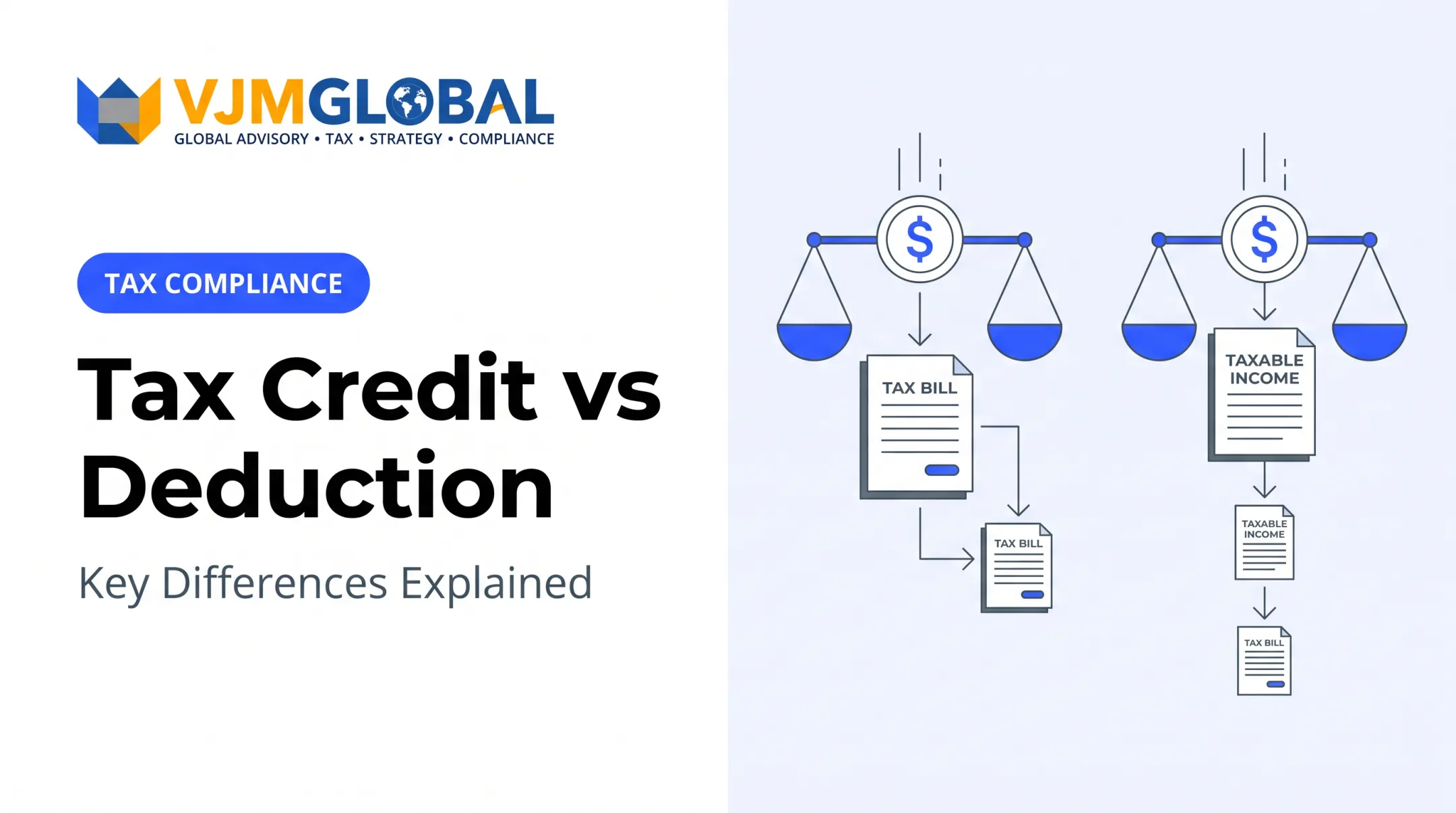
- Deduction: lowers taxable income, so the saving depends on your tax rate
- Offset: cuts the tax bill by the full $1,000
- Direct rebate: paid outside the tax return altogether
Refundability matters too. Most offsets can't take your tax below zero, so unused amounts are lost. Some, such as the private health insurance offset, can be refundable. The low and middle income tax offset (LMITO) ended after 2021-22 and was non-refundable.

Where the benefit comes from
The issuing authority decides the eligibility rules and the claim route:
- ATO: offsets claimed in your tax return, such as the small business income tax offset.
- Other federal bodies: the Clean Energy Regulator runs the Cheaper Home Batteries Program.
- State and territory schemes: Solar Victoria and the NSW Energy Savings Scheme.
"Rebate" is also a marketing word. Before relying on an advertisement or social post, confirm the programme's legal name and official source.
Tax Rebate vs Tax Credit, Tax Offset, Tax Refund and Deduction
Rebate versus credit
A rebate is often paid or applied after an eligible purchase or application, such as a battery discount at installation. A credit or offset is calculated through the tax system. Public communication blurs the two, so use each programme's own terminology.
Credit or offset versus refund
A refund happens when tax paid or withheld exceeds your final liability. A credit or offset is an input to that calculation. Getting a refund doesn't mean you claimed a rebate; your withholding and records drive the result.
Rebate or credit versus deduction
A deduction shrinks the income your tax is calculated on. An offset comes off the tax afterwards. The ATO's historical example: a taxpayer on $70,000 taxable income had tax payable of $13,217 in 2021-22, and the LMITO reduced that by $1,500. It's an illustration of an offset, not a current entitlement.

Same purchase, different outcomes
- Business equipment: may be a deduction, with GST recovered separately as a credit.
- Home battery: an installation-date-based discount, not a tax return item.
- Health insurance: a premium reduction or an offset in your return.
Don't mix the rules. GST credits, business deductions, personal expenses and offsets follow separate legislation. A GST amount claimed as a credit can't also be deducted for income tax, and only the business portion of mixed-use costs is claimable.
How Rebate-Style Benefits Work in Australia
Start with the exact programme
Before claiming, record these details:
- Formal name and issuing authority
- Income year and eligible entity
- Qualifying expense and closing date
The name determines the route:
- Tax return or automatic: some offsets apply automatically; others you claim
- Dedicated portal: the R&D Tax Incentive requires registration within 10 months after the company's income year ends
- Supplier or insurer: battery and NSW energy upgrade discounts, or reduced health premiums
- BAS: GST-registered businesses claim input tax credits through the Business Activity Statement
Check eligibility conditions
Look for income limits, residency, ownership, age or family circumstances, entity type and purchase date. Confirm you have enough tax payable to use the benefit.
Employees, sole traders, companies and trusts face different rules even for similar items. For instance, individuals can't claim the company R&D incentive.
Keep supporting records
Typical evidence includes invoices, receipts, proof of payment, logbooks, income records and calculations. The ATO generally expects individuals to keep written evidence for 5 years from lodgment.
Missing or inconsistent records can delay a claim, lead to denial or trigger repayment.
Check changes and repayment rules
- Battery incentives changed on 1 May 2026, and the installation date determines treatment
- Victorian solar arrangements run until 30 June 2027
- Private health premium reductions that exceed your income-tested entitlement may be recovered on assessment
- Individuals can generally amend a return within 2 years of assessment
Always check the review date on the official page so you catch outdated guidance.
Eligibility and How to Claim a Rebate Tax Credit
A pre-claim checklist
- Entity type (individual, sole trader, company, trust)
- Relevant income year
- Residency or location requirements
- Qualifying purchase or expense
- Enough tax payable, if the benefit is non-refundable
- Claim deadline
- Records on hand
Meeting one condition, such as an eligible purchase, does not guarantee the full benefit.
Individual and business considerations
Personal and business claims differ on business purpose, private use, GST, depreciation and record-keeping. Confirm each point against current ATO guidance.
Australian businesses with overseas operations should also check cross-border rules. Residents must declare foreign income, and the foreign income tax offset (FITO) requires foreign tax to have been paid, with an offset limit that can apply. Treasury lists the Australia-India tax treaty protocol as in force, so India-related transactions deserve a closer look.
A practical claim sequence
- Identify the programme that matches your purchase or activity.
- Read the current eligibility rules on the ATO or administering agency site.
- Gather evidence such as invoices, contracts and proof of payment.
- Calculate the benefit using the official method or worksheet.
- Submit through the required channel, usually your tax return or an online portal.
- Keep your confirmation and records for the required retention period.

If a claim is rejected or you spot an error, use the programme's review, amendment or objection process. Don't lodge a duplicate claim.
Common Mistakes and When to Seek Professional Advice
Treating a rebate as automatic
The word "rebate" doesn't prove you qualify, that the benefit is refundable, or that payment arrives without an application. Avoid copying rules from US articles or old programme pages. Go to the ATO and the relevant Australian, state or territory authority.
Overlooking interaction and documentation rules
The ATO is focused on work-related deductions and omitted income. Its tax gap estimate puts the 2022-23 work-expense gap at $3.2 billion. Common errors:
- Claiming the same cost twice
- Treating a personal expense as a business one
- Ignoring private use
- Using the wrong income year
- Failing to keep proof
In one ATO audit example, a taxpayer overstated expenses by $141,900, including a $12,900 GST credit. See the ATO's over-claiming guidance.

Get a professional review when a claim involves:
- Multiple entities
- Foreign income
- Restructuring
- GST
- A large sum
Fee-based tax agents must be registered with the Tax Practitioners Board.
Where VJM Global fits
Australian businesses with India-related operations can use VJM Global for tax, accounting, compliance and financial advisory support, including input tax credit assistance. The firm helps assess cross-border implications and keep accurate records. VJM Global doesn't administer government rebates or guarantee eligibility. For personal tax matters, confirm with the ATO or a qualified Australian tax professional.
Frequently Asked Questions
What is the difference between a tax credit and a rebate?
A credit or offset is applied through the tax system. A rebate may be paid or discounted after an eligible purchase or application. Official programme terminology takes precedence.
What does "tax rebate" mean?
It can refer to different types of tax relief or incentive. The ATO uses it as another name for a tax offset. Identify the specific programme and issuing authority.
Is a tax rebate the same as a tax refund?
No. A refund returns excess tax paid or withheld. A rebate is an offset or incentive with its own eligibility rules.
How do I claim a rebate tax credit in Australia?
Confirm the programme's formal name, read its current rules, gather records, then use its required route: tax return, portal, provider or BAS.
Does a tax rebate reduce the amount of tax I owe?
Offsets do, though most can't reduce tax below zero. Deductions cut taxable income, and direct rebates may not touch your tax bill. Check the specific rules.
What documents do I need to claim a tax rebate or credit?
Usually invoices, receipts, proof of payment, logbooks, income records and any programme forms. Requirements vary by benefit.