The catch is that Box 1 of Form 1099-R shows the gross distribution, not necessarily what you owe tax on. For Australians who are US citizens or green card holders and hold US retirement accounts, that gap causes real errors. TIGTA found that for tax year 2021, about 12,126 taxpayers potentially omitted distribution income while still claiming the related withholding, according to TIGTA's 2024 report.
This article covers which boxes matter, where each amount goes, and how to check for extra tax.
Key Takeaways
- Report 1099-R distributions even when they are partly or fully nontaxable.
- The account type decides the line: IRAs on 4a/4b, pensions and annuities on 5a/5b.
- Box 4 withholding goes on line 25b as tax paid, never as income.
- Rollovers, Roth distributions, basis and early withdrawals change the treatment.
- Check the current IRS instructions, because line numbers change by year.
What Form 1099-R Reports and Which Boxes Matter
Payers issue Form 1099-R for distributions of $10 or more from IRAs, pensions, annuities, profit-sharing plans, insurance contracts and similar arrangements. Five boxes do most of the work.
Boxes 1, 2a and 2b
Box 1 is the total distributed. Box 2a is generally the taxable part, and it cannot exceed Box 1.
Box 2b has two checkboxes. "Taxable amount not determined" means the payer could not work it out, so you must determine it. A blank Box 2a is not automatically zero. "Total distribution" means the account was closed.
Box 4
Box 4 is federal income tax withheld. You claim it as a payment against your tax. It is not extra retirement income.
Box 7 and the IRA checkbox
Box 7 codes tell you what kind of distribution it was. The IRA/SEP/SIMPLE checkbox separates IRA distributions from employer-plan ones. Common codes:
- 1: early distribution, no known exception
- 2: early distribution, exception applies
- 7: normal distribution (this says nothing about taxability)
- G: direct rollover to a plan or IRA
- Q: qualified Roth IRA distribution
- B: designated Roth account distribution
- 3 / 4: disability / death
- L / M: deemed loan distribution / plan loan offset
Other boxes matter only in unusual cases:
- Box 5: amounts recovered tax-free
- Box 6: employer securities appreciation
- Box 9b: employee investment in an annuity
- Boxes 14 to 19: state and local amounts
Check the 2025 Form 1099-R recipient instructions for those.
Where to Report 1099-R Income on Form 1040
Classify the distribution first, then enter the three pieces separately: gross amount, taxable amount, and withholding.
| Situation | Form 1040 treatment |
|---|---|
| Partly taxable IRA, SEP or SIMPLE | Gross on 4a, taxable part on 4b |
| Fully taxable IRA | Total on 4b, leave 4a blank |
| Partly taxable pension or annuity | Gross on 5a, taxable part on 5b |
| Fully taxable pension or annuity | Total on 5b, leave 5a blank |
| Federal withholding (Box 4) | Line 25b |

Nontaxable and zero-taxable distributions
A fully rolled-over IRA distribution still appears on the return. Enter the gross on 4a and zero on 4b, then tick the rollover box on line 4c. For employer-plan rollovers, use 5a, 5b and 5c.
A qualified charitable distribution (QCD) goes gross on 4a, with the qualifying amount excluded from 4b and a different box ticked on 4c. The 2025 form uses checkboxes here, replacing the older margin-notation approach.
A qualified Roth IRA distribution (code Q) is generally reported as zero on 4b. Returns of after-tax basis usually need Form 8606 for IRAs, or the Simplified Method Worksheet for most qualified-plan annuities.
Multiple forms
Group your 1099-Rs by category: IRA, pension or annuity. Add the Box 1 and Box 2a totals within each group. Then reconcile them against what your software or preparer entered.
A worked example
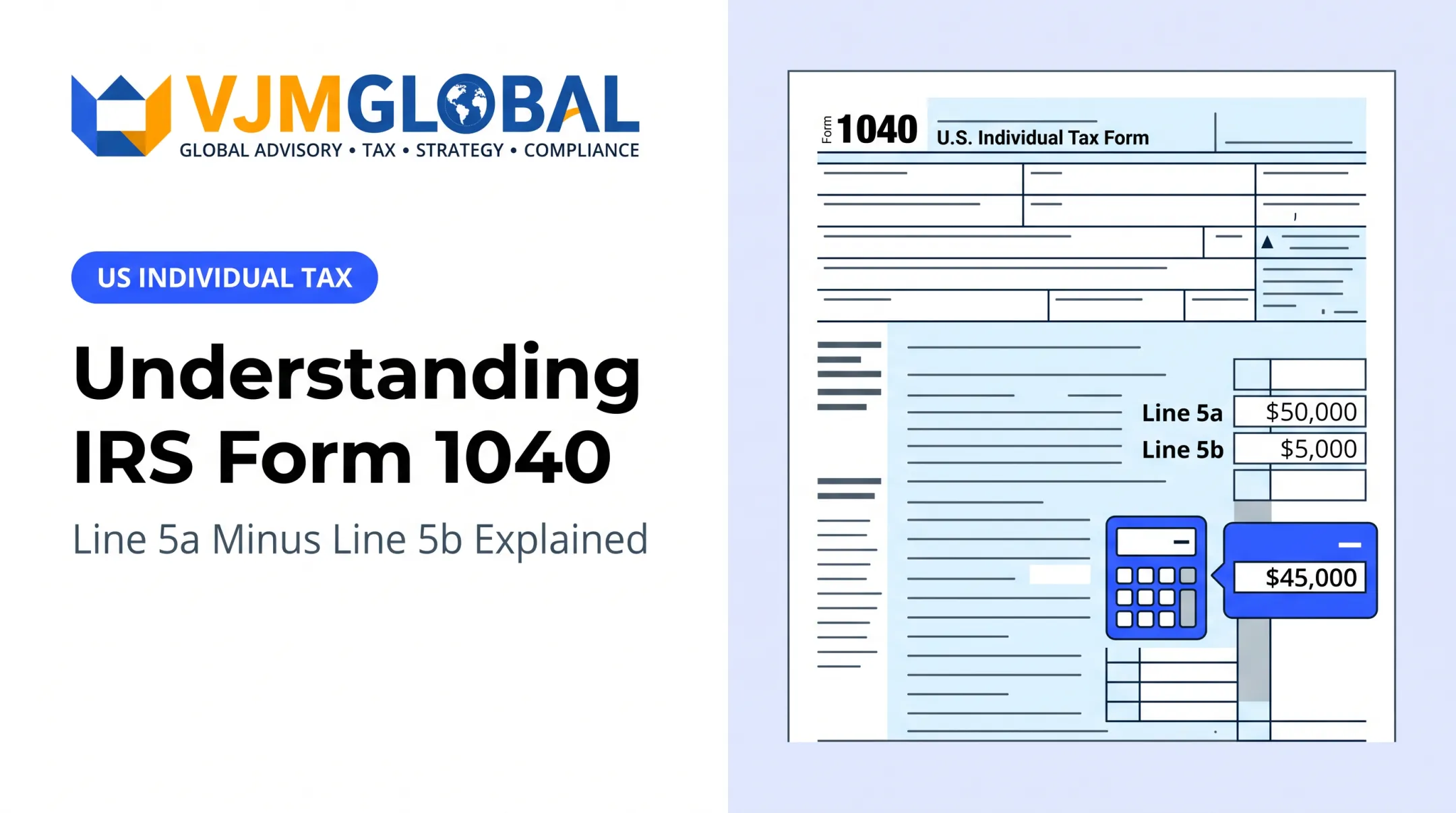
These figures are hypothetical. Say you receive a pension 1099-R showing Box 1 of $12,000, Box 2a of $9,000 and Box 4 of $900, because $3,000 is a return of your after-tax contributions.
- Line 5a: $12,000
- Line 5b: $9,000
- Line 25b: $900
Another 1099-R with a different code or account type may be treated quite differently.
How to Determine the Taxable Amount and Additional Tax
Start with Box 2a, then test it against your records. If Box 2b says the taxable amount was not determined, or the number looks off against your statements, work out the figure yourself using basis records.
Common tax treatments
- Traditional IRA: generally taxable when received, except qualifying rollovers, QCDs and recovery of nondeductible contributions.
- Qualified Roth IRA: tax-free once the five-tax-year period is met and you also meet age 59½, disability, death, or a first-home purchase ($10,000 lifetime limit).
- Nonqualified Roth IRA: possibly partly taxable. Contributions come out first, then conversions, then earnings.
- Direct rollover: not taxable if fully moved into another plan or IRA.
Indirect rollovers
You generally have 60 days to redeposit. Employer-plan payouts to you carry 20% mandatory withholding.
IRS Publication 575 gives an example: a $10,000 distribution with $2,000 withheld leaves $8,000 in hand. You would need another $2,000 from other funds to roll over the full $10,000.

IRAs are generally limited to one IRA-to-IRA rollover per 12 months.
The additional tax
Taxable amounts taken before age 59½ generally face an extra 10% tax, separate from ordinary income tax and from Box 4 withholding. SIMPLE IRA withdrawals in the first two years of participation face 25%.
Exceptions include death, disability, certain medical expenses and substantially equal periodic payments. Claiming one generally means filing Form 5329. If code 1 is correct and the full amount is subject to the tax, you can report it without that form.
If the 1099-R is wrong
- Contact the payer or plan administrator.
- Ask for a corrected form.
- Keep supporting records.
- Do not alter the form yourself.
Special Situations: Rollovers, RMDs, Roth Distributions and State Tax
Required minimum distributions
RMDs are reported as ordinary retirement income on Form 1099-R. The starting age is generally 73, rising to 75 for people born in 1960 or later. A missed RMD generally costs 25% of the shortfall, which can fall to 10% with timely correction.
Compare the form with your plan's RMD records to confirm the amount you must withdraw.
Rollovers and other special cases
A rollover code does not remove the need to report the distribution. You still enter the gross amount and tick the rollover box. Other cases depend on the code and account history:
- QCDs: direct payment from an IRA trustee to a charity, from age 70½, with a $108,000 annual exclusion limit for 2025.
- Inherited accounts: many beneficiaries must empty the account by the end of the tenth year after death. Spouses and some other eligible beneficiaries have different rules.
- Roth distributions: qualified withdrawals are generally tax-free; use Box 2a and the distribution code to see whether any earnings are taxable.
- Disability and death (codes 3 and 4): these may waive the extra tax, not the income tax.
- Plan loan offsets (code M): can often be rolled over by the return due date, including extensions.

State tax
Boxes 14 to 19 show state and local withholding and distributions. Treat them as a starting point only. Illinois, for example, allows a subtraction for qualifying retirement income that appears on federal lines 4b and 5b. If your form shows a US state amount, check that state's rules.
Australian residents should also consider how their home tax system treats the same payment. That analysis is separate from the US return.
Common Mistakes and a Form 1040 Filing Checklist
Frequent errors
- Entering Box 1 as taxable without checking Box 2a
- Leaving out a nontaxable distribution
- Reporting Box 4 withholding as income
- Ignoring the Box 7 code
- Skipping a rollover
- Missing the early-distribution tax
TIGTA flagged 2,832,911 taxpayers for tax year 2021 who potentially took early distributions without paying the extra tax or claiming an exception.
Pre-filing checklist
- Collect every 1099-R.
- Confirm your name and the account type.
- Compare Boxes 1, 2a, 2b, 4 and 7 with your statements.
- Confirm line placement against the IRS Form 1040 instructions.
- Check state reporting.

Attachments and records
On a paper return for 2025, attach Form 1099-R if federal tax was withheld. E-filed returns carry the same information electronically. Keep 1099-Rs, Forms 8606 and statements until all distributions from the account are made.
Missing, duplicate or late forms
- Contact the payer first. If it is still unresolved by the end of February, the IRS can help.
- Form 4852 can substitute for a form you cannot get in time to file.
- If you receive information after filing that differs from your return, file Form 1040-X.
- For a CP2000 notice, respond using the notice. You generally have 30 days, or 60 if you live outside the US.
Taxpayers with complex rollovers, inherited accounts, cross-border circumstances or unresolved 1099-R discrepancies may consider VJM Global's US individual tax return preparation, delivered by US-compliant professionals. Pricing depends on the scope of work.
Frequently Asked Questions
Where do I report 1099-R income on Form 1040?
IRA distributions go on lines 4a and 4b. Pension and annuity distributions go on lines 5a and 5b. Federal withholding goes on line 25b. Confirm against the current year's form.
Do I have to report 1099-R income on my tax return?
Generally yes, even if some or all of it is nontaxable, such as a direct rollover or qualified Roth distribution. You report the gross amount and show the taxable portion separately.
How do I determine the taxable amount on Form 1099-R?
Start with Boxes 2a and 2b, the Box 7 code, the account type and your basis records. Special transactions may need professional review.
Do I need to attach Form 1099-R to my tax return?
On a 2025 paper return, attach it if federal tax was withheld. E-filing transmits the data electronically. Keep your copy either way.
What are common mistakes to avoid with Form 1099-R?
Confusing gross and taxable amounts, reporting withholding as income, mishandling rollovers, ignoring distribution codes, and not requesting a correction when the form is wrong.
What are the distribution codes on Form 1099-R?
Box 7 codes identify the distribution type, such as early, normal, rollover, Roth, disability or death. They can affect taxability, extra tax and whether Form 5329 is needed.