The right place depends on three things: the type of income, whether the dependent must file, and whether the parent can make a limited election under IRS rules. This guide walks through that decision path: classify the income, find the Dependents section, test the filing requirement, and check Form 8814 or Form 8615. The figures below are US dollar amounts from the 2025 tax year, so confirm them against the current IRS forms before filing.
Key Takeaways
- Dependent wages and other earned income generally go on the dependent's own return.
- The Dependents section of the parent's Form 1040 records the claim, not the income.
- Eligible parents may use Form 8814 for certain child interest and dividends, or Form 8615 for larger unearned income.
- Check current-year thresholds and line numbers in the latest IRS instructions.
Does a dependent's income go on the parent's Form 1040?
Not automatically. Claiming someone as a dependent and reporting their income are separate questions.
Say a 16-year-old earns $6,000 at a café and has $200 of bank interest. The parent claims the teen as a dependent, but the wages sit on the teen's own return if one is required.
IRS Publication 501 states that a child's earnings for services belong in the child's gross income, even if the parent receives the money.
Earned versus unearned income
Earned income includes:
- Wages, salaries and tips
- Professional fees and other pay for work performed
- Self-employment income
- Taxable scholarships (for filing-requirement and standard-deduction purposes only)
Unearned income includes:
- Interest and dividends
- Capital gains and capital gain distributions
- Certain trust distributions
- For filing-table purposes, unemployment compensation, taxable Social Security, pensions and annuities
Why unearned income can take a different path
Earned income stays with the dependent. Unearned income has two special routes.
- A parent may elect to report a child's interest and dividends on their own return using Form 8814
- A child with larger unearned income may owe tax at the parent's rate through Form 8615 (the kiddie tax)

Both paths depend on the tax year and the child's full facts, so use current IRS thresholds rather than old amounts.
Where to report dependent information and income on Form 1040
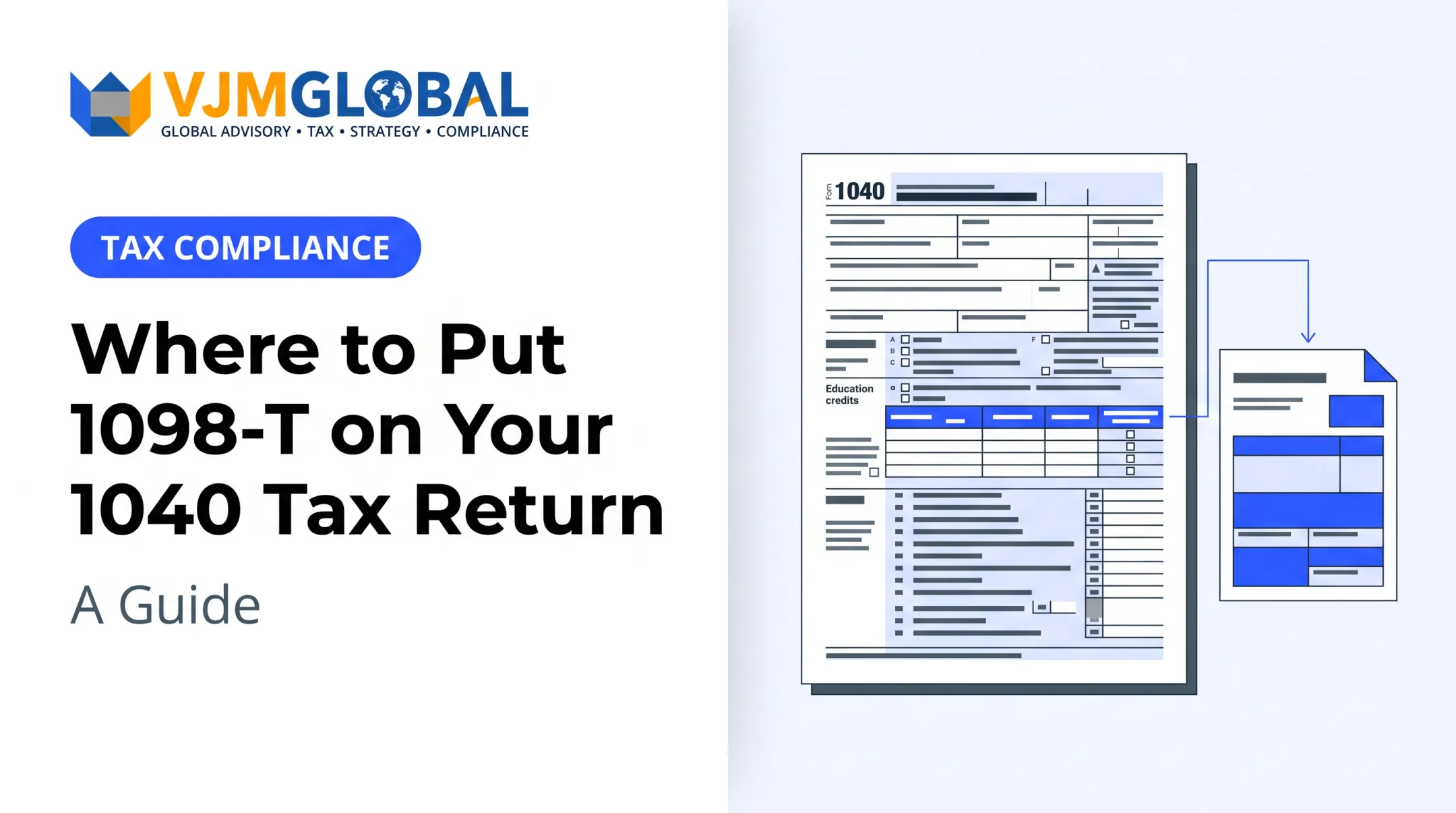
The Dependents section on the parent's Form 1040
On the 2025 Form 1040, the Dependents section is on page 1. It asks for:
- First and last name
- Social Security number
- Relationship to the taxpayer
- Whether the dependent lived with you more than half the year
- Full-time student and disability checkboxes
- Credit checkboxes (such as the child tax credit)
It has no box for the dependent's wages, interest or dividends. It records the claim and credit eligibility only.
When the parent elects to report eligible child income
If the child qualifies, the parent completes Form 8814 and attaches it to their return. They do not type the child's income into a Form 1040 field.
For 2025, the Form 8814 instructions require that:
- The child is under 19 at year-end, or under 24 if a full-time student
- The child's only income is interest and dividends (including capital gain distributions and Alaska Permanent Fund dividends)
- The child's gross income is under $13,500
- The child would otherwise have to file, and does not file a joint return
- No estimated tax payments were made for the child, and no 2024 overpayment was applied to 2025
- No federal income tax was withheld from the child's income
Where the amounts land on the parent's return (2025 form):
- Form 8814 line 9 flows to Form 1040 lines 3a and 3b
- Line 10 goes to Schedule D line 13 or Form 1040 line 7a
- Line 12 goes to Schedule 1 line 8z
- Line 15 goes to Form 1040 line 16, with the Form 8814 box checked
Line numbers change between years, so check the current form. The election can also raise the parent's adjusted gross income and affect deductions or credits. The instructions note the parent may owe up to $135 more tax in some cases.
When the dependent files a separate Form 1040
The dependent reports their own wages, interest, dividends, capital gains and self-employment income on a separate return. They use their Forms W-2 and 1099 plus any needed schedules. A parent can still claim the child as a dependent while the child files, provided the dependency tests are met.
On the child's own 2025 Form 1040, line 12a asks whether someone can claim them as a dependent. Form 8615, when it applies, is attached to the child's return, not the parent's.
When must a dependent file a separate tax return?
Using the 2025 IRS Publication 501 table for a single dependent under 65 and not blind, a return is required if any of these is true:
| Test | 2025 threshold |
|---|---|
| Unearned income | More than $1,350 |
| Earned income | More than $15,750 |
| Gross income | More than the greater of $1,350 or earned income (up to $15,300) plus $450 |
Other ages and filing statuses have different thresholds.
Earned income
Even below the threshold, a dependent should file if tax was withheld and a refund is possible.
Self-employment follows different rules. Net earnings of $400 or more require a return and trigger Schedule SE, regardless of age. Form 8814 cannot be used for self-employment income.
Unearned income
Interest, ordinary dividends, capital gain distributions and trust income all count towards the $1,350 test. If the child meets the Form 8814 conditions, the parent may choose that route instead of a separate child return.
Mixed earned and unearned income
Mixed income calls for the gross-income test rather than checking one category. The dependent standard deduction is generally the greater of $1,350 or earned income plus $450, capped at the regular standard deduction ($15,750 for 2025). Use the dependent filing worksheet in Publication 501.

Special situations
- Capital gains and gain distributions are unearned income. Form 8814 covers only the distributions.
- Custodial accounts (UTMA/UGMA) are generally taxed to the child, except income used to meet a parent's legal support obligation, which is taxed to the parent.
- Estimated payments, withholding or a joint return each rule out Form 8814.
- A child who cannot sign still files a return: a parent or guardian signs the child's name with the parent-for-minor-child wording. It remains the child's return.
Forms and decision process
Form 8814 lets eligible parents report a child's limited interest and dividend income on their own return. It cannot be used for wages or other kinds of dependent income.
Form 8615 computes the child's tax when unearned income exceeds $2,700 (2025). Per the Form 8615 instructions, the child must also:
- Be required to file
- Have at least one living parent at year-end
- Not file a joint return
- Meet the age test: under 18; age 18 with earned income no more than half of support; or age 19–23 and a full-time student with earned income no more than half of support
The excess is taxed at the parent's rate if that is higher. Note the two different numbers: $1,350 is the filing threshold, and $2,700 is the Form 8615 threshold.

For married parents filing jointly, use the joint return. If they file separately, use the parent with greater taxable income. Divorced or separated parents have their own custodial-parent rules.
A simple decision sequence:
- Identify whose name and number are on each income document.
- Classify the income as earned or unearned.
- Test whether the dependent must file.
- Check Form 8814 eligibility, including the parent selection rules.
- Attach the correct forms: Form 8814 to the parent's return, or Form 8615 and schedules to the child's.

The IRS Interactive Tax Assistant ("Do I need to file a tax return?") can help with step 3.
Common mistakes and record checklist
Two errors come up most often:
- Entering a dependent's income on the parent's return just because the dependent appears in the Dependents section
- Reporting the same income on both returns
Gather these before preparing either return:
- Form W-2 and withholding details
- Forms 1099-INT, 1099-DIV, 1099-B and 1099-NEC (and 1099-K if relevant)
- Brokerage and custodial account statements
- Prior-year returns
Keep supporting records. The IRS generally has three years from filing to assess.
Custody rules create another frequent mix-up. For separated or divorced parents, the custodial parent is generally the one the child lived with for more nights. The custodial parent can release the claim with Form 8332. That release does not change which parent's return is used for Forms 8814 or 8615.
When professional review makes sense
Get professional help when any of these apply:
- Mixed earned and unearned income
- Custodial accounts or trust distributions
- Self-employment income
- Possible kiddie tax
- Divorced-parent situations
- Doubt about Form 8814 eligibility
VJM Global prepares US individual returns (Form 1040 and 1040-NR) and federal and state filings, with a team of CPAs and US-compliant professionals. That support helps families with cross-border income or accounts, where dependent-reporting rules are easy to misapply.
Frequently Asked Questions
Where is the dependent box on a 1040?
It is the Dependents section on page 1 of the Form 1040. It is used to claim the person and note credit eligibility, not to enter their income. Check the current form layout each year.
How do I report my child's interest income on my tax return?
Eligible parents can use Form 8814 for certain child interest and dividends. Otherwise the child files a separate return. Check the latest eligibility rules first.
How much can my child earn and still be claimed as a dependent?
A qualifying child has no gross-income test, but must not provide more than half their own support. A qualifying relative must have gross income under $5,200 (2025). Verify the current-year amount.
Does my dependent's earned income go on my tax return?
Generally no. Earned income belongs on the dependent's own return. Form 8814 covers only limited unearned income, not wages.
When does a dependent child need to file a separate tax return?
When earned, unearned or combined gross income passes the thresholds, or net self-employment earnings reach $400. A child should also file if withholding could produce a refund.