Introduction
Short answer: regular Roth IRA contributions don't appear on Form 1040. You make them with after-tax dollars, so there is no deduction to claim. The IRS says plainly, "You don't report Roth IRA contributions on your return."
That simple rule trips people up because conversions, withdrawals, excess contributions and the Saver's Credit all do trigger reporting.
This guide is for Australian-based taxpayers with U.S. federal filing obligations. U.S. reporting is separate from how any contribution is treated on an Australian return, so we cover only the U.S. side here.
Key Takeaways
- Regular Roth contributions have no deduction or entry on Form 1040.
- Your custodian reports them on Form 5498, which you keep rather than attach.
- Report conversions, withdrawals, excess contributions, and the Saver's Credit separately.
- Check current-year IRS instructions and keep contribution records permanently.
Where to Report IRA Contributions on Form 1040
Here is what appears on the federal return and what doesn't:
| Transaction | Form 1040 treatment |
|---|---|
| Regular Roth contribution | No deduction or contribution entry |
| Deductible traditional contribution | Adjustment to income via Schedule 1 |
| Nondeductible traditional contribution | Form 8606 |
| IRA distributions | Form 1040, lines 4a and 4b |
Roth IRA contributions
A regular Roth contribution doesn't reduce adjusted gross income or taxable income. So it never shows up as an IRA deduction on Schedule 1.
It still matters in other ways:
- Eligibility checks against your modified AGI
- Annual limit tracking: $7,500 for 2026 ($8,600 at age 50+), across all traditional and Roth IRAs
- Keeping records for future distribution calculations
- Saver's Credit eligibility, claimed separately if you qualify
Traditional IRA contributions
Deductible traditional contributions work differently. In the 2026 draft forms, the deduction sits on Schedule 1, line 20, flows into line 26, and carries to Form 1040, line 10. Those are draft references, so confirm the final line numbers before filing.
Contributions versus distributions and conversions
A Roth conversion or withdrawal is a different transaction. It may generate Form 1099-R, Form 8606 or other reporting, even though a regular contribution doesn't.
Take a simple example. In one year, you contribute $7,500 to a Roth IRA and also convert $20,000 from a traditional IRA. The contribution gets no Form 1040 entry. The conversion is reported through Form 1099-R and Form 8606, and part of it may be taxable.

How to Claim a Traditional IRA Deduction
The most common mix-up is treating traditional IRA contributions the same as Roth contributions on your return. A traditional IRA contribution can be fully deductible, partially deductible or nondeductible. Deductibility depends on filing status, compensation, workplace-plan coverage and modified AGI.
A deductible contribution is an adjustment to income, not an itemized deduction. You get it whether you take the standard deduction or itemize.
For 2026, the deduction phase-out ranges for those covered by a workplace plan are:
| Filing status | MAGI phase-out |
|---|---|
| Single, covered at work | $81,000–$91,000 |
| Married filing jointly, contributor covered | $129,000–$149,000 |
| Married filing jointly, only spouse covered | $242,000–$252,000 |
| Married filing separately, covered | $0–$10,000 |
Regular Roth contributions have their own income limits. For 2026, they phase out at $153,000–$168,000 for single filers and $242,000–$252,000 for joint filers.
Nondeductible traditional contributions may require Form 8606 to establish after-tax basis. That rule does not apply to a regular Roth contribution.
When IRA Type or Transaction Changes the Reporting
Roth conversions and backdoor Roth transactions
Moving money from a traditional IRA to a Roth IRA is a conversion, not a contribution. It can create taxable income depending on your pretax and after-tax IRA basis.
- Form 1099-R reports the conversion. The custodian may leave the taxable amount undetermined.
- Form 8606 is where you calculate the taxable part.
- The pro rata rule counts all your traditional, SEP and SIMPLE IRA balances at December 31, not just the account you converted.

Roth IRA withdrawals
Withdrawals follow an ordering rule:
- Regular contributions first (not included in gross income)
- Conversions next, earliest year first
- Earnings last
Earnings are different. A distribution is qualified after a five-year period plus an event such as reaching age 59½, disability, death or a first-home purchase (up to a $10,000 lifetime limit).
Otherwise, earnings may be taxable and subject to a 10% additional tax reported on Form 5329. Each conversion has its own five-year clock for that 10% tax. Verify current exceptions in IRS Publication 590-B.
Excess Roth IRA contributions
Going over the annual limit triggers a 6% tax for every year the excess stays in the account, reported on Form 5329. You can avoid it by withdrawing the excess plus attributable earnings by the return due date, including extensions. The earnings remain reportable.
Recharacterizations and contribution-year errors
A recharacterization moves a contribution, with earnings or losses, to the other IRA type by trustee-to-trustee transfer. It generally must happen by the return due date including extensions. A conversion made after 2017 can't be recharacterized.
Also confirm which tax year your custodian assigned to a contribution made between January and April. Ordinary contribution deadlines don't extend with a filing extension.
Australian superannuation and cross-border considerations
An Australian superannuation contribution is not automatically a U.S. Roth IRA contribution. Don't enter it on Form 1040 as one. The IRS defines an IRA as a trust or custodial account set up in the United States.
Other issues can apply to Australian residents, including:
- Foreign earned income exclusions don't count as IRA compensation, but are added back for Roth MAGI
- Possible Form 8938 and FBAR reporting for foreign retirement accounts
- Treaty and saving-clause questions between the U.S. and Australia
- Australian residents filing a U.S. return generally get an automatic two-month extension to June 15, though interest runs from the regular due date

Get separate professional advice on how U.S. and Australian rules interact.
Other IRA Tax Forms You May Need
Form 5498
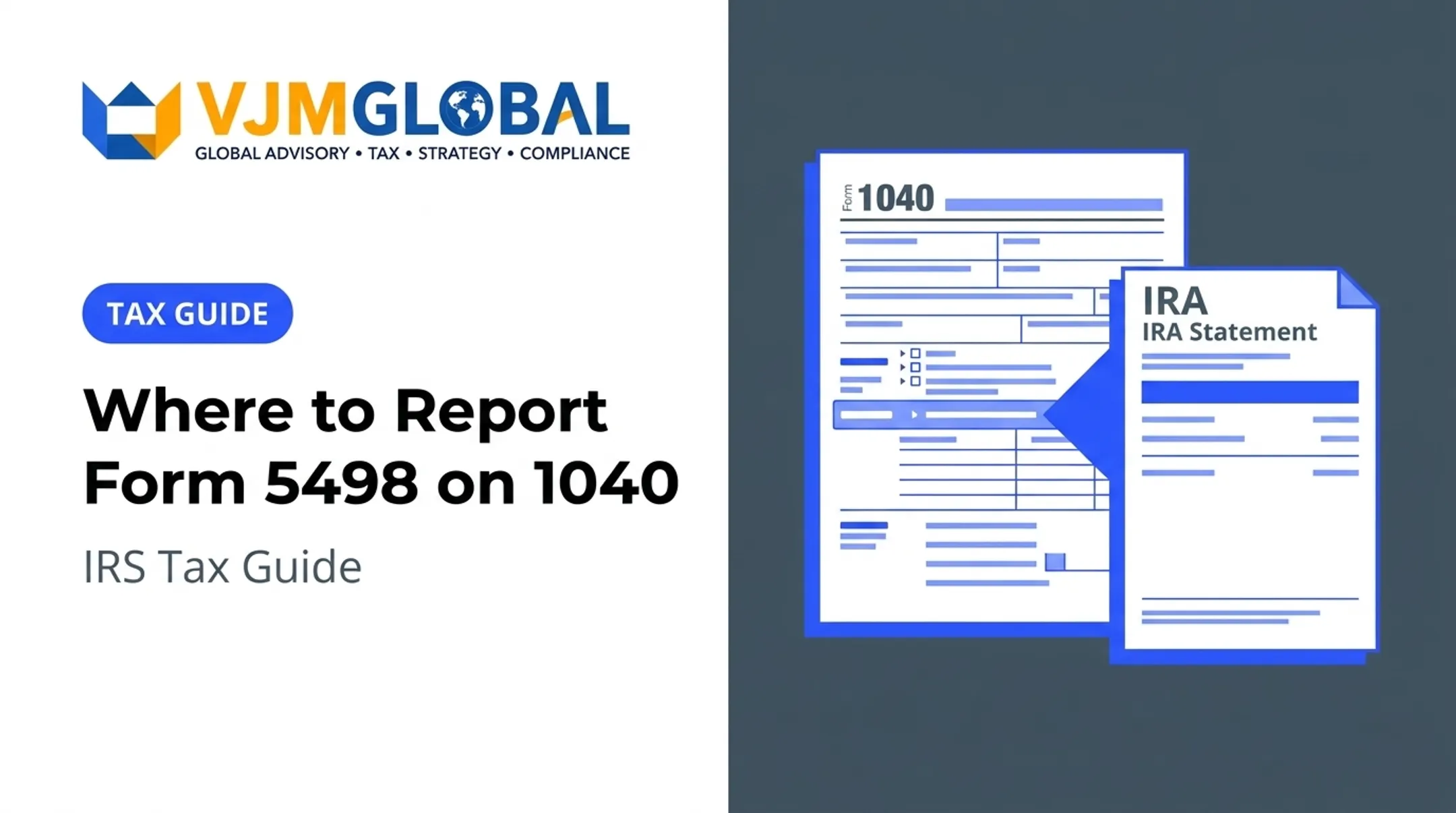
Your IRA custodian reports contributions to the IRS on Form 5498. Traditional contributions appear in box 1, conversions in box 3, and Roth contributions in box 10.
The IRS labels your copy "keep for your records." You don't attach it to your return. Compare it with your own records and contribution-year instructions, since it is useful proof of your contribution history.
Forms 8606, 1099-R, 5329 and 8880
- Form 8606: nondeductible basis, conversions and certain Roth distributions
- Form 1099-R: distributions and conversions
- Form 5329: additional taxes, excess contributions and exceptions
- Form 8880: the Saver's Credit, at 50%, 20% or 10% of up to $2,000 in contributions, capped at $1,000 per person
Receiving one of these forms doesn't automatically make a transaction taxable. Reconcile the form with what actually happened and with current IRS instructions.
A Practical Form 1040 Filing Checklist
Identify the transaction
Before entering anything, decide what it was: a regular Roth contribution, traditional contribution, conversion, rollover, recharacterization, withdrawal or excess contribution.
Confirm records and current instructions
Gather:
- Custodian statements and contribution confirmations
- Form 5498, when available
- Form 1099-R
- Prior Forms 8606
- Proof of the designated tax year
Keep basis records until all distributions are made. Confirm final IRS line numbers and deadlines before you file, since draft forms are not valid for filing.
Know when to seek help
Common errors include:
- Claiming a deduction for a Roth contribution
- Filing Form 8606 for a regular contribution alone
- Overlooking a conversion
- Attaching Form 5498 to the return
VJM Global's U.S.-compliant tax professionals can review Form 1040 and related IRA reporting for Australian-based taxpayers with U.S. filing obligations or more complex cross-border circumstances.
Frequently Asked Questions
Do you report Roth IRA contributions on 1040?
Generally no. Regular contributions aren't entered as a deduction. Conversions, distributions, excess contributions and an eligible Saver's Credit may need separate reporting.
Where do IRA contributions go on a tax return?
Deductible traditional contributions go on Schedule 1 and carry to Form 1040. Nondeductible ones use Form 8606. Regular Roth contributions aren't reported. Verify current-year lines.
Can I deduct Roth IRA contributions on my tax return?
No. They are made with after-tax funds. The Saver's Credit is a separate matter if you qualify.
Do I need to file Form 5498 with my tax return?
No. The custodian sends the information to the IRS. You keep your copy for your records.
How are Roth IRA conversions reported on a tax return?
Form 1099-R reports the conversion, and Form 8606 usually calculates the taxable portion based on your IRA basis. Check current IRS rules.
Do I report a Roth IRA withdrawal on my tax return?
It depends. Withdrawing regular contributions is generally not taxable. Converted funds or earnings may require Form 8606, Form 5329 or Form 1040 reporting.