For entrepreneurs outside the US, including many Indian founders eyeing the American market, Rhode Island is increasingly a practical entry point. It doesn't require US residency, and its formation costs are lower than several neighboring states.
This guide breaks down the entire process: choosing a structure, filing with the Secretary of State, registering for taxes, and staying compliant year after year.
Key Takeaways
- LLC filing costs $150; corporation filing costs $230 minimum with the Rhode Island Secretary of State
- No US residency is required, but you must appoint a registered agent with a physical Rhode Island address
- Rhode Island has no general state business license, though industry and local permits often apply
- Every LLC and corporation owes a $400 minimum annual tax, regardless of profit
- An annual report ($50) is due between February 1 and May 1 every year to stay in good standing
Why Start a Business in Rhode Island?
Rhode Island sits between Boston and New York, giving businesses access to two of the largest metro economies in the Northeast without the higher formation and compliance costs those states carry.
Forming an LLC or corporation in Rhode Island still gives owners the standard US benefits of liability protection and, for most LLCs, pass-through taxation—personal assets stay separate from business debts, and profits are taxed once on the owner’s return.
Other practical advantages include:
- Shorter supply chains and simpler logistics across compact New England geography
- An educated workforce anchored by universities like Brown and URI
- Lower cost of living than Boston or New York, which helps with hiring
Non-US residents can legally form and own a Rhode Island business. You do not need to live in the state—or even in the country—to hold LLC membership interests or corporate shares. Rhode Island imposes no residency rule on members, managers, or directors.
The one non-negotiable requirement is a registered agent physically based in Rhode Island.
Step-by-Step Guide to Starting a Business in Rhode Island
Step 1: Validate Your Business Idea
Before filing anything, confirm there's demand. Research your target customers, check what competitors charge, and estimate whether the numbers actually work. This step costs nothing, but skipping it is the most common reason new businesses stall in year one.
Step 2: Choose Your Legal Structure
Your structure decision affects liability, taxes, and paperwork for years to come.
| Structure | Liability Protection | Taxation | Paperwork |
|---|---|---|---|
| Sole Proprietorship | None | Pass-through | Minimal |
| Partnership | None (general partners) | Pass-through | Low |
| LLC | Yes | Pass-through by default | Moderate |
| Corporation | Yes | Double taxation (C-corp) unless S-corp elected | Highest |
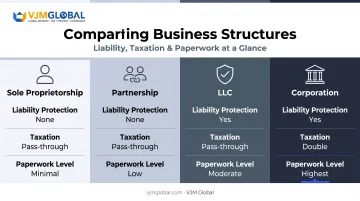
Most foreign founders and small operators choose an LLC for the liability shield combined with simpler compliance. Corporations make more sense if you're planning to raise venture funding or issue stock.
Step 3: Name Your Business
Search the RI Corporate Database to confirm your desired name isn't already taken. If you're not ready to file yet, you can reserve the name for 120 days through the Secretary of State's office—confirm the current reservation fee on their fee schedule.
Step 4: File Your Formation Documents
This is the step that legally creates your business.
- LLCs file Articles of Organization for $150
- Corporations file Articles of Incorporation for $230 minimum (for fewer than 75 million authorized shares)
Both must appoint a registered agent with a Rhode Island street address available during business hours. P.O. boxes and virtual addresses don't qualify.
Filings go through the Rhode Island Secretary of State's Business Services division.
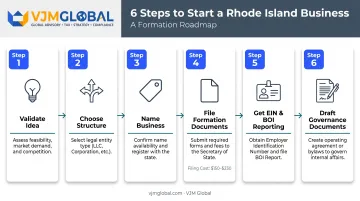
Step 5: Get Your EIN and Handle BOI Reporting
Apply for a federal Employer Identification Number (EIN) through the IRS. Foreign applicants without an SSN or ITIN can enter "foreign" on IRS Form SS-4 and apply by phone, fax, or mail instead of online. Plan to apply 4-5 weeks before you need the number.
For beneficial ownership (BOI) reporting, current FinCEN rules exempt companies formed under US law, including Rhode Island LLCs and corporations, regardless of foreign ownership. BOI filing now applies mainly to foreign entities registering to do business in the US, not to domestically formed companies.
Step 6: Draft Internal Governance Documents
Rhode Island doesn't legally require an LLC operating agreement or corporate bylaws, but you should draft one anyway. These documents define ownership splits, decision-making authority, and what happens if a partner exits. Banks and investors often ask to see them too.
Licenses, Permits, and Location Compliance
Rhode Island has no general statewide business license. Most businesses still need specific permits and local approvals before opening.
If you sell taxable goods or services:
- Register for a seller's permit through the Division of Taxation's BAR (Business Application and Registration) system
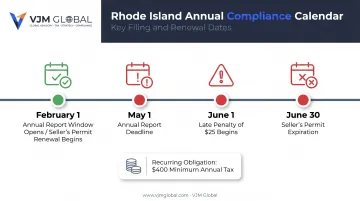
- Renew every year by February 1 — permits expire each June 30
If you're in a regulated industry:
- Check licensing through the Department of Business Regulation for healthcare, professional services, and skilled trades
- Confirm requirements if you work as a contractor, commercial roofer, home inspector, or water filtration/well-drilling specialist
- Use the DBR's license lookup tool to see what applies to your business
Before finalizing a location:
- Check your city or town's zoning rules — some activities are limited to specific zones
- Confirm whether your municipality requires a local business license or occupancy permit
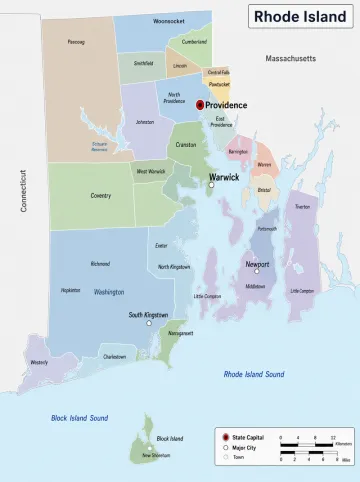
Rules differ across Providence, Warwick, and smaller towns, so verify zoning and local permits before you sign a lease.
Understanding Rhode Island Taxes and Ongoing Compliance
Formation is only the start. Rhode Island expects ongoing tax registration, minimum entity tax, and annual filings—and missing them can put your company in bad standing.
Sales Tax and State Registration
Rhode Island charges a flat 7% sales and use tax, and unlike many states, there are no local add-ons to worry about. Register through the Division of Taxation once you know you'll be making taxable sales.
The $400 Minimum Tax
Every LLC and corporation, whether it turns a profit or not, owes a $400 minimum annual tax. Corporations pay 7% of Rhode Island-apportioned net income or $400, whichever is higher. This is a flat cost of doing business in the state, separate from any income tax owed.
Pass-Through vs. Double Taxation
- LLCs and sole proprietorships pass profits through to the owner's personal tax return, avoiding entity-level tax (aside from the $400 minimum)
- C-corporations face taxation at the corporate level, then again when dividends reach shareholders
- S-corporations can elect pass-through treatment, though this option isn't available to non-US shareholders
Annual Report Filing
Every LLC and corporation must file an annual report between February 1 and May 1, with a $50 fee. Miss the window and a $25 late penalty kicks in starting June 1. Skip the filing repeatedly and the state can place your business in bad standing, blocking bank accounts, contracts, and other filings until you catch up.
Workers' Compensation
If you hire employees in Rhode Island, arrange workers' compensation coverage through the Department of Labor and Training. Confirm the rules for your headcount before you onboard your first hire.
Simplifying Cross-Border Business Setup with VJM Global
Filing paperwork with a state agency you've never worked with, in a country you may have never visited, is where many Indian founders stall when entering the US market. The business idea is rarely the blocker—compliance mechanics are.
VJM Global works with founders across India, the UAE, the UK, and other markets who are setting up entities in the United States. The firm's US formation support covers LLCs, C-corporations, S-corporations, and branch registrations, filed with the relevant Secretary of State.
Practically, that means help with:
- Choosing between an LLC and a corporation based on your ownership structure and growth plans
- Appointing a registered agent and preparing Articles of Organization or Incorporation
- Applying for an EIN with the IRS, including the process required for applicants without an SSN or ITIN
- Registering for state and local tax obligations, including sales tax
- Managing ongoing compliance, including federal, state, and local filings on Forms 1120, 1120-S, and 1065
VJM Global has built its US practice on 30+ years of firm experience and a team of CPAs, Chartered Accountants, and professionals trained in US accounting standards and tax legislation.
For a founder launching a Rhode Island entity from Noida, Mumbai, or Bengaluru, that cross-border familiarity and filing support turns Secretary of State, IRS, and state tax steps into a managed process instead of months of portal guesswork.
Frequently Asked Questions
How much does it cost to start a business in Rhode Island?
An LLC costs $150 to file, while a corporation costs $230 minimum. Add potential costs for name reservation, industry-specific licenses, and a registered agent service if you're not using your own address.
How much does it cost to have an LLC in Rhode Island?
Beyond the $150 filing fee, expect a $50 annual report each year and a $400 minimum annual tax, regardless of whether the LLC turns a profit.
Do I need a business license in Rhode Island, and what does it cost?
There's no statewide general license, so requirements and fees vary by industry and municipality. Check the Department of Business Regulation and your local city or town for permits specific to your business type.
How do I register a small business in Rhode Island?
Choose a legal structure, file your formation documents with the Secretary of State, then register with the Division of Taxation for any applicable sales or employer taxes.
How do I officially register an LLC in Rhode Island?
File Articles of Organization with the Secretary of State for $150, and appoint a registered agent with a physical Rhode Island address before submitting.