This guide is for Australian company directors, finance teams and businesses with cross-border operations. It covers deductions versus offsets, common expenses, R&D and asset incentives, entity considerations, records and compliant planning.
Rates and thresholds change. Confirm every figure against current ATO guidance and legislation before you lodge.
Key Takeaways
- A deduction cuts taxable income; an offset cuts tax payable.
- Every claim needs a business nexus, correct timing and records.
- Turnover tests differ: 25% rate, $20,000 write-off and R&D refunds each use their own.
- Never claim private, capital, duplicated or undocumented costs.
How Corporate Tax Breaks Work in Australia
What is a corporate tax break?
Australian corporate tax law uses several mechanisms:
- Deduction: reduces taxable income. Example: rent for a Melbourne office.
- Tax offset: reduces tax payable. Example: the R&D tax offset.
- Rate concession: changes the rate. Example: the lower base rate entity rate.
- Exemption or concession: removes or softens tax on certain amounts, such as franking credits attached to exploration credits.
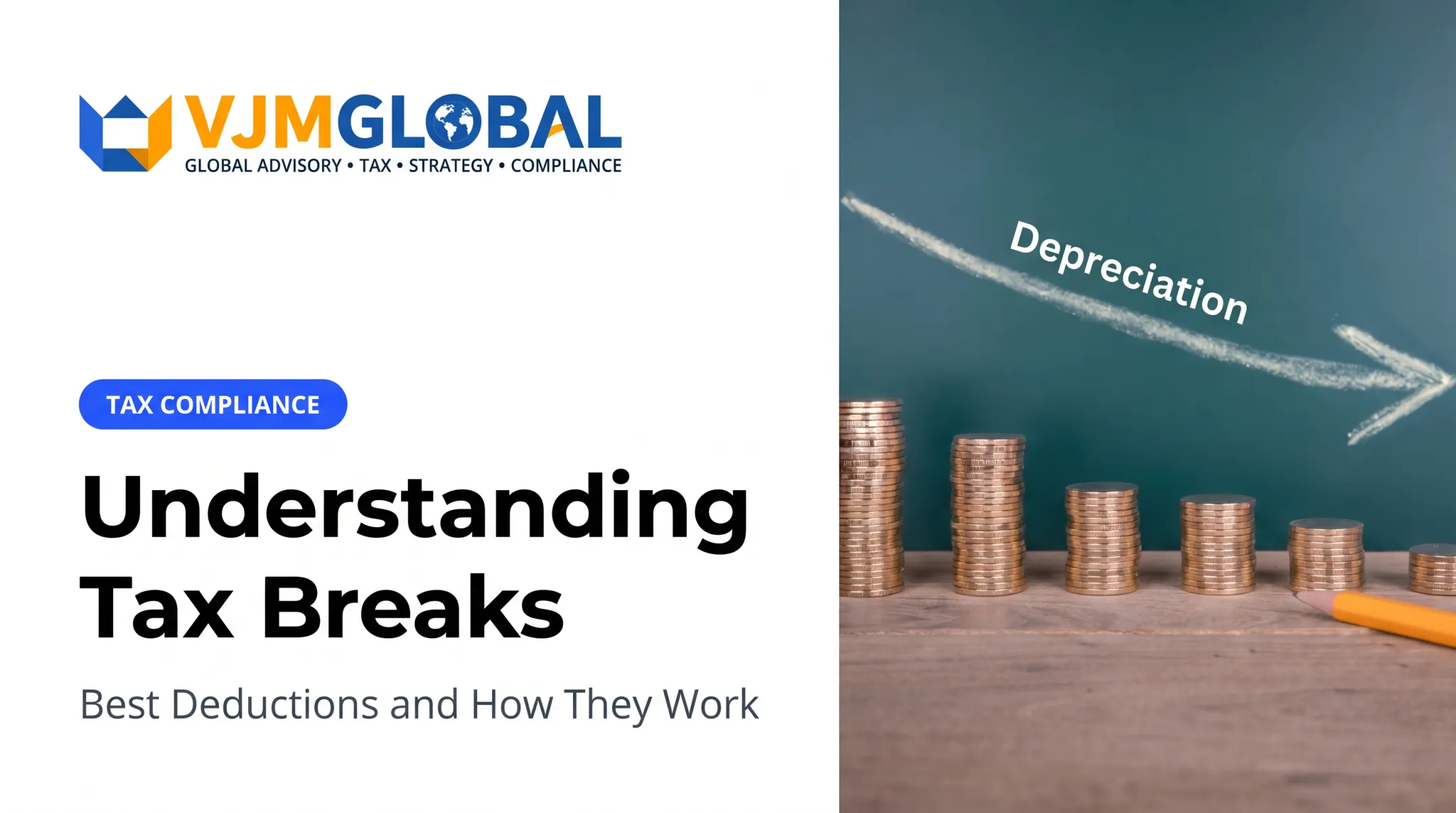
- Deferral: moves the deduction or liability to another year, such as depreciation spread over an asset's life.
Under the ITAA 1997, taxable income is assessable income minus deductions (s 4-15). Income tax is taxable income multiplied by the applicable rate, less offsets. Refundability depends on the offset.
What determines the value of a tax break?
The benefit depends on:
- Entity type and residency
- Aggregated turnover and income mix
- Whether the item is revenue or capital
- When the expenditure occurs
Separate permanent savings from timing benefits. Claiming an asset over several years instead of immediately changes cash flow, not the total deduction. Don't treat the two as the same thing.
Common Corporate Tax Deductions in Australia
Ordinary operating expenses
Potentially deductible costs include wages, employer super, rent, utilities, insurance, advertising, software, professional fees, repairs and business travel. Operating expenses are generally deductible when incurred.
Key rules:
- Only the business portion of mixed-use costs is deductible, on a fair and reasonable basis.
- Super contributions count when the fund receives them, not when you initiate payment.
- From 1 July 2026, the super guarantee charge is deductible when paid. Penalties and interest remain non-deductible.
- Businesses under $50m aggregated turnover can use the 12-month prepayment rule where conditions are met.
- Failing PAYG withholding or reporting obligations on worker payments can deny the deduction.
Being deductible doesn't settle the year of deduction or the deductible proportion.
Capital expenditure, depreciation and asset write-offs
Long-term assets usually fall under capital allowance rules, not the ordinary expense rules. Division 40 covers decline in value of depreciating assets, and Division 43 covers capital works at generally 2.5% or 4%.
| Rule | Key detail |
|---|---|
| Instant asset write-off | Aggregated turnover under $10m; asset cost under $20,000; business-use portion only |
| Simplified pool | Generally 15% first year, 30% after |
| General low-value pool | Assets under $1,000; 18.75% then 37.5% |

According to the ATO's write-off guidance, the $20,000 threshold is permanent from 1 July 2026. The full asset cost determines eligibility, but only the taxable-purpose portion is deductible.
Research and development expenditure
Eligible R&D goes through the R&D Tax Incentive, not just an ordinary deduction. Core activities must generate new knowledge, have an outcome that can't be known in advance, and follow systematic experimentation. Routine commercial work doesn't qualify.
Requirements:
- Register with AusIndustry within 10 months of income year end, before claiming.
- Lodge the R&D tax incentive schedule and complete the company return item (21 A or 21 U).
- Keep records of activities and expenditure.
- Account for clawbacks such as feedstock and government recoupments.
Registering activities doesn't make all related spending eligible.
Interest, borrowing costs and financing expenses
Interest is deductible where borrowing produces assessable income, but purpose matters. Check private use, related-party arrangements and debt/equity characterisation, where substance beats legal labels.
Thin capitalisation limits apply for income years from 1 July 2023:
- Fixed ratio: net debt deductions capped at 30% of tax EBITDA.
- Group ratio: elective, based on the worldwide group.
- Third-party debt test: elective, with strict conditions.
Associates with combined debt deductions of $2m or less keep a de minimis exemption. Related-party financing also needs transfer pricing documentation prepared before lodgment, and the arm's-length principle applies.
Losses and bad debts
Companies can carry tax losses forward indefinitely, but they must pass either:
- the ownership test (more than 50% continuity of voting, dividend and capital rights), or
- the business continuity test.
Losses aren't automatically refundable or transferable between companies. A new carry-back scheme starts for income years from 1 July 2026, with the first refundable claim in the 2026-27 return. Don't confuse it with the expired 2019-20 to 2022-23 scheme.
Bad debts must be written off as bad during the income year and previously included in assessable income. An accounting provision alone isn't a tax deduction. Record when the debt became unrecoverable.
Tax Offsets, Incentives and Concessions Companies May Access
Small-business concessions
Two separate tests apply to company tax treatment:
- Small business entity: aggregated turnover under $10m
- Base rate entity (25%): turnover under $50m and passive income of 80% or less; otherwise the 30% rate applies
The small business income tax offset is for individuals, not companies. The Small Business Energy Incentive (20% bonus deduction) has expired.
R&D and innovation incentives
For companies with aggregated turnover under $20m, the refundable offset is the company rate plus 18.5 points, or 43.5% at a 25% rate.
Other eligible entities get a non-refundable offset of the company rate plus 8.5 points, rising to 16.5 points above a 2% intensity threshold.

Eligibility checklist:
- Technical uncertainty exists
- Systematic experimentation is followed
- Expenditure is eligible
- Records are contemporaneous
- Registration is done on time
Ineligible activity risks an amended claim and repayment.
Environmental, energy and investment incentives
Classify each incentive correctly before relying on it:
- Hydrogen Production Tax Incentive: refundable offset of $2/kg, production from 1 July 2027.
- Critical Minerals Production Tax Incentive: 10% of eligible processing costs, production from 1 July 2027.
- ESIC incentives: benefit eligible investors, not the company itself.
- Cheaper Home Batteries Program: an upfront subsidy, not an income tax offset.
State incentives sit outside federal company income tax, so check them separately.
Foreign income tax offsets and treaty relief
A foreign income tax offset needs foreign tax actually paid on income included in Australian assessable income. At $1,000 or less, no limit calculation applies. That isn't a tax-free allowance. See the ATO's FITO guide.
Check residency, permanent establishment, source rules, CFC rules and transfer pricing. Domestic withholding rates are 10% on interest and 30% on unfranked dividends and royalties. A tax treaty may reduce those rates.
Industry-specific concessions and anti-avoidance limits
Targeted incentives often depend on tightly defined activities or approvals. Part IVA anti-avoidance rules can deny benefits where a scheme’s dominant purpose is a tax benefit, based on its manner, substance and financial effect.
Entity Structure and Cross-Border Considerations
Company versus other business structures
A company is a separate taxpayer with its own return. Sole traders, partnerships and trusts are taxed differently, and they don't share deductions, rates or investor benefits.
Company tax and shareholder tax are separate questions. Franking credits attach company tax to distributions, and Division 7A can turn private payments or loans to shareholders into unfranked deemed dividends. A company isn't automatically more tax-efficient. Weigh these factors before you choose:
- Liability protection and funding options
- Retained profits versus distributions
- Ongoing compliance costs
Australian and foreign companies
An Australian company must have a resident director and a registered office, and it receives an ACN and ABN.
A foreign company with Australian-source income or a permanent establishment faces withholding, treaty and filing considerations.
Expanding abroad adds accounting, tax, payroll and reporting layers. It doesn't simply add a deduction.
S corporations and LLCs are not Australian structures
An S corporation is a US tax classification. An LLC is a US state-law entity. Neither substitutes for a Pty Ltd, public company, trust or partnership. Compare structures using your actual country, residency, ownership and activity.
How to Claim Corporate Tax Breaks and Stay Compliant
Build an eligibility map before spending or filing
Check these first:
- Entity type, residency and tax year
- Aggregated turnover and passive income
- Expense or asset type
- Whether the provision is current, transitional or expired
Confirm against current ATO guidance and legislation before relying on any rate or threshold.
Maintain evidence and records
Keep records for five years. Useful records include:
- Tax invoices and contracts
- Payroll and super records
- Asset registers
- R&D documentation
- Loan agreements
- Foreign tax statements
- Apportionment calculations
A bank payment alone doesn't prove eligibility. Records must tie spending to income-producing activity.
Separate, apportion and time claims
Split private and mixed-purpose costs, and classify capital versus revenue correctly. Watch prepayments, disposals and depreciation timing. Don't claim the same cost twice, for example as an ordinary deduction and in an R&D calculation, unless legislation permits it.
Review filing, payment and audit exposure
The company return has conditional schedules, including R&D, losses and international dealings. PAYG instalments are prepayments, not a break. GST and state payroll tax sit outside company income tax.
Risk areas include private expenses, related-party dealings and missing records. Shortfall penalties start at 25% for lack of reasonable care, 50% for recklessness and 75% for intentional disregard. The ATO reports a 17.4% income tax gap for small business, though this figure covers all entity types.

Use professional support for complex or cross-border claims
Seek review where you have R&D, major capital expenditure, foreign shareholders, related-party debt, losses or multi-country operations.
For Australian businesses expanding into or operating in India, VJM Global supports India business setup, accounting outsourcing, tax compliance and financial reporting. Retain qualified Australian tax advice for Australian obligations.
Work through this sequence:
- Identify possible benefits
- Verify eligibility
- Calculate the claim
- Assemble evidence
- Review the return
- Reassess when law or circumstances change
Frequently Asked Questions
Is company tax still 25%?
Only for base rate entities: aggregated turnover under $50 million and passive income of 80% or less. Other companies pay 30%. Check current ATO guidance.
How much company tax will I have to pay?
Multiply taxable income (assessable income minus deductions and losses) by your company tax rate, then subtract any offsets. Residency and entity treatment also affect the final amount.
What are the best ways to reduce company tax?
Claim genuine deductions, time asset purchases, check available incentives, document R&D, manage losses, and review your structure. Skip artificial arrangements and private expenses.
How do I calculate the marginal relief on Corporation Tax?
Marginal relief is UK terminology. Australian companies use the base rate entity tests and current ATO rules instead.
What items are 100% tax deductible?
No category is automatically fully deductible. Each expense depends on business nexus, private use, capital character, timing and records.
Why is an S Corp better for taxes?
An S corporation is a US classification, not an Australian structure. Your Australian comparison depends on entity type, ownership, residency and distributions.