Timing adds confusion. The 2026-27 financial year runs from 1 July 2026 to 30 June 2027, and the return for it is generally lodged after year-end, with a self-lodgement deadline of 31 October 2027. Some thresholds below are confirmed for 2026-27, and others are the latest published figures from 2025-26. Each is labelled.
This guide covers individual offsets, business incentives, CCTV and security expenses, eligibility checks, records and common mistakes.
Key Takeaways
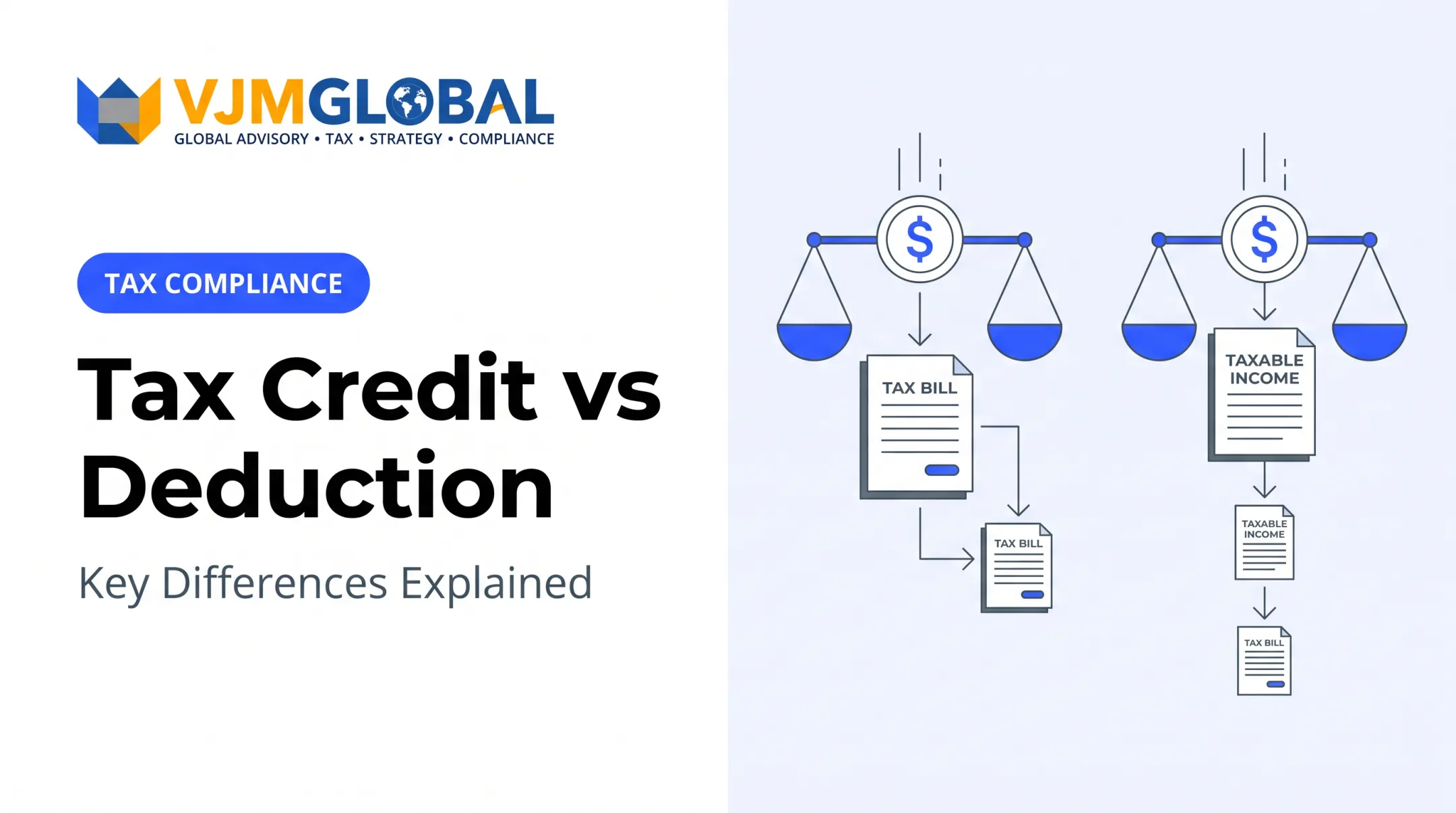
- An offset reduces tax payable; a deduction reduces taxable income.
- Eligibility turns on residency, income, entity type, registration and private use.
- Rules change between years, so confirm figures with the ATO before lodging.
- Keep invoices, statements and calculations for every claim.
What Australian Taxpayers Mean by "Tax Credits"
Offsets, deductions, rebates and GST credits
The ATO uses "tax rebate" and "tax offset" for the same thing. A tax offset reduces the tax you owe. A deduction reduces the income your tax is calculated on.
Outside the income tax return, related credits and GST rules include:
- GST input tax credits recover GST on business purchases and are claimed on the BAS
- Grants and upfront discounts, such as battery discounts, reduce a cost but aren't offsets
- GST registration is generally required at A$75,000 turnover (A$150,000 for non-profits)
- Purchases over A$82.50 including GST need a tax invoice
Refundable or not
Most offsets can only reduce tax to zero. Some are refundable. The ATO cites the private health insurance rebate as an example. Never assume a "rebate" means cash back. Your result also depends on your income, withholding and other offsets.
Individual Tax Offsets and Rebates You May Qualify For
Income, age and residency-based benefits
- Low income tax offset (LITO): the ATO shows a maximum of A$700 for taxable income up to A$37,500, phasing out by A$66,667. Confirm the final amount in the 2026-27 return instructions on the ATO website.
- Seniors and pensioners tax offset (SAPTO): the latest figures are 2025-26: A$2,230 for a single person and A$1,602 per partner in a couple. Confirm the 2026-27 amounts on the ATO website before you lodge.
- Medicare levy reduction: 2025-26 lower and upper thresholds are A$28,011 and A$35,013 for most people. Confirm the 2026-27 thresholds with the ATO before you lodge.
Family, health and personal circumstances
The private health insurance rebate for 2026-27 is income-tested. Single tiers are:
- Base: up to A$105,000
- Tier 1: A$105,001 to A$123,000
- Tier 2: A$123,001 to A$164,000
- Tier 3: above A$164,000, with no rebate
Family thresholds are double, plus A$1,500 per dependent child after the first. Rebate rates also rise with the age of the oldest person covered. The Medicare levy surcharge (0%, 1%, 1.25% or 1.5%) is a surcharge, not an offset.
Other items to check:
- Spouse super contribution offset: up to A$540 on contributions of up to A$3,000 where spouse income is A$37,000 or less (2025-26 instructions).
- Invalid or invalid carer offset: depends on relationship and income tests.
- Family Tax Benefit and Child Care Subsidy are administered separately, not through offsets.
Investment and international credits
Franking credits can be refunded to eligible individuals. If your annual entitlement is under A$5,000, the small-shareholder exemption removes the holding-period test. At A$5,000 or more, shares generally need to be held at risk for 45 days.
For the foreign income tax offset, the ATO's FITO guide explains the A$1,000 simplified method. Excess foreign tax isn't refunded or carried forward, and the income must be in your Australian assessable income.

Education, energy and commonly misunderstood benefits
- Self-education: deductible only if connected to your current work, not a move to a new occupation.
- HELP: indexation applies each 1 June; 2.8% applied in 2026.
- Cheaper Home Batteries: delivered through Small-scale Technology Certificates as an upfront discount, not a tax offset. Availability depends on purchase date, installer and product standards.
Quick checklist for individuals
- Which income year applies?
- Are you a resident for tax purposes?
- Does your income fall within the thresholds?
- Do you have the statements or receipts?
- Has the benefit been claimed elsewhere?
Business Tax Incentives, Credits and Security Expenses
R&D tax incentive
R&D offsets depend on turnover and intensity:
- Under A$20 million aggregated turnover: refundable offset at the company tax rate plus 18.5 percentage points
- Larger entities: non-refundable offset with a premium of 8.5 or 16.5 percentage points, based on R&D intensity
Register activities with AusIndustry within 10 months of year-end. Grants can affect the claim, so check before applying.
Fuel tax credits and GST credits
Claim fuel tax credits on the BAS at label 7D (7C for decreases). For fuel from 3 August 2026 to 30 June 2027, rates are:
- 21.3 cents per litre for eligible heavy vehicles on public roads
- 53.7 cents per litre for other eligible business use

Light vehicles of 4.5 tonnes GVM or less on public roads are ineligible. Use the rate for the acquisition date and keep fuel records for five years.
GST credits need business use and, over A$82.50, a tax invoice.
Small-business incentives
- Instant asset write-off: A$20,000 measure is law from 1 July 2026 for turnover under A$10 million. It applies per asset first used or installed ready for use in the year.
- Simplified depreciation: the pool deducts 15% in year one and 30% afterwards, on the business-use portion.
- Small business income tax offset: 16%, capped at A$1,000, for individuals with turnover under A$5 million.
Can CCTV qualify for tax relief?
CCTV isn't a tax credit. What applies depends on who owns it and where it's installed.
- Business premises: a deduction requires a direct income-earning link, and mixed-use costs are apportioned.
- Small business: a system under A$20,000 may fit the instant write-off.
- Rental property: the ATO treats cameras and recorders as depreciating assets with effective lives of 2 to 5 years
- Low-cost rental items: A$300 or less may be fully deductible if not part of a larger set
- Private residence: generally not deductible.

Keep invoices, installation costs and an asset register.
State and territory programs
These aren't federal tax credits, and each has its own location and dates.
- Queensland security grants: Small Business Security Grants (Round 3), closing 23 April 2027
- Queensland payroll tax: 50% rebate on eligible apprentice and trainee wages through 30 June 2027
- New South Wales: a business battery discount from 1 September 2026 for capacities of 20 kWh to 30 MWh.
How to Check Eligibility and Claim Tax Relief
Start with your profile
Identify whether you're an individual, sole trader, partnership, trust, company, investor or employer. Then ask:
- Which financial year applies?
- Was the income or expense Australian or foreign?
- Was it for business, investment or private purposes?
- Were you registered, or required to register?

Confirm with primary sources
Check each benefit against current ATO and government pages and note the dates and exclusions. Skip US articles on the Earned Income Tax Credit or Child Tax Credit; they don't apply here.
Gather records and apportion
ATO guidance requires records for five years from lodgement. Collect:
- Payment summaries
- Dividend and health insurance statements
- Invoices and asset registers
- R&D registration documents
- Fuel logs and BAS records
Each record should show date, amount, supplier, purpose and business-use percentage.
Mixed-use items such as vehicles, home offices and security systems need apportioning. The fixed-rate work-from-home method is 70 cents an hour for 2025-26, with the 2026-27 rate unconfirmed. Running expenses covered by it can't be claimed again.
Get professional help when rules overlap
Mistakes are most common with cross-border income, R&D, foreign shareholders, multiple entities and large asset purchases. VJM Global supports Australian businesses with accounting, tax compliance and BAS and GST reviews, including checking records before lodgement. That review helps identify the correct treatment, but it does not guarantee eligibility or savings.
Mistakes to Avoid Before Lodging
- Treating an offset, deduction, rebate, grant and GST credit as the same thing.
- Using an outdated threshold or assuming last year's incentive continues.
- Claiming an expense with weak business connection or ignoring private use.
- Claiming the same expense twice under different methods.
- Skipping checks on the financial year, lodging channel, registration and supporting documents.
The ATO's 2026 tax-time focus includes work-related deductions and omitted income, and it warns about incorrect apportionment.
Frequently Asked Questions
What are the tax incentives for 2026?
Confirm whether you mean the 2026 calendar year or the 2026-27 financial year. Then check current ATO guidance for offsets, rebates, deductions and business incentives.
Can you still get tax credits?
Yes, in some cases. Offsets, rebates and GST credits remain available, but eligibility depends on taxpayer type, year, income and activity.
Can I claim tax relief for CCTV in 2026?
CCTV isn't a standalone credit. A business may claim a deduction, depreciation or the instant asset write-off, while private installations generally don't qualify.
What is the difference between a tax offset and a tax deduction in Australia?
An offset reduces tax payable directly. A deduction reduces taxable income, so its value depends on your tax rate.
Which tax offsets can Australian small businesses claim?
Look at R&D, fuel tax credits, GST credits, the small business income tax offset and asset write-offs. Eligibility depends on entity type, turnover, registration and year.
When should I check my eligibility for the 2026-27 tax year?
Review during the year, then confirm final rules before lodging in 2027. Seek advice earlier when registration, asset purchases or application deadlines apply.