That string is a CUSIP number, and it sits in Box 14. It identifies the bond. The dollar figures live in other boxes.
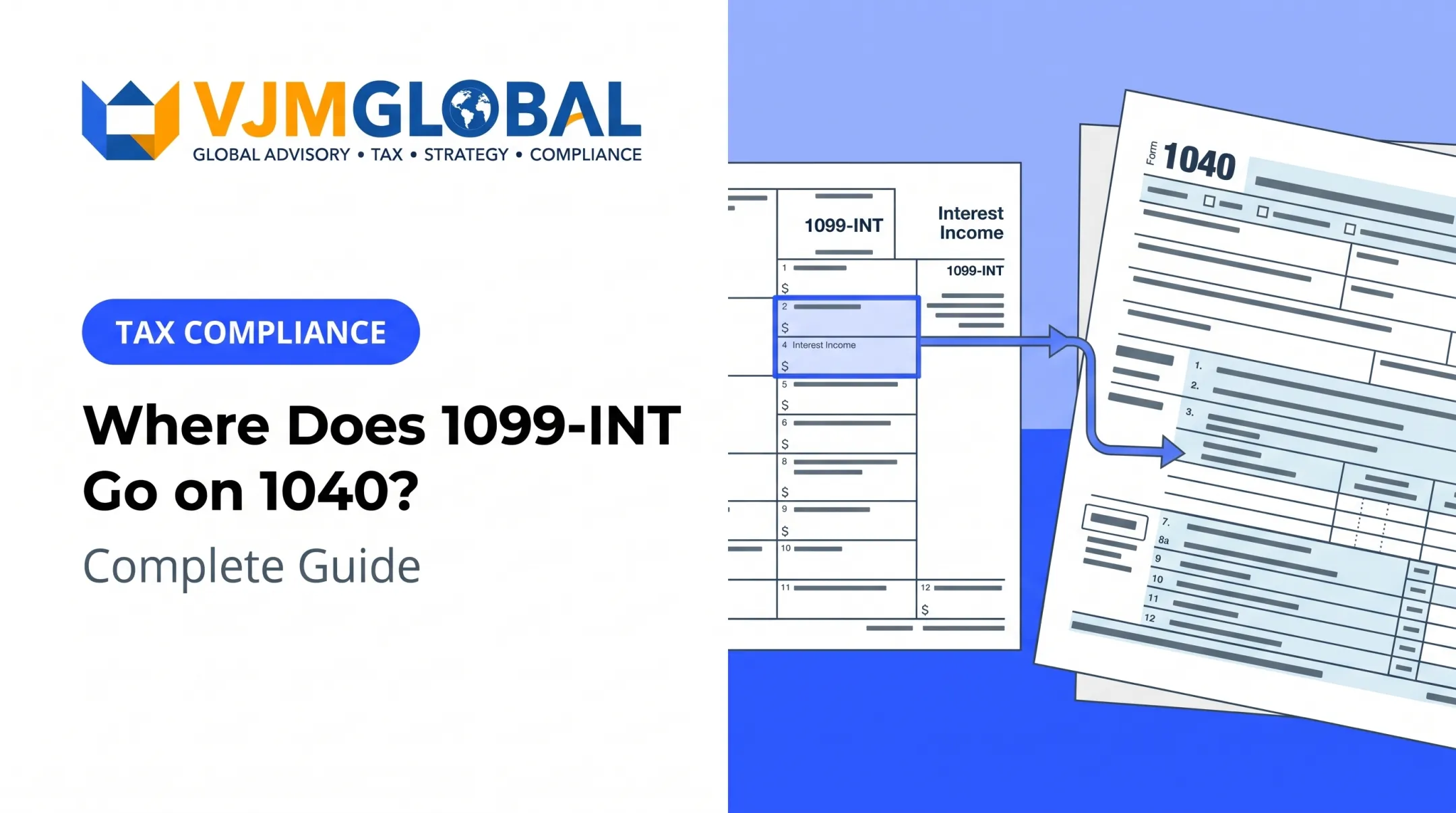
This article covers the U.S. Form 1099-INT (Rev. January 2024), and shows how to read Box 14 alongside Boxes 1, 8, 9 and 13. Australian readers have an extra step: U.S. reporting does not settle Australian tax, so ATO rules apply separately.
Key Takeaways
- A CUSIP identifies the bond issue; tax treatment comes from the bond type and the rules.
- Box 14 covers tax-exempt and tax credit bonds, with amounts reported in Boxes 1, 8 and 9.
- CUSIP numbers differ from TINs, account numbers and tax classifications.
- Compare the form with your brokerage statement and current IRS instructions.
- Confirm ATO treatment of US tax-exempt and tax credit bond income.
What CUSIP Numbers Identify in Tax-Exempt and Tax Credit Bonds
A CUSIP is a unique 9-character alphanumeric identifier for securities, including municipal bonds, according to the MSRB guide. It breaks down like this:
- Characters 1-6: the issuer
- Characters 7-8: the specific issue
- Character 9: a check digit that tests accuracy
Payers, brokers, investors and tax preparers use it to match reported interest or credits to the right bond. That matters most when you hold several securities.
Tax-exempt versus tax credit bonds
Interest on bonds issued by a state, the District of Columbia, a U.S. territory or their political subdivisions is generally not taxable federally, per IRS Publication 550.
Tax credit bonds work differently. The holder receives a credit instead of, or alongside, periodic interest, and that credit counts as interest.
Examples include Clean Renewable Energy Bonds, Qualified School Construction Bonds and Build America Bonds. The IRS says these programs are no longer open to new issuance, but existing holdings can still be covered by Form 8912 rules.
What a CUSIP does not tell you
A CUSIP does not:
- Prove that a bond is tax-exempt
- Confirm you qualify for a credit
- Calculate taxable income, basis or final tax
- Establish ownership
Other identifiers a CUSIP is not
| Identifier | What it identifies |
|---|---|
| CUSIP | The bond issue |
| TIN/EIN | The taxpayer (the form lists the recipient's TIN separately) |
| Account number | The brokerage account, assigned by the payer |
Australian identifiers such as a TFN or ABN are also unrelated to a CUSIP.
How Box 14 of Form 1099-INT Uses the CUSIP Number
The exact Box 14 label is "Tax-exempt and tax credit bond CUSIP no." Check it against the current IRS form rather than an older revision. The box holds CUSIP numbers, not a tax amount.
When one CUSIP appears, and when it says "various"
Under the payer instructions, a payer enters the CUSIP when the account holds a single bond: the exempt bond reported in Box 8, or the tax credit bond whose credit or taxable interest is in Box 1.
When exempt interest or credits are aggregated across multiple bonds or accounts, the payer enters "various". In that case, rely on the supporting brokerage statement for bond-level detail.
How Box 14 connects to the other boxes
- Box 1 reports taxable interest. It may include tax credit bond credits that must be treated as interest.
- Box 8 reports tax-exempt interest paid during the year.
- Box 9 reports specified private activity bond interest subject to AMT. It is already included in Box 8, so do not add it twice.
- Box 13 reports bond premium amortisation on a tax-exempt covered security.
Box 13 and Box 14 do different jobs. Box 14 names the bond; Box 13 reports a premium figure.
A simple example
Say your form shows a CUSIP in Box 14 and an amount in Box 8. You find the same CUSIP on your brokerage statement and confirm it matches a school district bond you own. Then you check whether Box 9 or Box 13 also carry figures. The CUSIP linked the records; the other boxes tell you what to review.

How Bond Type and Premium Affect Tax Reporting
Tax-exempt interest still has to be reported. For a U.S. individual return, total exempt interest goes on Form 1040 line 2a. Specified private activity bond interest feeds into Form 6251 for AMT. Exempt interest may also be subject to backup withholding, which appears in Box 4.
Premiums on tax-exempt bonds
You pay a premium when you buy a bond for more than its face value. For a bond yielding exempt interest, Publication 550 says the premium must be amortised. The amortised amount is not deductible. Each year it reduces your basis and the exempt interest otherwise reportable.
Box 13 helps here:
- A figure in Box 13 lets you work out net exempt interest.
- A blank Box 13 on a covered bond bought at a premium can mean the payer already reported net interest in Box 8 or 9. Don't subtract again.
- A Box 13 amount above the interest paid produces a nondeductible loss.
Tax credit bonds
- Holder-credit bonds let an eligible holder claim the credit on Form 8912, and that credit is taxable interest
- Build America Bond holders also receive taxable cash interest
- Direct-pay bonds pay the federal amount to the issuer; the holder gets taxable interest and no holder credit

The CUSIP identifies the security. It does not calculate your credit, tax or basis.
Cross-border caution for Australian readers
Australian tax residents are taxed on worldwide income, and the ATO lists foreign bond interest as income to declare, converted to Australian dollars. So a U.S. "exempt" label does not make the interest exempt in Australia.
Other points to check:
- The foreign income tax offset applies only where foreign tax was actually paid.
- The Australia-U.S. treaty keeps each country's right to tax its residents, and caps source-country tax on interest generally at 10% of gross.
- Treat the 1099-INT as one input, not a complete Australian answer.
How to Find, Check, and Use a CUSIP Number
You can find a CUSIP in several places:
- Box 14 of Form 1099-INT
- Broker or custodian tax statements
- Trade confirmations (municipal dealer confirmations include it)
- Account statements
- EMMA, the MSRB's free site, where the full CUSIP opens security details
Layouts differ. The form and the supporting statement may not display the same way.
Verify it
- Compare the CUSIP across the 1099-INT, brokerage records and trade confirmations.
- Check for typos, dropped characters and mix-ups with account or tax numbers.
- Search the full number on EMMA to confirm the bond's identity.

If Box 14 is blank
The IRS wording is: "If blank, no CUSIP number was issued for the bond(s)." If you expected one, ask your broker. A blank box does not by itself change the bond's tax treatment.
Common Errors and a Cross-Border Review Checklist
Watch for these mistakes:
- Treating the CUSIP as income
- Assuming every CUSIP means tax-exempt (credit bonds appear too)
- Confusing Box 14 with a tax ID
- Counting Box 9 inside Box 8 twice
- Overlooking Box 13 or subtracting premium twice
A short review sequence:
- Identify the bond.
- Match the CUSIP to your brokerage records.
- Reconcile Boxes 1, 8 and 9.
- Review Box 13 premium information.
- Keep the form and records.
The IRS ordinary rule is 3 years, and basis records generally stay until the limitations period for the year you dispose of the bond expires.
Australian businesses reporting U.S. bond income often need cross-border tax support. VJM Global provides accounting outsourcing and tax-compliance services for Australian businesses. It does not issue CUSIPs and does not replace advice tailored to your situation.
Frequently Asked Questions
Are bond premiums on tax-exempt bonds taxable?
The premium must be amortised, and the IRS says the amortised amount is not deductible. It reduces basis and otherwise reportable exempt interest. Box 13 is not taxable interest. Check current IRS guidance or a tax professional.
Is the tax ID number the same as a tax-exempt number?
No. A taxpayer identification number identifies who pays tax, while a tax-exempt organisation number relates to an organisation's status. Neither is a bond CUSIP.
What is a CUSIP number on Form 1099-INT?
It identifies the tax-exempt or tax credit bond and helps match the form to brokerage or issuer records. It is not a tax amount.
What does Box 14 on Form 1099-INT mean?
Box 14 lists the CUSIP for tax-exempt bonds or tax credit bonds. Read it with Boxes 1, 8, 9 and 13, which carry the amounts.
What should I do if Box 14 is blank?
Check your brokerage statement and ask the payer whether no CUSIP was issued. A blank box doesn't determine tax treatment.