%20(4).webp)
Expanding your US business into India presents significant growth potential. The traditional company registration process often involves complex paperwork. This administrative burden can delay your market entry for several weeks.
The Indian government now offers a streamlined digital registration platform. This system simplifies the entire incorporation procedure for entrepreneurs. You can complete many steps remotely from the United States.
This guide details the complete process for online company registration in India. We will outline the required documents and specific steps. You will learn how to establish your corporate presence efficiently.
Registering a company online in India offers distinct operational and strategic benefits. This digital approach provides significant advantages over traditional paper-based methods. It fundamentally changes how entrepreneurs establish their business presence.
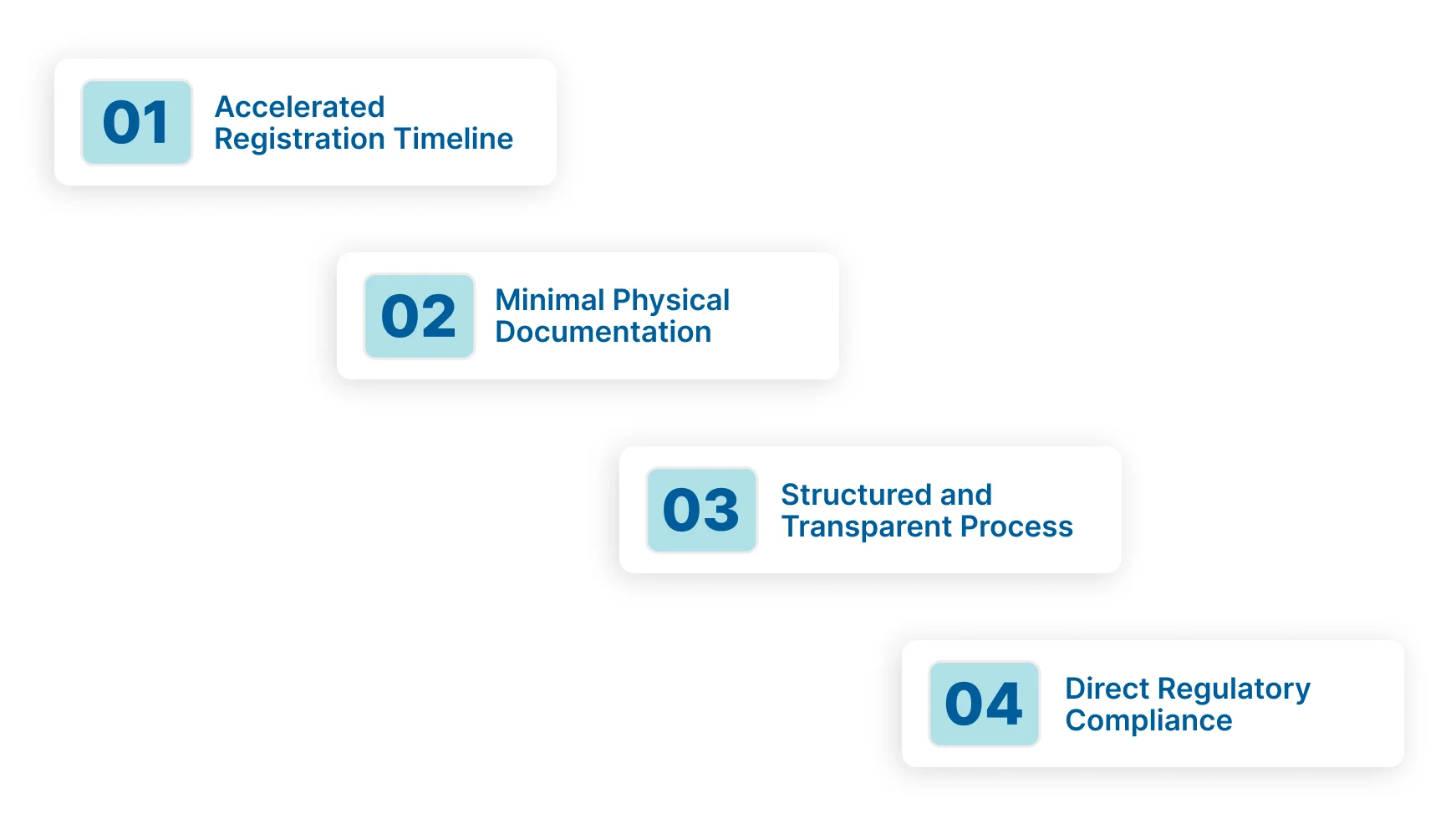
The key advantages of this digital process include:
The online system can reduce incorporation time to under two weeks. Manual submission methods often require several weeks for the same process. This speed allows you to commence business operations much faster. The digital portal enables real-time tracking of your application status.
You can submit most documents digitally through the MCA portal. This reduces the need for notarized physical copies and in-person submissions. The process primarily relies on digital signatures for authentication. This approach significantly cuts down paperwork and related costs.
The online system provides a clear, step-by-step application roadmap. Each stage has defined requirements and predictable government fees. You receive official updates and requests directly through the portal. This transparency minimizes procedural uncertainties and potential delays.
The digital forms are designed to align with current corporate laws. The system automatically validates your application against statutory requirements. This built-in check reduces the risk of non-compliance from the start. It establishes a compliant corporate foundation for your business.
Begin your registration process with confidence. Contact VJM Global for a free consultation to assess your eligibility and review your options.
These advantages make a strong case for online registration. You must next confirm that you meet the specific eligibility requirements.
Also read: How to Start a Software Company in India
The online registration process in India has specific eligibility requirements. These criteria are defined by the Companies Act of 2013. You must meet these conditions for a successful digital incorporation. Proper verification ensures your application proceeds without legal issues.
You must fulfil the following key conditions:
Every proposed director of the company must have a valid DIN. This is a unique identification number for company directors. You can apply for this number online through the MCA portal. It is a mandatory prerequisite for all directors.
You must obtain a Class 3 Digital Signature Certificate. This DSC signs all electronic forms filed with the Registrar of Companies. It must be acquired from a government-certified agency. This is non-negotiable for all digital filings.
Your proposed company name must be unique and available. The name cannot be identical to any existing company or trademark. It must adhere to the naming guidelines in the Companies Act 2013. Name reservation is a distinct step on the MCA portal.
A private limited company requires a minimum of two members. A public limited company requires at least seven members. One-person companies have different eligibility rules for solo entrepreneurs. The structure determines the member requirements.
Your company must have a registered office address in India. This can be a commercial or residential property. You must provide proof of address for this location. All official correspondence will be sent to this address.
Also read: How to Register a Trademark in India: Step-By-Step Guide
General eligibility leads to a common question about nationality. The rules for foreign citizens and NRIs have important distinctions.
Indian citizenship is not mandatory for company registration in India. Foreign nationals and Non-Resident Indians can register a company. The rules differ for shareholders and directors in the company. Specific regulations apply based on your citizenship and residency status.
The eligibility varies for different roles:
A foreign individual may serve as a director in an Indian company. You must meet all other Director Identification Number requirements. The company must have at least one director resident in India. This resident director must stay in India for 182 days.
Foreign individuals and entities can be shareholders in Indian companies. This applies to both private and public limited company structures. Foreign investment often falls under the automatic approval route. Some sectors may require specific government approvals.
Only Indian citizens can incorporate a One-Person Company. This rule applies to both resident and non-resident Indian citizens. Foreign nationals cannot act as members in an OPC structure. The nominee for an OPC must also be an Indian citizen.
Foreign investment in Indian companies is governed by the FDI policy. The Reserve Bank of India regulations outline the specific guidelines. Most sectors allow up to 100% foreign investment automatically. Some specific industries may have lower limits or require approval.
Understand how citizenship rules apply to your specific case. Speak with a VJM Global expert for personalized guidance on director and shareholder requirements.
Once you confirm eligibility, you can gather the necessary paperwork. Proper documentation is fundamental for a successful application.
Also read: Company Registration Cost in India Explained
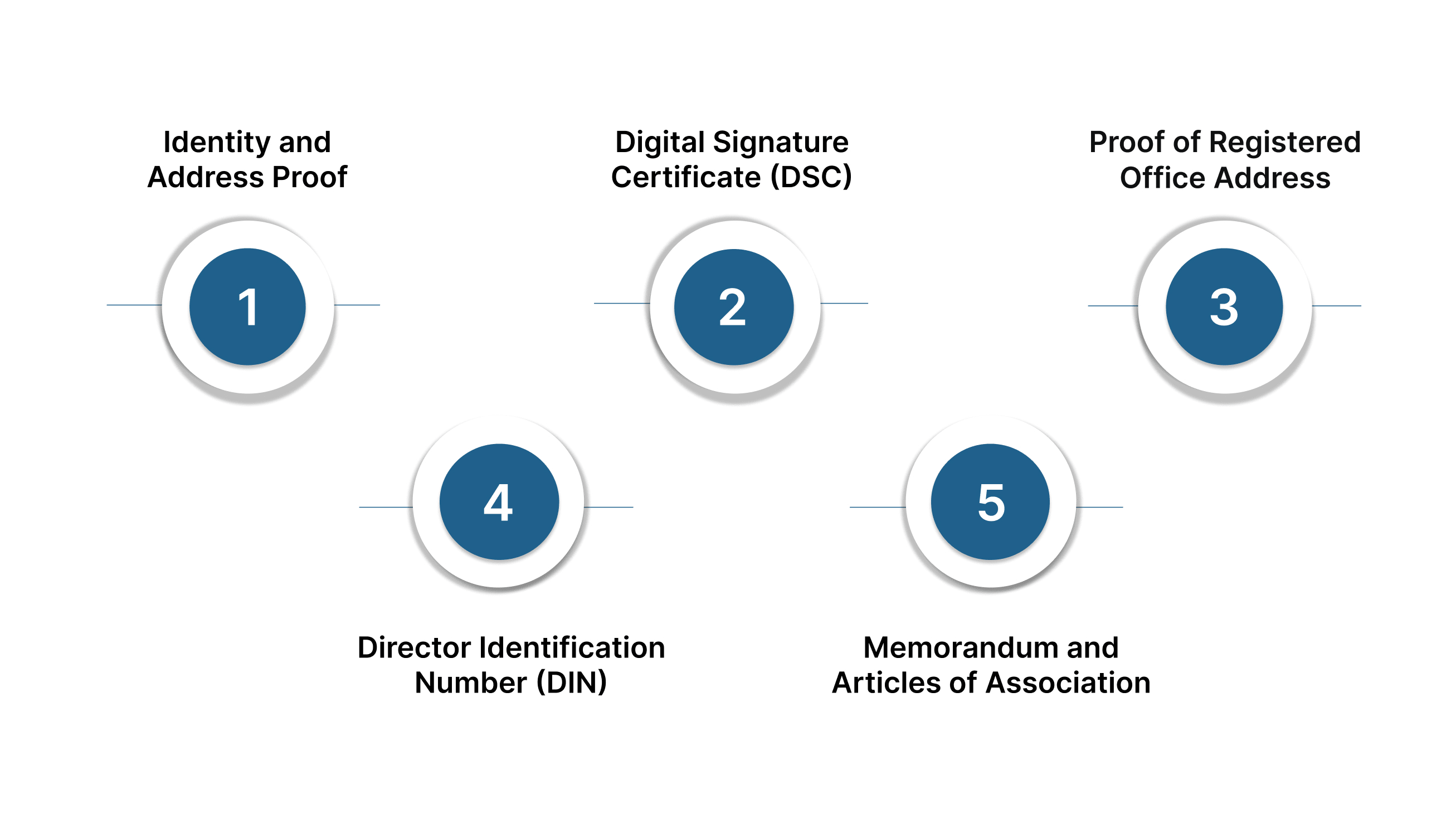
Preparing the correct documents is crucial for a successful online registration. You must provide proof of identity, address, and business location. All documents must be digitally scanned for upload to the MCA portal. Proper preparation prevents delays and application rejection.
You will need to provide the following documents:
All proposed directors and shareholders must provide proof. Your passport is the most widely accepted form of identification. A driver's license or voter ID card is also a valid option. You must also submit a document verifying your residential address.
You must obtain a Class 3 DSC from a licensed provider. This digital signature is used to sign all electronic application forms. It is a mandatory security requirement for the process. The DSC ensures the authenticity of your online submission.
You must submit a document for your Indian registered office. This can be a rental agreement or a property deed. A recent utility bill, like an electricity bil,l is also required. You must also provide a no-objection certificate from the owner.
You must have a DIN for each proposed company director. This unique number is issued by the Ministry of Corporate Affairs. You can apply for it during the registration process itself. The DIN is a prerequisite for appointing any director.
These are the constitutional documents of your new company. The MoA defines the company's objectives and scope of business. The AoA outlines the internal rules and regulations for governance. Both documents are required to be signed digitally by the subscribers.
With your documents prepared, you can begin the formal procedure. The registration follows a clear, sequential digital pathway.
The online company registration process follows a structured digital pathway. You will primarily interact with the Ministry of Corporate Affairs portal. This process requires careful preparation of digital signatures and documents. Proper execution of each step leads to your Certificate of Incorporation.
Your first action is to secure a Class 3 Digital Signature Certificate. This DSC serves as your online signature for all official forms. You must obtain it from a government-certified agency in India. This step is mandatory for all subsequent digital filings.
You need a Director Identification Number for each proposed director. Apply for this unique number using Form DIR-3 on the MCA portal.
Select and reserve a unique name for your company through Form SPICe+ PART-A.
After name approval, file Form SPICe+ PART-B with all incorporation details.
The Registrar issues this certificate upon application approval. This document legally confirms your company's formation in India. It includes your unique Corporate Identity Number. You can now legally commence business operations.
Also read: Guide to Registering an Event Management Business in India from the U.S.
Knowing the correct steps helps you avoid frequent errors. Several common pitfalls can delay an otherwise complete application.
Several common errors can delay or derail your online company registration. These mistakes often involve document preparation and procedural knowledge. Awareness of these pitfalls helps ensure a smooth application process. Careful attention prevents unnecessary complications with authorities.
Do not choose a name that is too similar to existing companies. Avoid names that are offensive or suggest prohibited activities. Always conduct a thorough name availability search first. The proposed name must reflect your business activities accurately.
Do not submit documents that are unclear or incomplete. Ensure all scanned copies are legible and in the correct format. All international documents need to be notarized and apostilled as necessary. Inconsistent information across different forms causes immediate rejection.
Do not proceed without a resident director if you are a foreign national. Ensure all directors have valid Director Identification Numbers before applying. Verify that no proposed director is disqualified under company law. The board must meet all composition requirements.
Do not provide incorrect details about authorized or paid-up share capital. Ensure the capital structure matches your business needs and future plans. All subscriber information must be accurate and verifiable. Mistakes in capital disclosure raise regulatory concerns.
Do not ignore mandatory compliance requirements after receiving your certificate. You must open a corporate bank account immediately after incorporation. Statutory registrations like GST and professional tax may be necessary. Ongoing compliance filings must be completed on schedule.
Avoiding these mistakes is most effective with expert guidance. VJM Global is structured to provide this exact support for international clients.
Managing the online registration process from abroad presents several challenges. You must handle document authentication and complex regulatory requirements. Navigating the MCA portal correctly demands specific technical knowledge. These hurdles often lead to application delays and compliance issues.
VJM Global provides a comprehensive solution for online company registration in India. Our firm manages the entire process from initial documentation to final incorporation. We help you establish your corporate presence with accuracy and efficiency. Our service is designed to prevent the common mistakes mentioned earlier.
Our approach includes several key features:
Partnering with VJM Global provides a managed pathway for your business entry into India.
Online company registration in India is a structured digital process. It requires careful preparation of documents and adherence to specific steps. Understanding eligibility criteria and common mistakes is crucial for success. This knowledge helps you navigate the MCA portal effectively.
VJM Global specializes in managing this registration process for international clients. Our team handles document preparation and regulatory compliance on your behalf. We offer expert guidance customised to your unique business needs. This ensures a smooth and efficient company setup experience.
Get in touch with VJM Global today to begin your company registration in India.
The complete process typically takes ten to fifteen days after submitting all documents. This timeline depends on the speed of government approvals. The digital system has significantly reduced previous timeframes.
Yes, a foreign national or entity can fully own an Indian company in most sectors. The company must appoint one director who resides in India. This resident director must stay in India for at least 182 days per year.
A Director Identification Number (DIN) is a unique identity for a company director. A Digital Signature Certificate (DSC) is an encrypted digital key for signing documents. You need a DSC to apply for a DIN and file forms.
Yes, you must provide a registered office address in India during registration. This property can be either commercial or residential. You must submit proof of address, such as a rental agreement or utility bill.
You must immediately open a corporate bank account in the company's name. You should also apply for necessary tax registrations, like GST, if applicable. Ongoing statutory compliance filings are required annually.