The credit covers the 2020 and 2021 tax years only. It does not signal a new stimulus payment. All three rounds of Economic Impact Payments have been issued, and any message promising a new one deserves suspicion.
Form 1040 is a U.S. federal tax form, not an Australian one. If you live in Australia, this guide applies only if you had a U.S. filing obligation in the relevant year. Amounts below are in US dollars.
Key Takeaways
- Claim missed or partial stimulus payments on Form 1040 or 1040-SR for that year, not a separate application.
- The credit appears on line 30 of the return for both 2020 and 2021.
- Confirm what you already received before calculating so you never claim twice.
- Published ordinary refund deadlines for both 2020 and 2021 have passed.
What Is the Recovery Rebate Credit and Who Can Claim It?
Stimulus payments were advances of a tax credit. The Recovery Rebate Credit lets you reconcile what you received against what you were entitled to for that year. If you got less, the difference can be claimed on your return.
Which Payment Belongs to Which Year
Keep the rounds separate:
- 2020 return: the first and second Economic Impact Payments
- 2021 return: the third payment, including any plus-up payments
Do not apply the credit to later, unrelated tax years.
Maximum Amounts Before Income Reductions
| Category | 2020 | 2021 |
|---|---|---|
| Per eligible individual | $1,200 (first), $600 (second) | $1,400 |
| Joint filers | $2,400 (first), $1,200 (second) | $2,800 |
| Per qualifying child | $500 (first), $600 (second) | $1,400 per qualifying dependent |
The 2021 credit also covers eligible adult dependents. The 2020 credit covered only children under 17 at the end of 2020.
Income Thresholds
| Filing status | Reduction begins above AGI | 2021: no credit at AGI of |
|---|---|---|
| Single or married filing separately | $75,000 | $80,000 or more |
| Head of household | $112,500 | $120,000 or more |
| Married filing jointly or qualifying widow(er) | $150,000 | $160,000 or more |
In 2020 the credit reduced by 5% of the excess over the threshold. Don't swap the 2021 cut-offs into a 2020 calculation.

Eligibility Checklist
- You are a U.S. citizen or resident alien (nonresident aliens are ineligible)
- No one else can claim you as a dependent
- Your income falls under the year's threshold
- You, or your qualifying dependents, hold a valid Social Security number or an IRS ATIN where allowed
Why You May Have Received Less Than Expected
- Income lower than the figure the IRS used for the advance
- A new child or qualifying dependent
- No longer claimed as someone else's dependent
- Obtained a required SSN within the deadline
- No return on file, so the IRS had no information on you
Refundable, Not a Deduction
A deduction lowers taxable income. A nonrefundable credit lowers tax but stops at zero. The Recovery Rebate Credit is refundable, so any excess over your tax liability can come back as a refund. You don't need to owe tax to benefit.
Which 1040 Form Do You Need for a Stimulus Check?
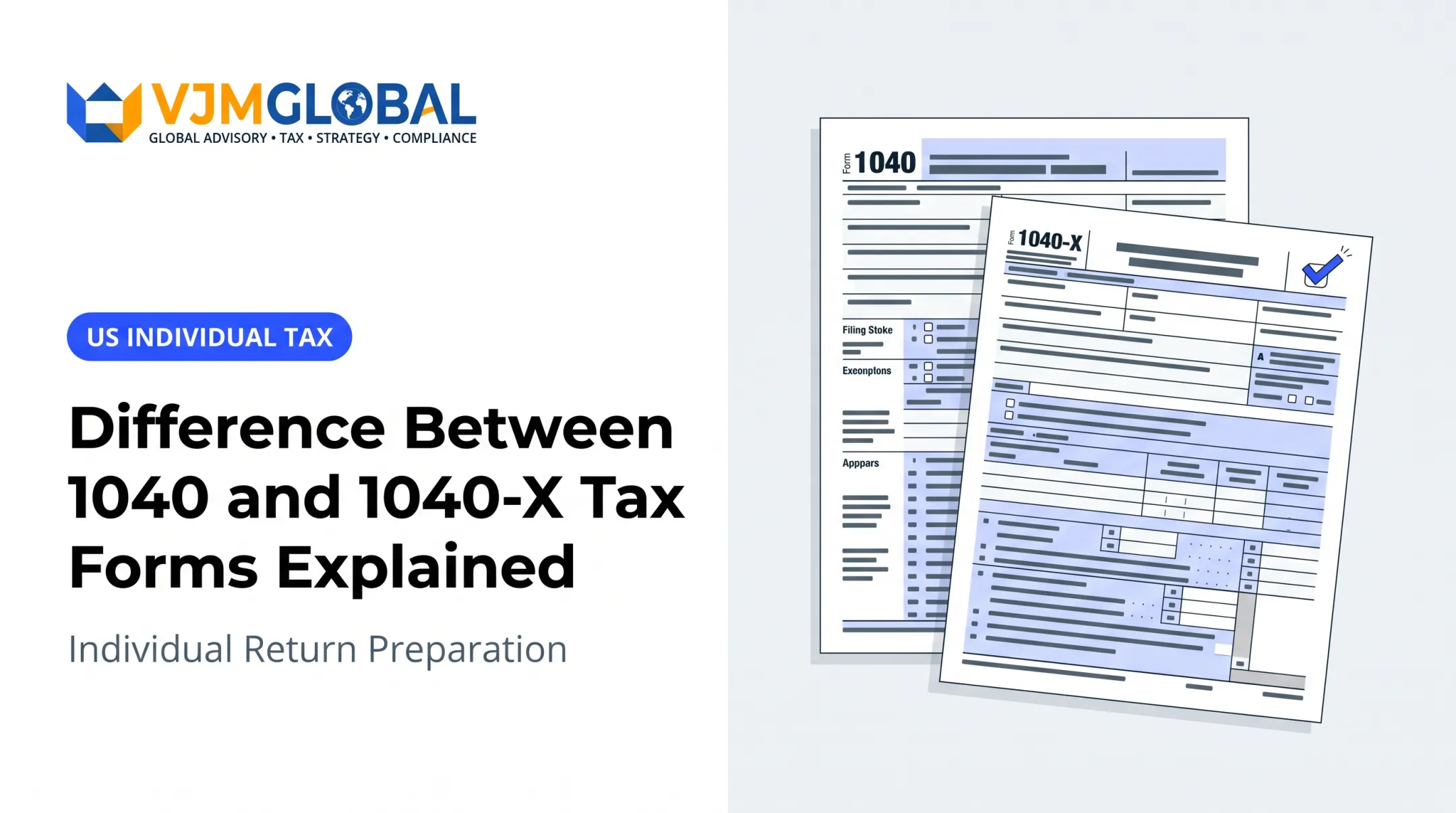
Form 1040 Versus Form 1040-SR
Form 1040 is the standard U.S. individual return. Form 1040-SR is the larger-print alternative for people aged 65 or over. The 2021 instructions set the cut-off at birth before 2 January 1957. Both claim the credit on line 30, so the senior version is a different layout, not a different credit.
Choose the form by the tax year you are correcting or filing, not by the year you are submitting it.
Finding the Official Form
Download from the IRS only. The IRS Forms & Instructions page links to prior-year versions of each form, instructions and worksheet. Use the version for the year you're claiming, because line numbers and eligibility questions change.
Where the Credit Goes
The credit is calculated on a worksheet in the instructions, then carried to line 30.
- 2020: worksheet line 21 adds lines 17 and 20, and a positive result goes to line 30
- 2021: worksheet line 14 deducts line 13 from line 12, treats a negative result as zero, and a positive result goes to line 30
You file the complete return. Mailing a blank Form 1040 or the worksheet alone is not a claim.
How to Claim the Recovery Rebate Credit on Form 1040
The steps below are historical. Check the deadline section before preparing anything.
Step 1: Identify the Tax Year and Payment History
Work out which round you are reconciling. Then match IRS records against your bank statements and notices:
- 2020: Notice 1444 (first payment) and Notice 1444-B (second payment)
- 2021: Letter 6475, which also covers plus-up payments. Each joint-filing spouse got a letter showing half the total
- Missing paperwork: your IRS online account shows all three payment totals
Step 2: Gather the Information
- SSNs or ITINs/ATINs for everyone on the return
- Filing status and dependant details
- Income records for that year
- Payment amounts already received
- Any IRS notices or return transcripts
Step 3: Complete the Underlying Return
File the full Form 1040 or 1040-SR for the relevant year, even if you had little or no income. People with minimal income were eligible but still had to file.
If you never filed an original return, you file an original, not an amendment.
Step 4: Complete the Worksheet
Enter the payments you received, apply that year's eligibility rules, and carry any positive result to line 30. Do not estimate, and never copy a figure from an old article.

The 2021 worksheet also includes a safeguard: you are not required to repay if the third payment exceeded your calculated entitlement.
Step 5: Review and Submit
Check these before sending:
- Filing status and dependants
- Identification numbers
- Bank details for any refund
- Payments already received
- No duplicate claim
Original returns can be e-filed where supported, and a foreign address does not by itself block e-filing. Otherwise mail a paper return. Filing availability does not extend a refund deadline.
Cross-border situations are where mistakes creep in. If you're unsure about U.S. tax documentation, VJM Global's tax and compliance team prepares U.S. individual returns, including Form 1040 and 1040-NR. This is not a promise of eligibility or a refund.
Special Situations That Can Affect Your Claim
A Taxpayer Who Has Died
Eligibility turns on the date of death:
- Before 1 January 2020: no 2020 credit
- Before 1 January 2021: no 2021 credit
- During 2021 and otherwise eligible: may still qualify for the 2021 credit
Form 1310 identifies who is claiming a deceased person's refund. It does not calculate the credit.
It is generally unnecessary for a surviving spouse filing a joint return, or a court-appointed representative filing an original return with the appointment certificate. The Form 1310 instructions list the exceptions.
You Already Filed but Missed the Credit
- Never filed: file the original return, not Form 1040-X
- Credit left off a filed 2020 return: generally amend with Form 1040-X after the return is processed
- Calculation errors: the IRS corrected these itself without requiring an amendment
- 2021 omissions: earlier guidance required an amendment; on 20 December 2024 the IRS began automatic payments to about 1 million eligible taxpayers, so no amendment is needed

Identification and Household Issues
| Situation | 2020 | 2021 |
|---|---|---|
| One spouse has a valid SSN | Partial joint credit; a military exception can allow both amounts | Up to $1,400 for the SSN holder plus dependants; military exception allows $2,800 |
| Neither spouse has a valid SSN | General SSN requirement applies | Up to $1,400 per qualifying dependant, no spouse amount |
| Dependant's number | Employment-valid SSN within the deadline, or ATIN | Valid SSN or ATIN |
Treat each as a year-specific scenario. Don't carry a 2021 rule back to 2020.
What to Check Before Filing and After You Submit
Deadlines Have Passed
This matters most. The published ordinary refund deadlines were 17 May 2024 for 2020 and 15 April 2025 for 2021, according to the Taxpayer Advocate Service. Both have passed.
Statutory exceptions, such as disaster or combat-zone circumstances, exist under the general refund-claim rules. They need separate consideration, so confirm with the IRS or a qualified tax professional before assuming one applies. Older articles may describe procedures that no longer exist, so rely on current IRS guidance.
After You Submit
- Keep your e-file acceptance or proof of mailing
- Expect possible IRS review or adjustment
- Track original returns with Where's My Refund?
- Use Where's My Amended Return? only for the current year plus up to three prior years; older amendments run on paper
- Check payment totals in your online account (Get My Payment is closed)
No processing time is guaranteed.
Avoiding Scams
- Get forms and status information from IRS.gov only
- The IRS does not start contact by email, text or social media about refunds or bills
- Ignore messages promising a "third-round" or guaranteed stimulus payment
- Report phishing to [email protected]
- Never share tax or banking details with unsolicited contacts
VJM Global is an independent professional services provider, not the IRS.
Frequently Asked Questions
What form to fill out for stimulus check?
No separate form exists. A missing or partial payment is reconciled on the relevant year's Form 1040 or 1040-SR, using the Recovery Rebate Credit worksheet and line 30.
Where can I find the Form 1040?
Use the IRS Forms & Instructions page and pick the prior-year version matching the tax year you're claiming. Line numbers and worksheets differ between 2020 and 2021.
Who will need to file Form 1310 to claim a refund?
Form 1310 may apply when someone claims a refund for a deceased taxpayer. A surviving spouse on a joint return or a court-appointed representative filing an original return is often exempt, so check the form's instructions.
Can tax credits be refunded?
Refundable credits can, nonrefundable credits cannot. The Recovery Rebate Credit is refundable, so any excess over your tax can increase your refund if you qualify under that year's rules.
Can I still claim the Recovery Rebate Credit for a past tax year?
The published ordinary deadlines were 17 May 2024 for 2020 and 15 April 2025 for 2021. Both have passed, so verify any exception with the IRS before preparing a return.
Do I file Form 1040-X to claim a missing stimulus check?
Form 1040-X is generally for correcting a return you already filed. If you never filed, submit an original return for that year instead.