This matters for Australia-based taxpayers and other foreign filers with U.S. obligations. A late-arriving tax document, omitted income or a wrong deduction often surfaces after lodgement. The right route depends on timing: confirm the deadline, check eligibility, submit a full corrected return, then review the related U.S. and Australian filings.
Key Takeaways
- A superseding Form 1040 generally replaces an earlier return filed by the original or extended due date.
- After that date, the usual route is Form 1040-X, subject to IRS limitation rules.
- Send a complete return with all schedules, not just the changed pages.
- A federal correction doesn't automatically fix state, FBAR, Form 8938 or ATO filings.
What Is a Superseded Tax Return for Form 1040?
A superseding return is a complete corrected return for the same tax year, filed within the permitted window, that becomes the operative return. It is not a separate IRS form.
The IRS Internal Revenue Manual treats a timely corrected return as a duplicate/superseding return and says to prepare a blank Form 1040 with all relevant tax data.
Retain these records:
- Original return
- Corrected return
- Source documents
- Extension evidence
- IRS acceptance or rejection records
Filing deadline and eligibility test
Work out three dates:
- The original due date
- Any valid extension
- The final date for a superseding filing
A calendar-year return is generally due April 15. Taxpayers abroad may get an automatic extension to June 15, and Form 4868 can extend filing further. Check current IRS guidance for the year in question rather than relying on remembered dates.
Extra time to file is not extra time to pay. Interest generally runs on unpaid tax from the original due date. Special rules for taxpayers abroad turn on your own facts and circumstances.
Some elections have separate rules. The IRS manual treats a joint-to-separate change as a special case: a return filed after the original due date, even within an extension, is not a superseding return for that purpose.
Why taxpayers file a superseding return
Common triggers include:
- Corrected Forms W-2 or 1099
- Omitted income or missing deductions
- Incorrect dependants
- Changed withholding
- Omitted schedule
- Election that needs rethinking
The upside is putting the intended complete return in front of the IRS sooner and preserving options that may disappear after the deadline. But filing guarantees nothing: not acceptance, faster processing, refund approval or penalty relief.
Superseded Return vs. Amended Return: What Is the Difference?
The Taxpayer Advocate Service describes a superseding return as one filed by the original deadline, including extensions, and an amended return as one filed after that deadline.
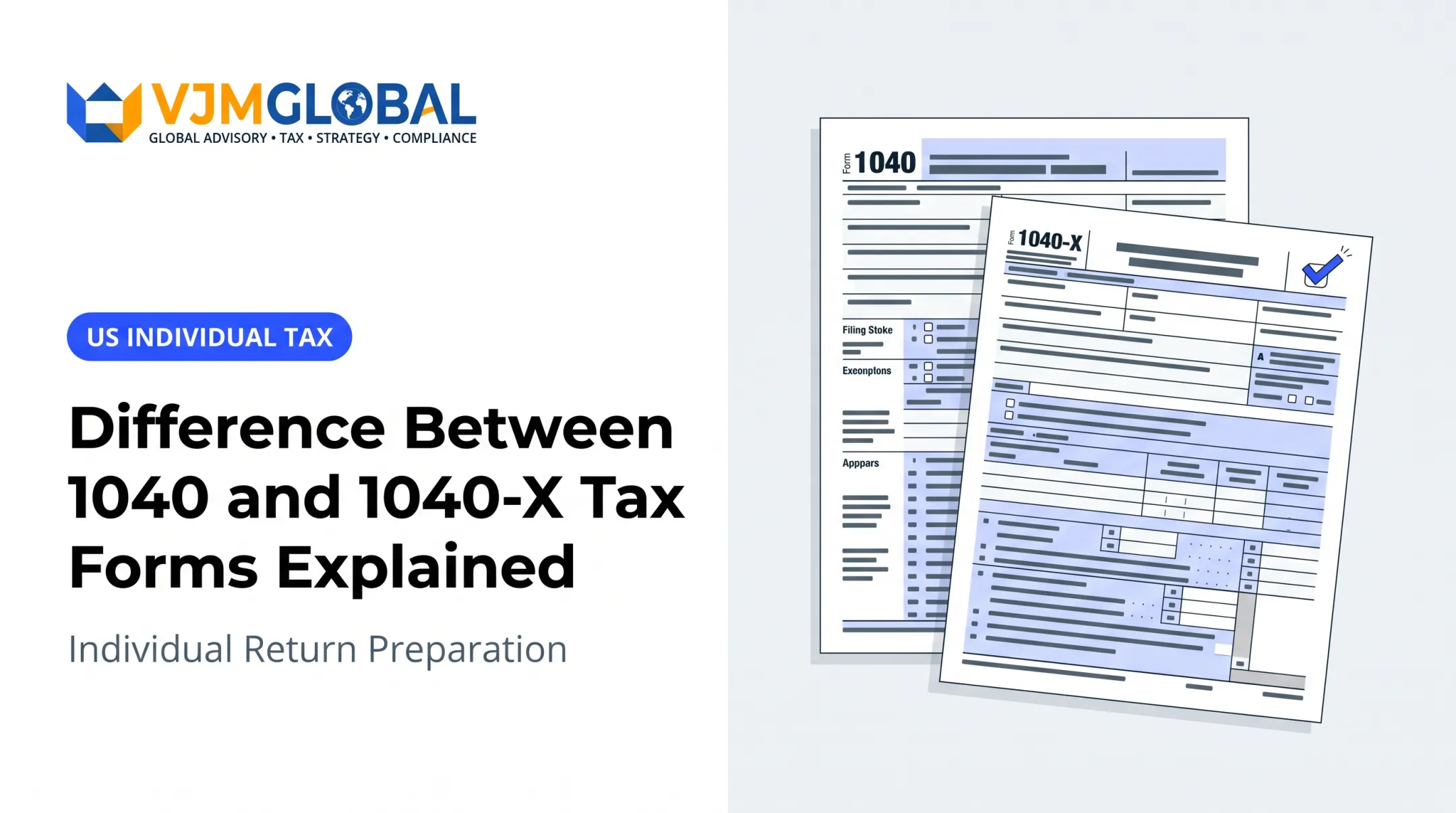
| Feature | Superseding return | Amended return (Form 1040-X) |
|---|---|---|
| Timing | By original or extended due date | Generally after that date |
| Purpose | Replace the earlier return | Change a filed return |
| Form | Complete Form 1040 package | Form 1040-X |
| Content | Full corrected figures | Original, net change and corrected columns, plus explanation |
| Explanation | Not generally needed line by line | Required for each change |
Form 1040-X instructions require an explanation of each change, with a separate form for each tax year.
Which path you use can affect tax due, refunds, estimated-tax credits, carryovers and withholding. Reconcile every changed figure to the original return and your source records.
Filing status and elections need extra care. Joint-versus-separate decisions and other elections may be irrevocable or carry an earlier, unextended deadline.
A practical decision framework
- Window still open? Confirm eligibility and consider a complete superseding return.
- Window closed? Evaluate Form 1040-X and the IRS amendment and refund limits.
- Foreign income, treaty positions, foreign tax credits or filing status involved? Get professional review before sending either return.

How to File a Superseding Form 1040
Confirm that the filing window is open
Verify the tax year, original due date, extension validity, filing status and any special election deadline. If an electronic submission was rejected or never accepted, the process differs from that of an accepted return. Keep every IRS and software acknowledgement.
Prepare the complete corrected return
Rebuild the whole Form 1040 for that year, including unchanged schedules, income, deductions, credits, withholding, payments and foreign reporting forms. Gather:
- The accepted original return
- Corrected information returns
- Extension confirmation
- Payment records
- Foreign income and tax records
- Evidence for each changed item
Then compare the new return with the original line by line. Aim to avoid dropping income, duplicating deductions, or losing withholding, estimated payments and carryovers in the rebuild.

Submit electronically or by mail
The Taxpayer Advocate Service says both superseding and amended returns can be filed electronically. That does not mean every year or software package supports an e-filed superseding return, so confirm with your provider. The IRS has not clearly published a required "superseding" notation, so do not assume one is needed.
For paper filing, use the current IRS international mailing address for your tax year, sign the return, include every schedule, and keep proof of delivery. Check the live IRS address page before mailing.
Review the result after filing
Monitor your IRS account transcript, notices and acceptance messages to confirm the replacement wasn't treated as a duplicate or rejected. Don't file competing corrections for the same issue until you know what happened to the earlier submission.
Coordinate cross-border filings
Changing a federal Form 1040 can ripple outward:
- U.S. state income tax returns
- FBAR (FinCEN Form 114), a separate filing amended by submitting a new, complete FBAR
- Form 8938, filed with the return and distinct from FBAR
- Foreign tax credit calculations on Form 1116, and treaty disclosures such as Form 8833
- Your Australian return
U.S. treatment does not dictate ATO or U.S. state treatment. The ATO generally allows two years to amend an assessment, and the Australian income year runs 1 July to 30 June.
The U.S.-Australia treaty gives relief from double taxation, but it does not turn a U.S. superseding return into an Australian amendment. Check ATO guidance on foreign income tax offsets before assuming how a later U.S. change flows through.

Limitations and Common Mistakes to Avoid
Timing errors
- Calling a return "superseding" after the deadline
- Assuming an extension moves every election deadline
- Believing a superseding return restarts limitation periods
IRS guidance says a superseding return filed during an extension does not extend assessment or refund dates.
Refund claims generally must come within three years of filing or two years of payment, whichever is later, under IRC section 6511. Narrow exceptions exist, including a ten-year period for foreign tax credit claims.
Incomplete returns
- Sending only changed pages
- Omitting schedules
- Leaving out payments or withholding
- Using the wrong year's forms
- Filing a second ordinary return with no superseding treatment
Cross-border blind spots
State agencies and foreign authorities use different forms and procedures. Seek professional review if you have:
- Foreign income or foreign tax credits
- Large refunds or filing-status changes
- Treaty positions
- Conflicting U.S. and Australian reporting
Conclusion: Choose the Correct Form 1040 Correction Route
Three steps decide the route:
- Check the deadline and any special election rules.
- Compare a complete superseding return with Form 1040-X.
- Coordinate every related U.S. federal, state and Australian filing.
VJM Global supports Australia-based taxpayers and international clients with U.S. Form 1040 compliance, documentation review and correction-related filing decisions.
This article is general information, not individual tax advice. Rules change by year and circumstance.
Frequently Asked Questions
What is the difference between a superseding return and an amended return?
A superseding return generally replaces an earlier return filed by the applicable deadline. An amended return generally modifies a filed return after that deadline, using Form 1040-X.
Can I amend a tax return from 5 years ago with the IRS?
There's no automatic five-year rule. Check the filing, payment, refund-claim and special-exception limits for that specific tax year. Refunds are generally barred after the ordinary three-year or two-year window.
What is a superseded tax return for Form 1040?
It's a complete corrected return meant to replace an earlier Form 1040 when submitted within the permitted filing period.
Can I file a superseding Form 1040 electronically?
Possibly. It depends on current IRS rules and whether your software or provider supports superseding treatment. Keep the acceptance records.
Do I need to submit the entire Form 1040 again for a superseding return?
Generally yes. Submit a complete return with all applicable schedules and forms, not only the pages that changed.
Does a superseding U.S. tax return change my Australian tax return?
No. The filings are separate. A US federal correction may still need its own review or amendment with the ATO if it affects your Australian tax position.