Introduction
A C corporation gives you limited liability and a clean path to outside investors. The price is higher tax exposure, stricter governance and heavier admin. Many founders only see that price after the entity is running.
For Australian owners there's an extra wrinkle. A C corporation is a U.S. tax classification, so you answer to the IRS and the ATO at once. A missed Form 5472 alone carries a $25,000 penalty, per the IRS instructions.
This guide covers the tax costs, management burden and long-term trade-offs, so you can weigh them before committing.
Key Takeaways
- Profits can be taxed in the company, then again as dividends.
- Losses stay inside the corporation, not on your personal return.
- Boards, minutes, payroll and filings add ongoing admin.
- The right structure depends on investors, exit plans and cross-border exposure.
What a C Corporation Means for an Australian Business
A C corporation is a corporation taxed under Subchapter C of the U.S. Internal Revenue Code, essentially any corporation that isn't an S corporation. It's a U.S. tax label, not an Australian legal structure. An Australian Pty Ltd, partnership, sole trader or trust each sits under different rules.
Australian businesses typically consider one when they:
- set up a U.S. subsidiary
- court U.S. investors, who commonly expect a Delaware C corporation
- hire staff in the U.S.
- need a local corporate entity to trade credibly
The upsides are real: limited liability, continuity beyond the original owners and flexible share classes. This article focuses on the trade-offs.
Tax Implications of a C Corporation
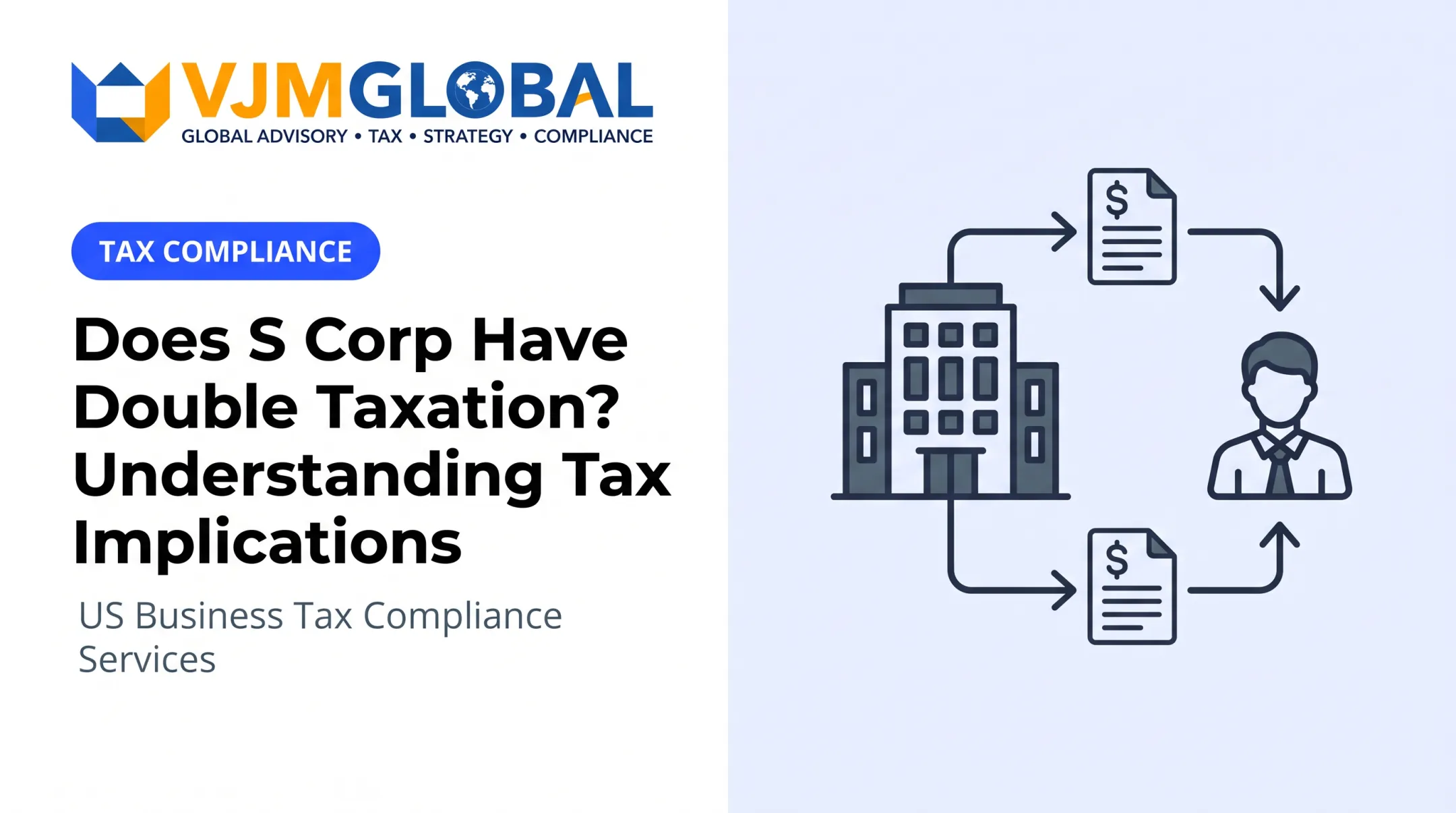
Double taxation on corporate profits and dividends
The corporation pays federal tax at 21% of taxable income. Shareholders may then pay tax again when profits are distributed as dividends. State tax sits on top, ranging from 2% in North Carolina to 8.84% in California.
A simple illustration, not a personal calculation: a company earns $100,000 profit. If it retains the money to reinvest, only the corporate layer applies. If it pays everything out, the dividend faces a second layer.

For Australians, the second layer depends on who you are:
Statutory withholding on foreign shareholders is 30% unless documentation reduces it.
Under the Australia-U.S. treaty, the dividend cap is generally 15%.
Qualifying Australian companies with at least 10% voting power can reach 5%, or 0% when they hold 80% for 12 months and meet other tests.
How Australia taxes that dividend depends on the recipient:
- A corporate parent may get a non-assessable non-exempt outcome under ITAA 1997 s.768-5 at a 10% participation
- Foreign tax on that exempt dividend doesn't count towards the foreign income tax offset
- Individuals must declare foreign income and may claim an offset
Corporate losses may be trapped at entity level
Operating losses belong to the corporation. They can't reduce your salary or other personal income. Post-2017 losses carry forward indefinitely, but the deduction is generally limited to 80% of taxable income, and there's no carryback for most years.
Ownership changes make it worse. Under IRC 382, pre-change losses can face an annual cap if ownership shifts by more than 50 percentage points. A funding round can trigger this.
Pass-through structures treat losses differently. But an S corporation generally can't have corporate or nonresident-alien shareholders, so an Australian corporate parent isn't eligible. Get separate advice on that route.
Owner compensation and distribution complications
Wages, bonuses, dividends, shareholder loans and reimbursements are each taxed and documented differently. The IRS can treat excessive shareholder salary or rent as a distribution. Below-market shareholder loans and forgiven debt can be recharacterised too.
Keep it clean:
- Pay commercially reasonable salaries and run proper payroll.
- Document every loan and reimbursement.
- Never run personal expenses through the company.
Cross-border taxation for Australian owners
Expect to juggle U.S. withholding, Forms 1042 and 1042-S, foreign tax credits and treaty claims. Australia's CFC rules and transfer-pricing requirements also apply to dealings between related entities. Both countries expect arm's-length pricing.
A U.S. subsidiary and a branch are taxed differently. The treaty caps branch-level tax at 5% for qualifying profits, so a branch isn't automatically free of a second U.S. layer. State filings can add more: California's 2025 income-tax nexus threshold is $757,070 in sales or 25% of total sales.
Incorporating in one country doesn't remove duties in the other. Use coordinated U.S. and Australian advice.
Tax compliance is costlier and slower
You'll handle a Form 1120, state returns, payroll taxes, estimated payments and information returns. Estimated tax instalments apply once expected tax reaches $500. Late filing costs 5% of unpaid tax per month, up to 25%. Late payment adds 0.5% monthly, per the Form 1120 instructions.
Bad books, undocumented related-party deals and missed registrations all invite penalties and interest. Build a tax projection and a compliance calendar before you choose the structure. Both show the real admin cost up front.
Management and Compliance Issues
Corporate formalities require ongoing attention
You need articles of incorporation, bylaws, board appointments, stock records, resolutions and minutes. Delaware requires a registered office and agent, and an annual report and franchise tax due 1 March. Franchise tax starts at $175 or $400, depending on method.

Skip the formalities and you risk your liability shield. Courts look at commingling, undercapitalisation and personal use of company assets when deciding whether to pierce the veil.
A practical recordkeeping checklist:
- Approvals for major transactions
- Share issues and ownership changes
- Related-party arrangements
- Director decisions, signed and dated
Ownership, oversight and daily management
Shareholders, directors, officers and employees are distinct roles, even if one founder holds all four. Board oversight can slow decisions and add approvals. Investors and operators can also clash over executive pay, dividends, reinvestment and fundraising.
Day-to-day control also depends on clean accounting and payroll. Keep separate bank accounts, payroll systems and expense policies. Treat owner-employee pay, shareholder loans, capital contributions and dividend authorisations consistently. Monthly or quarterly reporting helps directors track cash, tax provisions, retained earnings and deadlines.
Multi-jurisdiction administration and costs
Operating in several states can trigger extra registrations, income tax filings, payroll duties and annual reports. Sales tax is state-by-state; South Dakota's threshold, for example, is $100,000 in sales. The IRS generally requires records for 3 years, and employment-tax records for at least 4 years.
For Australian-owned entities, information must flow between the U.S. company, Australian shareholders, banks and advisers.
That load grows with the business. Legal, tax, payroll, audit, insurance and secretarial costs climb as you raise capital or expand. The burden isn't limited to tax season: investor reporting, board approvals and hiring continue year-round.
Separate unavoidable compliance from sloppy internal processes. Outsource or automate only where you keep control, confidentiality and reporting quality.
Other Long-Term Disadvantages and How to Evaluate Them
Sale and exit-tax consequences
In an asset sale, the corporation can pay tax on the gain, and shareholders pay again when proceeds are distributed. Buyers often prefer assets. Owners usually prefer a share sale. That mismatch affects price, liabilities and deal structure.
In a stock sale, buyers inherit tax attributes, and IRC 382 can limit use of those losses. Seek transaction-specific advice well before a sale.
Fundraising brings dilution and governance costs
C corporations accommodate many investors and share classes, which suits high-growth businesses. The cost: Carta data puts median founder ownership at about 56% after seed and 16.1% at Series C. Add investor preferences, board seats and reporting duties. Ask whether the capital is worth the tax and governance cost at your stage.

Comparing simpler structures
| Structure | Key point |
|---|---|
| Sole proprietor | Simple, but no liability protection |
| LLC | Tax treatment varies by election; single-member is generally disregarded |
| S corporation | Pass-through, but not open to foreign shareholders or entities |
| C corporation | Investor-friendly, with entity-level tax |
Also compare the US option with an Australian company, branch or subsidiary. Australian company tax is 25% for base rate entities and 30% otherwise.
A practical decision checklist
Ask yourself:
- Do I expect early losses or plan to retain profits?
- Do I need multiple investors or share classes?
- Will I pay dividends, or sell soon?
- Am I willing to maintain governance, payroll controls and US state registrations?
Model several scenarios (retained earnings, dividends, salary, losses, fundraising, exit) with current professional advice. Don't decide on the headline tax rate alone.
Accounting and tax compliance support
VJM Global supports Australian businesses operating through international entities with cross-border accounting, financial reporting, tax compliance and back-office coordination. That includes bookkeeping, corporate tax return preparation and director resolutions. It doesn't replace US or Australian legal or entity-structure advice.
Frequently Asked Questions
What is an attractive benefit of a corporation?
Limited liability, continuity beyond the founders, access to investors and multiple share classes. Weigh them against the tax and management costs.
Can you give me some examples of C corporations?
Many large U.S. public and venture-funded companies use C corporation treatment. Verify any named company's current status, since tax classification can change.
Which is better, a sole proprietorship or a corporation?
A sole trader is simpler and cheaper but carries personal liability. A corporation protects personal assets and raises capital more easily, but adds tax layers and admin. Australian readers should not treat a sole trader and a U.S. corporation as equivalent.
What are the biggest tax disadvantages of a C corporation?
Potential double taxation, losses trapped in the entity, tax on shareholder distributions and cross-border withholding. Check current federal, state and Australian rules.
Can C corporation losses reduce an owner's personal taxable income?
Generally no. Losses stay with the corporation and carry forward, subject to the 80% limit and ownership-change rules.