Australia uses specific offsets, deductions and exempt payments instead. Each has its own test, and none of them promises a refund on its own.
This guide covers which Australian measures exist, who may qualify, why an offset doesn't always become cash, and how the Canadian and U.S. systems differ.
General information only. Confirm current rules for your tax year with the ATO, Services Australia, the CRA or the IRS.
Key Takeaways
- Australia has no general "Disability Tax Credit"; check the ATO's offsets for people with disability.
- A diagnosis alone doesn't qualify you; relationship, payment, residency and income tests apply.
- Most offsets only reduce tax payable and can't push it below zero.
- Don't use Canadian or U.S. forms, thresholds or tests on an Australian return.
What Does "Disability Tax Credit" Mean in Australia?
The ATO publishes a framework called "tax offsets for people with disability". It isn't a single application or certificate like Canada's T2201. The closest Australian concepts are below.
Australian tax terms readers often confuse
| Term | What it does |
|---|---|
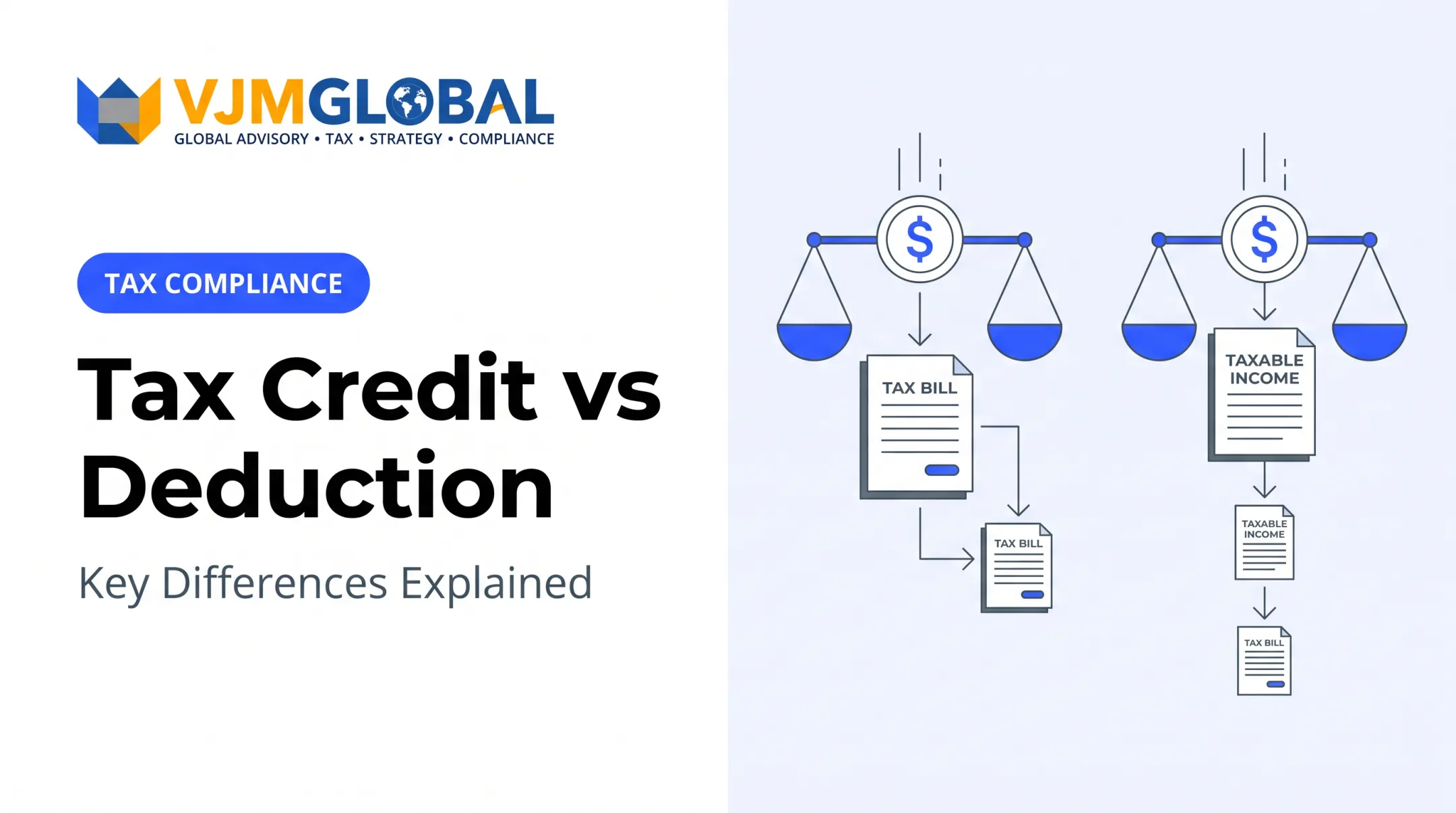
| Tax offset | Directly reduces the tax you owe. Most are non-refundable. |
| Deduction | Reduces taxable income, not tax dollar for dollar. |
| Tax refund | The balance after tax liability and credits for tax already paid. |
| Government payment | Income support such as DSP; may be taxable or exempt. |
A quick illustration: a $1,000 offset cuts a $3,000 tax bill to $2,000. A $1,000 deduction at a 30% marginal rate cuts the bill by roughly $300. Neither guarantees a refund.
Who administers what
- ATO: returns, deductions, offsets, assessments and amendments.
- Services Australia (Centrelink): Disability Support Pension (DSP), Carer Payment, Carer Allowance and Carer Supplement.
NDIS participant funding is exempt income. It isn't a tax credit, and you can't claim deductions for expenses the scheme funds.
How payments are taxed
- DSP: exempt below Age Pension age; taxable at Age Pension age or above.
- Carer Payment: generally exempt when both carer and care receiver are below Age Pension age.
- Carer Allowance and Carer Supplement: exempt.
"Tax-free" doesn't always mean "never reported". Exempt DSP and Carer Payment still count toward adjusted taxable income (ATI) for some offsets.
Canadian content cites CRA approval and Form T2201. U.S. content cites Schedule R. Neither belongs on an Australian return.
Who May Qualify for Disability-Related Tax Support?
Eligibility depends on the specific measure, not a list of qualifying diagnoses.
The invalid and invalid carer tax offset
This offset remains available in limited circumstances for 2025-26. Key conditions:
- The maintained person is 16 or older, and you live with them or contribute to their food, clothing or accommodation.
- They are your spouse, parent, spouse's parent, or your or your spouse's child or sibling, and receive DSP or a qualifying invalidity service pension (or you meet the ATO's care conditions).
- You meet the Australian residency requirements.
- Your 2025-26 ATI doesn't exceed $120,007.
- Their ATI is under $13,866. Reductions start at $286.
For a maintained spouse, full-year Family Tax Benefit Part B eligibility blocks the claim. Only one offset applies per maintained person for the same period.
Closed and look-alike measures
- Medical expenses tax offset: ended after 2018-19. It isn't available now.
- Zone and overseas forces offsets: disability isn't the qualifying condition, though dependant amounts can feature in the calculation.
Work-related deductions
Disability-related costs are deductible only if you incurred them in earning assessable income. Ordinary medical costs are private expenses. The ATO treats them as costs that put you in a position to work, not costs incurred while earning income. Compulsory medical assessments required by your current employment can be an exception.
Carers and parents
Rules for a disabled adult dependant differ from disability payment rules. They also differ from Canadian transfers and U.S. dependant tests. Check the invalid and invalid carer offset first.
Eligibility checklist
- Country of tax residence and the tax year
- The exact support sought (offset, deduction or payment)
- The payment or expense involved
- Your relationship to the disabled person
- Both parties' income
- Evidence on hand
Evidence and privacy
Evidence should establish the facts each rule tests, such as payment statements, maintenance periods, receipts and duty statements. A diagnosis name alone won't do. A bank statement alone is generally insufficient for deductions.
Keep written records for five years from lodgement, longer for depreciation claims or disputes. Share only the medical detail you need, and store it securely.
What Benefits, Offsets and Refunds Might Be Available?
For 2025-26, the invalid and invalid carer offset has a maximum full-year amount of $3,396 per eligible maintained person, before reductions.
Zone and overseas forces dependant base amounts are:
- $376 for each full-time student under 25 and for the oldest non-student child under 21
- $282 for each other child under 21
These are calculation components, not cash payments.
Offset value is not refund size
Most offsets can't reduce tax below zero, as the ATO explains. Your refund depends on:
- Tax withheld during the year (PAYG)
- Assessable income and deductions
- Other offsets
- Medicare levy and any Medicare levy surcharge
Services Australia doesn't automatically withhold tax from Carer Payment unless you ask, so a taxable payment can coexist with a tax bill.
Why approval doesn't guarantee a refund
Take two people, each entitled to the same $3,396 offset. One has $5,000 of tax payable and benefits in full. The other has $1,200 payable, so the offset only wipes out that liability. A refund then depends on tax already withheld.

Treat any estimate as an illustration until the ATO assesses your return.
Correcting past returns
- Amendments: Individuals generally have two years from the day after the notice of assessment is sent. Use myGov, a registered tax agent, or a paper form.
- Objections: Generally two years for most individuals and four years for others, measured from the assessment. Amended assessments have their own deadline.
Amending fixes a mistake or omission. An objection disputes an ATO decision. The timing rules differ.
Other supports are separate
DSP, Carer Payment, NDIS services and concession programs each have their own eligibility rules. Tax relief doesn't follow automatically from any of them.
How to Check Eligibility and Claim the Correct Support
Match the right Australian support to your situation, then lodge through the correct channel.
- Confirm the tax year and your Australian tax residency.
- Name the exact measure: the offset, a deduction or a payment.
- Read the ATO eligibility test for that year.
- Collect evidence: payment records, maintenance periods, receipts.
- Decide the channel. Offsets and deductions go in your return. DSP and carer payments go through Services Australia.
- Lodge, using myTax (via myGov), a registered tax agent or a paper return.

In myTax, select the relevant offset personalisation options, then Other tax offsets > Invalid and invalid carer. Use Work it out to calculate. Paper returns use supplementary return T5, label B.
If a claim is missed or wrong
- Review your notice of assessment.
- Request an amendment if you made a mistake or omission.
- Object if you disagree with the ATO's decision, within the deadline.
- Keep all records until the matter is resolved.
When professional tax advice may help
Paid tax agents generally need Tax Practitioners Board registration, which you can check on the TPB public register.
VJM Global provides tax, accounting, payroll and compliance services in Australia for Australian businesses, foreign businesses and cross-border taxpayers. That support helps where a disability-related question overlaps with business or international tax. The firm doesn't approve disability claims or guarantee entitlements or refunds, so seek advice suited to your circumstances.
How Australia Differs from Canada and the United States
Canada
Canada's Disability Tax Credit is a non-refundable credit. The applicant completes Part A of Form T2201, and a medical practitioner certifies Part B. The CRA decides eligibility.
- Marked restriction: unable to perform an activity, or taking three times longer, generally 90% of the time and lasting at least 12 months.
- Other routes: cumulative limitations or life-sustaining therapy.
- Transfers: unused amounts may pass to a supporting family member.
- Past years: claims may go back up to 10 years.
United States
The Credit for the Elderly or the Disabled uses IRS Schedule R instructions. Taxpayers must be 65 or older, or under 65 and retired on permanent and total disability with taxable disability income.
Income limits apply, for example AGI under US$17,500 for single filers in 2025. The credit is generally limited by tax liability.
Social Security Disability Income may be partly taxable. That's a separate calculation from Schedule R.

Decision guide
- Filing in Australia: start with the ATO and Services Australia.
- Filing in Canada or the U.S.: use CRA or IRS rules.
- Cross-border income: get advice on both jurisdictions. Australia has tax treaties with both countries, but Australian eligibility does not establish foreign eligibility.
Conclusion
Before you estimate eligibility or a refund:
- Identify the exact Australian offset, deduction, payment or dependant rule that applies
- Gather your payment and tax records
- Check the current ATO guidance
Where a dependant, business activity, foreign income or more than one country is involved, qualified tax advice is worth the cost.
Frequently Asked Questions
What is the maximum disability tax credit amount I can claim?
No universal amount exists. In Australia, the invalid and invalid carer offset is up to $3,396 for 2025-26 before reductions. Check the ATO for your year.
What disabilities qualify for the tax credit?
Eligibility turns on legal and functional tests, not diagnosis alone. Australian offsets focus on relationship, payments, residency and income. Canadian and U.S. rules differ.
What is the Tax Credit for Elderly or Disabled and who qualifies?
It's a U.S. federal credit claimed on Schedule R. Check IRS requirements. Australian residents shouldn't apply it to an Australian return.
Can I claim my disabled adult child as a dependant?
It depends on the country and the tests. In Australia, check the invalid and invalid carer offset: age, maintenance, payment receipt and income. U.S. dependent rules differ.
Is there a disability tax credit in the United States?
The U.S. has the Credit for the Elderly or the Disabled and other disability provisions, but not a program structured like Canada's DTC. See current IRS guidance.
What is a tax offset?
A tax offset directly reduces the tax you owe, unlike a deduction, which reduces taxable income. Most can't cut tax below zero, so your refund depends on your overall assessment.