Introduction
An Australian company pays you a dividend. Tax is withheld before the money lands in your account. Then the IRS asks you to report the full gross amount on Form 1040 anyway.
That's the double-taxation problem facing U.S. citizens, green-card holders and resident aliens in Australia, or anyone holding Australian and other foreign investments. U.S. citizens and resident aliens are taxed on worldwide income, so living in Australia doesn't take dividends off the U.S. return.
Nonresident aliens follow different rules and generally file Form 1040-NR, which this article doesn't cover.
The process runs in order:
- Identify the gross dividend
- Classify it as ordinary or qualified
- Convert to U.S. dollars and report it
- Claim a credit or deduction for the foreign tax
Key Takeaways
- Report the gross dividend as income; the foreign tax is a separate credit or deduction claim.
- Qualified-dividend status doesn't guarantee every foreign dividend or tax gets the same treatment.
- Franking credits and Australian withholding tax are different things for U.S. purposes.
- Keep vouchers, broker statements, tax records and exchange-rate sources.
What Counts as Foreign Tax Paid on Dividends?
A foreign dividend is defined by the company paying it, not by where your brokerage account sits or where you live. An Australian-listed company held through a U.S. broker still pays a foreign dividend.
Gross, withheld and net amounts
Three numbers matter:
- Gross dividend: the amount declared before any tax
- Foreign withholding tax: the amount the payer or country took out
- Net cash: what you actually received
A dividend voucher or foreign broker statement may show all three.
On Form 1099-DIV, box 1a shows ordinary dividends, box 1b the qualified portion (already inside box 1a), and box 7 the foreign tax paid in U.S. dollars.
Box 8 names the country, though funds structured as regulated investment companies leave it blank.
An Australia-specific caution
Australian withholding generally applies to unfranked dividends paid to foreign residents. Under the U.S.-Australia treaty, the ordinary individual ceiling is 15% of gross dividends. Fully franked dividends are typically exempt from that withholding.
Franking is different. It represents tax the company already paid on its profits.
U.S. credit rules look to the taxpayer legally liable for the foreign tax. No Australia-specific IRS ruling resolves whether an attached franking amount counts as shareholder-paid foreign income tax.
Don't treat franking as creditable without professional review of the current treaty, IRS guidance and your Australian documentation.

How to Report Foreign Dividends on Form 1040
Start with the gross amount
Pull the gross figure from your broker statement, issuer records, Form 1099-DIV or fund tax report. Reporting only the net deposit understates income. Pub. 550 is blunt: even without a 1099-DIV, you must report all taxable dividend income.
Convert to U.S. dollars
Report in dollars, generally using the exchange rate when the dividend was received.
For foreign tax, Form 1116 instructions say to use the rate on the payment or withholding date for taxes paid. Accrued taxes generally use the year's average rate. The IRS's 2025 annual table lists AUD 1.551 per USD 1. Pick a method and apply it consistently.
Ordinary or qualified?
A qualified dividend needs three things:
- A U.S. corporation or qualified foreign corporation as payer. Australia appears in the Pub. 550 treaty table, but other requirements still apply.
- Not a disqualifying type: a PFIC in the payment year or the prior year is excluded, whatever the treaty says.
- The holding period: more than 60 days within the 121-day window beginning 60 days before the ex-dividend date.
Where it goes on the 2025 Form 1040
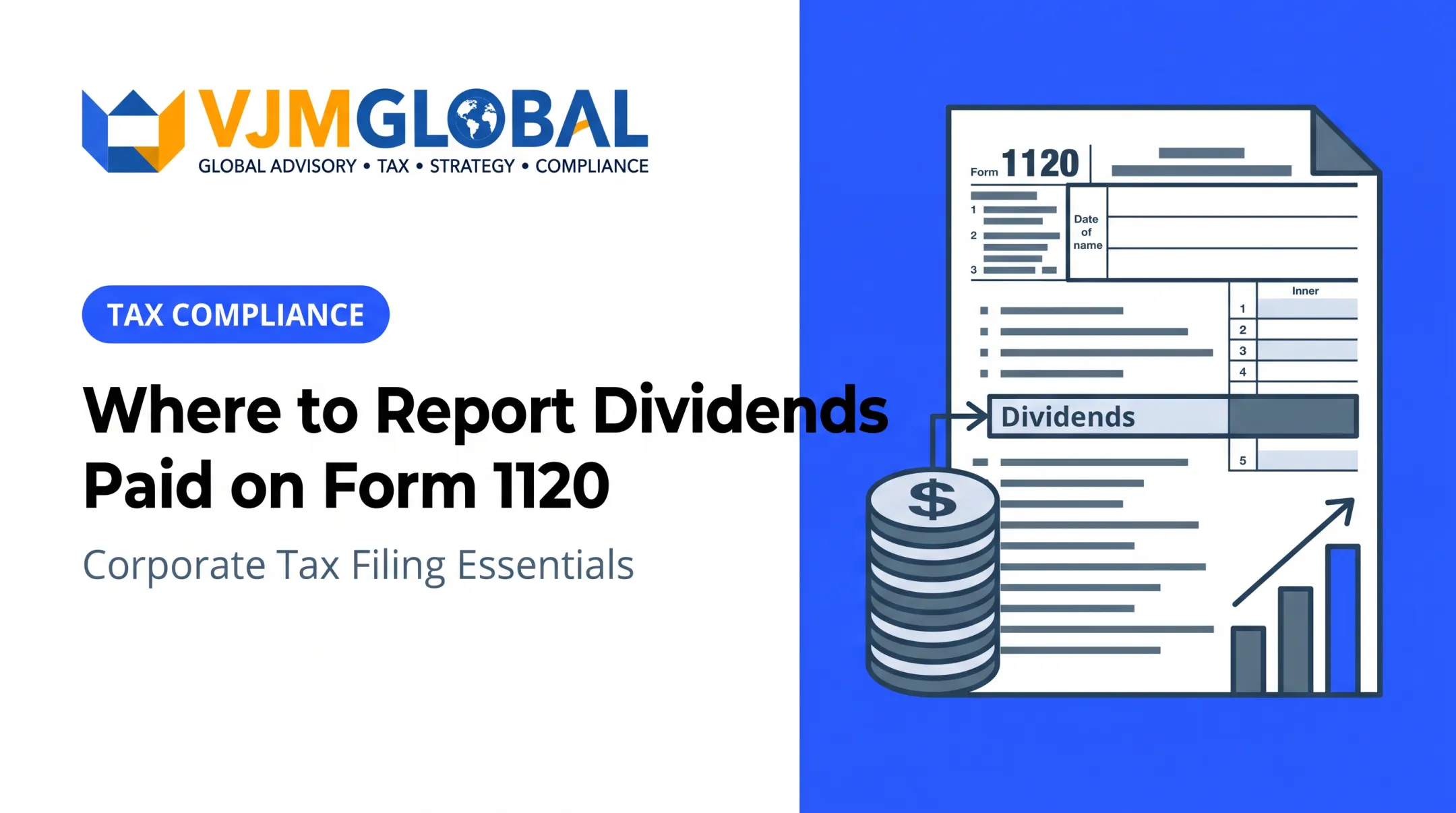
- Line 3b: ordinary dividends
- Line 3a: qualified dividends (already included in 3b)
- Schedule B: required above $1,500 of ordinary dividends
- Schedule 3, line 1: the foreign tax credit, with Form 1116 attached if required
Confirm line numbers for the tax year you're filing.
How to Claim the Foreign Tax Credit for Dividend Taxes
Basic eligibility
The foreign tax must meet all of these tests:
- Imposed on you personally
- Paid or accrued by you
- Legally and actually owed
- An income tax, or a tax in lieu of one
- Related to income you report for U.S. purposes
Form 1116
Most dividends fall in the passive category. File a separate Form 1116 for each income category, and use separate columns for each country.
The small-amount election
You can skip Form 1116 only if all of these hold:
- All your foreign-source gross income is passive
- That income and tax appear on qualified payee statements, such as Form 1099-DIV
- Creditable taxes don't exceed $300, or $600 if married filing jointly
The trade-off: you give up carrybacks and carryforwards for that year. Estates and trusts can't use it.
Credit or deduction?
You generally choose each year between crediting and deducting all qualified foreign taxes, not both. A credit cuts your U.S. tax directly. A deduction on Schedule A (line 6) only reduces taxable income, so it rarely beats the credit unless the credit is heavily limited.

Filing workflow
- Gather Form 1099-DIV statements and foreign tax records.
- Report gross dividends on Form 1040.
- Classify them as ordinary or qualified for the correct U.S. rate.
- Convert the eligible foreign tax to U.S. dollars at the proper exchange rate.
- Complete Form 1116, or use the direct-credit route if you qualify.
- Review any carryback or carryforward of unused credit.
Who Can Claim the Credit and How Much Can Be Used?
U.S. citizens and resident aliens generally qualify. Living in Australia neither grants nor removes eligibility. Nonresident aliens and taxpayers with excluded income may follow different rules.
The limitation
The credit is limited to the lesser of:
- The eligible foreign tax paid, or
- Your U.S. tax × (foreign-source taxable income ÷ total taxable income)
The ratio uses taxable income, not gross dividends.
Qualified dividends
Preferential rates require an adjustment on the 2025 Form 1116, line 1a:
- Foreign qualified dividends taxed at 15%: multiply by 0.4054
- Those taxed at 20%: multiply by 0.5405
- 0%-rate amounts: excluded
An exception applies when both foreign qualified dividends and capital gain distributions are under $20,000 and income is below set thresholds. It isn't a universal exemption.
Unused credits
Unused credits generally carry back one year and forward ten. They aren't refundable.
Refunds and overwithholding
If a treaty caps the rate at 15% and Australia withheld more, only the treaty amount is creditable when the excess is refundable. If you later receive a foreign refund, the U.S. return may need correcting. Pub. 514 generally calls for Form 1040-X and a revised Form 1116 when U.S. tax due changes.

Common Mistakes and a Form 1040 Filing Checklist
Frequent errors
- Reporting net rather than gross dividends
- Mixing exchange-rate methods
- Treating every foreign statement amount as creditable
- Confusing franking credits with withholding
- Misclassifying qualified dividends
- Claiming a credit and a deduction for the same tax
Document checklist
- Dividend vouchers and broker or fund statements
- Form 1099-DIV, if issued
- Foreign tax receipts and withholding correspondence
- Exchange-rate records
- Prior-year credit carryover information
- Records for any foreign mutual fund or ETF
When to get help
Complex cases call for a specialist. Get professional help when you face:
- Australian and U.S. rules interacting on the same income
- Form 1116 limitation calculations
- PFIC reporting on Form 8621
- Investments across several countries
- Amended returns
VJM Global works with CPAs, Chartered Accountants and U.S.-compliant professionals, and prepares Form 1040 returns with transparent pricing. Its Foreign Tax Credit Relief service aligns filings with Form 1116.
Frequently Asked Questions
How do I claim a foreign tax credit for foreign taxes paid on dividends on my Form 1040?
Report the gross dividend, confirm the tax is creditable, then claim it through Form 1116 or the direct-credit route if you qualify. Follow the current-year IRS instructions.
Where do I report foreign dividends on Form 1040?
On the 2025 form, ordinary dividends go on line 3b and qualified dividends on line 3a. Check line numbers for your filing year.
Who can claim the foreign tax credit and how is the amount calculated?
U.S. citizens and resident aliens can claim it when the tax relates to taxable foreign-source income. The Form 1116 limitation caps the credit at the proportion of U.S. tax attributable to that income.
Do I have to pay taxes on foreign dividends in the US?
Generally yes. U.S. citizens and resident aliens report worldwide income, though an allowable foreign tax credit can reduce double taxation.
How are foreign dividends taxed in the US?
Ordinary dividends are taxed as ordinary income. Qualified dividends get 0%, 15% or 20% rates, depending on the payer, holding period, treaty status and investment type.
What is the dividend tax credit and how does it work?
Usually it means the U.S. foreign tax credit for tax paid on dividend income. It differs from Australian franking credits, which represent company tax.