This guide covers U.S. federal SE tax, with a focus on Australian-based owners and businesses operating through a U.S. LLC. It compares default LLC taxation, S corporation elections, passive income, and cross-border obligations.
Key Takeaways
- An LLC is a state-law structure; the IRS treats it as a disregarded entity, partnership, S corporation, or C corporation.
- Active single-member owners pay SE tax on net business profit, not on what they withdraw.
- Partnership-taxed members generally pay SE tax on their active share of income plus service-related guaranteed payments.
- An S corporation election changes the mechanics but brings payroll, eligibility, and reasonable-compensation requirements.
- Australian owners should check social-security coverage, residency, and treaty rules before filing.
How LLC Tax Classification Affects Self-Employment Tax
SE tax funds Social Security and Medicare. The combined rate is 15.3% (12.4% Social Security plus 2.9% Medicare), applied to 92.35% of qualifying net profit.
The Social Security portion stops at an annual wage base of $176,100 for 2025 and $184,500 for 2026. An extra 0.9% Additional Medicare Tax applies above income thresholds (for example, $200,000 for single filers). You can deduct half of your SE tax from income.

SE tax is separate from federal income tax, from employer payroll tax, and from anything you owe the Australian Taxation Office (ATO).
The label matters less than the classification
The IRS describes an LLC as a state-law structure, not a federal tax class. Default treatment works like this:
- One member: disregarded entity, taxed on the owner's return.
- Two or more members: partnership.
- Either type can elect S corporation or C corporation treatment, which changes how pay, profit, and distributions are handled.
Taxable profit is not the same as cash taken out
Pass-through income lands on your personal return whether or not you withdraw it. If the LLC earns $80,000 and you leave it all in the business account, you can still owe tax on it.
The facts that drive the analysis:
- Number of members and any federal election
- Whether you perform services and hold management authority
- Type of income and any guaranteed payments
- Whether the activity is a trade or business
When LLC Owners Generally Pay Self-Employment Tax
Single-member LLCs
An owner running an active business generally reports profit on Schedule C and calculates SE tax on Schedule SE. Filing is required once net earnings reach $400. Tax follows net profit, not the amount you personally draw.
Multi-member LLCs taxed as partnerships
The LLC files Form 1065 and issues each member a Schedule K-1. For an active member, SE earnings appear in K-1 Box 14, code A, and flow into Schedule SE, even if profits stay in the LLC.
Guaranteed payments for services need separate treatment. They are set without regard to partnership income and generally count toward SE tax because they work like compensation.
Why members are not W-2 employees
IRS guidance, citing Rev. Rul. 69-184, says a bona fide partner is not an employee of the partnership. So the terms differ:
- Guaranteed payments: fixed pay for services or use of capital.
- Draws and distributions: cash withdrawals of profit.
- Wages: only for employees, and not for partners in a partnership.
A simple contrast
Priya, an LLC member, manages clients and delivers the work. Her share of profit is SE income. Her co-member Tom only contributed capital and has no role in operations. His return may be limited to passive or investment income, which is treated differently. Same LLC, different outcomes.

When LLC Owners May Not Pay Self-Employment Tax
The limited-partner exception
Section 1402(a)(13) excludes a limited partner's distributive share, but not guaranteed payments for services. Holding the title of "member" does not qualify you, and application to LLCs is fact-specific.
Courts disagree on the test:
- The Second Circuit (Soroban, 2026) held that principals exercising managerial control did not qualify.
- The Fifth Circuit (Sirius Solutions, January 2026) read "limited partner" as a partner in a limited partnership with limited liability, and vacated and remanded.
A 1997 proposed rule with a 500-hour test was never finalised, so it is not a safe harbour. Factors commonly examined include personal liability, authority to bind the LLC, participation, and management structure. No single nationwide test is settled.
Income categories that may fall outside SE tax
- Real estate rental income, except for real estate dealers or substantial services to tenants
- Specified dividends and interest, though interest earned in the course of a business can be included
- Gains and losses from capital assets
- Qualifying payments under a written partnership retirement plan (section 1402(a)(10))
Dividends paid by a corporation, rather than business earnings received directly, also sit outside SE earnings.
Do not relabel compensation as a distribution to avoid tax. A guaranteed payment for services can stay subject to SE tax even if your distributive share is treated differently.
How Tax Elections Change Self-Employment Tax Exposure
S corporation treatment
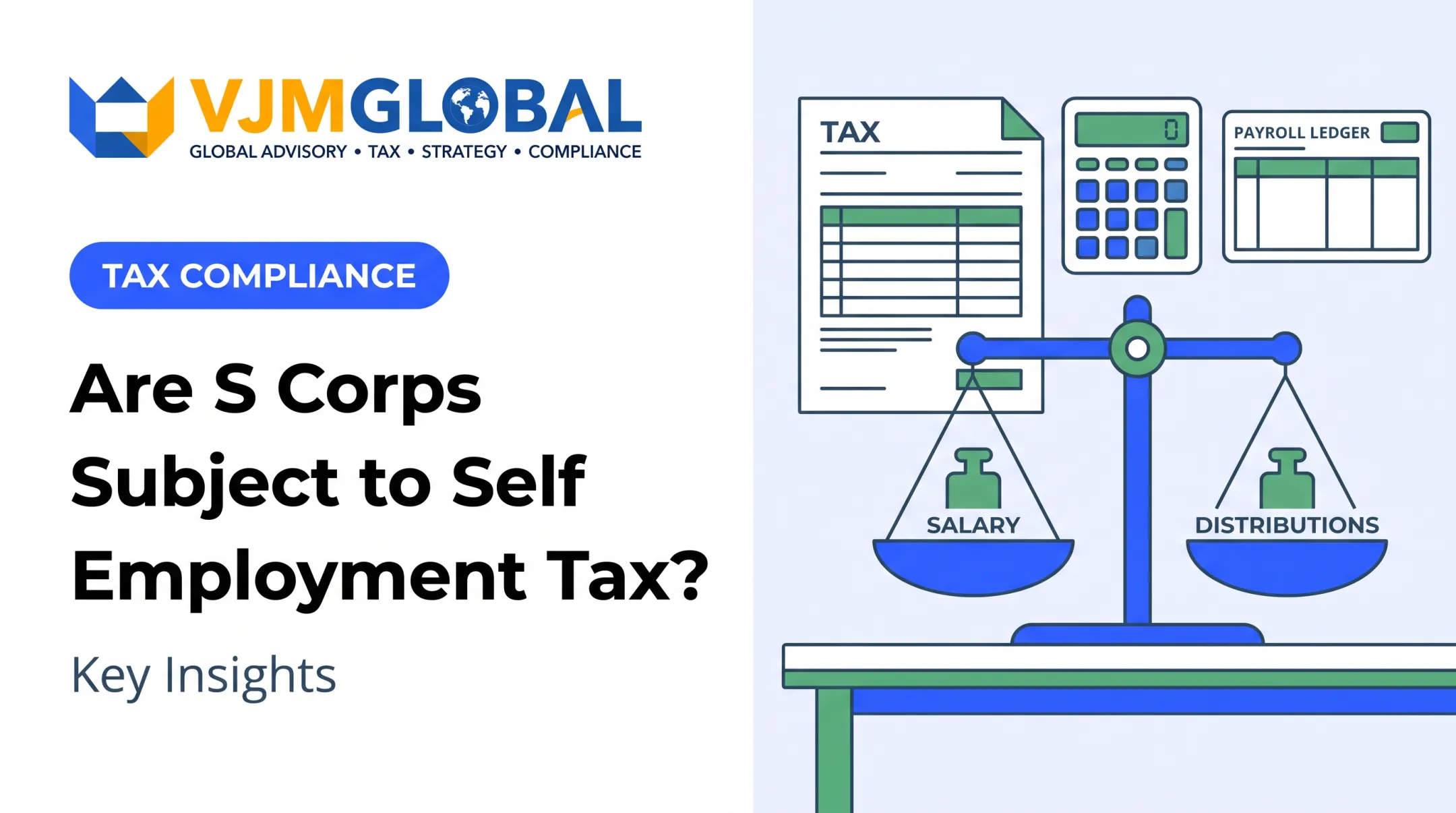
An S corporation separates pay from profit. Owner-employees receive wages subject to payroll tax, while other distributions are not wages. The IRS requires reasonable compensation first and can reclassify distributions as wages when pay is too low.
It is not an automatic fix. Consider:
- Eligibility: up to 100 shareholders, one class of stock, and no nonresident-alien shareholders (with a narrow exception). That alone rules out many Australian owners.
- Payroll: Forms W-4, W-2, and 941, plus state withholding.
- Form 1120-S and state-level filings or franchise taxes.
- Scrutiny of your salary level.
- Added compliance cost that may outweigh the saving.

C corporation treatment
Owner wages remain subject to employment tax. Dividends are generally not SE earnings, but the corporation pays 21% federal tax on profit first, so there are two layers of tax.
Comparison
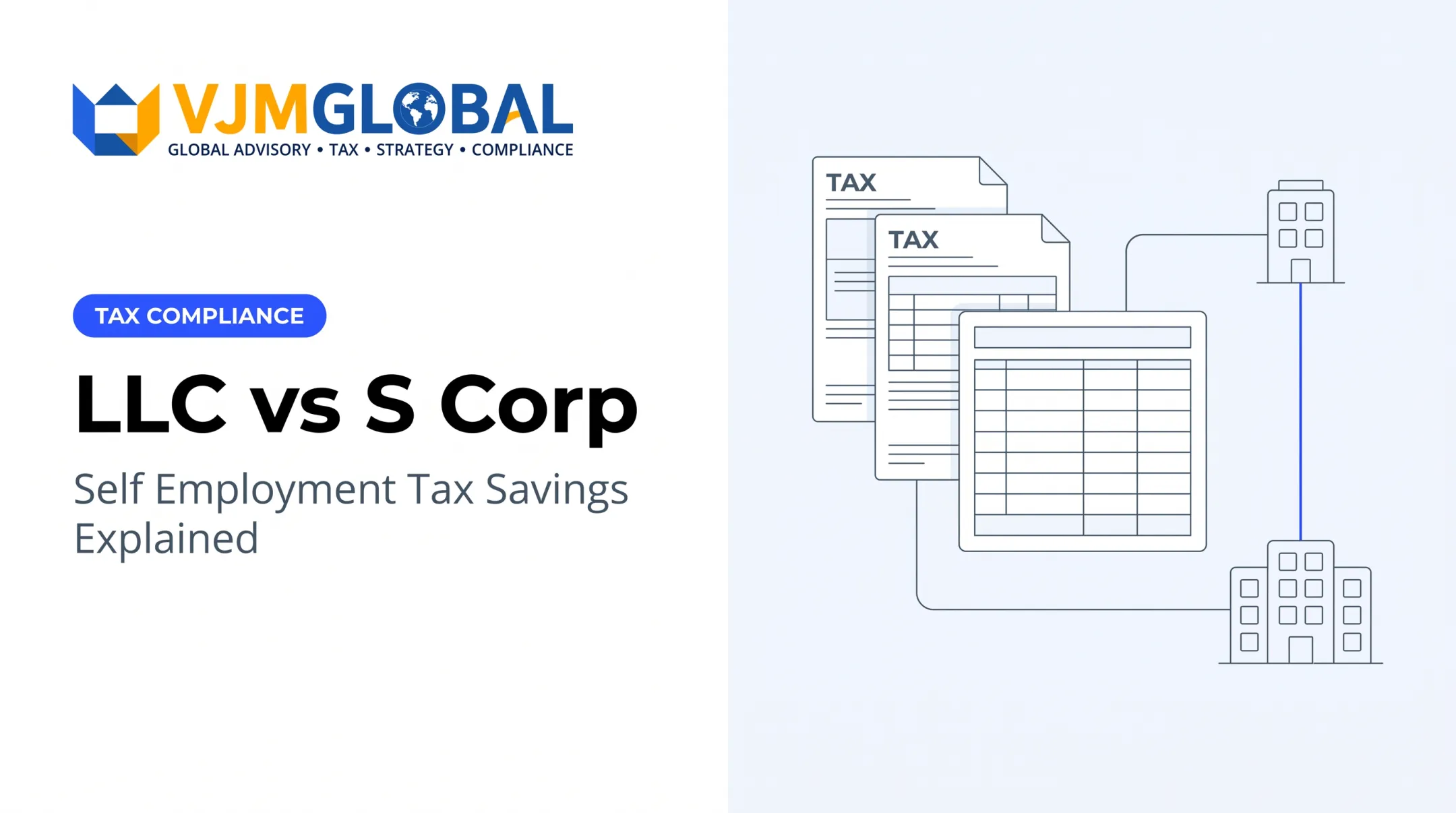
| Feature | Default LLC | S corporation | C corporation |
|---|---|---|---|
| SE tax | On net business earnings | On none of the distributions; wages face payroll tax | Wages face payroll tax; dividends are not SE earnings |
| Owner pay | Draws, guaranteed payments | Reasonable W-2 wages plus distributions | W-2 wages and dividends |
| Income tax | Owner's return | Passes through to owners | Corporate level plus dividends |
| Returns | Schedule C or Form 1065 | Form 1120-S | Form 1120 |
| Complexity | Lowest | Moderate to high | High |
Do not choose an election without reviewing your full facts.
How to Report and Plan for Self-Employment Tax
Gather your information
- Operating agreement and ownership structure
- Federal tax election (Form 8832 or 2553, if any)
- Management rights and services performed
- Guaranteed payments, draws, and distributions
- Income categories and prior returns
- U.S. and Australian residency details
Likely filings
Not every owner files all of these.
- Disregarded LLC: Schedule C and Schedule SE with Form 1040.
- Partnership: Form 1065 and K-1s.
- S corporation: Form 1120-S.
- C corporation: Form 1120.
For 2025, Form 1040 was due 15 April 2026, and Forms 1065 and 1120-S were due 16 March 2026. Confirm current deadlines on the IRS site.
Estimated tax and cash flow
Estimated tax is generally required when you expect to owe at least $1,000 after withholding and credits. SE tax is included in that figure.
2025 instalments fell on 15 April, 16 June, and 15 September 2025, and 15 January 2026. Reserve cash for tax on income you have not distributed, and keep compensation, draws, distributions, and expenses clearly separated in your books.

Australian owners of U.S. LLCs
- SE tax and residency: The IRS says SE tax applies to U.S. citizens and resident aliens; nonresident aliens are generally not subject to it, subject to Social Security agreements.
- Totalization: The U.S.-Australia agreement (in force since 1 October 2002) assigns coverage by residence and status. Self-employed U.S. residents stay under U.S. Social Security; U.S. citizens in Australia may request an exemption letter.
- Income tax: Effectively connected income and the treaty (Article 7, permanent establishment) govern income tax, not SE tax.
- Foreign-owned disregarded LLCs: These may need Form 5472 with a pro forma Form 1120, and an EIN.
- Australia: The ATO may treat a U.S. LLC as a foreign hybrid company (partnership treatment under Division 830 if conditions are met). A foreign income tax offset may apply, but it is not automatic.

VJM Global supports Australian businesses with U.S. LLC accounting, tax compliance, financial reporting, and coordination of cross-border information. Get tailored advice before changing an entity election or payment structure.
Frequently Asked Questions
Who is not subject to self-employment tax?
Qualifying passive owners, certain limited partners, owners receiving corporate dividends, and holders of statutorily excluded income may be exempt. Services performed, management rights, and the underlying activity can change the result.
Do single-member LLC owners pay self-employment tax?
Generally yes, if the LLC is a disregarded entity running an active business. Tax applies to net profit, not withdrawals, and a valid election can change the result.
Do multi-member LLC members pay self-employment tax?
Active members of partnership-taxed LLCs generally pay on their distributive share and service-related guaranteed payments. The limited-partner exception is fact-specific and unsettled.
Are LLC distributions subject to self-employment tax?
The cash itself is not the test. The income that generated it is, so a "distribution" label does not decide the treatment.
Can an LLC elect S corporation status to reduce self-employment tax?
Possibly, since distributions beyond reasonable wages avoid SE tax. But eligibility, payroll, reasonable-compensation scrutiny, extra filings, and costs all apply.
How does owning a U.S. LLC from Australia affect self-employment tax?
U.S. rules, residency, U.S. business activity, the social-security agreement, treaty terms, and Australian reporting can all matter. Coordinate advice across both countries.