Introduction
Mortgage interest gets messy fast when spouses file separate U.S. federal returns. One name on the loan, a joint bank account paying the bill, and a single Form 1098 in the mail: who deducts what?
The short answer: you can claim mortgage interest only if you itemize, and only for the share that fits your ownership, liability, payment and community-property facts. The IRS says its MFS rules require records of who paid.
This guide covers how to compare itemizing with the standard deduction, allocate interest, handle Form 1098 and keep records. If you live in Australia with U.S. filing obligations, keep U.S. federal rules separate from Australian tax treatment. This article covers only the U.S. side.
Key Takeaways
- Mortgage interest is deductible only if you itemize on Schedule A.
- Claim only the share properly allocable to you.
- If your spouse itemizes, your standard deduction is $0.
- Form 1098 is evidence, not an allocation.
How Itemized Deductions Work When Married Filing Separately
Standard vs. itemized
The 2026 base MFS standard deduction is $16,100. Mortgage interest sits on Schedule A, so you can't claim it while taking the standard deduction.
Each spouse files a separate return and reports only deductions allowed on that return. Household expenses don't move automatically to one return.
The coordination rule
Under Pub 501 (2025), an MFS taxpayer's standard deduction is zero if their spouse itemizes. So if one of you itemizes, the other must too, even if their deductible expenses are small. Check current IRS wording for any exceptions. A spouse who is considered unmarried may be able to file as head of household instead.
What counts toward the total
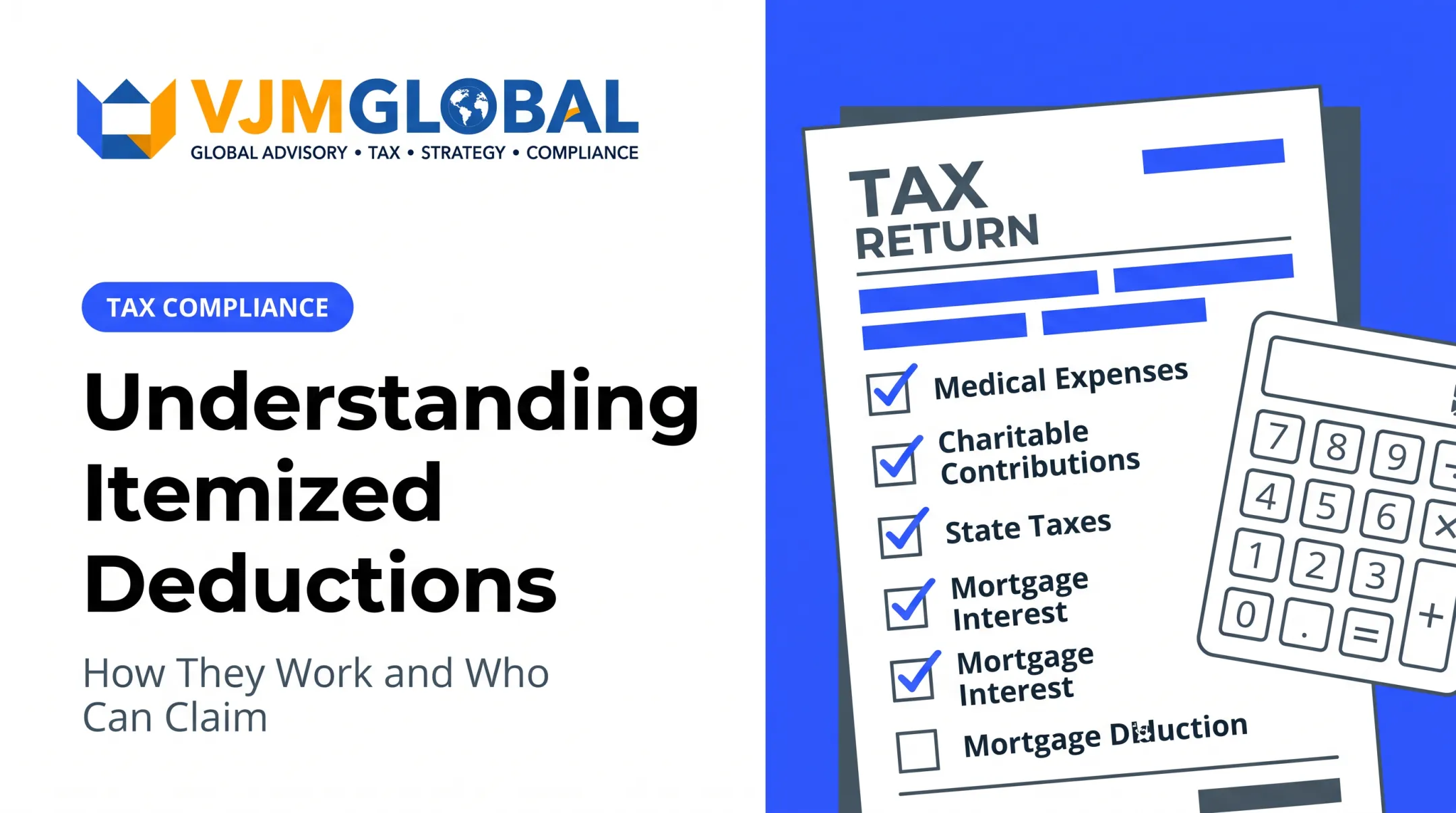
- Qualifying mortgage interest
- State and local taxes (2026 MFS cap of $20,200, reduced at higher incomes but not below $5,000)
- Charitable gifts (from 2026, a 0.5%-of-AGI floor applies)
- Medical expenses above 7.5% of AGI
- Qualifying casualty and disaster losses (the $100 per-casualty rule applies separately to each spouse)
A simple decision framework
- Total each spouse's allowable itemized deductions on their own return.
- Compare that total with the MFS standard deduction.
- Remember the lock-in: if one spouse itemizes, the other gets no standard deduction.
- Compare the combined tax result both ways, using current-year figures.

Run this alongside your full tax picture. A larger itemized total on one return can cost the other spouse a $16,100 standard deduction.
Who Can Claim Mortgage Interest on Separate Returns?
Three questions drive most allocations:
- Who is legally liable for the loan?
- Who owns an interest in the home?
- Who actually paid the interest?
IRS Publication 936 requires a qualified home in which you have an ownership interest and a loan you intend to repay. Treasury Regulation 1.163-1(b) also lets a legal or equitable owner deduct interest they pay even without direct liability on the note. Being absent from the loan doesn't automatically disqualify you.
Common scenarios
- Both on the loan, separate accounts: Each deducts what they can document they paid. Don't assume a 50/50 split.
- Joint account: Who funded it matters. The IRS example for equal interests on a jointly owned home paid from a joint account allocates one-half each when records support that split.
- One spouse on the loan or deed: Ownership and payment still matter. Neither the loan name nor the Form 1098 name decides it alone.
- One spouse pays everything from separate funds: Under the IRS MFS FAQ, that spouse deducts those payments, provided ownership and qualified-debt conditions are met.
Illustrative comparison
| Scenario | Likely approach |
|---|---|
| Both pay from own accounts | Each claims what they paid |
| One pays from separate funds | Payer claims it, if eligible |
| Equal-interest joint account | Often half each, with records |
| Form 1098 to one spouse only | Recipient uses line 8a; the other uses 8b with a statement |
These are examples, not universal outcomes.
Which Mortgage Interest and Home Costs May Qualify?
Debt must be secured by a qualified home and used to buy, build or substantially improve it (Pub 936, 2025).
Debt limits
- Debt after 15 December 2017: $375,000 MFS ($750,000 otherwise), now permanent under P.L. 119-21.
- Debt between 14 October 1987 and 15 December 2017: $500,000 MFS ($1 million otherwise), subject to combined-debt rules.
These limit the debt, not the deductible interest. Interest on debt above the limit needs a separate calculation.
Other home-related rules
- Second homes: MFS spouses normally count one qualified home each. Both may consent in writing for one spouse to count both.
- Refinancing: Acquisition-debt treatment continues only up to the old principal balance, plus any amount used to improve the home.
- HELOCs: Interest qualifies only if proceeds improve the home securing the loan.
- Points: Main-home purchase points may be deductible when paid; others are generally spread over the loan term.

What isn't mortgage interest
These items are not deductible as mortgage interest:
- Principal repayments
- Homeowners insurance and title insurance
- Escrow deposits (payments sent on to the taxing authority may still count as property tax under SALT rules)
Qualified mortgage insurance premiums are deductible again from 2026, subject to the usual requirements.
What Changes in Community Property and Ownership Situations?
Community-property states are Arizona, California, Idaho, Louisiana, Nevada, New Mexico, Texas, Washington and Wisconsin (IRS Publication 555).
- Community funds: Personal itemized deductions are divided equally.
- Separate funds: They belong to the paying spouse and are not split equally in every case.
Not every payment in these states is automatically split, so check the source of funds and property character.
Form 8958
Spouses with community-property rights who file separately use Form 8958 to allocate amounts and attach it to both returns.
Line 12 (Other items) covers deductions. Identify mortgage interest there and allocate the total between spouses. Keep records that show community funds, separate funds, separate property or joint ownership.

Special rules apply if you lived apart all year. Publication 555 sets four conditions, and all four must be met.
How to Compare, Report, and Document the Deduction
Step by step
- Confirm both spouses are filing as married filing separately.
- Review the deed and mortgage documents to confirm ownership and loan liability.
- Identify the qualified home and the debt that still qualifies for interest deduction.
- Trace who paid the interest using bank records and cancelled payments.
- Check whether community-property rules apply in your state, since they can change the split.
- Calculate each spouse's allowable share after acquisition-debt limits and allocation rules.
Schedule A
Use line 8a for interest on your own Form 1098, after limits and allocation. Use line 8b for interest not on your Form 1098, including your share of interest on someone else's form. Provide the recipient's name and address. On paper returns, attach an explanation of each person's payments and write "See attached" beside 8b.
Form 1098 mismatches
Lenders report to a payer of record, and the form doesn't establish each spouse's deductible portion. If your claim differs from the form, document why with payment records and an explanation.

Document checklist
- Form 1098
- Closing and refinancing documents
- Mortgage statements
- Bank statements and cancelled payments
- Deed and ownership records
- Evidence of separate or community funds
- Form 8958 or an allocation statement

Keep records generally three years from filing, and six years if you omit more than 25% of gross income.
Never deduct the same interest on both returns.
VJM Global's tax professionals prepare Form 1040 returns and can review U.S. compliance and documentation for cross-border cases, including Australia-based taxpayers with U.S. filing obligations.
Frequently Asked Questions
Can both spouses deduct mortgage interest when married filing separately?
Yes, each can claim a properly allocated share if each meets the ownership, liability, payment and itemizing requirements. Community-property rules can change the result.
Do I have to itemize deductions if married filing separately?
Not generally, but you must itemize to claim mortgage interest. If your spouse itemizes, your standard deduction is zero, so you must itemize too.
Is it worth itemizing deductions for mortgage interest when married filing separately?
Compare each spouse's allowable itemized total, including other expenses and limits, against the MFS standard deduction. Weigh the cost of the other spouse losing theirs.
What if only one spouse is named on Form 1098?
Form 1098 alone doesn't decide eligibility. Review ownership, liability, actual payment and allocation, and report the other spouse's share on line 8b with the required statement.
How do community property rules affect mortgage interest when filing separately?
Community funds are generally split equally, while separate funds stay with the paying spouse. Form 8958 is typically required to show the allocation.