If you're reading this from Australia, here's the first thing to understand: an S corporation is a U.S. federal tax election under the Internal Revenue Code, not an Australian business structure, according to IRS's S corporation guidance. It doesn't exist as a category under Australian law, and holding shares in one doesn't change how your Australian tax obligations work. Many Australians who own or invest in U.S. businesses need separate U.S. and Australian advice to get both sides right.
This guide walks through a practical record-keeping workflow: what to set up, what to capture, how to reconcile, when to tighten controls, the mistakes that cause the most damage, and when it's time to bring in professional help.
Key Takeaways
- Separate business and personal activity, reconcile accounts regularly, and keep support for every material transaction
- Owner compensation, payroll, shareholder basis, and distributions carry the highest risk of errors
- Software organises transactions but doesn't decide tax treatment, reasonable compensation, or cross-border obligations
- One secure, consistent record system should support filings, lender requests, and enquiries alike
How to Handle S Corp Accounting and Record Keeping
Step 1: Set Up a Clean Accounting System
Start with separation. Open dedicated business bank and credit accounts, and route payroll, reimbursements, and shareholder distributions through distinct payment processes rather than one shared account.
Build a chart of accounts that separates:
- Revenue and cost of goods sold
- Operating expenses by category
- Payroll and payroll tax liabilities
- Fixed assets and depreciation
- Shareholder contributions, distributions, and equity
Choose accounting software that supports bank feeds, document storage, reconciliation, payroll integration, and user-access controls. Platforms such as QuickBooks and Xero connect directly to e-commerce channels like Amazon and Shopify. They record sales, processing fees, and refunds into the correct account instead of leaving it for a messy year-end clean-up.
Finally, confirm your accounting method. S corporations can generally use cash or accrual accounting, though a business carrying inventory usually needs accrual accounting for purchases and sales. Eligibility for small-business exceptions depends on a gross-receipts test that changes yearly, so confirm your method with a tax professional rather than assuming last year's approach still applies.
Step 2: Capture and Classify Every Transaction
Record transactions as they happen. Waiting until year-end to reconstruct sales, bills, payroll, and distributions from memory almost guarantees errors.
For each transaction, attach the supporting evidence:
- Invoices, receipts, and payment confirmations
- Contracts for larger purchases or services
- Payroll reports and mileage logs
- Loan and reimbursement documentation
Categorise consistently. Deductible operating costs, capital purchases, personal expenses, and shareholder activity each need their own treatment, not a shared "miscellaneous" bucket. Expenses must be ordinary and necessary, and where a cost mixes business and personal use, only the business portion is deductible.
Travel, vehicle, and gift expenses carry specific documentation requirements: date, amount, business purpose, and destination, recorded at the time rather than estimated later.
Unusual, high-value, or owner-related transactions deserve extra scrutiny before they're finalised. Require a short written explanation and supporting document for anything that doesn't fit a routine pattern. This single habit prevents most of the commingling problems covered later in this guide.
Step 3: Reconcile and Review the Books
Reconcile every bank, credit card, loan, payment processor, and payroll account against its statement on a fixed schedule. Monthly is typical. When numbers don't match, investigate the difference rather than forcing an adjustment to make the ledger balance.
After each close, review:
- Profit and loss statement and cash position
- Accounts receivable and accounts payable ageing
- Payroll liabilities against payroll reports
- Tax balances by liability account
Multi-channel reconciliation matters here. If the business sells through several payment methods, such as ACH transfers, cheques, and digital wallets, each channel needs matching to the bank down to the last cent, not a rough estimate at month-end.
Shareholder transactions deserve their own line of sight, too. A distribution or loan repayment buried inside "general expenses" distorts both the P&L and the shareholder's basis calculation. Keep a closing checklist that records who prepared, reviewed, and approved each reconciliation, so there's a clear trail if a lender or examiner asks questions later.
Step 4: Prepare Records for Reporting and Tax Compliance
Before tax preparation begins, assemble:
- Year-end trial balance and account reconciliations
- Fixed-asset register and depreciation schedules
- Loan statements and payroll records
- Shareholder contribution and distribution logs
These feed directly into Form 1120-S and each shareholder's Schedule K-1, plus any state filings the business owes. The return is generally due the 15th day of the third month after the tax year ends, with a six-month extension available on request. Verify current due dates each year, since filing rules shift periodically.
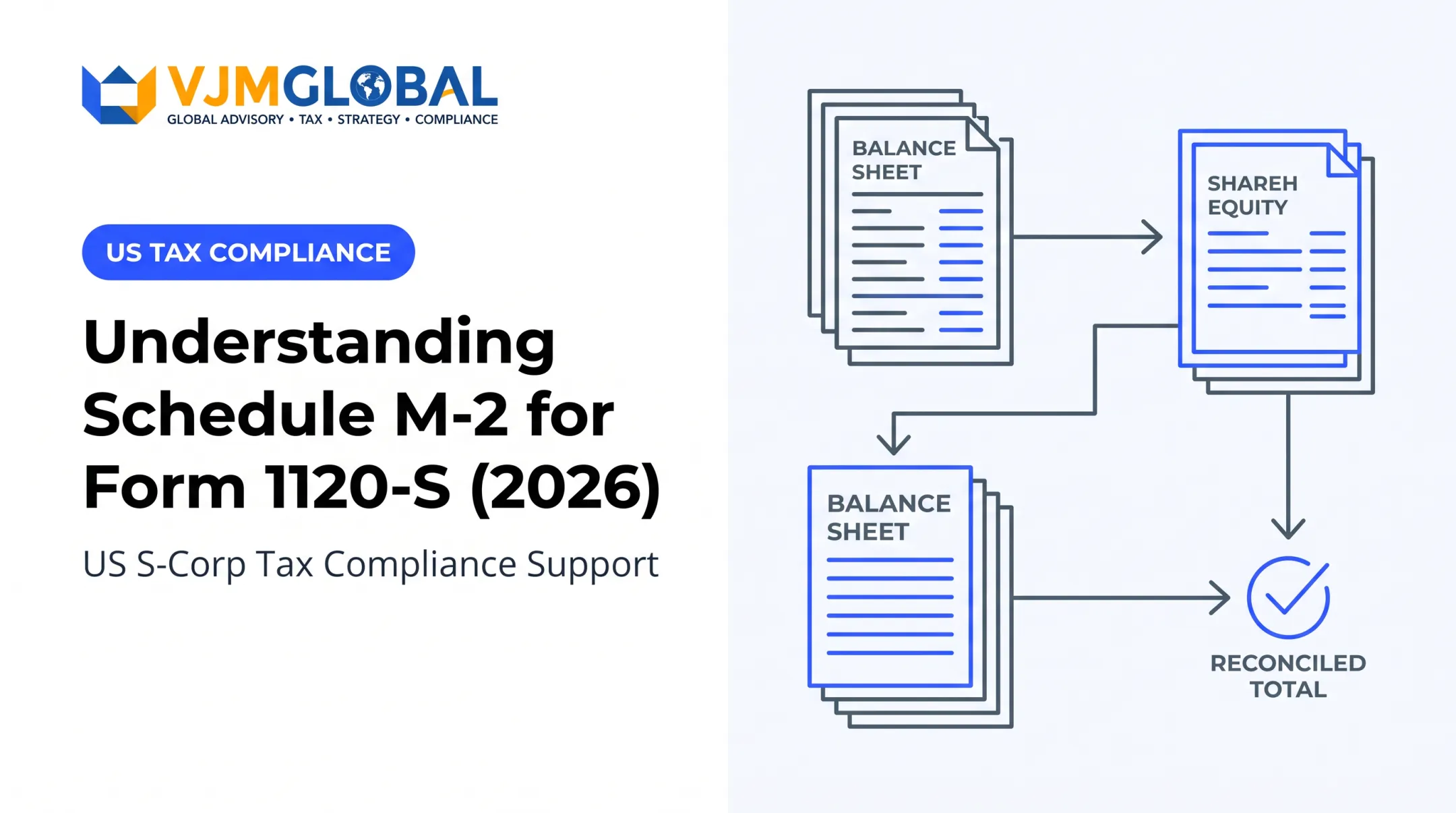
Update shareholder basis using the year's income, losses, contributions, and distributions. This isn't optional bookkeeping. It determines whether a shareholder can claim a loss on their personal return or whether a distribution is tax-free. Get a professional review when the calculation involves multiple shareholders or loan basis.
Once the return is filed, preserve a final, read-only year-end file: filed returns, financial statements, workpapers, source documents, and sign-off evidence. This file becomes the first thing requested during financing, a buyer's due diligence, or a tax enquiry.

When Should You Give S Corp Record Keeping Extra Attention?
The workflow above runs year-round, but certain triggers call for a closer look:
- The business starts paying an owner-employee a wage for the first time
- A new shareholder joins, changing the ownership ledger and basis figures
- The company takes a significant distribution or series of distributions
- You purchase a major asset, take out a loan, or refinance existing debt
- Operations expand into another state or country
- You switch accounting software or bookkeeping providers
Some situations are worth a call to your adviser before you act, not after:
- Paying an owner-employee entirely through distributions instead of wages
- Reimbursing a personal purchase through the company account
- Transferring personal assets into the business
- Forgiving a shareholder loan
- Making or receiving cross-border payments
Cross-Border Complexity for Australian Owners
If you're an Australian resident with a U.S. S corporation interest, keep the two tax systems separate in your thinking. U.S. federal and state filings answer U.S. obligations. They say nothing about Australian tax residency, foreign income declarations, or ATO reporting requirements, which follow their own rules entirely.
Filing correctly in the U.S. doesn't satisfy Australian obligations, and the reverse is also true. Cross-border owners typically need both a U.S. preparer and an Australian adviser reviewing the same facts.
Foreign asset disclosure items such as FBAR and FATCA reporting sit alongside, not instead of, Australian declarations.
Beyond cross-border issues, the right level of review scales with your overall setup. Factors that raise the bar include:
- Transaction volume and payroll complexity
- Number of owners and related entities
- Inventory holdings or industry-specific rules
- International activity

Core Records and Accounting Controls for an S Corp
Good record keeping should show what happened, why it happened, who approved it, how it was paid, and how it flows into the accounts and tax return.
Financial and Transaction Records
Maintain the backbone documents:
- General ledgers, journals, and reconciliations
- Invoices, receipts, bills, and contracts
- Bank, credit card, and payment processor statements
- Deposit records and loan documents
Common expense categories need their own evidence trail:
- Payroll records for wages
- Lease agreements for rent
- Subscription invoices for software
- Engagement letters for professional services
- Mileage logs for vehicles
Deductibility and substantiation rules differ by category and change periodically, so confirm current treatment before claiming anything unusual.
Fixed assets deserve separate tracking from ordinary expenses. Keep acquisition documents, the date each asset was placed in service, improvement records, disposal information, and the depreciation schedule tied to each item.
Payroll, Compensation, and Shareholder Records
Owner-employees need a documented payroll process:
- Payroll registers and wage payments
- Tax withholdings and employment tax filings
- Benefits records and year-end wage reporting
The IRS requires an S corporation to pay a shareholder-employee reasonable compensation for services before making non-wage distributions. It can reclassify distributions as wages when pay looks too low for the work performed, according to IRS compensation guidance. Build a reasonable-compensation file covering:
- Role, duties, and hours worked
- Industry and location benchmarks
- Comparable pay evidence
- The method used to set the salary
Keep this updated annually, not written once and forgotten.
Shareholder basis records matter just as much. Stock basis increases with income items and contributions, then decreases for distributions, nondeductible expenses, and losses. The order is set out in the Form 7203 instructions.
A distribution that exceeds stock basis becomes a taxable capital gain, so a shareholder needs current basis figures before taking a large distribution, not after.
Finally, label every owner transaction correctly: salary, reimbursement, distribution, loan repayment, or capital contribution. Each carries different tax treatment, and mislabelling one as another is one of the most common S corp errors.

Corporate and Tax Compliance Records
Keep the documents that prove the entity exists and operates properly:
- S election documentation and EIN confirmation
- Articles of incorporation, bylaws, and the ownership ledger
- Shareholder and board approvals and meeting minutes
- Annual reports and licences required by your state
Retain filed federal and state returns, extensions, notices, payment confirmations, payroll filings, K-1s, and the workpapers behind them.
Retention periods vary by record type:
- Ordinary return support: often three years
- Employment tax records: at least four years
- Property basis or open disputes: longer as needed
Confirm current requirements for your situation rather than relying on a single rule of thumb.
Store everything in one encrypted system with restricted access, regular backups, and version control. A documented retrieval process matters when a lender, buyer, or tax authority asks for records on short notice, not six months later.
Common S Corp Accounting Mistakes, Troubleshooting, and Alternatives
Most problems start small: weak separation between business and personal funds, late data entry, missing receipts, or an owner transaction nobody classified correctly. Fix the cause and document the correction. Don't bury it in an unexplained journal entry.
| Problem | Likely Cause | What to Check or Fix |
|---|---|---|
| Commingled personal and business transactions | Owner uses personal cards or transfers funds without labelling the purpose | Trace to the bank statement and business purpose; reclassify with documentation; add a reimbursement or distribution approval step |
| Unreconciled accounts or inaccurate statements | Duplicate bank-feed entries, omitted transactions, wrong opening balances | Compare the ledger to statements, age outstanding items, correct the entry, document the review |
| Unsupported expenses or excessive distributions | Missing receipts, personal spending booked as a business cost, distributions taken without checking basis | Obtain support, reverse or reclassify, update the distribution log and basis schedule, get advice before further distributions |
| Salary, payroll, and filing problems | Irregular owner pay, incomplete records, missed filings | Reconcile payroll to the ledger, confirm filings and payments, correct through proper payroll channels, have an adviser assess penalties |
Alternatives and Professional Support
Once the common failure points are under control, decide how much of the work stays in-house:
- Self-managed bookkeeping – lowest cost, highest owner time, no built-in technical review
- Software-assisted bookkeeping – automates data capture and reporting, still needs a human to judge tax treatment
- Outsourced bookkeeping – adds trained staff and reconciliation discipline without hiring in-house
- Full-service accounting support – adds tax, payroll, and compliance review alongside bookkeeping
Software keeps the numbers organised. It cannot decide whether a payment is a distribution or a loan, whether a salary is reasonable, or how shareholder basis and cross-border reporting should work. Those calls need a person who understands the rules behind the numbers.
This is where outsourced support earns its keep for cross-border owners. VJM Global covers accounting and bookkeeping outsourcing, accounts payable and receivable processing, multi-channel payment reconciliation, and year-end account preparation.
Work is delivered through encrypted systems and secure portals, with audit-ready records on hand. The firm has supported more than 250 Australian businesses alongside its U.S. client base, which is the dual-market exposure cross-border S corp owners often need.

Where records involve payroll, multiple shareholders, related-party activity, international operations, or an unresolved basis question, loop in a qualified U.S. tax professional. Australian residents should pair that with an adviser who understands Australian cross-border rules, since neither side substitutes for the other.
Conclusion
S corp accounting becomes manageable once the business separates financial activity, captures source documents as they happen, reconciles accounts on schedule, and tracks payroll and shareholder transactions with equal care. None of this requires complicated systems, just consistency.
The costliest errors are rarely dramatic:
- Commingled funds nobody labelled
- An expense with no receipt
- A salary set without analysis
- A distribution taken without checking basis
- A filing deadline missed because records weren't ready in time
Build a repeatable routine: capture, classify, reconcile, review. Then bring in professional review once the business crosses into payroll, multiple shareholders, or cross-border territory, particularly if you're managing both U.S. and Australian obligations at once.
Frequently Asked Questions
Do you need an accountant for an S corp?
You can manage basic bookkeeping yourself if the business is simple with one owner. Once payroll, shareholder basis, reasonable compensation, multiple owners, or cross-border activity enter the picture, a qualified accountant's review becomes worthwhile.
How do I handle S corp accounting?
Separate business and personal accounts, categorise every transaction with supporting documents, reconcile accounts regularly, and track payroll, distributions, and shareholder basis throughout the year. Pull these into a clean file before tax preparation begins.
How long should an S corp keep financial and tax records?
Retention periods vary by record type and by applicable federal, state, employment, and asset rules, and they run longer where a dispute or audit is open. Check current requirements rather than assuming one period covers everything.
What can I expense as an S corp?
Expenses must be ordinary, necessary, properly documented, and connected to the business, not personal in nature. Substantiation rules differ by expense type, such as travel or vehicle costs, so verify current requirements before claiming anything unusual.
What are the biggest tax mistakes S corp owners make?
Commingling personal and business funds, paying no documented salary, misclassifying distributions, ignoring shareholder basis, claiming unsupported expenses, and missing payroll or tax filings top the list.
Does an S corp have to file a balance sheet?
Form 1120-S may allow certain small corporations to skip Schedule L, but the exact thresholds depend on current filing instructions. Maintain an accurate balance sheet regardless, since it supports every other part of the return.