Introduction
Yes. A U.S. S corporation generally prepares a Schedule K-1 (Form 1120-S) for each shareholder as part of its annual tax filing. The K-1 is a U.S. tax document, so Australian-based readers with an interest in U.S. entities need to treat it carefully.
The confusion is understandable. Form 1120-S, the shareholder's K-1, W-2 wages and cash distributions are four separate things, and people often mix them up. The IRS reported an estimated 5,266,702 active Form 1120-S returns for tax year 2022, so the form is everywhere.
This guide explains what the K-1 reports, how it feeds into a shareholder's return, how to check it, and where Australian reporting, foreign tax treatment and S corporation eligibility need their own review.
Key Takeaways
- Each shareholder generally gets a K-1, even with no distribution or a loss.
- A K-1 reports allocated tax items, not cash received.
- The corporation files Form 1120-S; shareholders use K-1 data on their own returns.
- Check ownership details, attached statements, basis records and deadlines.
- Australian reporting and S corporation eligibility need separate review.
What Is Schedule K-1 for an S Corporation?
An S corporation is a pass-through entity. The corporation reports its income, deductions, credits and other tax items, and those amounts are allocated to shareholders, who report them on their own tax returns.
Form 1120-S versus Schedule K-1
Form 1120-S is the corporation's annual U.S. return. Schedule K-1 is the shareholder-specific statement prepared from it. The corporation or its tax preparer files the information with the IRS and gives each shareholder a separate K-1. Shareholders don't create it themselves.
Who receives an S corporation K-1?
The corporation generally furnishes a K-1 to everyone who was a shareholder at any time during the year, according to the Form 1120-S instructions. That covers:
- Part-year shareholders, including buyers and sellers mid-year
- Shareholders with a reported loss
- Shareholders in a quiet year with no distribution
An LLC that elects S corporation status files Form 1120-S, and its owners receive Schedule K-1 (Form 1120-S). An LLC with a different tax classification may use different reporting, or no S corporation K-1 at all.
What information does the K-1 contain?
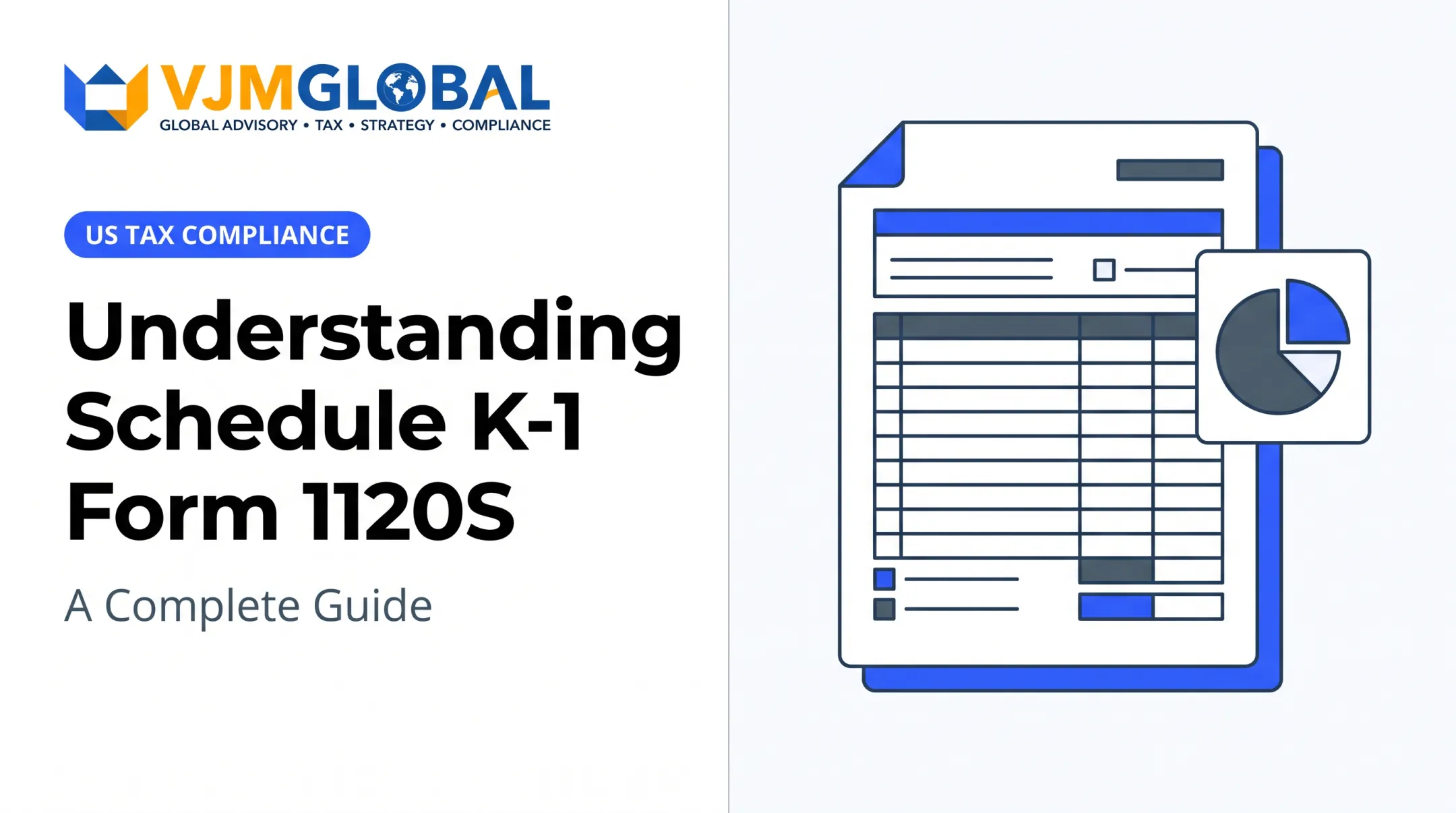
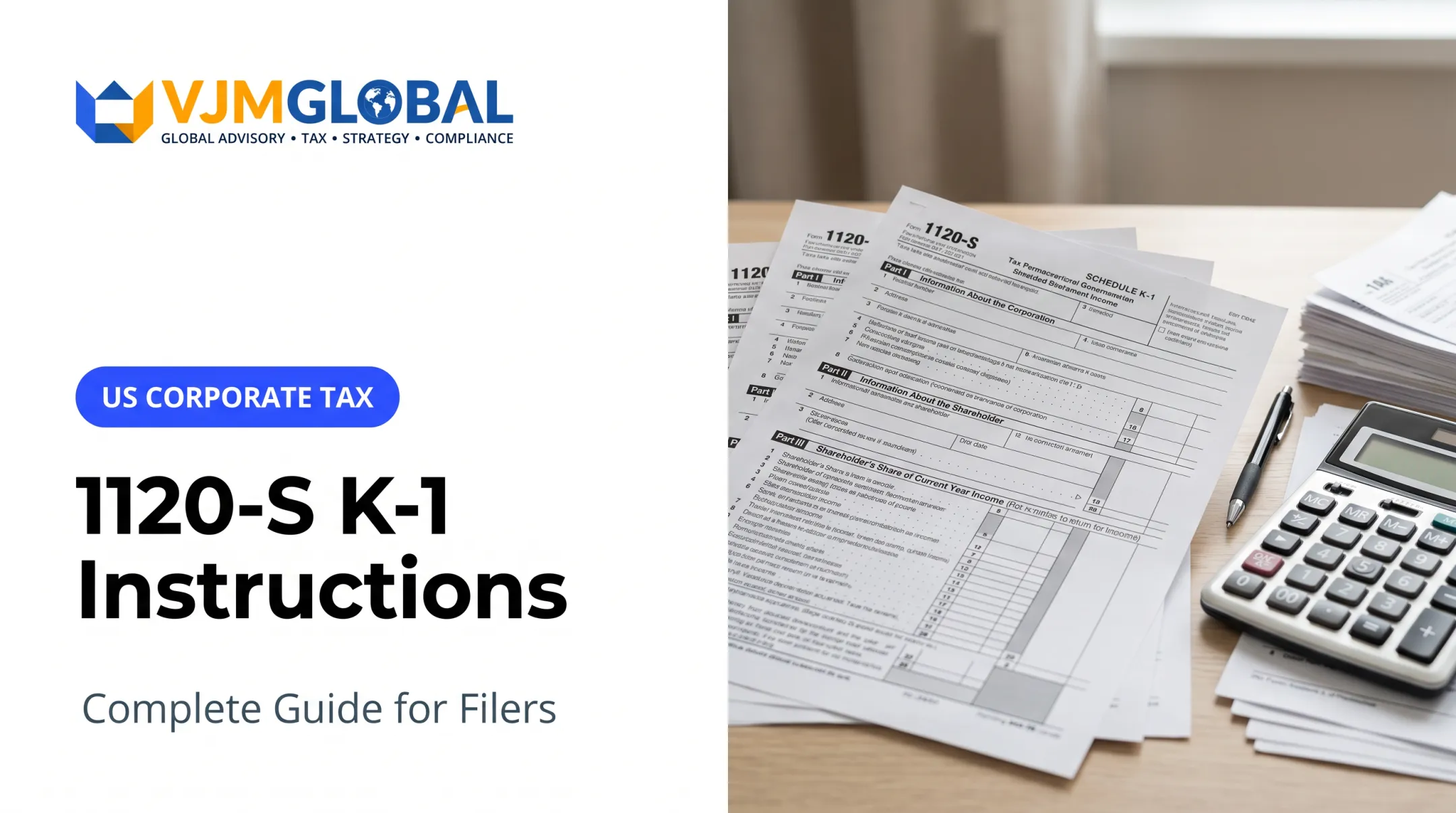
The form has three parts:
- Part I: information about the corporation
- Part II: information about the shareholder
- Part III: the shareholder's share of income, deductions, credits, distributions and other items
How Does an S Corp K-1 Affect Shareholder Tax Reporting?
Where K-1 amounts appear on a shareholder's return
For a U.S. individual, Box 1 ordinary business income or loss goes to Schedule E, Part II. Other items go elsewhere:
- Interest (Box 4) goes to Form 1040, with Schedule B in some cases
- Dividends (Box 5) go to the dividend lines of Form 1040
- Capital gains (Boxes 7 and 8a) go to Schedule D
- Box 17, code V, reports qualified business income information
Don't treat every amount as ordinary income. Use the current IRS Shareholder's Instructions for Schedule K-1 (Form 1120-S) and any attached statements.
K-1 income is not the same as cash received
A shareholder may owe tax on allocated income even if the corporation kept the cash for working capital, debt repayment or inventory. The K-1 doesn't show actual distributions as income. Box 16, code D, reports distributions that reduce stock basis.
Illustration only: A corporation earns US$100,000 of ordinary income, and a 50% shareholder is allocated US$50,000. The company keeps the cash to buy inventory and distributes only US$10,000. The K-1 still reports US$50,000 of allocated income.

Real results depend on each shareholder's facts.
W-2 wages, distributions, and K-1 income
Pay for services may appear on Form W-2 and is subject to payroll rules. Pass-through income appears on the K-1. Distributions are a separate category.
A shareholder who works in the business must receive reasonable compensation. The IRS compensation guidance sets no single fixed amount. Review this separately from K-1 reporting.
Basis and loss limitations
Losses are limited first by stock basis and qualifying shareholder-debt basis. Form 7203 is used to calculate basis. At-risk rules (Form 6198) and passive activity rules (Form 8582) can then limit a loss further. Only the forms relevant to your facts apply.
Considerations for Australian-based shareholders
The U.S. K-1 amount doesn't transfer directly to an Australian return. The ATO says Australian residents generally declare foreign income, and a foreign income tax offset may be available once foreign tax is paid. Amounts must be converted to Australian dollars.
Residency, treaty rules and how Australia classifies the entity all need review. The Australia–U.S. treaty addresses double taxation, but it doesn't settle an S corporation's Australian classification.
Eligibility is a separate question. A nonresident alien can't be an S corporation shareholder, and living in Australia doesn't by itself decide U.S. shareholder status. Verify entity structure and current IRS and ATO guidance before relying on any assumption.
How to Read and Check an S Corp K-1
Review Parts I, II, and III
- Part I: confirm the corporation's legal name, EIN, tax year and address.
- Part II: check your identifying details, ownership percentage, stock information and any midyear changes.
- Part III: review ordinary income, rental items, interest, dividends, gains, deductions, credits, distributions and coded items, plus any supplemental statements.
Reconcile the K-1 with ownership and financial records
Compare the ownership percentage and allocation period with your records:
- Stock ledgers
- Purchase or transfer documents
- Shareholder agreements
- Contributions, distributions and documented shareholder loans
Don't assume distributions equal K-1 income. The K-1 alone doesn't replace your own basis schedule.
Check codes and attached statements
Front-page figures don't tell the whole story. Attached statements may include qualified business income data, foreign items, credits, charitable contributions and Section 179 items.
If Box 14 is checked, Schedule K-3 holds international items. Box 16, code F, reports foreign taxes paid or accrued, but the instructions say not to use that amount to complete Form 1116.

Always use the form and instructions for the correct tax year. Boxes and codes change.
What to do if the K-1 is missing or incorrect
Contact the S corporation or its preparer. Don't estimate the allocation, substitute a distribution amount or ignore the gap.
- If the information is wrong, the corporation should issue an amended K-1, marked as such.
- If it's late, consider an individual filing extension.
- If you've already filed, an amended return may be needed.
- For tricky facts, get professional advice.
Form 8082 is limited for S corporation shareholders. It gives notice of inconsistent treatment and isn't a way to correct S corporation items.
Relevant professional support
VJM Global supports international businesses with U.S. tax compliance and accounting tasks, including Form 1120-S, shareholder records and K-1 reconciliation. No outcome is guaranteed, because each case turns on its own facts.
When Are S Corp K-1s Due?
Form 1120-S is generally due on the 15th day of the third month after year-end. For calendar-year corporations, that's 15 March of the following year.
For the 2025 tax year, the deadline moved to 16 March 2026 because 15 March fell on a Sunday. K-1s must be furnished by that date. Confirm the current year's deadline with the IRS.
An extension on Form 7004 gives the corporation an automatic six months to file, so K-1s can arrive late. The extension does not buy more time to pay tax.
If your K-1 is late:
- Estimate cautiously, and only from reliable information
- Check your own U.S. extension options (Form 4868 extends filing, not payment)
- Review Australian deadlines: the ATO income year runs 1 July to 30 June, and self-lodgment is generally due 31 October
- Consider foreign tax credit timing
Late filing carries penalties. The 2025 instructions state $255 per shareholder per month for a late Form 1120-S with no tax due, and $340 for each failure to furnish a correct K-1 on time. These figures apply to returns required in 2026.

Common S Corp K-1 Misconceptions and Mistakes
"No distribution, no K-1." Wrong. Allocations and distributions are separate. A K-1 is generally required for every shareholder who held stock during the year, even if no cash was paid out.
"Everything on the K-1 is taxed or deducted the same way." Wrong. Income character, basis, at-risk, passive activity and other limits all change the result.
Other common mistakes:
- Using an outdated Schedule K-1 form
- Leaving out required supplemental statements
- Confusing W-2 wages with K-1 pass-through income
- Ignoring mid-year ownership changes
- Assuming U.S. reporting satisfies Australian tax obligations
Frequently Asked Questions
Does an S corp always have a K-1?
An S corporation generally prepares a Schedule K-1 for each shareholder with Form 1120-S, even when there was no distribution or the allocation was a loss.
What is Schedule K-1 for an S corp?
Schedule K-1 (Form 1120-S) reports one shareholder's allocated share of the corporation's income, deductions, credits, distributions and other tax items.
What type of return is an S corp?
An S corporation is a federal tax status. The corporation generally files Form 1120-S, and shareholders report their allocated items on their own returns.
Do S corp shareholders pay tax on K-1 income if they receive no distribution?
Pass-through income may be taxable when allocated, even if the corporation kept the cash. Distributions have separate basis and tax treatment.
What should I do if I do not receive an S corp K-1?
Contact the corporation or its preparer and don't guess the figures. Consider a filing extension, and request a corrected K-1 if the eventual form is inaccurate.