Introduction
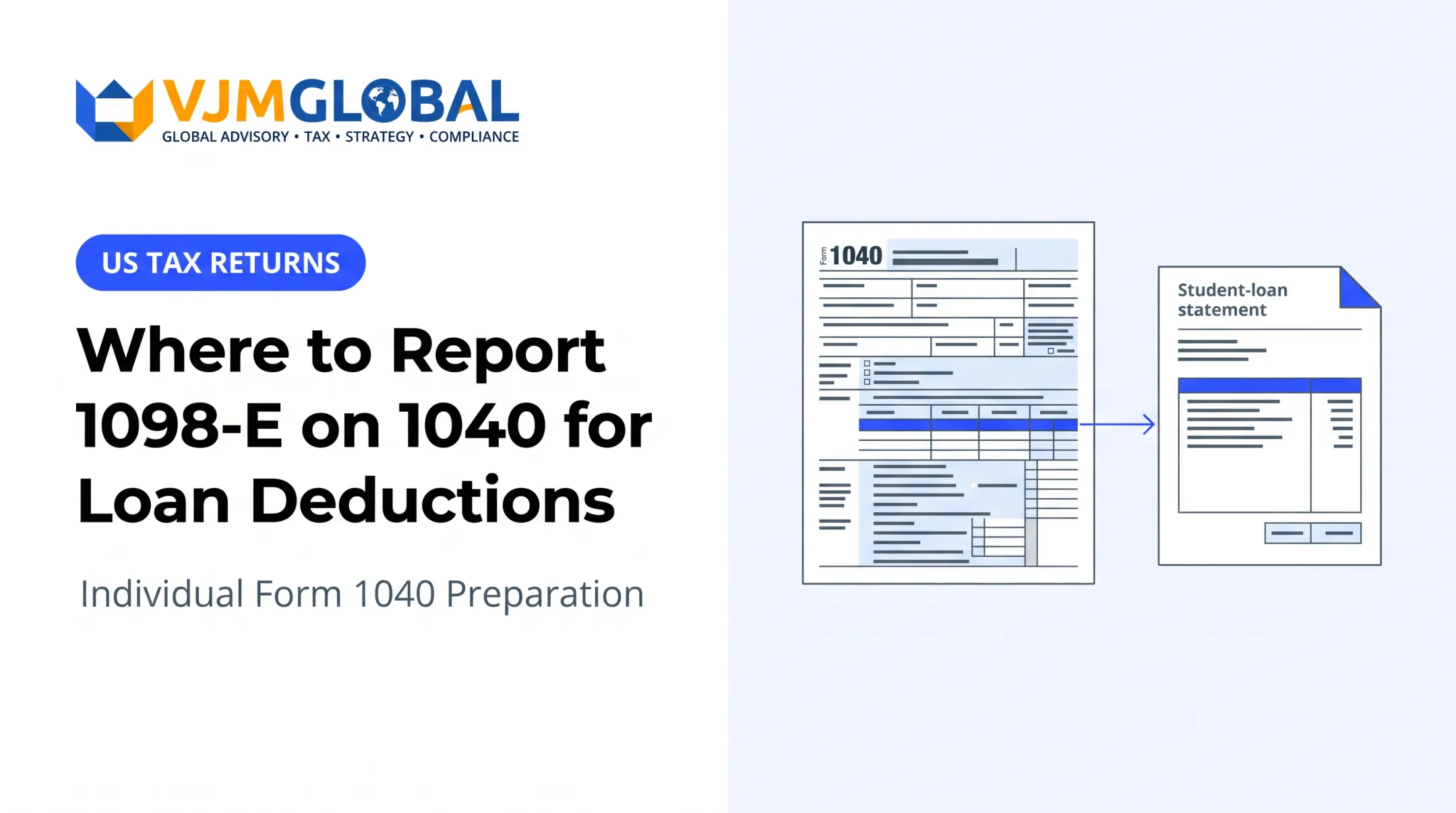
Eligible student loan interest goes on Schedule 1 (Form 1040), line 21, and the Schedule 1 total of adjustments then carries to Form 1040, line 10. Those line numbers apply to the 2025 tax year.
Line numbers can shift between years, so check the current Schedule 1 and instructions before you file.
Filers often mix up four documents: Form 1098-E, Schedule 1, Form 1040 and Schedule A. Form 1098-E is only a statement from your servicer. The deduction itself lives on Schedule 1.
This article covers eligibility, calculation, documents and common mistakes. It addresses U.S. federal filing only. It does not replace any separate Australian tax obligations you may have.
Key Takeaways
- Route: servicer records or Form 1098-E, then Schedule 1 line 21, then Form 1040 line 10.
- Only interest paid counts, not principal, and you needn't itemise.
- Form 1098-E supports the claim but isn't where you claim it.
- Filing status, dependency, loan type and MAGI can shrink or erase the deduction.
Where Is Student Loan Interest Reported on Form 1040?
The short answer
For tax year 2025, the student loan interest deduction is reported on Schedule 1, Part II, line 21. Your total adjustments on Schedule 1, line 26, then flow to Form 1040, line 10. The 2025 Schedule 1 confirms the layout.
You don't enter this interest on the main income lines of Form 1040. You also don't put it on Schedule A. It is an adjustment to income, so you can claim it even if you take the standard deduction.
How Form 1098-E fits in
Your servicer sends Form 1098-E to report the interest you paid. Schedule 1 is where you report the allowed deduction. Treat the 1098-E as evidence, not as the claim.
The reporting sequence looks like this:
- Total the interest paid during the year.
- Confirm you meet the eligibility rules.
- Work out the allowable amount using the Student Loan Interest Deduction Worksheet in the Schedule 1 instructions.
- Enter the result on Schedule 1, line 21.
- Let the Schedule 1 total carry to Form 1040, line 10.

If you have several servicers, compare each 1098-E against your own payment records. Tax software usually asks for 1098-E details and transfers the amount for you. Paper filers should follow the current Schedule 1 instructions and keep the supporting records.
How Do You Calculate the Student Loan Interest Deduction?
Determine qualifying interest paid
Principal repayment is not interest. Under Publication 970, a payment applies first to unpaid stated interest, then to origination fees, capitalised interest and principal.
Special cases to watch:
- Origination fees: may count as interest if charged for the use of money, not for a service such as processing.
- Capitalised interest: deductible as you pay down principal. No payments in a year means no deduction.
- Refinancing: interest can qualify if the new loan refinances only qualified student loans of the same borrower. Any non-qualified amount in the mix disqualifies it.
- Employer assistance: amounts excluded from income under an employer programme (up to $5,250 for 2025) can't also be deducted.
- Late charges: Publication 970 doesn't clearly resolve them. Don't assume they're deductible.
Missing statement? Download a year-end payment history from each servicer.
Apply the annual cap
Your deduction is the lesser of qualifying interest paid or $2,500 for 2025. Paying $4,000 in interest doesn't produce a bigger deduction. You may also get less than the cap because of the MAGI phaseout.
Account for MAGI
For most filers, MAGI is AGI calculated before the student loan interest deduction. Add back certain foreign income and housing exclusions, plus American Samoa or Puerto Rico exclusions.
Filers using Form 2555 or Form 4563 should use Worksheet 4-1 in Publication 970. For Form 1040-NR, MAGI is AGI without the Schedule 1 student loan interest deduction.
A simple example (tax year 2025)
Assume a single filer. These numbers are hypothetical.
| Scenario | Interest paid | MAGI | Result |
|---|---|---|---|
| Below cap | $1,800 | $60,000 | $1,800 deduction |
| Above cap | $3,400 | $60,000 | $2,500 deduction |
| Partial phaseout | $3,400 | $92,500 | About $1,250 deduction |
In the third case, MAGI sits halfway through the $85,000 to $100,000 band, so the $2,500 is cut by about half. Publication 970's worksheet performs the exact calculation.

Who Qualifies for the Student Loan Interest Deduction?
Basic eligibility
You must meet all of these:
- You paid interest on a qualified student loan during the year.
- You were legally obligated to pay that interest.
- No one else claims you as a dependent.
- Your filing status isn't married filing separately.
Qualifying loans
The loan must have been taken out solely to pay qualified higher-education expenses for you, your spouse, or someone who was your dependent when the loan was taken. Eligible costs include:
- Tuition and fees
- Room and board
- Books, supplies, and equipment
Loans from a related person or made under a qualified employer plan don't qualify. Neither do loans with personal-use money mixed in.
Income limits for 2025
| Filing status | Phaseout begins above | No deduction at or above |
|---|---|---|
| Single | $85,000 | $100,000 |
| Head of household | $85,000 | $100,000 |
| Qualifying surviving spouse | $85,000 | $100,000 |
| Married filing jointly | $170,000 | $200,000 |

Use these 2025 figures; older returns and prior-year articles may list different limits.
Forgiveness and other special situations
Forgiven debt can carry its own tax result. The American Rescue Plan exclusion covered most federal student loan discharges through 31 December 2025.
The IRS Taxpayer Advocate notes that balances forgiven under income-driven repayment plans in 2026 or later are generally cancellation-of-debt income. Publication 970 does not set separate rules for deferment or forbearance; it focuses on interest actually paid in the year.
Documents and Filing Steps
Gather these before you start:
- Form 1098-E from each servicer
- Lender statements and year-end payment histories
- Employer education benefit details
- The current Form 1040 and Schedule 1 instructions
Servicers generally must file Form 1098-E when they receive $600 or more in interest from a borrower in a calendar year, per the Form 1098-E instructions. That's a reporting threshold, not a minimum for the deduction.
If you paid less, or the form never arrived, contact the servicer, pull the online payment history and calculate the qualifying interest yourself. Keep the records, since IRS Topic 305 says to retain supporting documents until the limitation period expires.
Non-resident aliens filing Form 1040-NR aren't automatically excluded from the deduction. The 2025 instructions list it among Schedule 1 adjustments, subject to the same rules, and set no separate test for Australian residents.
If you're an Australian resident or foreign professional with U.S. filing obligations, VJM Global prepares Form 1040 and 1040-NR returns and can review your records, eligibility and federal reporting. That is separate from any Australian return.
Common Mistakes to Avoid
- Entering the full payment. Only the interest portion counts.
- Treating Form 1098-E as the deduction. It's supporting evidence.
- Using Schedule A. This deduction belongs on Schedule 1.
- Reusing last year's line numbers or thresholds. Lines and MAGI limits change from year to year, and tax software workflows often shift with them.
- Confusing a deduction with a credit. A deduction lowers taxable income. A credit lowers tax owed. A $2,500 deduction won't produce a $2,500 refund.
Loan proceeds aren't taxable income just because you borrowed them, since you must repay them. Cancelled debt is a different matter.
Frequently Asked Questions
Where is student loan interest reported on Form 1040?
On Schedule 1, line 21, for tax year 2025. Total adjustments on Schedule 1, line 26, carry to Form 1040, line 10. Confirm line numbers in your year's instructions.
Is the student loan interest deduction limited to $2,500?
Yes, for 2025 you deduct the lesser of interest paid or $2,500. Higher income can reduce it further. Confirm the amount for your tax year.
How do I calculate the student loan interest deduction?
Add up qualifying interest paid, apply the $2,500 cap, then adjust for MAGI phaseouts. Use the worksheet in the Schedule 1 instructions or Publication 970.
Do I need Form 1098-E to claim the deduction?
No. Qualifying interest not shown on the form may still be deductible. Without it, substantiate payments with servicer records.
Can I claim it if I take the standard deduction?
Yes. It's an adjustment to income, not a Schedule A itemized deduction, though all eligibility and income rules still apply.