Introduction
A business can have customers in one state, employees in another, and servers in a third. Texas franchise tax still needs one number: the share of the entity's receipts that belongs to Texas.
That number is the apportionment factor. It is a receipts-based ratio, and it decides how much of your taxable margin Texas can tax.
Source a receipt to the wrong place and the margin assigned to Texas moves with it. Businesses with multi-state operations often find that a single misclassified revenue stream shifts the result.
This guide covers the formula, the numerator and denominator, sourcing rules by transaction type, exclusions, combined groups, and the records that support your position.
Key Takeaways
- The factor compares Texas-sourced gross receipts with gross receipts from the entire business.
- Sourcing rules differ by receipt type, including services, goods, rentals, royalties, and digital products.
- Statutory exclusions and intercompany receipts affect both the numerator and the denominator.
- Confirm the rules, forms, and thresholds for your specific report year.
What the Texas Apportionment Factor Means
The factor assigns part of a taxable entity's business activity to Texas. Texas uses a single gross-receipts factor. Per the Comptroller's apportionment FAQ, the multistate three-factor formula is not used, and gross receipts everywhere include Texas receipts.
The calculation sequence
- Determine total revenue.
- Calculate margin using an allowed method (70% of revenue, revenue less cost of goods sold, revenue less compensation, or revenue less $1 million, as applicable).
- Calculate the apportionment factor.
- Multiply margin by the factor to get apportioned margin.
- Apply the tax rate and then any credits or other adjustments.

What the factor is not
- Nexus: Whether you must file is a separate question from the ratio.
- Margin: The factor applies to margin. It is not margin itself.
- Rate: For 2026 reports, the Comptroller's instructions list a 0.75% standard rate, 0.375% for qualifying retailers and wholesalers, and a $2,650,000 no-tax-due threshold. None of these is the factor.
- Tax due: Zero Texas receipts produce a zero factor and no tax, though information reports may still be required.
How to Calculate the Texas Franchise Tax Apportionment Factor
The statutory formula
The general formula is:
Texas gross receipts from business done in Texas ÷ gross receipts from the entire business
Both amounts are subject to statutory exclusions and adjustments, and both cover the same accounting period. The governing provisions are in Texas Tax Code Chapter 171:
- Section 171.103: receipts from business done in Texas (numerator)
- Section 171.105: receipts from the entire business (denominator)
- Section 171.1055: exclusion of certain receipts
- Section 171.106: apportionment of margin to Texas
Administrative sourcing rules sit in 34 Texas Administrative Code (TAC) 3.591. Confirm all citations against current text before relying on them.
Texas receipts in the numerator
The numerator captures receipts from business done in Texas, such as:
- Tangible personal property delivered or shipped to a Texas buyer
- Services performed in Texas
- Rentals of property located in Texas
- Patent or copyright receipts to the extent used in Texas
- Sales or leases of Texas real property and mineral interests
The customer's billing address does not decide the question. The transaction type does. For goods, the destination controls. For services, the place of performance controls. A Dallas billing address on a service performed entirely in Oklahoma does not make that receipt a Texas receipt.
Gross receipts from the entire business
The denominator uses the same broad receipt categories, wherever earned, and includes Texas receipts. It is the comparison point. If revenue data is incomplete, say a foreign subsidiary's sales are missing, the denominator shrinks and the factor inflates.
Illustrative calculation
Hypothetical figures for illustration only.
| Item | Amount |
|---|---|
| Texas-sourced receipts | $3,000,000 |
| Receipts from the entire business | $12,000,000 |
| Apportionment factor | 25% |
| Taxable margin | $5,000,000 |
| Apportioned margin | $1,250,000 |
The 25% factor applies to the $5 million margin, giving $1.25 million. The rate is then applied to that figure.
Before filing, reconcile the numbers:
- Tie the denominator to the general ledger and revenue schedules.
- Tie the numerator to invoice-level detail and location evidence.
- Explain any gap between book revenue and tax-reported revenue.
Texas Receipt Sourcing Rules by Transaction Type
Services
Under current 34 TAC 3.591(e)(26), service receipts generally source to where the service is performed, meaning where your personnel or property do the work the customer hired you to do.
The Texas Supreme Court reinforced this in Sirius XM v. Hegar (2022). Subscriber location alone did not make all subscription fees Texas receipts. The Court focused on where the paid-for service was performed.
For one charge covering work inside and outside Texas, allocate on fair value. You may use stand-alone values or service units such as hours.
Tangible property, real property, rentals, and royalties
- Goods: Texas receipts when delivered or shipped to a Texas buyer, regardless of FOB point.
- Real property and minerals: Texas receipts based on the property's location. Mineral royalties follow this rule.
- Tangible-property rentals: Texas receipts based on property location. If used in and outside Texas, allocate by Texas-use days or, for mileage-based charges, by mileage.
- Patents and copyrights: Texas receipts to the extent used in Texas.
Example: a Nevada seller ships equipment to a Houston buyer. The seller's location is irrelevant. Delivery to Texas makes it a Texas receipt.
Digital products, SaaS, and internet hosting
Current rules distinguish tangible media, digital property sold or leased without fixed media, and digital property delivered as a service. A permanent software download is treated as an intangible-property sale, sourced to the payor's location.
For reports originally due on or after January 1, 2014, internet hosting receipts are Texas receipts if the customer is located in Texas. That location turns on where the customer physically consumes the service.
The rule does not carve out a separate "SaaS" category. Facts decide whether a SaaS offering routes to the service rule or the hosting rule. Review bundled digital services under both rules before you file.

Advertising and transportation
- Advertising: Source to audience locations, using the most reasonable good-faith method with retained records. If nationwide audience location cannot otherwise be reasonably determined, 8.7% is sourced to Texas.
- Transportation: Rule 3.591(e)(33) offers two methods: include receipts for transportation both originating and terminating in Texas, or apply Texas compensated mileage over total compensated mileage. Confirm which applies to your report year.
Capital assets, investments, and securities
For sales of a capital asset or investment, generally only net gain enters gross receipts. Net loss is excluded. The Texas Supreme Court held in Hallmark Marketing v. Hegar (2016) that a taxpayer did not have to include its net investment loss in the denominator.
Securities sales source to the payor's location under Rule 3.591(e)(25). When the security is a capital asset or investment, the net-gain rule also applies, so gross proceeds are not always the right amount.
Exclusions, Combined Groups, and Special Apportionment Issues
Revenue exclusions from the calculation
Receipts excluded from total revenue under Section 171.1011 are excluded from both the Texas numerator and the entire-business denominator under Section 171.1055(a). They do not default into the denominator.
Keep exclusions and deductions apart. A revenue exclusion removes the receipt from both factor amounts. Cost of goods sold, compensation, or the $1 million method reduces margin later and has nothing to do with sourcing.
Combined groups and intercompany receipts
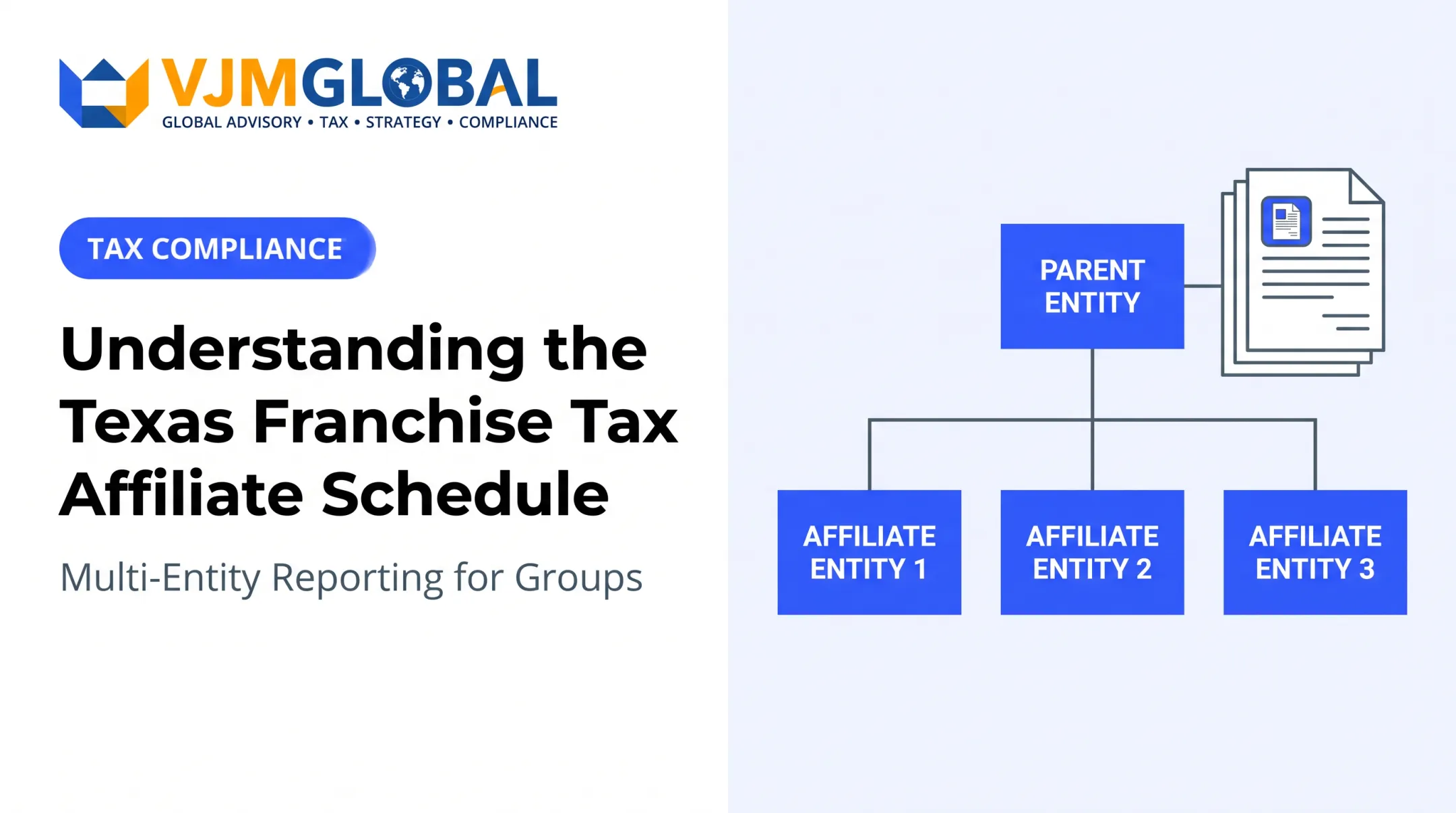
A combined group is an affiliated group engaged in a unitary business that must file a combined report. Ownership of more than 50% is the starting point, but the unitary-business test also applies.

Key points:
- Intercompany receipts excluded under Section 171.1014(c)(3) come out of both numerator and denominator.
- Gross receipts everywhere include every group member, even those without Texas nexus.
- Members without nexus are generally not in Texas receipts.
- Exception: when a no-nexus member sells tangible property to a group member that resells it unmodified to a Texas purchaser, the third-party amount goes in the numerator.
- The 2026 forms request member gross receipts before intercompany eliminations.
Confirm whether you are computing the factor for one entity or for the combined group.
Special transactions and changing rules
Capital-asset sales, investment receipts, securities, single-member LLC (SMLLC) interests, digital property, and bundled services need separate sourcing analysis. An SMLLC is a taxable entity even if federally disregarded. Legal formation, not federal tax treatment, drives franchise-tax status.
Rules change. Rule 3.591 was amended effective December 31, 2009, January 24, 2021, and March 14, 2023. Do not project the current text backward without checking the version for your report period.
For open years, a refund claim generally needs an amended report, a signed explanatory letter, and a timely postmark. Confirm limitation periods with a qualified tax professional.
Common calculation errors
- Sourcing by billing address without applying the correct rule
- Leaving excluded intercompany receipts in the factor
- Omitting Texas receipts from the numerator
- Mixing report years or accounting periods
- Treating gross receipts as taxable margin
- Failing to reconcile tax schedules to accounting records
- Omitting affiliates or the reporting entity from the combined-group schedule
Practical Compliance Checklist and Next Steps
Records to gather
- Revenue by receipt type
- Customer and purchaser locations
- Shipping and delivery documents
- Where services were performed, by personnel or equipment
- Property locations and Texas-use days or mileage
- Intangible-property use and digital-service consumption evidence
- Intercompany transaction schedules
- Securities documentation and capital-asset gain or loss schedules
Texas Tax Code 111.0041 requires records to stay available for at least four years, and longer while tax may still be assessed, collected, or refunded.
Workflow
- Reconcile the numerator and denominator to the general ledger.
- Review statutory exclusions.
- Document the sourcing method for any unusual receipt.
- Keep the evidence that supports each choice.
Where outside support helps
Businesses with operations in several countries often find that revenue data sits in different systems and standards. VJM Global supports cross-border businesses with accounting organization, tax-compliance coordination, and financial documentation. Defensible apportionment factors depend on that clean, reconciled revenue data.
Before preparing a report, confirm current requirements for the report year:
- Texas franchise tax report form and Comptroller instructions
- Filing deadline, threshold, and rate
- Administrative rules and relevant case law
Frequently Asked Questions
How does Texas calculate franchise tax?
Texas starts with total revenue, computes taxable margin under an allowed method, and multiplies it by the apportionment factor to get apportioned margin. The rate is applied to that figure, followed by credits. Check Comptroller guidance for current methods, rates, and thresholds.
What are the exclusions for Texas franchise tax?
Receipts excluded from total revenue are also excluded from both sides of the apportionment factor, as are qualifying intercompany receipts in a combined group. Exclusions differ from margin deductions, and rules vary by report year.
What is the role of a combined group in Texas franchise tax calculations?
A combined group is an affiliated, unitary group filing one report. Membership determines whose receipts are counted, and intercompany receipts are adjusted on both sides. Confirm whether the calculation is entity-level or group-level.
What is the apportionment factor in Texas?
It is the ratio of Texas-sourced gross receipts to gross receipts from the entire business, after required exclusions and adjustments. It apportions margin and is not the tax rate.
How are services sourced for Texas franchise tax?
Service receipts generally source to where the service is performed. Mixed-location charges are allocated on fair value, and specialized services such as advertising and transportation have their own rules.
What records support a Texas franchise tax apportionment calculation?
Keep revenue reconciliations, customer and delivery data, service-location records, property and intangible-use evidence, intercompany schedules, and notes on unusual transactions. Retain them for at least four years.