Introduction
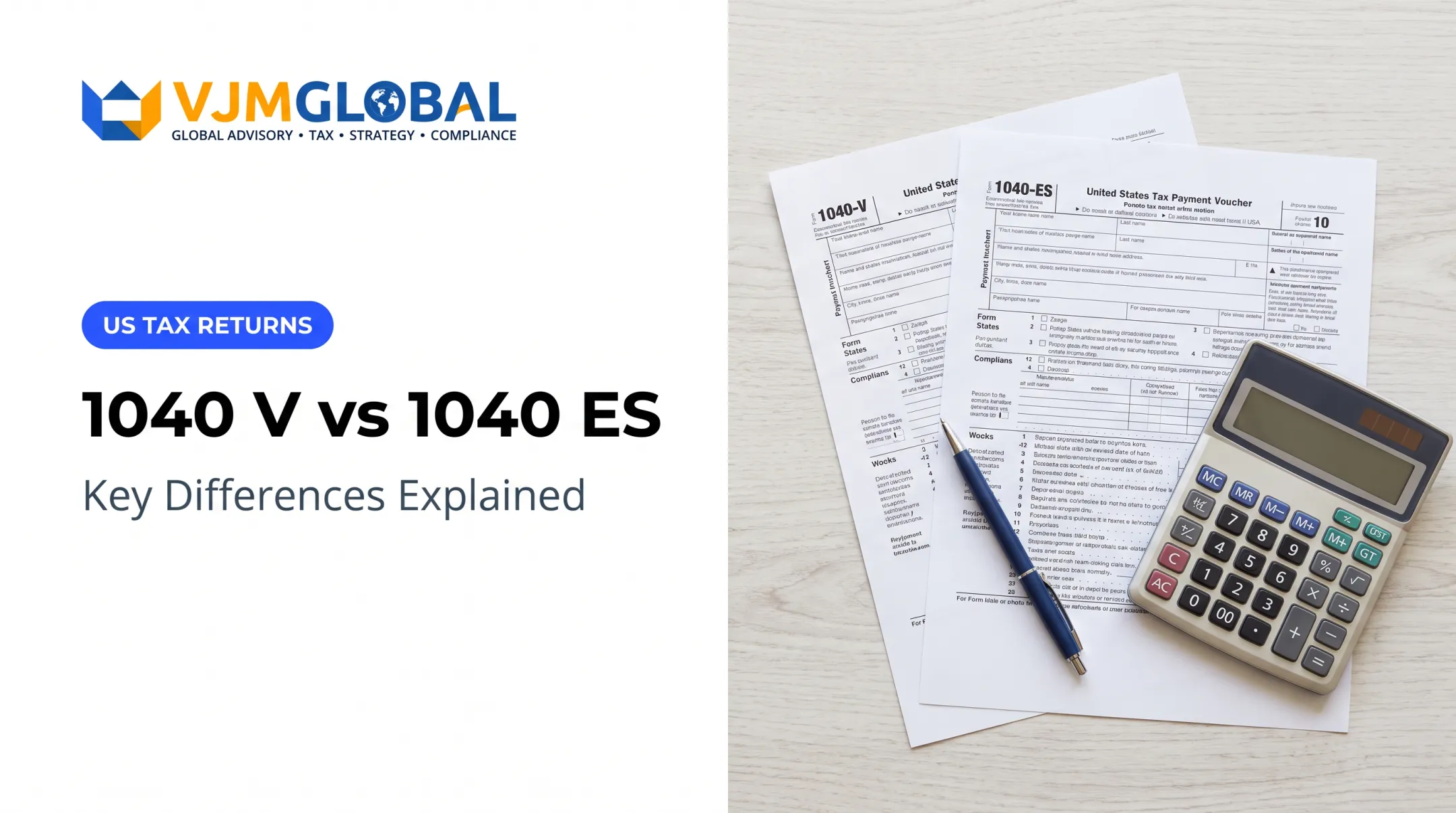
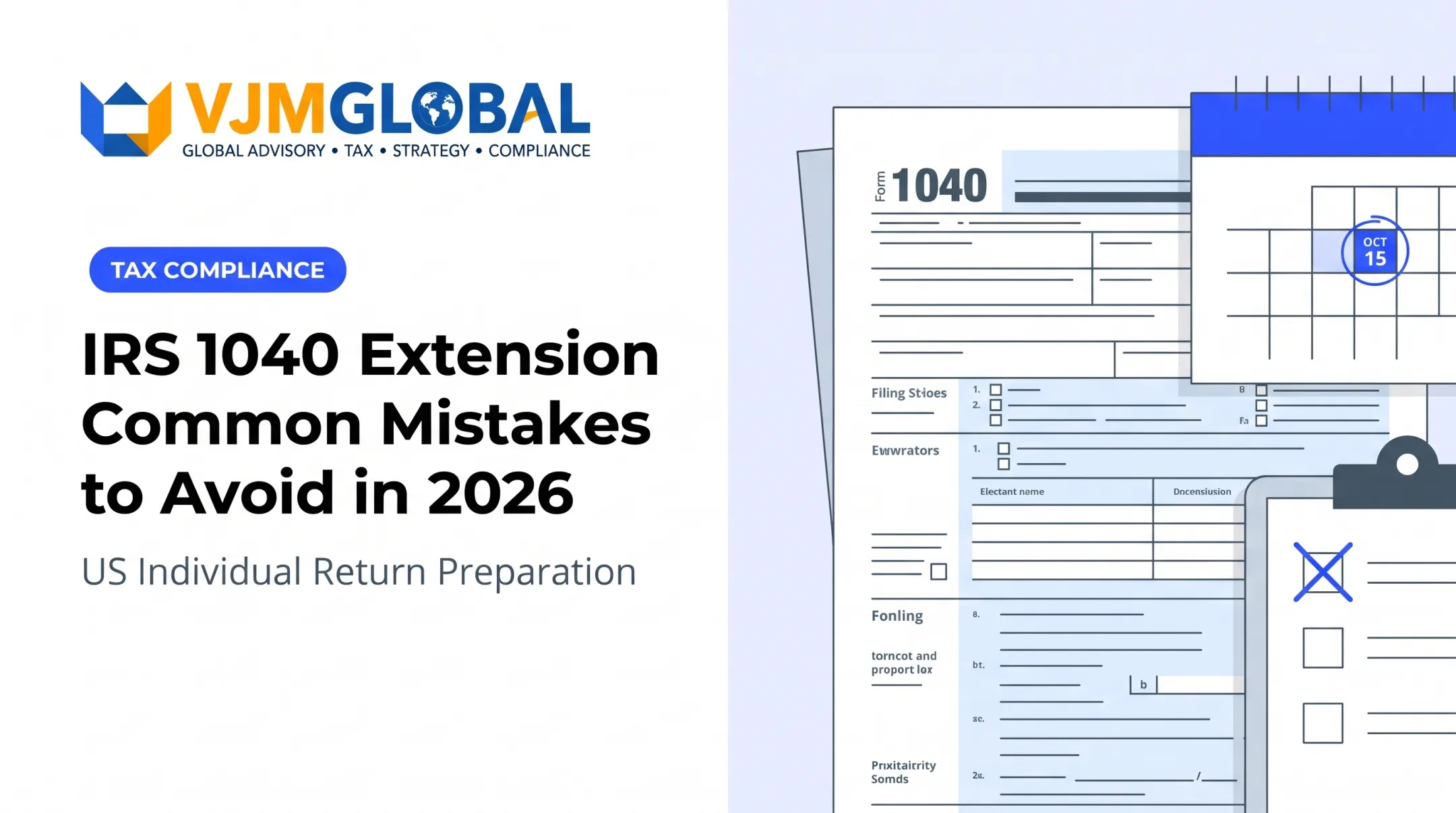
Plenty of people treat a Form 1040 extension and estimated tax payments as interchangeable. They aren't. One buys you time to file. The other is how you pay tax as income arrives.
For Australian-based taxpayers with U.S. filing obligations, mixing them up can mean missed deadlines, surprise cash demands, and interest you didn't budget for.
U.S. citizens and resident aliens remain taxable on worldwide income, wherever they live, per IRS Publication 54.
This guide gives you a simple decision framework. Check current IRS rules, U.S. state requirements, your Australian obligations, and your filing status before acting. All figures are in USD, the currency of the U.S. rules discussed.
Key Takeaways
- Filing extensions buy more time to submit your return; estimated taxes are payments toward current-year tax.
- Payment deadlines stay fixed even when you file an extension.
- Income without enough withholding may require estimated payments, even if you extend.
- Choose based on your problem: unfinished paperwork, unpaid tax, or both.
1040 Extension vs. Estimated Taxes: Quick Comparison
| Form 1040 extension | Estimated taxes | |
|---|---|---|
| Purpose | Postpones filing the return, generally via Form 4868 | Prepays income and self-employment tax when withholding falls short |
| Timing | Return due 15 April 2027 for 2026; extended to 15 October 2027 | Four instalments tied to when income is earned |
| Payment effect | Does not generally extend the payment date | Reduces the balance due at filing |
| Forms | Form 4868 | Form 1040-ES; Form 2210 if penalty calculations apply |
| Best fit | Records or documents not ready | Income with no or thin withholding |
The 2026 Form 4868 is still a draft, so treat its 2027 dates as provisional.
Timing details
Standard extensions run six months. Qualifying overseas taxpayers already get an automatic two months (to 15 June).
They request a further four months on Form 4868 by 15 June, which takes the filing date to 15 October. Interest on unpaid tax still runs from the regular April deadline, not June.
The 2026 estimated tax schedule uses uneven periods, not calendar quarters:
- Income 1 January to 31 March: due 15 April 2026
- 1 April to 31 May: due 15 June 2026
- 1 June to 31 August: due 15 September 2026
- 1 September to 31 December: due 15 January 2027

Process and records
For Form 4868, gather:
- Names, addresses and SSNs
- Estimated liability and payments already made
- The balance due
You can e-file it through IRS Free File (no income limit) or mail paper. An electronic payment designated as an extension can replace a separate form. Keep the confirmation.
For estimated tax, pay through:
- IRS Direct Pay or an IRS Online Account
- Card, or cheque with a Form 1040-ES voucher
EFTPS individual payments ended on 12 November 2026, so skip older guides that still mention it. Keep payment records.
Penalties differ
- Failure to file: usually 5% of unpaid tax per month, capped at 25%
- Failure to pay: usually 0.5% per month, capped at 25%
- Underpayment interest: 7% annually, compounded daily, for 1 October to 31 December 2026
Estimated-tax underpayment penalties are calculated differently from the flat failure-to-pay charge.
What Are a Form 1040 Extension and Estimated Taxes?
Form 1040 extension
"1040 extension" is shorthand. No extended version of Form 1040 exists. You request more time to file, generally with Form 4868.
To submit it, estimate your total tax, list payments already made, and state what you're paying with the request. To keep extension protection, the IRS expects at least 90% of total tax paid by the original deadline, with the remainder paid when you file. Even so, interest still applies.
Estimated taxes
Estimated payments are instalments toward current-year federal tax on income with insufficient withholding. Examples include self-employment, rental, interest, dividends, and capital gains.
For 2026, both tests generally apply:
- You expect to owe at least $1,000 after withholding and refundable credits.
- Your withholding and credits will fall below the smaller of 90% of 2026 tax or 100% of 2025 tax.
If your 2025 AGI exceeded $150,000 ($75,000 if married filing separately), use 110% instead of 100%. Farmers and fishers with at least two-thirds of gross income from those activities have different rules.

Self-employment tax runs at 15.3% (12.4% Social Security plus 2.9% Medicare).
Using both together
You can file an extension and make an estimated payment at once. The extension covers an unfinished return. The payment covers the expected balance.
Australian-based taxpayers still need to check several layers on top of that choice:
- U.S. federal and state obligations
- Australian filing or payment duties
- Foreign earned income exclusion (Form 2555), which doesn't reduce self-employment tax
- Foreign tax credit (Form 1116), unavailable on FEIE-excluded income
- The U.S.-Australia tax treaty and its saving clause
- FBAR (filed with FinCEN) and Form 8938, which are separate reporting duties

Totalisation agreements prevent dual social-security taxation, but ATO guidance excludes self-employed applicants from certificates of coverage. Don't assume an exemption. A qualified professional should confirm your position.
When each is useful
An extension suits:
- Missing tax documents or complex business records
- Late information from foreign entities
Estimated taxes suit:
- Self-employment, investment gains, or rental income
- Any income without enough tax withheld
If income shifts mid-year, the annualised income instalment method (Form 2210, Schedule AI) can reduce required instalments.
1040 Extension vs. Estimated Taxes: What Should You Choose?
Start with one rule: extend when the return isn't ready, make estimated payments when expected tax hasn't been prepaid, and do both when both apply.
Choose an extension when the return is the problem
If filing now risks an incomplete or inaccurate return, extend. Still calculate a reasonable estimate and pay it by the original deadline. Unpaid tax collects interest and penalties either way.
Choose estimated payments when withholding is the problem
Recurring income without adequate withholding calls for estimated taxes. Review your books, investment income, deductions, and credits to sharpen the estimate. Employees can instead file a new Form W-4 for extra withholding. The IRS Tax Withholding Estimator can help, though it is unavailable to non-resident aliens.
Weigh cash flow
Paying earlier can shrink your year-end balance and underpayment exposure. An extension offers administrative breathing room, but it doesn't make unpaid tax free.
Practical checklist
- Filing status and residency
- Source and timing of income
- 2025 tax and 2026 projection
- Withholding and payments already made
- Foreign and state obligations
- Records on hand
- Which deadline applies (April, June, or October)
Real-World Example: A Hypothetical Scenario
This is an illustrative scenario based on IRS guidance, not a client case.
Sam is a U.S. citizen living in Sydney, running a consultancy with U.S. clients. No tax is withheld on his income, and his foreign-entity statements arrive late.
He faces two problems at once:
- His return will not be ready by 15 June
- He has underpaid tax during the year
Extending alone leaves interest accruing from April. Estimated payments alone leave an unfinished return.
Sam requests the extra four months on Form 4868 by 15 June, pays a reasonable estimate of his balance, and sets 2027 instalments using updated income forecasts. Missing paperwork drove the extension; unwithheld income drove the payments.
If you have cross-border accounting or tax compliance needs, VJM Global's international team supports Australian businesses and U.S. individual taxpayers with Form 1040 preparation.
Conclusion
A Form 1040 extension and estimated taxes solve different problems. Neither substitutes for the other.
Identify whether your issue is filing readiness, a payment shortfall, or both. Confirm current IRS rules and your cross-border obligations, and get professional guidance if your Australian-U.S. position is complex.
Frequently Asked Questions
Is it good to pay estimated taxes?
Often, yes. They spread your liability across the year, avoid a large year-end bill, and reduce underpayment risk. The required amount depends on your circumstances.
Does filing a tax extension give me more time to pay?
Generally no. It extends filing only, and interest runs from the original due date. Overseas taxpayers get an automatic two months to file, but interest still accrues from April.
Can I file a tax extension and make estimated tax payments at the same time?
Yes. The extension handles unfinished paperwork while the payment goes toward your expected balance. They serve different purposes.
Who needs to pay estimated taxes with Form 1040?
Taxpayers expecting at least $1,000 owing after withholding, such as the self-employed, contractors, investors, and landlords. The 90%/100%/110% tests also apply.
What form do I use to request an extension for Form 1040?
Form 4868. Form 1040-ES is separate and is used to calculate and pay estimated tax.
What happens if I underestimate or miss an estimated tax payment?
You may owe the shortfall plus a penalty and interest. Safe-harbour rules and limited statutory waivers (such as disaster or casualty) may apply, so check current IRS guidance.