That's because Form 1120-S is an information return. It reports income that passes through to shareholders, who each pay tax on their share individually. The return itself can show a zero balance and still trigger a penalty if it's late.
This guide covers Form 1120-S returns required to be filed during 2026 — including the calendar-year 2025 return most S-corporations will lodge by mid-March. We'll walk through how the penalty is calculated, the key 2026 deadlines, Form 7004 extensions, relief options, and what Australian-based owners of US S-corporations should do first if they've missed a deadline.
Key Takeaways
- Verify the 2026 penalty amount against current IRS Form 1120-S instructions before you file
- The penalty is calculated per shareholder, per month or partial month late, up to a set maximum period
- File promptly and keep extension proof to limit exposure and support any later relief request
- US federal filing rules stay separate from Australian tax and corporate reporting obligations, which still run on their own schedule
What Is the 1120-S Late Filing Penalty?
Form 1120-S is the annual return filed by every US S-corporation, regardless of whether it made a profit. Because an S-corporation doesn't pay federal income tax itself, its shareholders do through Schedule K-1. The IRS still needs the return and K-1s filed on time to track each shareholder's share of income, deductions, and credits.
According to the IRS Form 1120-S instructions, the penalty for returns required to be filed in 2026 is US$255 per shareholder, for each month or part of a month the return is late, capped at 12 months. This figure is confirmed through Revenue Procedure 2024-40's inflation adjustment for 2026 filings, but IRS inflation adjustments change annually. Never use a 2025 or earlier figure for a 2026 return without checking the current instructions first.
Here's the part that catches owners off guard: the instructions apply this penalty to "returns on which no tax is due." A loss year, a break-even year, or a zero-balance return doesn't create an exemption. The filing obligation and the Schedule K-1 reporting duty exist independently of whether any tax is owed.
This penalty, under Internal Revenue Code section 6699, is separate from several other things the IRS can assess:
- Late payment penalties on any actual unpaid corporate-level tax (rare for S-corporations, but possible with certain built-in gains)
- Other information-return penalties for missing or incorrect forms
- State-level penalties, which run on entirely separate timelines and rate schedules
- Shareholder-level consequences when delayed K-1s push back an individual's own filing
How Is the 2026 Penalty Calculated?
The formula itself is straightforward once you know the inputs:
Monthly penalty rate × number of shareholders × months or partial months late (capped at 12)
A few calculation details matter:
- Partial months count as full months. A return filed one day into month two is treated the same as one filed on the last day of that month. Confirm this against current IRS instructions for your case.
- Shareholder count isn't just the year-end headcount. The rule counts the total number of persons who were shareholders at any point during the tax year, so a shareholder who sold out mid-year still gets counted.
- Extensions shift the "late" date. A validly filed Form 7004 moves the clock; the IRS treats the return as late only after the extended deadline passes.
- Weekend and holiday adjustments apply. If a due date lands on a Saturday, Sunday, or federal holiday, the deadline rolls to the next business day.
A Hypothetical Example
Say an S-corporation has 4 shareholders and files its return 3 months and 10 days after the (extended) due date:
- Months counted: 4 (the partial 10th day counts as a full month)
- Calculation: US$255 × 4 shareholders × 4 months = US$4,080
Compare that to a 2-shareholder business filing just 1 month late: US$255 × 2 × 1 = US$510. The spread between these two scenarios shows why shareholder count and speed both matter.

Checklist: Validating an IRS Assessment
Before accepting a penalty notice at face value, confirm:
- The correct tax period is identified
- The shareholder count matches your actual ownership records
- The filing date used by the IRS matches your proof of filing
- Any Form 7004 extension was accepted, not just submitted
- The number of months assessed doesn't exceed the 12-month cap
- The penalty rate applied matches the rate for the year the return was required to be filed
Important Deadlines and Extensions
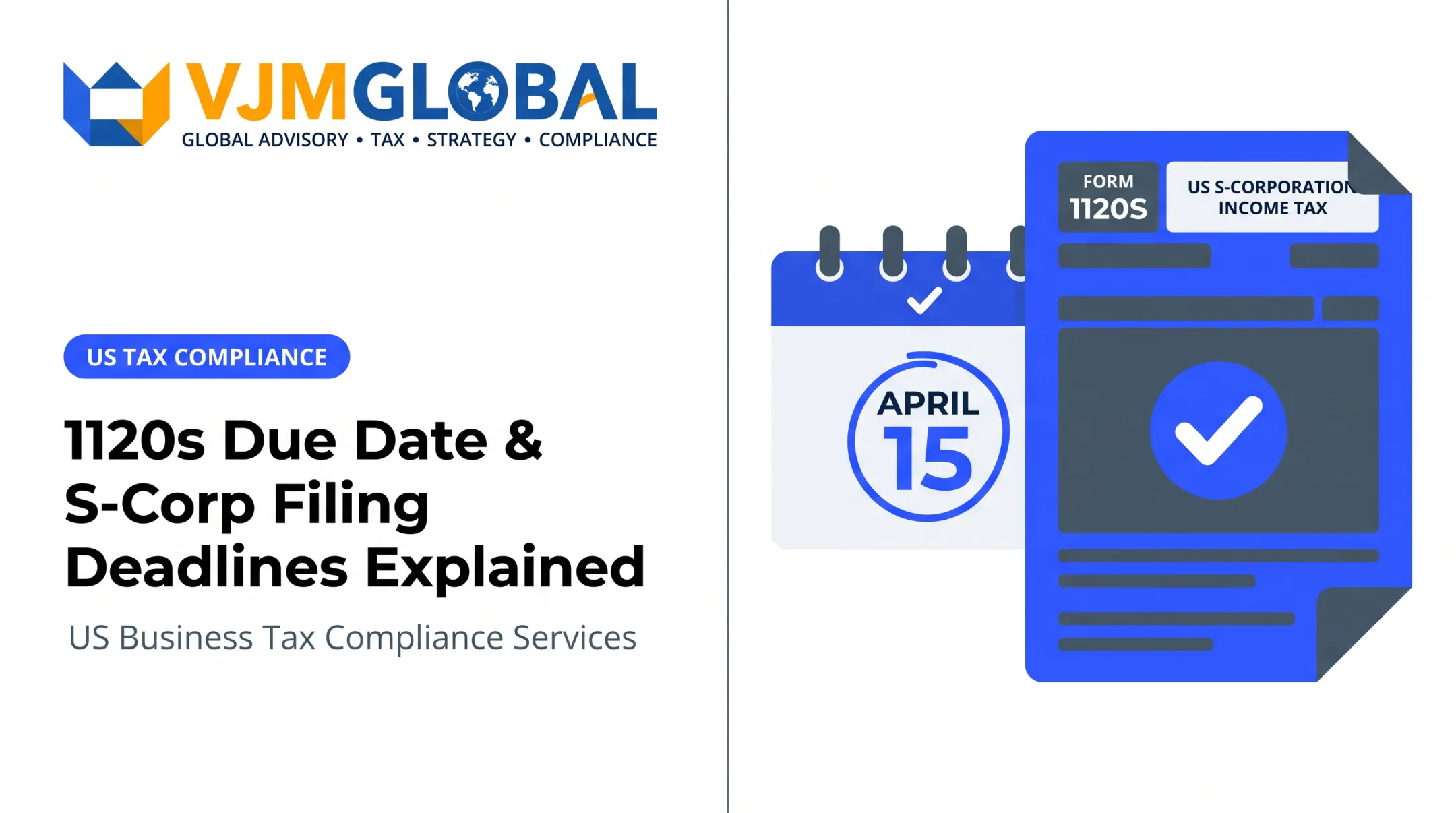
For a calendar-year S-corporation, the standard due date is the 15th day of the third month after the tax year ends, normally March 15. For the 2025 tax-year return, that date falls on a Sunday, so the IRS deadline shifts to March 16, 2026. Always check the IRS calendar directly, since weekend and holiday adjustments vary year to year.
Fiscal-year S-corporations calculate differently: their deadline is always the 15th day of the third month following the close of their tax year, with the same weekend/holiday rollover rule applied where relevant.
Form 7004: The Extension Mechanism
Filing Form 7004 gives most S-corporations an additional six months to file, pushing the 2026 calendar-year deadline out to September 15, 2026, if filed correctly and on time.
A few things to keep in mind:
- It extends the filing deadline only. Any tax owed is still due by the original date
- A late Form 7004 generally doesn't retroactively fix an already-late return
- State obligations aren't automatically extended. Annual reports, franchise tax, and state income tax filings typically run on their own separate deadlines
- The IRS doesn't confirm acceptance. It only contacts you if the request is rejected, so keep your submission confirmation or electronic acceptance record as your proof of timely filing

What to Do After Missing the Filing Deadline
If the deadline has already passed, filing immediately is almost always the right move. The longer the return sits unfiled, the more monthly periods accrue against the penalty cap.
Action Sequence
- Confirm whether Form 7004 was filed and check the acceptance status
- Gather books and payroll records covering the full tax year
- Reconcile shareholder ownership for the entire period, not just year-end
- Prepare all required schedules and K-1s completely and accurately
- File through an authorised method, using e-file where available
- Save proof of acceptance, including any confirmation number or stamped receipt
Don't rush an incomplete return out the door just to stop the clock. An inaccurate 1120-S can create its own problems, including the separate incomplete-return penalty, and typically needs qualified US tax guidance to fix properly, especially where shareholder records or K-1 details are missing.
Delayed K-1s don't just affect the corporation. Shareholders may need to file their own individual extensions or amended returns once the K-1 finally arrives, so flag this early rather than leaving each shareholder to discover it independently.
Document checklist for an IRS notice response:
- Filed return copy
- Extension confirmation (if applicable)
- Electronic acceptance or mailing proof
- Ownership records for the tax year
- Original IRS correspondence
- Preparer communications
- A dated, written explanation of the delay
This is where VJM Global typically supports Australian-based owners and international businesses: pulling together the accounting records, coordinating the compliance pieces across jurisdictions, and preparing the documentation a US tax professional needs.
Actual IRS representation or legal advice on a specific penalty matter should still sit with an appropriately qualified US tax professional, since that's outside what a preparation and coordination role covers.
Penalty Relief and How to Prevent Future Problems
Reasonable-cause relief is the main avenue for reducing or removing the section 6699 penalty, but it isn't automatic. The IRS looks at whether the corporation exercised ordinary business care and prudence, and whether circumstances genuinely beyond its control prevented timely filing.
Facts that may support relief include:
- Serious illness or death of the person solely responsible for filing
- Natural disaster or casualty that disrupted operations
- Loss of records despite reasonable efforts to maintain them
- Reliance on documented, specific professional advice that turned out to be wrong
- Demonstrated IRS processing errors or delays
Simply forgetting the deadline, or assuming that owing no tax meant no return was needed, generally isn't treated as reasonable cause.
Separately, current IRS penalty relief guidance lists section 6699(a)(1) failures as eligible for First-Time Abate, with a transition to an Automatic Exemption from Penalty process beginning in 2026. Eligibility generally requires a clean compliance history for the same return type over the prior three years.

This administrative route is separate from a reasonable-cause request and from late-election relief under Revenue Procedure 2013-30, which addresses a missed S-election rather than a missed return.
Prevention Controls Worth Setting Up
- A combined federal and state compliance calendar, not just a US-only one
- One named person with clear responsibility for each filing
- Bookkeeping closed out well before the deadline, not at it
- A running log of shareholder changes throughout the year
- A pre-deadline review step, separate from the person preparing the return
- Written confirmation saved for every electronic submission
Rates and deadlines shift most years. Re-check the current IRS instructions before relying on any figure in this guide for an actual filing.
Frequently Asked Questions
What is the penalty for late filing an S corporation tax return?
It's generally calculated per shareholder, per month or partial month late, up to a 12-month maximum. The exact rate depends on the year the return was required to be filed, so confirm the 2026 figure against current IRS guidance before using it.
How much penalty does the IRS charge for late filing?
The amount depends on the applicable year's rate, how many shareholders the business had, and how many months or partial months passed before filing. This is distinct from late-payment penalties, information-return penalties, or state-level charges.
What is the late filing penalty for 2025?
A return required to be filed in 2025 may carry a different rate than a 2025 tax-year return actually filed in 2026. Always check the instructions tied to the specific filing year, not the tax year printed on the return.
What happens if you miss the S-Corp tax deadline?
Monthly penalty periods continue accruing (up to the cap), K-1s get delayed for shareholders, and shareholders may need their own extensions or amended returns. Filing promptly and considering a relief request are the next steps.
How late can an S-Corp election be filed?
This is a different issue from a late Form 1120-S return — it concerns a missed Form 2553 election rather than a missed annual return. Late-election relief follows its own procedure under Revenue Procedure 2013-30, worth researching separately.
Will the IRS forgive late filing penalties?
Relief may be available through reasonable cause or an administrative program like First-Time Abate, but it isn't automatic. It requires a timely, well-documented response that follows the specific IRS notice's instructions.