Miss an installment and a penalty can apply even if you pay everything by the filing deadline. This guide covers the four 2026 due dates, what Form 1040-ES does, two ways to calculate payments, how to pay, and the extra points for Australian-based taxpayers.
This article is general educational tax information, not individual tax advice.
Key Takeaways
- The 2026 deadlines are April 15, June 15 and September 15, 2026, then January 15, 2027.
- Form 1040-ES estimates and pays current-year tax; it does not replace the annual Form 1040.
- You generally need to pay if you expect to owe $1,000 or more and withholding falls short of the safe harbor.
- Australian tax, currency, treaty and foreign tax credit issues are separate and may need professional review.
What Is IRS Form 1040-ES and Who Must Use It?
What does Form 1040-ES do?
Individuals use Form 1040-ES to estimate current-year federal income tax, self-employment tax and other applicable taxes, then pay during the year. The IRS 2026 Form 1040-ES includes the worksheet and payment vouchers.
It is not the annual return. Form 1040 reports the finished tax year. Sending an estimated payment does not satisfy your filing requirement.
Who may need to make estimated tax payments?
The general test has two parts:
- You expect to owe at least $1,000 after withholding and refundable credits.
- Your withholding and refundable credits will be less than the smaller of 90% of your 2026 tax or 100% of your 2025 tax. The 2025 return must cover 12 months.
If your 2025 adjusted gross income exceeded $150,000 ($75,000 if married filing separately), the prior-year figure becomes 110%.
Income that often lacks withholding includes:
- Self-employment or freelance earnings
- Partnership or S corporation pass-through income
- Interest, dividends, rent and royalties
- Capital gains, including cryptocurrency gains
- Certain retirement distributions
W-2 employees are not exempt. If payroll withholding doesn't cover investment or side-business income, you may still owe estimates.
Who may not need to pay?
You may skip estimates if you were a U.S. citizen or resident alien throughout 2025 and had no tax liability for the full 12-month year. No liability means total tax was zero, or you weren't required to file.
Corporations are different. They follow separate estimated tax rules, and Form 1120-W is now historical, so individuals shouldn't use corporate forms.
2026 Estimated Tax Payment Due Dates
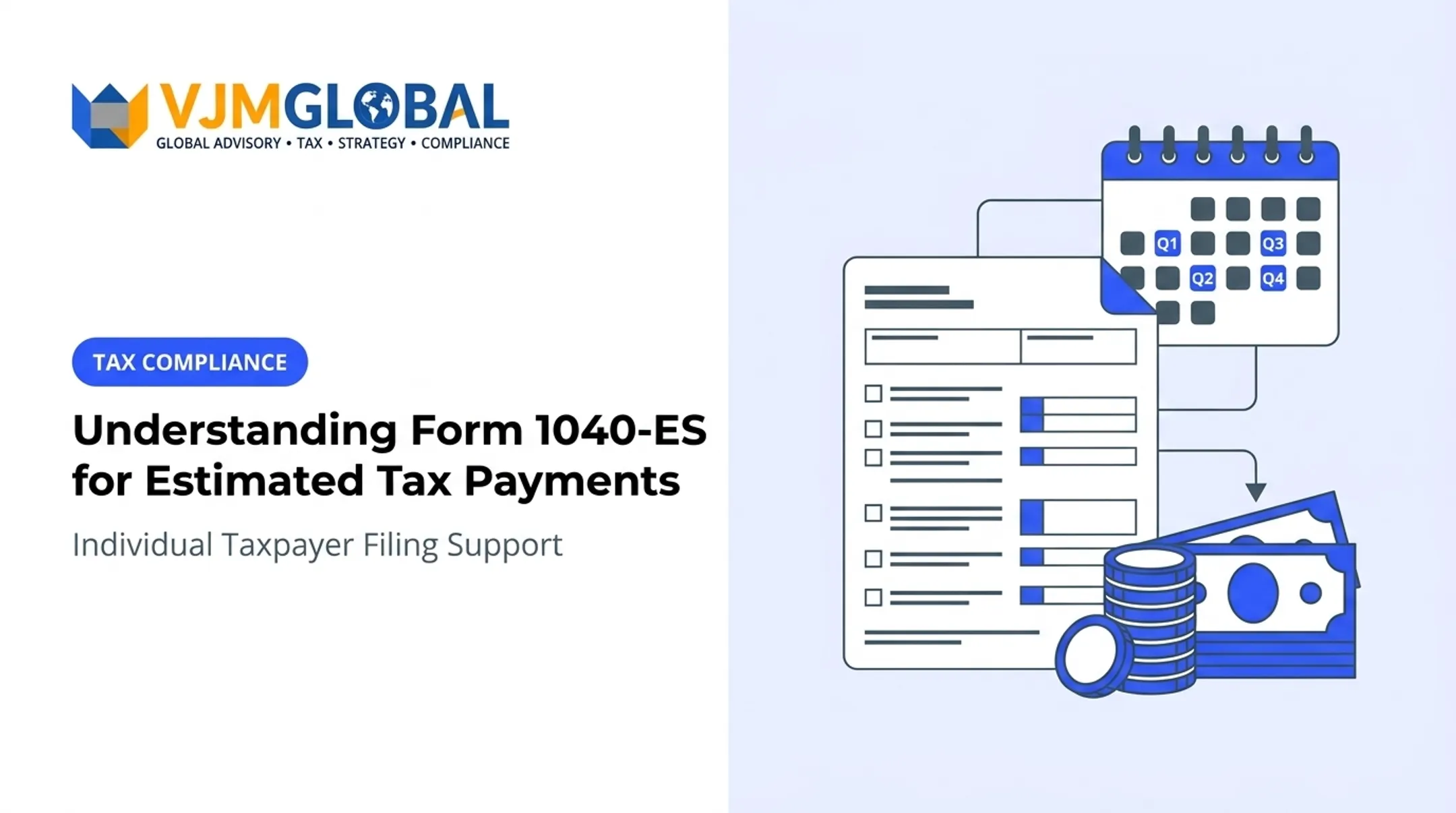
2026 calendar-year payment schedule
| Income period | Due date |
|---|---|
| January 1 – March 31, 2026 | April 15, 2026 |
| April 1 – May 31, 2026 | June 15, 2026 |
| June 1 – August 31, 2026 | September 15, 2026 |
| September 1 – December 31, 2026 | January 15, 2027 |
These periods are not four equal quarters. The second covers only two months and the third covers three, so payment gaps are uneven. The January 15, 2027 payment is the final installment for 2026, not the first for 2027.
You can skip that last payment if you file your 2026 return and pay the full balance by February 1, 2027.
Weekend, holiday and special deadline rules
When a deadline lands on a Saturday, Sunday or legal holiday, it moves to the next day that is none of those, per Publication 509. Check the IRS calendar for any year-specific shift.
Disaster relief can also change dates. In October 2026, for example, the IRS postponed covered estimated tax deadlines to February 4, 2027 for affected West Virginia counties. Check current IRS notices for your situation.
Fiscal-year taxpayers
If your tax year isn't the calendar year, payments fall on the 15th day of the 4th, 6th and 9th months of your fiscal year, and the 15th day of the first month after it ends. Confirm the schedule in the 2026 instructions rather than assuming calendar dates.
How to Calculate 2026 Estimated Tax Payments with Form 1040-ES
Gather the figures
Collect these before you start:
- Your 2025 federal return
- Expected 2026 income and business or investment expenses
- Deductions, credits, filing status and dependents
- Retirement contributions
- Expected federal withholding
Self-employed taxpayers should work from net profit, not gross receipts. Self-employment tax is 15.3% (12.4% Social Security plus 2.9% Medicare), applied to 92.35% of net profit. Half of it is deductible.
Complete the worksheet
The worksheet runs like this:
- Project annual income and subtract deductions to reach taxable income.
- Apply the 2026 tax rates and add self-employment and other taxes.
- Subtract credits.
- Compare the result to the safe-harbor benchmark.
- Subtract expected withholding to find what you owe.

For an April start, equal installments are generally one-quarter of the required amount. Don't treat any simple percentage as a universal answer; use the official worksheet.
Prior-year safe harbor
If your income is stable, paying 100% of last year's tax (110% for higher earners) in equal installments cuts penalty risk. It's a penalty benchmark, not your final liability, so you may still owe when you file.
Current-year or annualized income
Seasonal, irregular or investment-heavy income often fits poorly into four equal payments. The annualized income method uses year-to-date income for each period, which can reduce early installments.

Publication 505 uses a repair shop that earns far more in summer to illustrate it. File Form 2210, Schedule AI with your return.
A large capital gain, business launch, property sale or delayed freelance payment may mean recalculating later installments.
Revisit the estimate
Review your numbers after any major change in revenue, deductions, withholding, filing status, investment sales or expenses. Recalculate with the 2026 worksheet for remaining installments, and keep each version with its supporting records.
How to Pay, Track, and Correct Estimated Tax Payments
Payment methods and records
- IRS Online Account: bank payments, balances and payment history
- IRS Direct Pay: bank payment without signing in
- Card or digital wallet through IRS-approved processors (fees apply)
- Check or money order with the Form 1040-ES voucher, payable to United States Treasury
EFTPS is no longer available for individual payments from November 12, 2026, so don't rely on older instructions listing it.
Save confirmation numbers, dates, bank records, vouchers and each calculation. You can also pay weekly, fortnightly or monthly, as long as enough is paid by each deadline.
Missed or underpaid instalments
The penalty depends on how much you underpaid and for how long, using the IRS quarterly rate. Each instalment is treated separately, so catching up later or receiving a refund doesn't necessarily erase it.
If you've missed one:
- Pay as soon as possible
- Recalculate remaining instalments
- Review withholding options
- Check whether an exception applies or whether Form 2210 is needed
Common mistakes to avoid
- Using gross revenue instead of net profit
- Forgetting self-employment tax
- Overlooking investment gains
- Assuming the four periods are equal
- Relying on outdated prior-year figures
Federal payments also don't cover state or local estimated tax. Those are separate.
Special Considerations for Australian-Based Taxpayers with U.S. Obligations
Confirm whether U.S. estimated tax rules apply
Living in Australia doesn't automatically create a U.S. obligation or remove one. Start by working out whether you are a U.S. citizen, resident alien, or nonresident alien with U.S. income. Citizens and resident aliens are taxed on worldwide income wherever they live.
Several rules can change the numbers:
- The Form 1040-ES (NR) schedule for nonresident aliens, which depends on whether you have U.S.-withholding wages, not your address
- Effectively connected income (ECI) from a U.S. trade or business
- The foreign earned income exclusion, which doesn't reduce self-employment tax
- Foreign tax credits on Form 1116
- The U.S.–Australia treaty saving clause, which generally preserves U.S. taxation of citizens and residents
The two-month overseas extension for annual returns (to June 15) doesn't move the estimated tax schedule. The first estimate is still due April 15.
Keep U.S. and Australian obligations separate
A payment to the IRS doesn't satisfy the Australian Taxation Office, and an ATO payment doesn't satisfy an estimated payment. Australia's tax year runs July 1 to June 30; U.S. estimates follow January to December.

Keep records of:
- Exchange rates and income dates
- Foreign taxes paid and withholding
- Supporting documents for both countries
Convert amounts to U.S. dollars. The IRS accepts consistently applied posted rates, and payments must be in U.S. currency.
Relevant professional support
VJM Global supports Australian businesses, foreign investors and multinational companies with cross-border accounting, U.S. and Australian tax compliance, and financial reporting, including Form 1040/1040-NR preparation. If your situation spans both systems, get a professional review before you set your payments.
Frequently Asked Questions
What are the 2026 estimated tax payment due dates?
April 15, June 15 and September 15, 2026, plus January 15, 2027. Weekend, holiday or disaster relief rules can shift a deadline.
Who has to pay estimated taxes using Form 1040-ES?
Generally anyone expecting to owe $1,000 or more whose withholding and credits fall below the safe harbor. That often includes self-employed people, investors and landlords.
How do I calculate estimated tax payments for 2026?
Use the 2026 Form 1040-ES worksheet. The prior-year safe harbor suits stable income; the annualized method suits uneven income.
Can I pay estimated taxes monthly instead of quarterly?
Generally yes. Weekly, fortnightly or monthly payments are fine if the required amount is paid by each installment deadline.
What happens if I miss or underpay a 2026 estimated tax payment?
The IRS may charge an underpayment penalty per installment. Pay promptly, recalculate later installments, and review exceptions or Form 2210.
Does living in Australia change U.S. estimated tax payment deadlines?
Not automatically. Residence in Australia doesn't remove the obligation or change the federal schedule, but treaty, filing status, foreign income and disaster relief rules should be reviewed individually.