Many filers assume that taking the standard deduction ends the conversation. It doesn't. Several deductions reduce adjusted gross income (AGI) or taxable income whether or not you itemise. Eligibility turns on filing status, income, employment, residency and the type of expense. The sections below cover what applies for tax year 2026, which you'd generally file in 2027.
Key Takeaways
- Claiming the standard deduction still leaves many deductions available.
- Review IRA, HSA, student-loan interest, self-employed and educator deductions first.
- Several 2026 provisions apply to non-itemisers, including tips, overtime and senior deductions.
- Deductions reduce taxable income; credits reduce tax directly.
- Confirm all 2026 limits and forms against current IRS guidance.
What Does "Without Itemising" Mean for 2026 Tax Returns?
Standard vs itemised deductions
You choose one method per U.S. federal return. The standard deduction is a fixed amount, while itemising means totalling eligible Schedule A expenses and using that figure if it is higher.
| Filing status | 2026 standard deduction |
|---|---|
| Single | $16,100 |
| Married filing jointly / surviving spouse | $32,200 |
| Married filing separately | $16,100 |
| Head of household | $24,150 |
The additional amount for age 65 or blindness is $1,650 per qualifying status, rising to $2,050 for unmarried filers who aren't surviving spouses, per IRS Rev. Proc. 2025-32.
Above-the-line adjustments
Adjustments to income are listed on Schedule 1 (Form 1040) and totalled on Form 1040, line 10. They reduce AGI before the standard-or-itemised choice, so standard-deduction filers keep them. The 2026 Schedule 1 is currently a draft.
Newer provisions, such as tips and overtime, reduce taxable income through Schedule 1-A rather than Schedule A. They aren't traditional itemised deductions either.
Does living in Australia matter?
Residency in Australia alone doesn't decide eligibility. What matters is:
- U.S. citizenship or U.S. tax-residency status
- Whether a U.S. federal return is required
- Filing status and income source
- Treaty position and any foreign earned income exclusion (FEIE)
U.S. citizens and resident aliens abroad owe U.S. tax on worldwide income. The U.S.-Australia treaty's saving clause still preserves U.S. taxation of citizens. Nonresident aliens file Form 1040-NR and cannot claim the standard deduction in most cases.
The 2026 FEIE is $132,900, claimed on Form 2555. Expenses allocable to excluded income generally can't be deducted too.
Above-the-Line Deductions You May Claim Without Itemising
Traditional IRA
The 2026 combined IRA limit is $7,500, plus a $1,100 catch-up at age 50 or older, capped by your compensation. If neither you nor your spouse has a workplace plan, the deduction isn't income-limited, per IRS Notice 2025-67. Otherwise phaseouts apply:
- Single or head of household, covered by a plan: MAGI $81,000 to $91,000
- Joint, contributor covered: $129,000 to $149,000
- Joint, only spouse covered: $242,000 to $252,000
- Married filing separately: $0 to $10,000
HSA
For 2026 the contribution ceiling is $4,400 for self-only coverage or $8,750 for family coverage, plus a $1,000 catch-up at 55 or older. You need a qualifying high-deductible health plan: minimum deductible $1,700 self-only or $3,400 family.
Employer contributions count toward the ceiling. Don't deduct pre-tax payroll contributions a second time. Enrolling in Medicare ends your contribution eligibility. Report on Form 8889.
Self-employed deductions
Business owners who take the standard deduction can still claim:
- Half of self-employment tax
- Self-employed health insurance premiums (Form 7206 in some cases), limited for months you could join an employer-subsidised plan
- SEP retirement contributions up to $72,000 using a special calculation
- One-participant 401(k): $24,500 elective deferral, plus $8,000 catch-up at 50 or older and $11,250 at ages 60 to 63
Ordinary business expenses reduce profit on Schedule C. They aren't Schedule A deductions.
Student-loan interest
The maximum is $2,500 of interest actually paid on a qualified loan. For 2026, the single and head-of-household phaseout starts above $85,000 MAGI and ends at $100,000. Check the IRS joint-filer range when final instructions are released, and don't reuse the 2025 joint range.
The loan must have funded qualified education expenses for you, your spouse or a dependent. Form 1098-E supports the claim.
Other adjustments
- Educator expenses: up to $350 for 2026, now extended to coaches and certain instructional equipment
- Early-withdrawal penalty on savings: requires the bank's interest statement
- Alimony: only for instruments executed before 2019 that weren't modified
- Moving expenses: active-duty military and intelligence-community members, on Form 3903
New or Expanded 2026 Deductions Available to Some Non-Itemisers
These deductions come from the 2025 budget legislation (OBBBA). The 2026 Form 1040 draft routes most through Schedule 1-A to line 13a. Check the final IRS forms when they are released.
| Deduction | Maximum | Phaseout begins (MAGI) |
|---|---|---|
| Charitable gifts (non-itemisers) | $1,000; $2,000 joint | None |
| Qualified tips | $25,000 | $150,000; $300,000 joint |
| Qualified overtime | $12,500; $25,000 joint | $150,000; $300,000 joint |
| New vehicle loan interest | $10,000 | $100,000; $200,000 joint |
| Senior deduction | $6,000 per person aged 65+ | $75,000; $150,000 joint |

Charitable gifts
Starting in 2026, non-itemisers can deduct cash gifts to qualifying organisations. Donor-advised-fund contributions are excluded. Keep receipts. Line 12f on the draft Form 1040 handles it.
Tips and overtime
Tips must be earned in a listed occupation. Treasury's final occupations list covers more than 70 occupations, including bartenders and floral designers. Qualified overtime is only the premium portion required by the Fair Labor Standards Act, not total pay for overtime hours.
Both deductions require a valid SSN, and married taxpayers must file jointly. They apply for 2025 to 2028.
Vehicle loan interest
The loan must meet all of these conditions:
- Taken out after 31 December 2024
- Used to buy a new vehicle for personal use
- Secured by that vehicle
- Final assembly in the United States
Report the VIN on the return.
Senior deduction
This $6,000 deduction applies on top of the regular standard deduction. It phases out at 6% of MAGI above the threshold and needs a valid SSN.
Excluded foreign income, including Foreign Earned Income Exclusion (FEIE) amounts, is added back to MAGI.
Less Common Deductions, Business Situations, and Expenses That Do Not Qualify
Business expenses
Self-employed filers can still deduct legitimate costs against business income, provided they meet business-purpose and substantiation rules:
- Simplified home office: $5 per square foot up to 300 square feet, with regular and exclusive use, limited by business income
- Business mileage: 72.5 cents per mile for 2026
- Ordinary and necessary supplies, advertising and professional fees

Itemized-only expenses
These stay on Schedule A and do not help standard-deduction filers:
- Mortgage interest
- Medical expenses above 7.5% of AGI
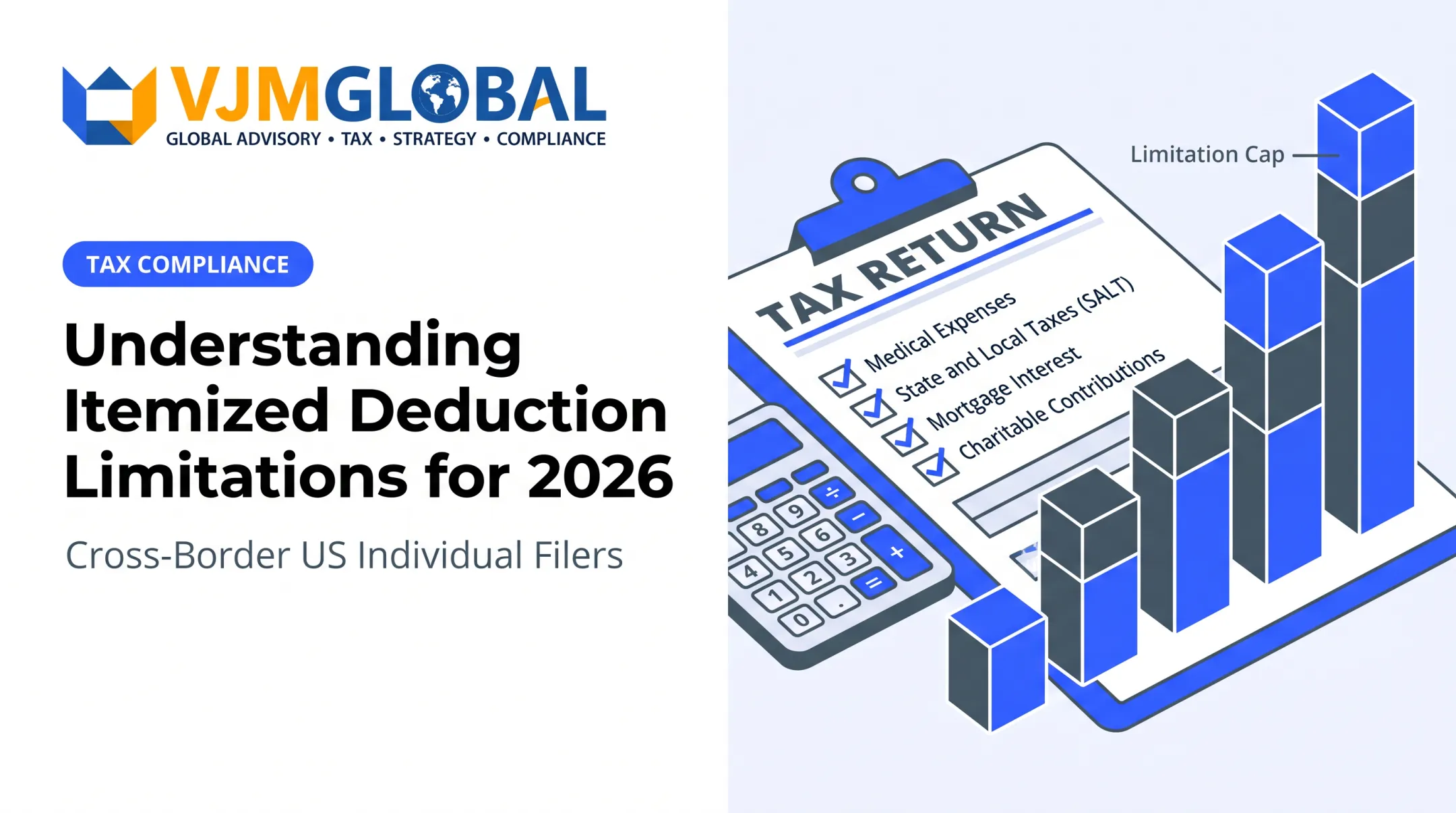
- State and local taxes (the 2026 cap is $40,400)
- Non-cash charitable gifts
Do not assume it is deductible
- Personal, family and living expenses
- Most unreimbursed employee expenses (still suspended for 2026)
- Federal income tax
- Fines and penalties
- Costs already reimbursed or paid with pre-tax funds
Verify exclusions against current IRS guidance each year.
How to Claim and Document Deductions Without Itemising
A practical workflow
- Confirm you have a U.S. filing obligation (citizen, resident alien or nonresident with U.S. income).
- Set your filing status.
- Gather W-2s, 1099s, 1098-E and 5498-SA forms.
- Review adjustments on Schedule 1 and additional deductions on Schedule 1-A.
- Compare the standard deduction with itemising where relevant.
- Complete Form 1040 and its schedules.

Records to keep
- IRA and HSA statements
- Student-loan interest forms
- Health-insurance and retirement-plan records
- Mileage logs and vehicle-loan paperwork
- Charitable receipts
- Educator-expense records
- Business invoices
Each record should show the amount, date, recipient, purpose and any reimbursement or employer contribution. The general retention period is three years, with longer periods for some claims.
Deadlines and professional help
The 2026 return is due April 15, 2027. Filers whose tax home and abode are abroad generally get an automatic extension to June 15, 2027, but interest on unpaid tax runs from April.
Cross-border situations get complicated quickly. VJM Global supports accounting, tax compliance and financial reporting for Australian businesses and other international clients. The team prepares Form 1040 and 1040-NR returns through professionals familiar with U.S.-compliant reporting.
Frequently Asked Questions
What does it mean to take a deduction without itemising?
You claim certain adjustments or statutory deductions while using the standard deduction. Most Schedule A expenses can't be claimed separately.
Which deductions can I claim without itemising in 2026?
Eligible IRA and HSA contributions, student-loan interest, self-employed deductions, educator expenses and provisions such as tips, overtime and senior deductions. Limits and phaseouts apply.
Can self-employed taxpayers claim deductions without itemising?
Yes. Business expenses reduce business income on Schedule C, separate from personal itemised deductions. Keep separate records showing business purpose.
Are charitable contributions deductible without itemising in 2026?
Yes, up to $1,000 ($2,000 joint) for cash gifts to qualifying organisations. Donor-advised funds are excluded, and you need receipts.
Can Australian residents claim U.S. tax deductions without itemising?
Only with a U.S. filing obligation and by meeting the statutory rules. Citizenship, treaty position, income source and filing status need individual review.
What records should I keep for deductions claimed without itemising?
Receipts, official contribution or interest statements, income forms, payment evidence and mileage logs. Also keep proof that expenses weren't reimbursed or paid pre-tax.