That effort doesn't guarantee a bigger tax saving. Itemising can pay off when your allowable deductions are substantial, but only if the numbers actually beat the alternative.
A note on terms: "itemised deductions" and the standard-versus-itemised election are US tax concepts. Australian taxpayers follow Australian Taxation Office (ATO) rules for eligible deductions and records. This article covers both and keeps them separate.
Key Takeaways
- Itemising adds record-keeping and preparation work.
- Deductions reduce taxable income, not tax owed dollar for dollar.
- Compare allowable itemised deductions with the alternative before choosing.
- Australia has no US-style standard-deduction election for individuals.
What Does Itemising Your Deductions Mean?
Itemising under US federal rules
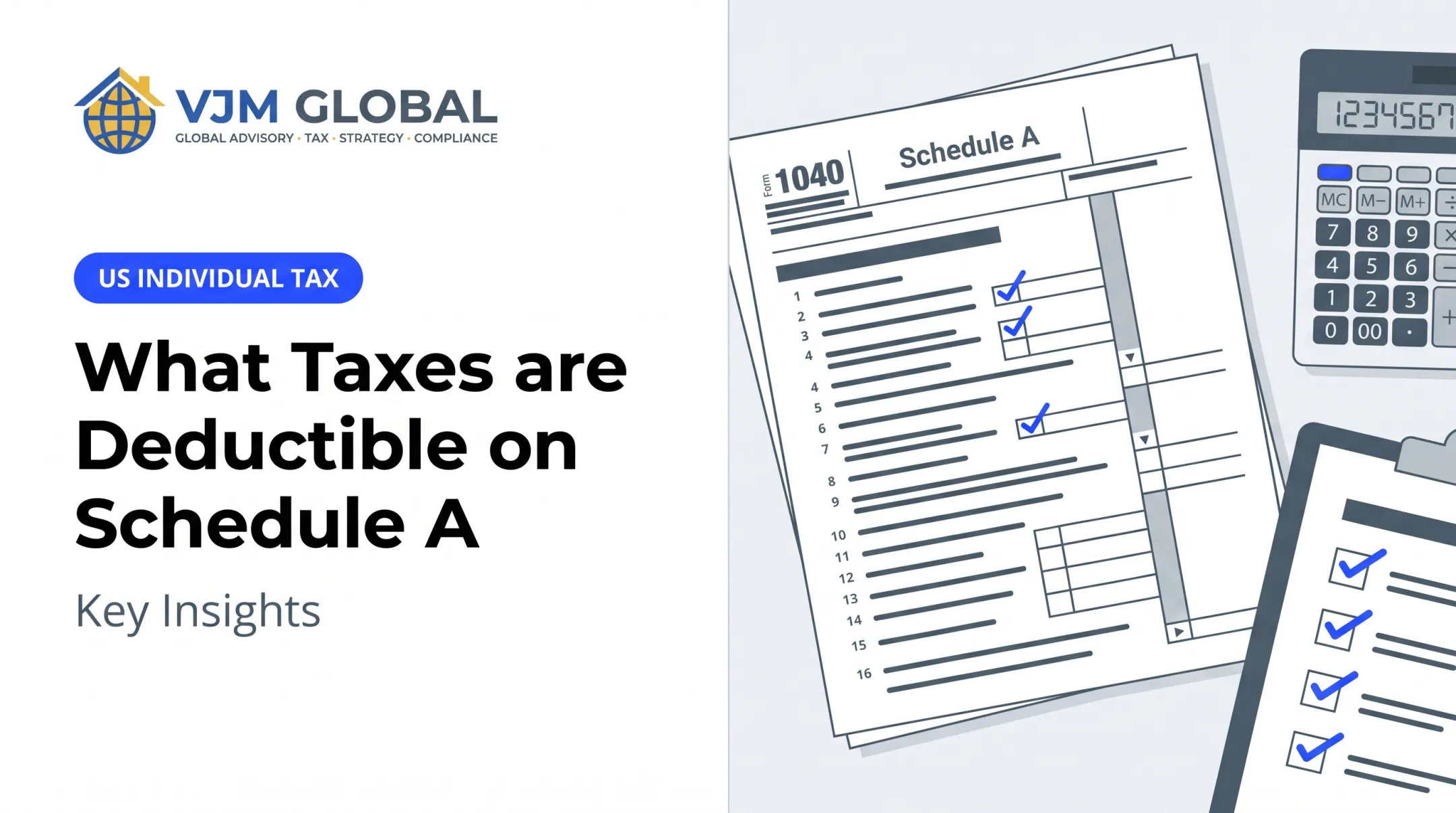
In the US, itemising means listing eligible expenses individually on Schedule A of Form 1040 instead of taking the standard deduction.
The IRS says taxpayers generally use whichever allowable amount is larger, and the IRS guidance confirms you cannot take both.
Common categories include:
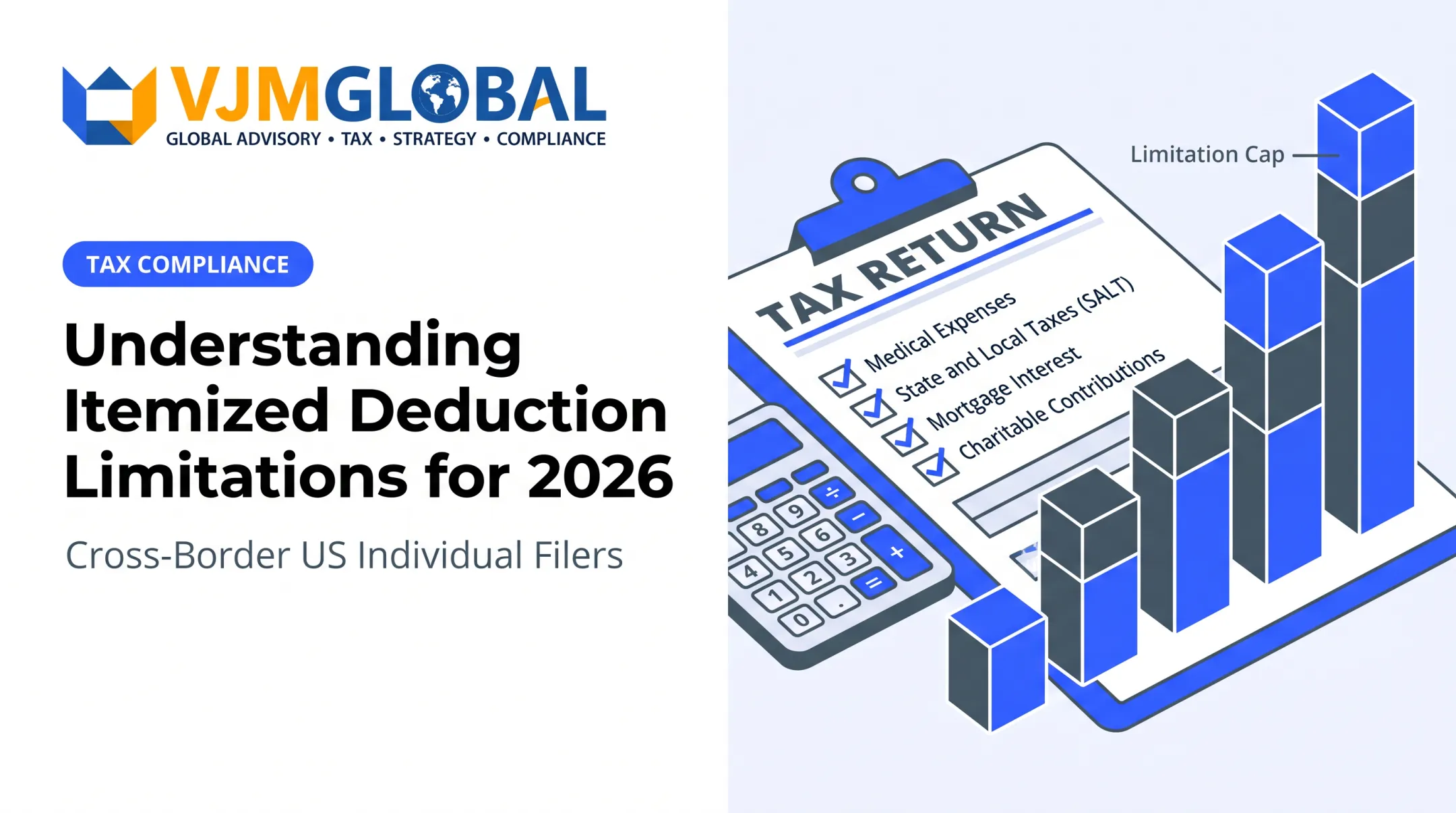
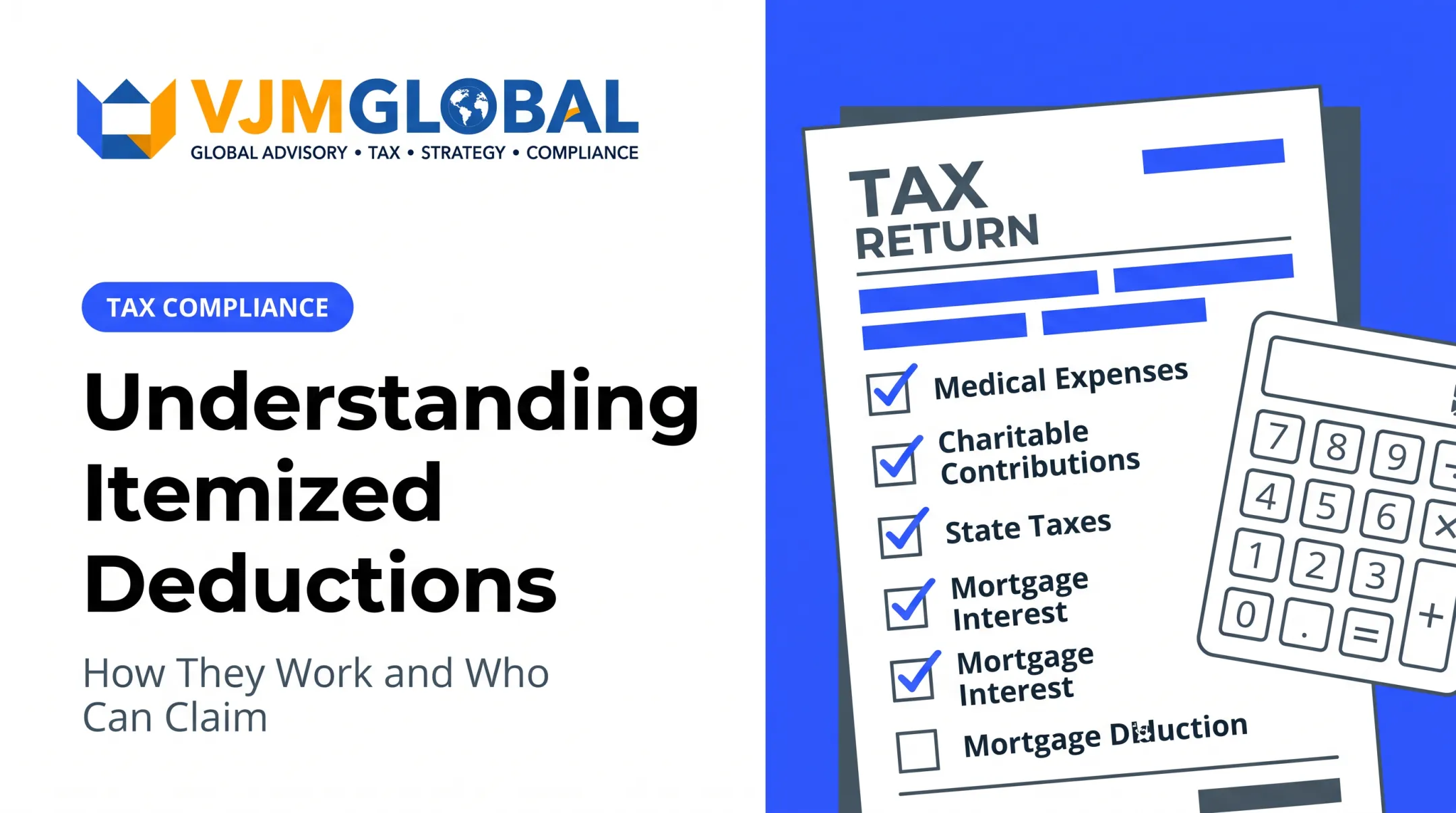
- Medical and dental expenses above a percentage of income
- State and local taxes, subject to a cap
- Home mortgage interest, subject to debt limits
- Charitable contributions, subject to percentage limits
Paying an expense does not make it deductible. Each category has its own eligibility rules, thresholds and limits.
A deduction reduces the income that gets taxed. A tax credit reduces the tax itself. So a deduction's value depends on your tax rate: the higher your rate, the more each deducted dollar saves.
Australian terminology and treatment
Australia does not use a standard-versus-itemised choice for individual returns. The ATO describes deductions as expenses that reduce taxable income, and its three golden rules for work-related claims are:
- You spent the money and weren't reimbursed.
- The expense directly relates to earning your income.
- You have a record to prove it.
The ATO has described a proposed standard deduction of up to A$1,000 for work-related expenses from 2026-27. It is labelled a proposal and is not available for Tax Time 2025-26, so check current legislation before relying on it.
Any US example below is governed by US federal rules. Australian examples follow ATO rules.
What Is One Disadvantage of Itemising Your Deductions?
The process takes more time and effort
With a fixed deduction, you enter one predetermined amount. When you itemise, you have to:
- Identify potentially deductible expenses
- Classify them correctly
- Calculate the allowable amount for each
- Complete the relevant schedules
Picture someone with medical bills, donations, mortgage interest and local taxes. They may spend an entire weekend gathering paperwork, while a standard-deduction filer finishes in minutes.
The IRS estimates a full Form 1040 return with schedules takes about 12 hours and US$290 in out-of-pocket costs, according to the 1040 instructions. That figure covers the whole return, not Schedule A alone.
Record-keeping and substantiation requirements
Evidence varies by deduction and country. It may include:
- Receipts and invoices
- Bank or card statements
- Donation acknowledgements
- Medical records
- Lender statements
In the US, a charitable gift of US$250 or more needs a written acknowledgement from the charity.
In Australia, if total work-related claims are A$300 or less, written evidence is generally not required, but you must still show how you calculated the claim. Above A$300, written evidence is generally required.
Missing or inconsistent records can sink a claim or force an amendment.
Retention periods differ:
- US: generally three years, with longer periods in specific cases (IRS Topic 305)
- Australia: generally five years from the date you lodge
Greater opportunity for mistakes
More line items mean more places to slip. Typical errors include:
- Putting an expense in the wrong category
- Claiming an unsupported amount
- Missing a threshold
- Claiming a non-qualifying expense
Never claim the full amount paid if the rules allow only a qualifying portion, an amount above a threshold or an amount under a cap.
In Australia, an expense used partly for work and partly privately is deductible only for the work portion, and you need evidence of how you split it. The ATO has also named incorrect work-related claims as a tax-time focus, particularly working-from-home claims.
The financial cost of complexity
A complicated return may need more capable tax software or a paid preparer. That cost belongs in your comparison alongside the expected tax saving.
Professional help is valuable for complex or cross-border situations. Plenty of straightforward returns don't need it.
When the disadvantage may be outweighed
The extra burden is justified when your allowable deductions clearly exceed the alternative. A simple test: estimate the tax effect of the extra deductions, then weigh it against the hours, documents and fees involved. If the saving is small, the paperwork may not be worth it. If it's large, it usually is.

Other Drawbacks and Limitations to Consider
Limits and thresholds can reduce the expected benefit
Many US deductions only count after you pass a threshold or are capped. Based on the IRS's 2026 draft Schedule A (not a final form), common limits include:
- Medical expenses count only above 7.5% of AGI
- State and local tax deduction capped at US$40,400 (US$20,200 if married filing separately)
- Mortgage interest subject to qualified-debt limits
- Charitable gifts limited to 60%, 50%, 30% or 20% of AGI under the final 2025 guidance, depending on gift and recipient

Always confirm current figures with the IRS for your tax year.
The total can change from year to year
Mortgage interest, giving, medical costs, property ownership, income and life events all move your deductible total. Reassess every year rather than repeating last year's approach.
Accuracy matters more than maximising claims
A shorter list of well-supported claims beats a long list of doubtful ones. On audits, IRS guidance describes several selection methods, including random selection and computer screening. It does not say that itemising alone triggers an audit.
How Should You Decide Whether Itemising Is Worthwhile?
Start with the correct jurisdiction and tax year
Work out whether US federal, Australian or other rules apply before using any checklist. Rules, limits and forms change, so rely on current IRS or ATO material for your tax year.
Build a list of potentially allowable expenses
Group expenses by category. Separate possible deductions from personal costs, and drop anything without a clear tax link or evidence. Gather:
- Receipts and statements
- Donation records
- Property or loan documents
- Evidence of work or business use, such as a diary or timesheet
For working from home in 2025-26, the ATO fixed-rate method is 70 cents per hour, and you need a record of actual hours worked.
Calculate only the allowable amount
Apply thresholds, apportion private and income-producing use, and respect caps. For example: total expense, minus the private share, then check any threshold or cap. What remains is your claim.
Compare the result with the available alternative
- US: Compare total allowable itemised deductions with the standard deduction for your filing status and use the better result.
- Australia: Follow ATO rules for the deduction categories that apply to you. The US standard-deduction comparison does not transfer.
For US filers, the IRS lists 2026 standard deductions of US$16,100 (single), US$32,200 (married filing jointly) and US$24,150 (head of household). CRS analysis found only 9% of individual returns itemised for 2023.
Know when professional guidance may help
Advice is worth considering with multiple income sources, business or investment activity, cross-border obligations, property transactions or doubts about evidence. In Australia, anyone charging for tax agent services must be registered with the Tax Practitioners Board.
VJM Global provides tax, accounting and compliance support for Australian businesses and other companies operating across borders, and prepares US individual returns (Form 1040 and 1040-NR).
A Practical Takeaway
The principal disadvantage of itemising is the extra time, paperwork and risk of calculation or substantiation errors.
Before you itemise:
- Compare the likely tax benefit with the preparation burden
- Work from current official guidance
- Get advice when your return involves complex or cross-border circumstances
Frequently Asked Questions
What are itemising and non-itemising taxpayers?
Itemisers list eligible expenses individually. Non-itemisers use the standard or a simpler deduction method. The terminology is primarily US.
How do deductions affect your taxable income?
Allowable deductions reduce the income that is taxed, so the saving depends on your circumstances. Credits differ: they reduce the tax itself.
What is the main disadvantage of itemising deductions?
Extra record-keeping, calculations and preparation time. It can still be worthwhile when allowable deductions are significantly higher.
Is itemising always better than taking the standard deduction?
No. It depends on your allowable deductions and the rules that apply. Australian taxpayers shouldn't apply the US comparison automatically.
What records do you need to keep for itemised deductions?
Receipts, statements, invoices, and donation or loan records. Confirm retention periods with the IRS, ATO or your relevant tax authority.