Many brewers assume that sourcing ingredients from a nearby farm, or simply operating in a rural town, is enough to qualify. It isn't. The Massachusetts Alcoholic Beverages Control Commission (ABCC) ties this license to actual agricultural production under the brewer's control.
This article covers who qualifies, what you need to grow or document, which agencies get involved, what the license permits on-site, and how the costs compare against alternative licensing structures.
A note before you read further: liquor licensing law changes, and some older ABCC guidance remains posted without clear updates. Confirm every requirement, fee, and form directly with the ABCC, the current Massachusetts General Laws, and your municipal licensing authority before relying on anything here.
Key Takeaways
- Farmer-brewery licenses require genuinely growing cereal grains or hops, not just buying local ingredients
- Eligibility, production rights, taproom pouring, and local approvals are four separate decisions
- Older ABCC advisories may not reflect current thresholds; confirm them before applying
- Businesses that can't meet the agricultural test should look at manufacturer or pub-brewery licenses instead
What Is a Massachusetts Farmer-Brewery License?
Massachusetts created the farmer-brewery license under Massachusetts General Laws Chapter 138, Section 19C, with a specific policy goal: to support in-state agriculture while still letting qualifying farms brew and sell malt beverages. The statute isn't a cheaper substitute for a standard brewery permit. It's built around an actual farming relationship.
A "farmer-brewer" is someone who grows cereal grains or hops for the purpose of producing malt beverages. A "farmer-brewery" is the production premises tied to that grower.
Malt beverages under the law max out at 12% alcohol by weight. That cap matters if you plan stronger specialty releases later.
How It Differs From Other Brewery Categories
Three related licenses get confused constantly:
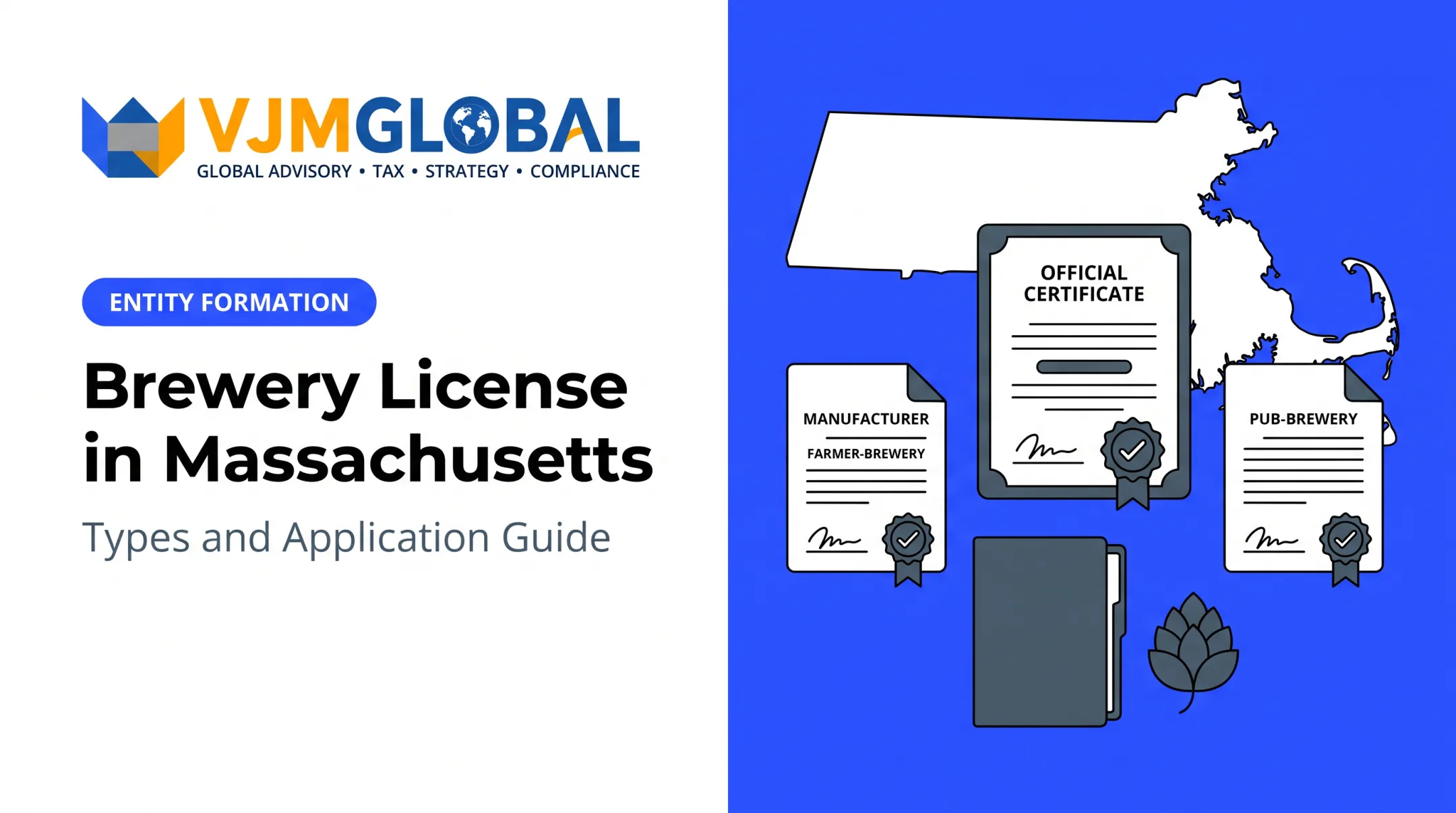
- Manufacturer's license (Section 19): general brewing authority, no farming requirement, different fee structure
- Farmer-brewery license (Section 19C): requires growing hops or cereal grains used in your own malt beverage production
- Pub-brewery license (Section 19D): built around on-premises retail sales, not agricultural sourcing
Holding a Section 19C license doesn't automatically authorize taproom pours, off-site festival tastings, or unlimited wholesale distribution. Each privilege needs its own check against the statute, and sometimes a separate local or state approval too.
The Agricultural Connection Has to Be Real
Buying grain from a farm down the road doesn't make you a farmer-brewer. ABCC guidance centers on the brewer actually growing the hops or cereal grains used, or controlling that production through an arrangement such as an exclusive crop contract.
Here's where things get murky. An ABCC advisory from 2011 described a specific growing-or-exclusive-yield-contract percentage test. More recent ABCC materials don't repeat that figure, and nothing confirms whether the older advisory was formally withdrawn or just left unaddressed.
Don't treat either document as the final word. Confirm the current standard directly with the agency before building a business plan around any specific number.
Eligibility and Application Requirements
The core requirement sounds simple, but it's murkier in practice: you need to grow cereal grains or hops that go into your own malt beverage production, or control that production through an arrangement like an exclusive crop contract.
Neither the statute nor ABCC's current application guidance specifies a minimum acreage or ingredient percentage, despite that older advisory floating a specific test. Confirm the live standard before finalizing your farm plan.
Connecting Projected Output to Crop Volume
This calculation is for planning purposes only; it's not a legal threshold. Say you project 800 barrels of beer annually, and your recipe uses roughly 1.5 pounds of hops per barrel. That's around 1,200 pounds of hops you'd need sourced from land you grow or control.
Run similar math against your actual recipes and acreage before committing to a production figure on your application. ABCC reconciles your stated output against actual annual results.

Evidence Worth Gathering Early
Documentation supporting the agricultural side of your application typically includes:
- Ownership deeds or lease agreements for the farmland
- Farm maps showing acreage under cultivation
- Planting and harvest records for the relevant crop
- Production plans tying crop output to brewing volume
- Invoices or contracts for supplemental grain or hops
- Records proving exclusive rights to a third party's yield, if applicable
Business Structure and Control Questions
Who actually controls the farming operation matters a great deal. If the brewery and farm sit under separate legal entities, ABCC may ask how the brewer exercises control over the crop. Does a lease grant sufficient control for the agricultural test? Does a multi-member LLC's farming arm count as "the farmer-brewer growing" hops? These are questions for Massachusetts counsel, not guesswork.
Application Checklist
ABCC's current application materials call for:
- TTB Brewer's Notice (federal approval)
- FDA Food Facility Registration
- A $3,000 surety bond payable to the Commonwealth
- Premises floor plan and lease or occupancy documents
- Entity formation documents and an authorizing corporate or LLC vote
- Personal information, CORI release, and citizenship documentation for managers
- Records supporting the agricultural connection described above
Confirm whether your municipality requires a public hearing, site inspection, or neighborhood notice before local approval. These steps vary town to town and aren't standardized statewide.
What the License Allows, and What It Does Not
A Section 19C license covers production and specific sales channels. It doesn't cover everything you might picture when you imagine a brewery with a taproom.
| Activity | What the license covers |
|---|---|
| Production | Brewing malt beverages within statutory fee tiers; no overall output cap tied to the license itself |
| Wholesale sales | Sales to licensed Massachusetts buyers, capped at 50,000 gallons annually to those specified purchasers |
| Off-premises retail | Bottled sales for off-site consumption, under your own brand |
| On-site paid pours | Requires separate local licensing; the state license alone doesn't cover this |
| Free samples | ABCC allows free samples of your own brands on your premises |
ABCC's state license FAQ confirms free sampling is distinct from paid taproom service. Don't assume one covers the other.
Local Pouring Permits Are a Separate Approval
Getting your state farmer-brewery license approved doesn't unlock paid pours in a taproom. That requires a distinct local permit, and your town's licensing authority decides the details: hours, service areas, seating, whether events are allowed. Some municipalities layer on additional conditions before signing off.
Premises Boundaries Matter
The law ties farmer-brewery privileges to specific premises: your brewery, the farmland, and any contiguous or appurtenant land included in your application. Adding an outdoor beer garden or a separate event space later isn't automatic. It often means amending your premises plan with both ABCC and your town.
Expanding Into Wine, Cider, or Spirits
Want to add a cider program or distill spirits on the same property? Each is its own licensing track. Cider counts as wine under Massachusetts licensing rules, meaning a farmer-winery license applies, not an add-on to your existing beer license.
Combining categories on one site can also trigger Section 19H review for shared on-premises service.

Before expanding, work through this checklist:
- Identify the new product category precisely (cider/wine vs. spirits)
- Confirm federal TTB permits and formulas for that category
- Review which additional ABCC license applies to the new line
- Secure local approval for any expanded premises use
- Update your premises floor plan with ABCC and the town
- Confirm whether your existing pouring permit needs amending
Key Compliance Steps After Approval
Recordkeeping That Protects Your License
ABCC expects ongoing records most brewers underestimate at application time:
- Crop and ingredient sourcing records tied to your agricultural claim
- Production volumes by batch and by year
- Sales records across wholesale and off-premises channels
- Tax filings and payment records
- Documentation showing continued eligibility under the farmer-brewer definition
Section 19C also requires an annual production report at year-end, with additional fees owed if actual output exceeds what you originally paid for.
Renewal Isn't Automatic
State license renewals run through ABCC's ePLACE portal. Farmer-series renewals currently ask for updated FDA registration and a current surety bond. Confirm your specific renewal date and local permit renewal deadlines separately; they don't always align.
Where Licensees Run Into Trouble
Common compliance pitfalls include:
- Selling product outside the approved premises footprint
- Expanding into a new alcohol category before securing approval
- Violating local service-hour restrictions
- Discounting alcohol in ways that breach ABCC advertising rules
- Failing to update ownership or management changes with the state
Build in a periodic review, at minimum annually, comparing your actual farming activity, production volume, and sales channels against what your original application described. Drift between the two is where licenses get flagged.
Meeting these requirements creates real bookkeeping work behind the scenes: production cost tracking, tax filings, and annual financial statements. This is where a firm like VJM Global typically steps in, managing accounting records and financial reporting so brewery owners can focus on running operations. Liquor-law interpretation and ABCC filings themselves still belong with Massachusetts counsel or the licensing authority directly.
Costs and Alternative License Options
Budgeting Beyond the License Fee
The state license fee is one line item among many. Build your budget around:
- State license fee: starts at $22 annually for 5,000 barrels or less, rising through statutory production tiers (verify current brackets with ABCC)
- Local licensing fees: set by your municipality
- Federal permit costs: TTB Brewer's Notice, FDA registration
- Professional fees: attorney, accountant, surveyor for premises plans
- Premises and inspection costs: build-out, required inspections
- Agricultural operating costs: land, planting, harvest, equipment
- Insurance and surety bond: liability coverage plus the required $3,000 surety bond
- Ongoing renewal and recordkeeping costs
When This License Isn't the Right Fit
A farmer-brewery license may not suit your business if:
- You can't document a real, controlling agricultural connection
- You want broad manufacturing privileges without a farming requirement
- You plan to sell multiple alcohol categories from day one
- Your production model is primarily non-farm sourced
Comparing License Categories
| License | Starting state fee | Core distinction |
|---|---|---|
| Farmer-brewery (§19C) | $22/year at 5,000 barrels or less | Must grow hops or cereal grains for your beer |
| Manufacturer (§19) | Roughly $6,000 to $10,000 (confirm current category fee) | General brewing, no farming requirement |
| Pub-brewery (§19D) | $1,000 to $3,000 by production bracket | Built-in on-premises retail privileges |

Before you commit, model each license against your planned revenue channels: direct sales, taproom pours, wholesale, events, and future product lines. The cheapest license on paper isn't a bargain if it blocks the sales channel your business plan depends on.
Frequently Asked Questions
How much does a liquor license cost in Massachusetts?
Total cost depends on the license category, state and local fees, federal approvals, premises build-out, and renewal costs. Check current ABCC, municipal, and TTB/FDA fee schedules before budgeting a final number.
Can I pledge my liquor license in Massachusetts?
Yes, potentially. Massachusetts law allows a license to be pledged for a loan with approval from both the local licensing authority and the ABCC. This doesn't limit the state's power to regulate or revoke the license, so confirm the process with qualified counsel.
What are the requirements for a farmer-brewery license in Massachusetts?
You need a genuine agricultural connection, meaning growing cereal grains or hops used in your malt beverage production, plus brewing plans, qualifying premises, and documentation supporting that connection. Confirm the current standard with the ABCC before applying.
Can a Massachusetts farmer-brewery sell beer directly to customers?
The license covers bottled, off-premises sales and specified wholesale channels, but paid on-site pours in a taproom require a separate local permit. Production authority and retail pouring authority aren't the same approval.
Does a farmer-brewery have to grow all of its own ingredients?
Not necessarily. Older ABCC guidance referenced a specific growing percentage, but current materials don't repeat that figure. Verify directly with the ABCC whether growing, an exclusive crop contract, or another arrangement satisfies the current standard.
Do I need separate licenses to produce wine or spirits at a Massachusetts farmer-brewery?
Yes. Wine, including cider, and spirits fall under different state licenses, with their own federal approvals and premises requirements. Review your expansion plan with the ABCC and your municipality before production begins.