The common mistake is picking a code from the entity name, the formation documents, or a broad label like "tax services." The right code follows the activity that drives operations and revenue.
This guide covers what NAICS codes mean, how to choose one, where the code fits in the Texas franchise tax workflow, which records to keep, and when to bring in a professional. Filing rules, thresholds, and portal screens change by report year, so confirm time-sensitive details with the Texas Comptroller and the current U.S. Census Bureau NAICS resources.
Key Takeaways
- Choose the code that matches your primary activity and your actual revenue profile.
- A NAICS code classifies the business. It does not set your tax liability or the amount owed.
- Use current official descriptions, read the exclusions, and write down why you chose the code.
- Keep the code consistent across filings, and revisit it when your main activity changes.
What Is a NAICS Code and Why Does It Matter for Texas Franchise Tax?
What a NAICS code represents
The North American Industry Classification System is the federal statistical standard for classifying business establishments. The current edition is the 2022 NAICS. Updates proposed for 2027 are not yet a replacement, so don't use them.
The structure narrows from broad to specific. Here is the accounting-services example:
| Level | Digits | Example |
|---|---|---|
| Sector | 2 | 54 - Professional, Scientific, and Technical Services |
| Industry group | 4 | 5412 - Accounting, Tax Preparation, Bookkeeping, and Payroll Services |
| U.S. national industry | 6 | 541213 - Tax Preparation Services |
Codes describe activity. The manual states that "in general, ownership is not a criterion for classification in NAICS." Your business name, state of formation, or owner type doesn't pick the code. What you do, and what earns the money, does.
Why Texas may request a code
Texas asks for an industry code on its franchise tax reports. The 2026 Long Form (05-158-A) and the EZ Computation Report (05-169) each have a single field labeled "NAICS code." The Texas Nexus Questionnaire (AP-114) also asks for it.
The Comptroller's Long Form help says to enter the code appropriate for the taxable entity, or the code that reflects the overall business activity of a combined group.
The code supports classification and administrative records. It doesn't replace revenue figures, ownership details, or entity information.
What a NAICS code does not determine
Your code does not decide:
- Whether you owe franchise tax
- Whether you have nexus in Texas
- Which report type you file
- Whether you qualify for an exemption or the no-tax-due threshold
- How tax is computed
No code creates a tax advantage. Revenue, entity status, and the rules for the report year drive those outcomes. For example, the no-tax-due revenue threshold is $2,650,000 for 2026 and $2,470,000 for 2025, per the 2026 franchise tax instructions.
NAICS, SIC, EIN, and Texas identifiers are different
| Identifier | Purpose |
|---|---|
| NAICS | Six-digit industry classification |
| SIC | Older classification system that NAICS replaced in 1997 |
| Federal EIN | Federal employer identification number issued by the IRS |
| Texas taxpayer number | Eleven-digit number used to add taxpayer access in Webfile |
| Webfile number | Personal Identification Code for authentication (XT plus six digits for franchise reports, FQ plus six digits for the questionnaire) |
Never substitute one for another. A NAICS code entered in an identifier field, or an EIN entered where a taxpayer number belongs, will cause problems.
How to Find and Choose the Right NAICS Code
Start with the business's primary activity
Before searching, write down:
- Your main products and services
- Your customers
- Your revenue sources
- The operational activities behind them
Census treats receipts and revenue as practical proxies for primary activity. The IRS Form 1120 instructions, which use a separate NAICS-based list, make the same point: pick the activity producing the largest share of receipts. Document significant secondary activities separately, even if the Texas form only has room for one code.
Search authoritative NAICS directories
Start with the Census Bureau's NAICS search. Search on activity keywords such as "tax return preparation" or "payroll," not on your brand or entity type.
For each candidate, open the six-digit page and compare:
- The code title
- The detailed definition
- The illustrative examples
- The cross-references and exclusions
The exclusions often settle the question. If a code's exclusion describes your business, you're in the wrong place.
Handle businesses with multiple services
Census assigns one code per establishment, based on its primary activity. For Texas, a combined group enters a code reflecting its overall activity. If you offer tax preparation, bookkeeping, payroll, and consulting, ask which activity earns the most revenue.

Consider two firms that both market themselves as "tax solutions." One mainly files individual returns and nothing else. The other mostly runs bookkeeping and billing, with tax preparation as an add-on.
The first fits tax preparation. The second fits other accounting services. Same label, different codes.
Address the "NAICS code for tax services" question carefully
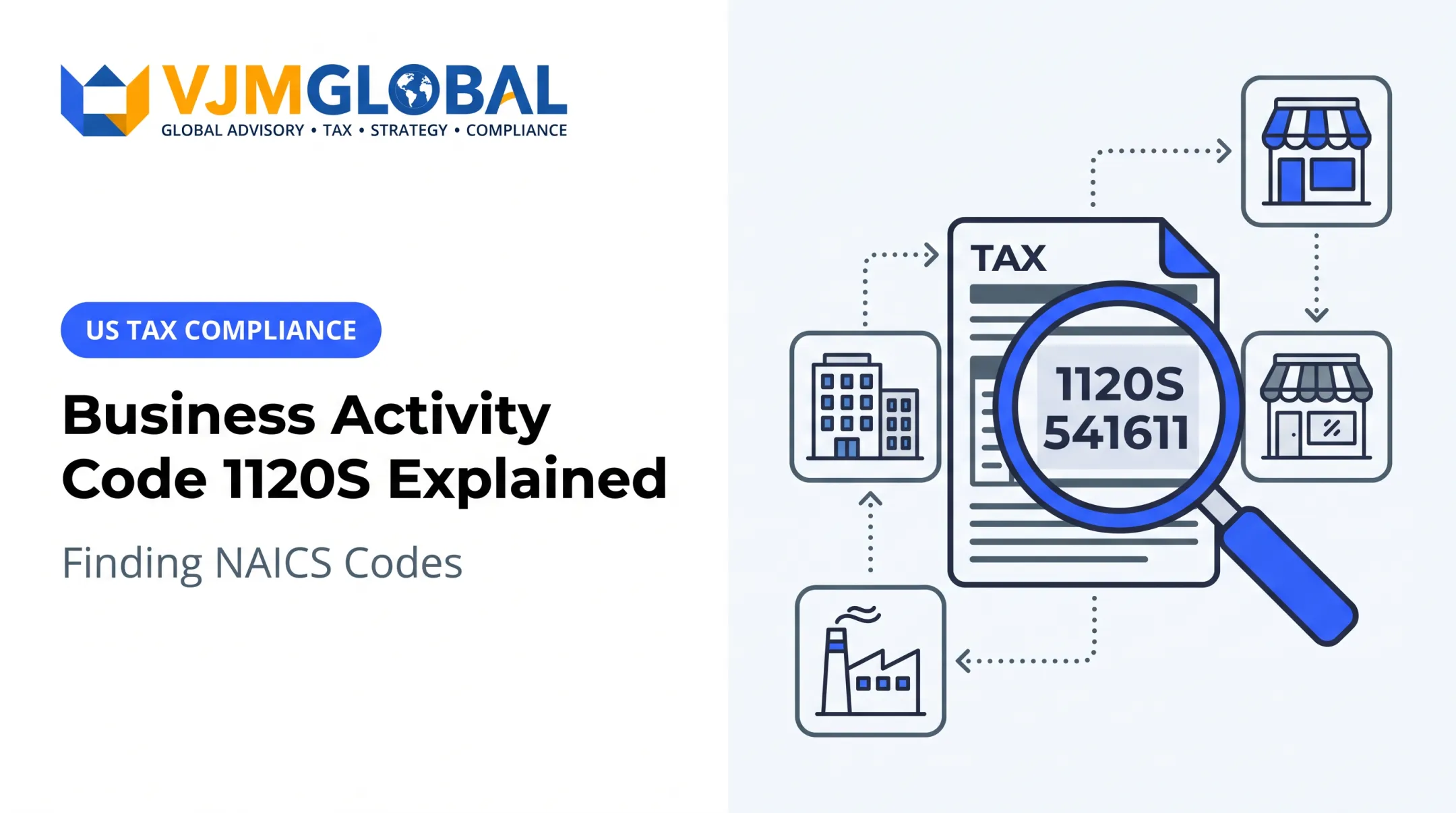
"Tax services" has no single universal code. The 2022 definitions split it like this:
| Code | Title | Fits |
|---|---|---|
| 541213 | Tax Preparation Services | Non-CPA tax-return preparation without accounting, bookkeeping, billing, or payroll |
| 541211 | Offices of Certified Public Accountants | CPA offices, which may also do tax, bookkeeping, and payroll |
| 541214 | Payroll Services | Non-CPA payroll processing without accounting or bookkeeping |
| 541219 | Other Accounting Services | Non-CPA accounting and bookkeeping, possibly with tax or payroll |
| 541611 | Administrative Management and General Management Consulting Services | Financial planning, budgeting, and strategy advice |
| 541110 | Offices of Lawyers | The practice of law, including tax law |
Check the current Census page for exclusions before you commit.
Document and validate the decision
Keep these in your compliance file:
- The selected code and its official description
- The search date and source link
- A short summary of business activities
- A revenue breakdown by activity
- Your reasoning
Then test the code against your website, invoices, contracts, financial statements, insurance applications, and lender records. If those describe a different business, fix the mismatch.
How to Use the NAICS Code in the Texas Franchise Tax Filing Workflow
Confirm the applicable Texas account and filing
Before entering a code, identify your entity type, Texas tax account, reporting year, and required filing. Texas uses several distinct items:
- The online Franchise Tax Accountability Questionnaire, which updates entity information
- The Long Form or EZ Computation annual report
- The Public Information Report (05-102) or Ownership Information Report (05-167), which are separate information reports
Don't confuse them. An entity under the no-tax-due threshold doesn't file a No Tax Due Report, but it still files the applicable PIR or OIR.
Gather the information needed before accessing Webfile
Have these ready:
- Legal entity name and federal EIN, if applicable
- Texas taxpayer number and Webfile number
- Current mailing address
- Ownership or officer information
- Revenue records for the reporting period
- Your selected NAICS code and its documented rationale
Exact identifiers vary by entity status and existing accounts. Follow the Comptroller's current instructions for your filing.
Locate the NAICS field
Access Webfile through the Comptroller's eSystems. The documented sequence for adding access is:
- Add Taxpayer Access
- Enter Webfile Number
- Create Access
- Access Confirmed
"Access Confirmed" only confirms account access. It does not mean a report was submitted.
On the Long Form, the NAICS entry sits under "Industry Classification Code." Screen labels change, so check the current portal rather than relying on older screenshots or third-party walkthroughs.
Enter and review the code
Enter the six-digit code, then compare the description with your documented primary activity. Before submitting, review:
- Legal name and taxpayer information
- Reporting period
- Revenue figures
- Ownership details
- The NAICS description
Understand the code's role in the filing
The NAICS entry is one field in a larger filing. It doesn't calculate revenue, select the report, claim an exclusion, or decide whether tax is due.
Time-sensitive points to confirm for your report year:
- Deadline: Annual reports are generally due May 15, moving to the next business day when needed.
- Extensions: Eligible filers request one through Webfile or Form 05-164 by the original deadline. Payment conditions apply.
- Late penalties: The Comptroller lists a $50 penalty per late franchise tax report, with none for late PIR or OIR filings. Late tax payments carry 5% (1 to 30 days) or 10% (more than 30 days) penalties.
- Records: Texas Tax Code 111.0041 requires covered records to remain open to inspection for at least four years, and longer in certain proceedings.

Save your submission confirmation with the rest of the file.
Common NAICS Code Mistakes and Ongoing Maintenance
Avoid classification and data-entry errors
Watch for these:
- Picking a code from the entity name, such as "Tax Group LLC"
- Using an outdated NAICS edition
- Confusing NAICS with SIC
- Copying a code from a competitor
- Choosing a code whose exclusions contradict your activity
- Entering a CPA-office code when you're a non-CPA firm, or the reverse
Inconsistent codes across Texas filings, federal records, insurance documents, and lender applications invite questions and slow down reviews. No reliable data quantifies penalties tied specifically to NAICS inconsistency, but a clean paper trail makes any inquiry easier to answer.
Review the code when the business changes
Revisit your classification after:
- A major change in services
- A new revenue-leading activity
- A shift from product sales to consulting
- A merger or acquisition
- A substantial change in operating model
Census notes there is no central agency that assigns or approves all NAICS codes, and no single register to update. Contact the agency that holds the code. For Texas, check the Comptroller's current process for changing account information.
If you filed an inaccurate report, the 2026 instructions say to file all pages of the amended report, add a cover letter and supporting documents, and write "AMENDED" at the top. Whether earlier filings need review depends on how material the error was.

Maintain an audit-ready record
Keep together in one compliance file:
- The selected code and official source link
- The NAICS edition or publication year
- Your activity description and revenue analysis
- Internal approval
- The submitted filing
- Confirmations and Comptroller correspondence
Texas Franchise Tax Compliance Checklist and When to Get Help
A concise pre-filing checklist
- Correct reporting year and applicable report or questionnaire
- Entity and taxpayer information, including Webfile access
- Current NAICS code with written rationale
- Revenue records and the no-tax-due threshold check
- Ownership information for the OIR or PIR
- Payment or extension requirements
- Saved submission confirmation
Verify all thresholds, deadlines, and portal instructions directly with the Texas Comptroller before you file.
Situations that warrant professional review
Get a second set of eyes when you have:
- Multiple revenue streams or an unclear primary activity
- A recent change in business model
- Foreign ownership or related entities
- A unitary affiliated group that must file a combined report
- Missing account notices or inconsistent prior filings
- A Comptroller notice, such as Form 05-211, Notice of Intent to Forfeit Right to Transact Business
A professional can reconcile the code with your records. You should still confirm final filing requirements for your entity and report year. For disputes about a missing report or schedule, the Comptroller's notices page lists 800-252-7942.
Where VJM Global fits
VJM Global is a professional services firm offering tax compliance, accounting, audit, and advisory support to USA-based businesses and multinational companies. Its team includes CPAs, Chartered Accountants, and international tax practitioners.
That support can help you organize records, review how your business is classified, and coordinate broader compliance work. VJM Global does not guarantee any particular Texas tax result.
Frequently Asked Questions
How do I report franchise tax in Texas?
Identify the Comptroller report you must file, gather your taxpayer and Webfile information, and complete it with accurate financial and entity details. Submit through the current approved channel and keep the confirmation. Check Comptroller guidance for report-year rules.
How do I find out my NAICS code in Texas?
Search the current Census Bureau NAICS directory using activity keywords. Compare the results with any description the Comptroller's form or selection tool shows. Choose the code that best reflects your primary business activity.
What is the NAICS code for tax services?
It depends on the service. Tax-only preparation by a non-CPA is 541213, CPA offices are 541211, and payroll, other accounting, and consulting have their own codes. Verify the current definition and exclusions first.
Does a NAICS code determine how much Texas franchise tax I owe?
No. The code identifies your business activity but does not calculate tax or establish every filing obligation. Revenue, entity status, and report-year rules decide what you owe.
Can I change my NAICS code after filing a Texas franchise tax report?
Yes, if your primary activity changed or the earlier entry was wrong. Check the Comptroller's current process for updating account information or amending a report. Then assess whether prior filings need review.
Can one Texas business use more than one NAICS code?
The 2026 Long Form and EZ report each provide a single NAICS entry, so choose the code for your overall primary activity. Keep documentation for each material secondary activity, and follow the instructions on the specific form.