Mixing them up is the most common mistake. Owners assume the federal return covers the state, or apply a C-corporation deadline to an S-corporation return.
This guide covers Form 1120-S, Pennsylvania Form PA-20S/PA-65, owner schedules, deadlines, extensions, records, and the errors that cause trouble. Confirm every date and form against current IRS and Pennsylvania Department of Revenue instructions before you file.
Key Takeaways
- Form 2553 elects S status, Form 1120-S is the annual federal return, and PA-20S/PA-65 is the state information return.
- Pennsylvania S corporations generally pass income to owners, so shareholders may carry their own state filing duties.
- Federal and state deadlines, extensions, and nonresident withholding run on separate calendars.
- Reconcile the federal return, state schedules, payroll, and ownership records before submitting.
Pennsylvania S-Corp Tax Forms: What Does an S Corporation File?
S corporation status is a federal tax classification. A business can be legally organized as a corporation or an eligible LLC and still elect it. So the election, the legal entity, and the annual returns are three different things.
Form 1120-S and Federal Shareholder Documents
Form 1120-S is the federal annual return. It reports the company's income, deductions, credits, balance-sheet information, and each shareholder's allocation. It is required once the S election has been accepted and remains in effect.
Each shareholder receives a Schedule K-1 showing their share of income, deductions, and credits. Anyone who held shares during the year gets one. Shareholders use it when preparing their personal federal and state returns.
Don't confuse the two federal forms:
- Form 2553 is the one-time election to be treated as an S corporation.
- Form 1120-S is the recurring annual return filed afterward.
The IRS 1120-S instructions cover filing rules, penalties, and K-1 requirements in full.
Pennsylvania Form PA-20S/PA-65
PA-20S/PA-65 is the PA S Corporation/Partnership Information Return. It reports income, losses, credits, Pennsylvania adjustments, and allocation or apportionment data.
Filing is triggered by either of these:
- Pennsylvania-allocable or apportionable gross taxable income or loss, any amount, even if nothing was distributed
- A shareholder who is a Pennsylvania resident or part-year resident
The return includes owner schedules:
- Schedule RK-1 for each resident owner, showing income or loss by Pennsylvania income class
- Schedule NRK-1 for each nonresident owner, showing Pennsylvania-source income or loss
Part-year shareholders receive separate schedules for their resident and nonresident periods. Federal K-1 and Pennsylvania owner schedules are not interchangeable, and each must reconcile to the underlying calculations.
Inactive entities still file. Mark the return Inactive and include the owner directory plus any required RK-1 or NRK-1 schedules. Use Final Return if the business is closing. Short-year filings follow the same pattern; use the PA-20S/PA-65 instructions for that tax year.
Related Pennsylvania Forms and Schedules
Schedule NW and withholding. If the S corporation has nonresident individual owners with Pennsylvania-source income, it generally withholds tax at 3.07%, the 2025 personal income tax rate. Schedule NW reconciles that withholding, extension payments, and credits. It does not apply to resident owners.
Separate obligations. Filing PA-20S/PA-65 does not replace:
- Payroll filings and W-2s
- Employer withholding returns
- Unemployment compensation reports
- Sales and use tax returns
RCT-101. This is the corporate net income tax report, not the ordinary S-corporation return. One exception: a taxable built-in gain can trigger entity-level tax, and then both RCT-101 and PA-20S/PA-65 may be required.

REV-976. This form is the opt-out, not the election. Pennsylvania automatically recognizes a valid federal S election. REV-976 is used only to elect not to be taxed as a Pennsylvania S corporation. All shareholders must sign, and the choice cannot be revoked for five years.
When Is a Pennsylvania S-Corp Tax Return Due?
Federal Form 1120-S Deadline
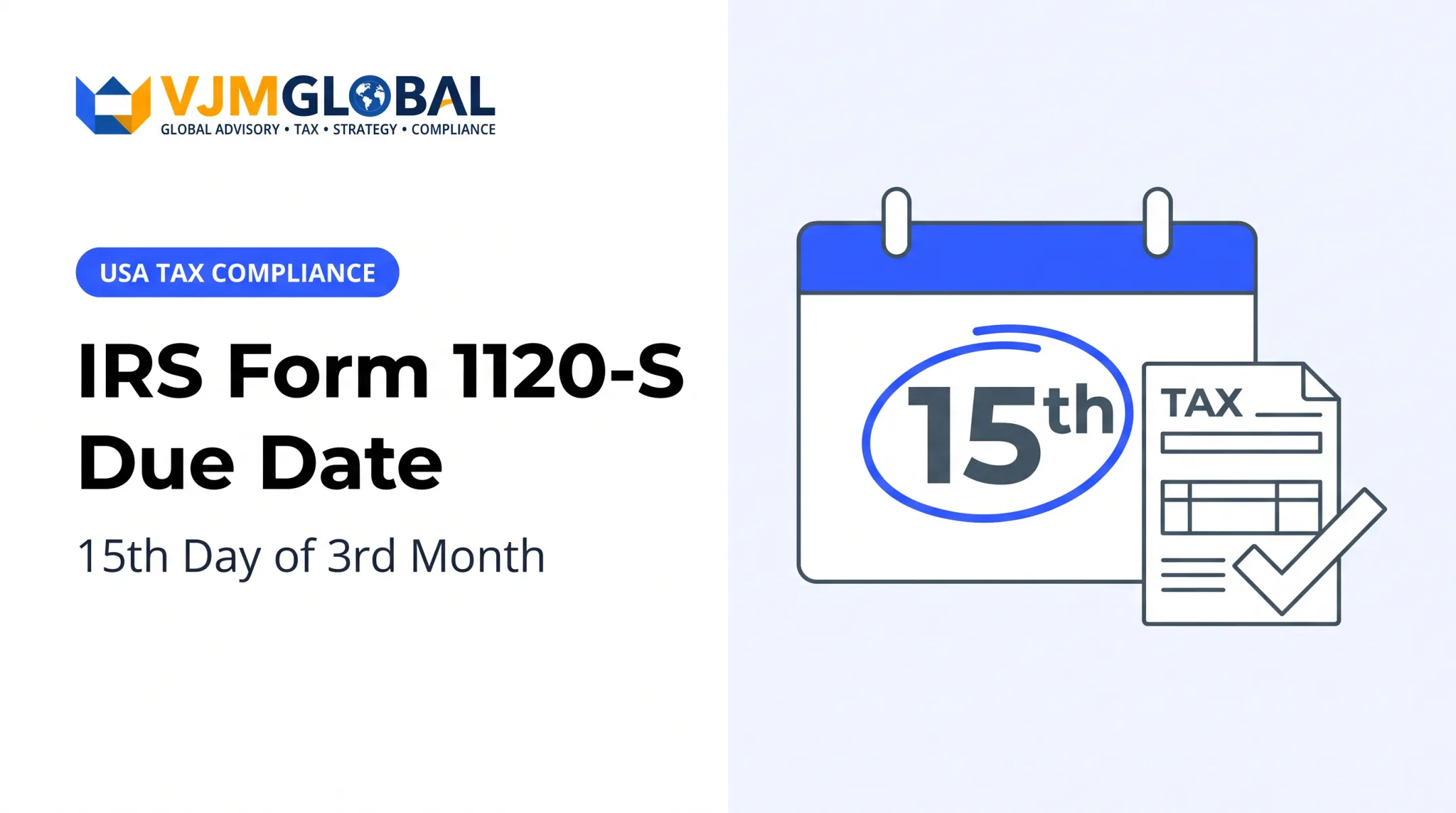
The federal return is due on the 15th day of the third month after the tax year ends. For calendar-year 2025, that is March 16, 2026. When a deadline lands on a weekend or legal holiday, it moves to the next business day. Fiscal-year filers count three months from their own year-end.
Form 7004 generally buys a six-month filing extension, and you must request it by the original due date. It does not extend time to pay. Any entity-level tax is still due on the original deadline. See the Form 7004 instructions for current terms.
Schedule K-1s must be furnished to shareholders by the date Form 1120-S is required to be filed.
Pennsylvania PA-20S/PA-65 Deadline
For calendar-year 2025, the Pennsylvania return is due April 15, 2026. The extended date is September 15, 2026. Fiscal-year filers file by the 15th day of the fourth month after year-end.
Pennsylvania's extension is generally five months:
- If no nonresident withholding is due, a federal extension automatically qualifies. Include a copy of Form 7004 with the Pennsylvania return.
- Otherwise, request an extension on REV-276 through myPATH or MeF.
- Either way, a reasonable estimate of tax owed is still due by the original deadline.
Some secondary sources print conflicting dates, often blending federal and state calendars. The authoritative source is the PA-20S/PA-65 instructions for the tax year. They support April 15 for Pennsylvania, not the federal March date.

Owner, Payroll, and Withholding Deadlines
Owners need their K-1, RK-1, and NRK-1 data early. Their personal PA-40 returns are due April 15, 2026, and they can't finish without these schedules.
Other calendars run independently:
| Filing | Rule |
|---|---|
| Nonresident withholding installments | Jan. 15 for the prior year's fourth installment; April 15, July 15, Oct. 15 for 2026 |
| Final nonresident withholding payment | 15th of the fourth month after year-end |
| Pennsylvania quarterly withholding returns (2026) | April 30, July 31, Nov. 2; Feb. 1, 2027 |
| Annual REV-1667, W-2, and 1099 | Nominal Jan. 31 after the wage year |
| Unemployment compensation reports | Ordinarily April 30, July 31, Oct. 31, Jan. 31 |
Pennsylvania employer deposit frequency depends on quarterly withholding:
- Under $300: quarterly
- $300 to $999: monthly
- $1,000 to $4,999.99: semi-monthly
- $5,000 or more: semi-weekly
Deposits never replace the quarterly reconciliation return. Do not substitute owners' own estimated-tax dates for the withholding dates above.
What Does "Pennsylvania Corporate Tax Return Due Date" Mean?
The phrase covers three different filings:
- S corporation: PA-20S/PA-65, due April 15 for calendar-year filers.
- C corporation: RCT-101, due the 15th of the month following the federal return's due date.
- Owner: the individual's PA-40, due April 15.
Identify the exact form and tax classification first, then apply the deadline. Using the C-corporation date for an S corporation produces a wrong compliance calendar and potentially a missed filing.
How to Prepare and File the Pennsylvania S-Corp Return
Records and Information to Gather
Pull these together before anyone starts the return:
- EIN, the accepted S-election documentation, and prior-year federal and Pennsylvania returns
- Trial balance, general ledger, income and expense records, and year-end financial statements
- Fixed-asset schedules and loan statements
- Ownership percentages, mid-year changes, shareholder addresses, and residency status
- Capital contributions, distributions, shareholder loans, and basis records
- Shareholder W-2 wages, payroll tax filings, and Pennsylvania withholding records
- Pennsylvania-source revenue, business locations, apportionment data, and nonresident owner details
- State registrations that apply to the business
Write the full EIN on the return. Pennsylvania requires it unabbreviated and unmasked.
Reconcile Federal and Pennsylvania Information
Start with the books and tie them to Form 1120-S. Only then prepare the Pennsylvania return.
- Reconcile books to the federal return. Resolve differences before moving on.
- Apply Pennsylvania adjustments. Schedule M reclassifies federal income or loss under personal income tax rules. Residents report all-source income. Nonresidents report Pennsylvania-source income.
- Apportion multistate income. Schedule H uses property, payroll, and sales factors.
- Compare owner schedules. Check federal K-1 amounts against RK-1 or NRK-1 amounts and document differences. Don't copy federal figures automatically.
- Review owner equity items. Distributions, shareholder loans, contributions, and basis should agree with the books and shareholder records.

Review Payroll and Shareholder Compensation
A shareholder who performs services for the company generally must receive reasonable compensation through payroll before taking non-wage distributions. The IRS can reclassify distributions as wages, weighing duties, time, experience, and comparable pay. It cites David E. Watson, PC v. U.S. (8th Cir. 2012) as an example.
Before filing, check that these agree:
- Shareholder W-2s
- Payroll tax returns
- Pennsylvania employer withholding records
- Year-end books
Record wages, withholding, employer taxes, and distributions separately. A mismatch invites notices.
Submit, Confirm, and Retain the Filing
For 2025, Pennsylvania accepts PA-20S/PA-65 returns through approved Fed/State MeF software or preparers, or on paper subject to the preparer e-file mandate. Preparers filing 11 or more of these returns must e-file. Paper returns need the responsible official's handwritten signature. Electronic filings need PA-8453-P or PA-8879-P authorization.
Payments and REV-276 extension requests go through myPATH. Electronic payment is required for $15,000 or more, and failure can cost 3%, capped at $500.
After filing, save:
- The filed return and all schedules
- Acceptance or confirmation records
- Payment evidence and extension documents
- Copies of shareholder statements
Keep entity records at least seven years. Federal guidance generally calls for three years from the later of the shareholder return due or filing date, longer for basis records. Employment tax records need four years.
Corrections follow the same principle on both levels. An amended return needs an explanation, corrected schedules, and amended owner copies. Final and short-period returns must be labeled as such.
Federal IRS changes can require a Pennsylvania amendment. Check the current instructions before filing any corrective return.
Professional Filing and Accounting Support
VJM Global's U.S.-compliant accounting and tax professionals support USA-based businesses with bookkeeping reconciliation, federal and Pennsylvania return preparation, payroll coordination, shareholder schedules, and recurring compliance.
Outside review pays off most when the S corporation has:
- Multiple shareholders or nonresident owners
- Multistate activity
- A late election or amended returns
- Missing records
- Local Pennsylvania tax obligations
Common Pennsylvania S-Corp Filing Issues and Ongoing Obligations
Frequent Mistakes
Each document has a different job:
- Form 2553 elects S status.
- Form 1120-S is the annual federal return.
- PA-20S/PA-65 is the annual state return.
- RCT-101 is for corporate net income tax.
- REV-976 opts out of Pennsylvania S treatment.
Automatic state recognition of the federal election does not erase annual Pennsylvania reporting.
Watch for these issues:
- Missing Schedule RK-1 or NRK-1 (Pennsylvania may impose $250 for failing to file plus $250 per missing schedule)
- Skipping nonresident withholding review (penalty up to 50% of the amount due)
- Treating distributions as payroll, or the reverse
- Mismatched EIN or ownership details across filings
- Assuming no tax due means no return is required
Federal penalties are per shareholder: $255 per shareholder per month, up to 12 months, for late or incomplete returns even with no tax due. If tax is owed, add 5% of the unpaid tax per month, up to 25%. Recheck amounts for later tax years.

Annual Compliance Checklist
- Federal Form 1120-S and Schedule K-1s
- Pennsylvania PA-20S/PA-65 with RK-1 and NRK-1 schedules
- Nonresident withholding installments, if applicable
- Payroll deposits, quarterly returns, W-2s, and 1099s
- Unemployment compensation quarterly reports, including zero-wage quarters
- Department of State annual report ($7 fee; corporations by June 30, LLCs by September 30)
- Sales and use tax returns at the assigned frequency, even for periods without sales
- Local taxes where they apply
Local taxes depend on activity. Philadelphia for-profit activity generally requires the Business Income & Receipts Tax whether or not the business is profitable. Employers with covered worksites must also withhold local earned income tax. Only include these if your business actually operates in those places.
Frequently Asked Questions
Is there a Pennsylvania state tax form?
Yes. PA-20S/PA-65 is the primary pass-through information return for many S corporations. It is separate from federal Form 1120-S, and requirements depend on the entity and tax year.
What IRS form do S Corps file?
S corporations generally file Form 1120-S annually and issue Schedule K-1 to shareholders. Form 2553 makes the S election when the entity is eligible. Form 7004 extends the filing deadline.
What is the due date for Pennsylvania corporate tax returns?
For calendar-year S corporations, PA-20S/PA-65 is due April 15. C corporations file RCT-101 on a different schedule, the 15th of the month after the federal due date. Verify the year's official instructions.
Does Pennsylvania automatically recognize a federal S corporation election?
Yes, unless the corporation files REV-976 to opt out. Automatic recognition does not remove the annual PA-20S/PA-65 filing obligation.
Do Pennsylvania S corporations have to file a return if they had no income?
Often yes. Inactive Pennsylvania S corporations still file, marking the return Inactive and including owner information. Check the current PA-20S/PA-65 instructions for your situation.
What forms are required for Pennsylvania S corporations with nonresident shareholders?
Expect Schedule NRK-1 for each nonresident owner, plus Schedule NW and estimated withholding filings when there is Pennsylvania-source income. Exact requirements depend on the owners' circumstances.