
But many first-time founders, especially those based abroad, struggle with the maze of US business registration, licensing, and compliance. Which agency do you file with? What licenses actually apply to your business? How much will it cost?
This guide breaks the entire process into clear, sequential steps.
Key Takeaways
- Complete planning, entity selection, California registration, and Sacramento city/county licenses before you launch
- Budget for state filings, local permits, and optional professional help—costs swing widely by business type
- Secure industry-specific permits early; delays here often push back your open date
- Foreign entrepreneurs can simplify US entity formation and compliance with specialist advisory services
Why Sacramento Is a Smart Place to Start a Business
Sacramento's government sector alone accounted for 256,605 public-sector jobs, or 23.3% of total regional employment, according to a 2025 workforce report from the Institute for Local Government. That's a massive, stable customer base for businesses serving government contracts, consulting, and public-sector adjacent services.
Beyond government, the region has real momentum in:
- Technology: 51% of bachelor's degrees earned regionally are in STEM fields, and electronic-computer manufacturing employment runs 2.7 times the national concentration
- Clean energy: Greater Sacramento's cleantech growth capital is 2.5 times the US average, with 1,600 active cleantech patents in the region
- Healthcare and life sciences: a recognized regional workforce cluster with steady demand for clinics, suppliers, and professional services
Lower Housing Costs Than Coastal California
Average home values as of July 2026 show how much further a startup budget goes inland:
| Metro | Average Home Value |
|---|---|
| Sacramento | $480,488 |
| Los Angeles | $946,268 |
| San Diego | $994,682 |
| San Francisco | $1,416,278 |
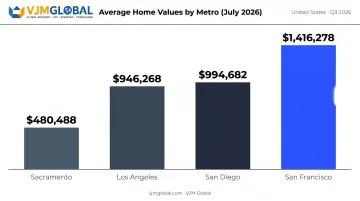
Housing isn't the full cost-of-living picture, but it's a clear signal: Sacramento leaves more capital for operations than California's coastal metros.
Local Economic Advantages for New Entrepreneurs
Nearby cities add more incentive options for new businesses.
Rancho Cordova supports qualifying startups with:
- Fee assistance up to 70% of eligible fees
- Startup grants, generally up to $25,000 or 10% of eligible startup costs
- $10,000 per qualifying job when you create five or more roles paying $100,000+
Elk Grove runs a negotiable Economic Development Incentive Program and "Startup Elk Grove," which offer technical and financial help to qualifying innovative businesses.
Proximity to state agencies also matters if you work in government contracting, regulatory consulting, or public-sector services. You are close to the decision-makers who shape those contracts.
Step-by-Step Guide to Starting a Business in Sacramento
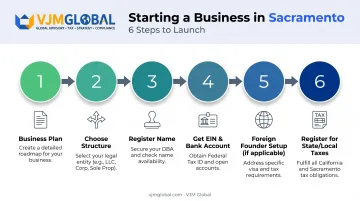
1. Research the Market and Write a Business Plan
Before you file anything, map demand in the Sacramento metro and put the numbers on paper. A workable plan should cover:
- Executive summary
- Market analysis (who's your customer, who's your competitor)
- Financial projections
2. Choose a Business Structure
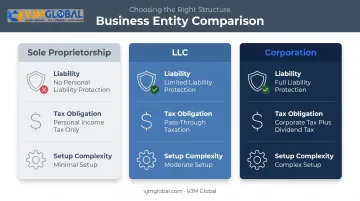
Your structure affects liability and taxes:
- Sole proprietorship: simplest setup, but no liability protection
- LLC: separates personal and business liability; California charges an $800 annual tax on LLCs organized or doing business in the state
- Corporation: stronger path for raising capital; generally owes an $800 minimum franchise tax (newly qualified corporations are exempt in their first taxable year)
3. Register Your Business Name
- LLCs and corporations: file with the California Secretary of State via bizfile Online or by mail. LLC Articles of Organization cost $70; a $20 Statement of Information is due within 90 days
- Sole proprietors: if you trade under a name that isn’t your legal name, file a Fictitious Business Name (FBN) with the Sacramento County Clerk, then publish it in a newspaper weekly for four consecutive weeks
4. Get an EIN and Open a Bank Account
EINs are free through the IRS and issued instantly online for eligible domestic applicants. If your principal place of business is outside the US, you'll need to apply by phone, fax, or mail instead.
With the EIN in hand, open a dedicated US business bank account so personal and company funds stay separate from day one.
5. Get Help If You're Expanding From Abroad
For Indian companies and other overseas founders, US entity formation has more moving parts than a domestic filing:
- Choosing an LLC, C-Corp, S-Corp, or branch
- Appointing a registered agent
- Preparing Articles of Incorporation and bylaws
- Filing annual reports and FinCEN beneficial-ownership (BOI) reports
VJM Global handles US entity formation and ongoing compliance for founders in this position: state-level registration, EIN acquisition, registered-agent appointment, formation documents, annual reports, and BOI filings. Pricing is quoted by state and entity type.
For a founder in Mumbai or Bengaluru managing California Secretary of State filings remotely, that structure keeps remote setup on track without missed deadlines.
6. Register for State and Local Taxes
If you're hiring, register with the California Employment Development Department (EDD) within 15 days of paying more than $100 in wages in a calendar quarter. You'll also register with the Franchise Tax Board for state income/franchise tax obligations. If you sell tangible goods, get a seller’s permit from the California Department of Tax and Fee Administration (CDTFA).
Licensing, Permits, and Zoning Requirements
Before you open, secure the right city or county credentials and confirm your site is zoned for your use.
The Business Operations Tax Certificate
Sacramento does not issue a traditional "business license." The City requires a Business Operations Tax (BOT) certificate, renewed annually. Apply online through the city's portal, or submit by mail, email, or in person.
Based on the most recent published rate schedule:
- Base fee: $30
- Receipts above $10,000: taxed at 0.04%, capped at $5,000 annually
- Professionals/brokers: $75–$300 per principal, plus $30 per additional employee
Note: Rates can change. Verify current figures on the city's portal before filing.
If your business operates in unincorporated Sacramento County, you need a County General Business License (currently $254.34 for three years), plus a Special Business License at $230.40 for one year where applicable.
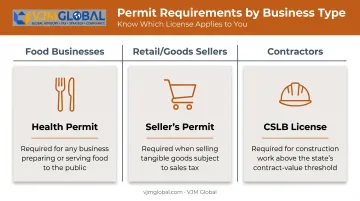
Industry-Specific Permits
- Food businesses: Sacramento County health permit required any time food is sold or given to the public
- Retail/goods sellers: CDTFA seller's permit (no fee, though security deposits may apply)
- Contractors: CSLB license required for most projects at or above $1,000 in labor and materials
Check Zoning Before You Sign a Lease
Contact the City's Community Development staff or the County's Planning and Environmental Review department to confirm your intended use is zoned correctly. Skipping this step is one of the most common—and expensive—mistakes new owners make.
Estimating Startup Costs and Choosing a Business Idea
Before you file paperwork, map what it will cost to open and which idea fits both Sacramento’s market and your budget. Total the lines below, then stress-test that number against the cash you actually have.
Typical startup cost categories, per the SBA's framework:
- Licensing and registration fees
- Insurance
- Equipment or initial inventory
- Professional fees (legal, accounting, formation services)
- Marketing and website costs
Your business idea drives those figures. A lean service model may need little more than licenses and insurance; inventory-heavy models push equipment and stock much higher.
What's the Best Business to Start With $10,000?
Low-capital options that fit Sacramento's economy well:
- Consulting — leverages expertise, near-zero inventory costs
- E-commerce — low overhead if you skip warehousing
- Home-based service businesses — cleaning, tutoring, bookkeeping
- Freelance professional services — design, writing, IT support
Skip the food truck if your budget is tight — documented startup costs typically run $50,000 to $170,000, well beyond a $10,000 ceiling.
Add a contingency reserve on top of your baseline estimate. Costs shift by entity type and industry, and unexpected fees almost always show up before launch.
Support Resources and Assistance for New Business Owners
Local agencies and portals can cover much of the early setup work—funding guidance, permits, and networking:
- SBA Sacramento District Office — funding, counseling, and lender connections (6501 Sylvan Avenue, Citrus Heights)
- Sacramento Business Environmental Resource Center (BERC) — free environmental-compliance guidance
- Sacramento Metro Chamber of Commerce — networking and advocacy
- County and City online portals — license applications and renewals
Companies expanding into Sacramento from abroad often need more than initial registration help. Multi-state tax compliance, payroll withholding, and California franchise tax filings still need attention after you incorporate.
Cross-border advisory firms such as VJM Global handle franchise tax nexus reviews and ongoing payroll compliance as the business grows, which keeps founders focused on operations instead of recurring filings.
Frequently Asked Questions
How much does a business license cost in Sacramento?
Costs vary by business type and revenue. The City's Business Operations Tax starts around $30, while County licenses run $230–$255 depending on type. Check the current fee schedule on the city or county finance portal before filing.
What is the best business to start with $10,000?
Low-overhead options like consulting, e-commerce, and home-based service businesses fit comfortably within this budget. Avoid capital-intensive ventures like food trucks, which typically cost $50,000 or more to launch.
Is a business license required in Sacramento County?
Most businesses need some form of license: a City BOT certificate inside Sacramento city limits, or a County General Business License in unincorporated county territory. This is separate from state-level entity registration.
How do I register a business name in Sacramento?
LLCs and corporations register their name with the California Secretary of State during formation. Sole proprietors trading under a different name file a Fictitious Business Name statement with the Sacramento County Clerk.
What permits does a Sacramento business need beyond a license?
Depending on your industry, you may need a health permit (food businesses), a seller's permit (retail), a contractor's license (construction), or zoning approval before signing a lease.
Can a foreign company set up a business in Sacramento?
Yes. Foreign companies, including those based in India, qualify to do business in California by filing with the Secretary of State, then complete the same local registration and licensing steps. VJM Global supports overseas founders with US entity formation and compliance handled remotely.