More people are testing the waters now because New York offers something few states can match: a massive, diverse customer base, deep talent pools across nearly every industry, and access to capital that ranges from state-backed programs to active angel and VC networks. A New York address still carries weight, whether you're pitching investors or closing your first retail lease.
That interest comes from every direction. Lifelong New Yorkers are formalizing side hustles. First-time founders are testing new concepts. Foreign entrepreneurs and overseas companies are using New York as their entry point into the US market.
This guide walks through what actually happens between having an idea and running a compliant New York business, step by step.
Key Takeaways
- New York small businesses make up 99.8% of state businesses and employ 3.9 million people
- New York imposes state-specific rules on LLCs and corporations, including the LLC Publication Requirement
- LLC filing starts at $200; corporation filing starts at $125, plus recurring biennial statement fees
- The Secretary of State serves as your default registered agent, making a commercial agent optional
- Expect longer timelines than typical, since local licensing and tax registration add extra steps
What Is a Small Business in New York?
A small business in New York is an independently owned and operated company, whether structured as a sole proprietorship, LLC, or corporation. It's formed and run within the state, subject to its own registration, tax, and licensing framework.
The SBA generally treats firms with fewer than 500 employees as small, though thresholds shift by industry.
Those 2.4 million small businesses employ 46.6% of all New York employees, according to the U.S. Small Business Administration's New York profile. That's nearly half the state's workforce running through independently owned companies, not large corporations.
Common formats you'll see across the state include:
- Service-based freelancers and sole proprietors (consultants, designers, tutors)
- Product and retail businesses, both physical storefronts and online-only
- Home-based businesses operating out of an apartment or private residence
- Multi-member LLCs and corporations built with scaling and outside investment in mind
What to Know Before You Start a Small Business in New York
Most first-time founders underestimate the paperwork. Your idea's quality isn't the deciding factor here, regardless of how strong it is. Setting realistic expectations for the administrative lift matters more, especially before you see your first dollar of revenue.
The Early Time Investment
Before any revenue arrives, you're handling name and entity selection, multiple state and local filings, and setup tasks that don't generate income on their own. Expect this phase to eat real hours, not a weekend.
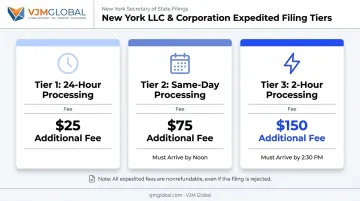
New York's Department of State doesn't publish a guaranteed standard turnaround for LLC or corporation filings. Online submissions typically generate an acknowledgment within minutes, but full processing varies. If you need speed, expedited handling is available for an extra fee:
- 24-hour processing: $25 additional
- Same-day processing: $75 additional (must arrive by noon)
- 2-hour processing: $150 additional (must arrive by 2:30 p.m.)
These fees are nonrefundable, even if your filing gets rejected for errors. Revenue almost always lags formation by weeks, sometimes months, once you factor in licensing and setup.
Skill Versus Compliance
Technical skill matters less than most people assume in New York specifically. What separates businesses that survive from those that stall is whether the founder can manage layered state, county, and city compliance requirements simultaneously. That's a different muscle than the one used to build the product or service itself.
Professional services firms such as VJM Global, which handles entity formation and compliance across 100+ countries, can help convert that layered checklist into a manageable process.
Chasing quick income and building a properly structured, compliant business aren't the same goal. New York rewards the second one over time.
Why Start a Small Business in New York? (When It Makes Sense)
Starting in New York is a sound decision under the right conditions, not a guaranteed win just because of the zip code. Here's when it genuinely makes sense.
Access to Customers, Talent, and Capital
The workforce numbers speak for themselves: small businesses already employ 3.9 million New Yorkers, or 46.6% of the state's employees. That density means you're launching into a market with both established consumer demand and a skilled labor pool ready to hire from.
Funding access is real, too. Programs worth knowing about:
- Excelsior Jobs Program: Offers a refundable jobs tax credit up to 6.85% of wages per net-new job for firms creating as few as 5 net-new jobs for software or life sciences firms
- START-UP NY: Previously offered up to 10 tax-free years for firms near eligible college campuses, but this program set to close to new applicants on January 1, 2026
- SBA-backed loans: Federal 7(a) and 504 loan programs remain active through New York-based SBA lenders
- State venture capital: New York Ventures has deployed more than $300 million through equity programs
The New York Address Advantage
A recognizable New York or NYC address still signals credibility to customers, partners, and investors. That perception, combined with long-term asset creation once your systems and compliance are stable, is often what makes the higher cost of doing business worthwhile. For founders entering the U.S. from abroad, partnering with cross-border specialists like VJM Global to handle entity formation and tax compliance from day one helps that stability arrive faster.
Early Decisions That Matter When Starting a Small Business in New York
Most early-stage problems in New York trace back to underestimating compliance complexity, not lack of founder effort. Here's what actually costs money and time.
True Startup Costs by Entity Type
| Filing Type | Fee |
|---|---|
| LLC Articles of Organization | $200 |
| Corporation Certificate of Incorporation | $125 |
| Name reservation (60 days) | $20 |
| Certificate of Publication (LLC) | $50 |
| Biennial Statement (every 2 years) | $9 |
| Foreign LLC Application for Authority | $250 |
These are just the state-level fees. Local licensing, insurance, and any professional help add to the total.
Compliance Friction Founders Often Miss
New York layers on a few requirements that surprise out-of-state founders:
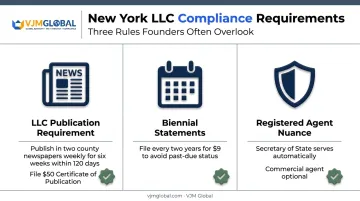
- LLC Publication Requirement: Publish notice in two county-designated newspapers weekly for six weeks within 120 days of formation, then file the $50 Certificate of Publication. Rates vary by county—get quotes early.
- Biennial Statements: LLCs and corporations must file this every two years for $9. Missing it creates a "past-due" status that can complicate transactions, though it won't dissolve your entity.
- Registered agent nuance: The New York Secretary of State automatically serves as your statutory agent. Hiring a separate commercial registered agent is optional, not legally required, despite what many formation services claim.
Given New York's comparatively higher rent, wages, and tax burden, break-even timelines tend to run longer than in lower-cost states. Firms like VJM Global help founders map out entity formation and compliance costs upfront, so budget conversations start with real numbers instead of guesswork.
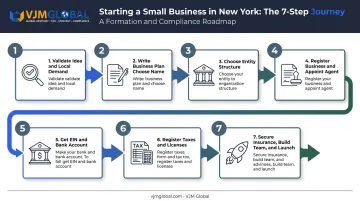
How to Start a Small Business in New York – Step by Step
The steps below break the process into practical stages specific to New York's rules. Common mistakes to watch for throughout: skipping name availability checks, registering without confirming your service-of-process address, underestimating tax registration, or launching before securing required licenses.
Step 1: Validate Your Business Idea and Local Market Demand
Define the problem you're solving, then confirm demand for your specific New York location, whether that's a borough, a specific neighborhood, or an upstate county. Research existing competitors in that exact area before assuming there's room.
The common miss here is assuming citywide demand exists because "New York is huge." A concept that works in Brooklyn's Williamsburg might flop in a quieter part of Staten Island. Validate locally, not broadly.
Step 2: Write a Business Plan and Choose Your Business Name
Draft a business plan covering market research, financial projections, and funding needs, especially if you plan to approach lenders or investors. Then check name availability through the Department of State's Corporation and Business Entity Database. If you're not ready to file immediately, a name reservation holds it for 60 days for a $20 fee.
Two misses to avoid:
- Choosing a name that violates New York's distinctiveness rules against existing entities
- Skipping a nationwide USPTO trademark search if you plan to scale beyond New York, since a state database hit (or miss) doesn't establish trademark rights
Step 3: Choose a Business Structure and Entity Type
Compare sole proprietorship, partnership, LLC, and corporation against liability protection, tax treatment, and how much ongoing compliance you're willing to manage. New York has a few quirks worth flagging:
- Series LLCs aren't available. New York law doesn't authorize a domestic Series LLC structure, unlike Delaware or Texas.
- Biennial Statements apply to both LLCs and corporations.
- The Publication Requirement applies only to LLCs, not corporations.
For founders entering the US market from abroad, the entity choice carries added weight, since it affects cross-border tax exposure and ongoing compliance obligations tied to your home country. VJM Global's cross-border structuring team works through entity choice with these founders, weighing tax treaty and reporting implications before filing rather than after.
A common miss: defaulting to an LLC without comparing self-employment tax exposure against what an S-corp election could save.
Step 4: Register Your Business and Appoint a Registered Agent
File your Articles of Organization (LLCs) or Certificate of Incorporation (corporations) with the New York Department of State and pay the filing fee, $200 or $125 respectively. Your formation document must list the address where the Secretary of State forwards legal correspondence.
You can appoint an additional registered agent with a New York address if you want a dedicated point of contact, but it's optional since the state already serves that statutory function. The real risk is letting your address information go stale, which can result in missed legal notices and a past-due compliance status.
Step 5: Get an EIN, Open a Business Bank Account, and Set Up Accounting
Apply for a free EIN directly from the IRS. You'll need it for hiring, opening a business bank account, and most tax filings. Open a dedicated account separate from your personal finances right away.
One frequent error: commingling personal and business funds. Doing this can undermine the liability protection your LLC or corporation is supposed to provide, which defeats the purpose of forming one in the first place.
Step 6: Register for New York Taxes, Licenses, and Permits
Register with the New York Department of Taxation and Finance for sales tax, corporate franchise tax, or payroll tax obligations that apply to your business. If you'll sell taxable goods or services, you need a Certificate of Authority at least 20 days before you start making taxable sales.
Use the NYS Business Express Wizard to identify state, county, and city-specific licenses for your industry. If you're operating in NYC specifically, run your address through the city's own Step by Step tool too.
Many overlook NYC-specific layers, like the city's Unincorporated Business Tax (4% for many unincorporated entities) or the separate Business Corporation Tax that stacks on top of state obligations.
Step 7: Secure Insurance, Build Your Team, and Launch
If you're hiring, workers' compensation and unemployment insurance are generally required. You become liable for unemployment insurance once you pay $300 or more in wages within a calendar quarter. General or professional liability insurance is optional but worth considering depending on your industry.
Decide early whether you're operating solo, using contractors, or bringing on employees, and keep New York's wage and payment frequency rules in mind for classification. From there, build your go-to-market plan: digital presence, local marketing, and credibility signals, then track early performance before pushing to scale.
Conclusion
Starting a small business in New York comes down to handling multiple layers of state, county, and city requirements correctly and consistently. Speed matters less than accuracy here.
Validation, the right entity choice, proper registration, and tax compliance carry more weight in New York than they might in a simpler regulatory state. This complexity hits hardest for international entrepreneurs and companies expanding into the US for the first time. Partnering with an advisor familiar with cross-border entity formation, like VJM Global, helps you get New York's requirements right from day one instead of correcting costly mistakes later.
Frequently Asked Questions
How much does it cost to start a small business in New York?
State filing fees run $200 for an LLC or $125 for a corporation. Add publication costs (which vary by county), a $50 Certificate of Publication fee for LLCs, and any licensing costs specific to your industry.
What do I need to do to start a small business in NY?
Validate your idea locally, choose a business structure, register your formation document with the Department of State, get a free EIN from the IRS, and register for applicable state and city taxes and licenses. Firms like VJM Global can handle the formation and registration filings if you'd rather outsource the paperwork.
How long does it take to start a business in New York?
The Department of State doesn't guarantee a standard processing timeline. Expedited options exist, ranging from 24-hour to 2-hour turnaround, for an additional fee starting at $25.
Do I need a registered agent in New York?
The New York Secretary of State automatically serves as your statutory agent for service of process. A separate commercial registered agent is optional, not legally required, for LLCs and corporations.
Can I run a small business from home in New York?
Yes, home-based businesses are allowed as long as they comply with local zoning rules and secure any required licenses or permits. Requirements vary by address, so check with your local zoning office before launching.
What is the best business structure for a small business in New York?
There's no single "best" structure. It depends on your liability protection needs and tax situation, though LLCs remain the most common choice for small business owners due to their flexibility and pass-through taxation.