Introduction: Texas Franchise Tax and the Cost of Goods Sold Deduction
Texas franchise tax cost of goods sold (COGS) is its own deduction. It follows Texas Tax Code §171.1012 and 34 TAC §3.588, not the COGS figure on a federal income tax return. Assuming the two match is a common and costly mistake.
The deduction can reshape taxable margin. A manufacturer, contractor or restaurant that picks the wrong method, or claims a disallowed cost, can overpay or face an audit adjustment.
This guide covers who qualifies, how to calculate the deduction, which costs count, and what changed under the 2026 Comptroller guidance. Always check thresholds, forms and rules for the report year you are filing.
Key Takeaways
- Texas taxes margin, and COGS is one of four ways to compute it.
- "Goods" and "production" reach beyond inventory, including construction and extraction.
- A cost deductible federally is not automatically Texas COGS.
- 2026 depreciation guidance changes inputs, so keep detailed records.
Who Can Use the Texas Franchise Tax COGS Deduction?
Taxable entities and thresholds
Franchise tax generally applies to entities organized in Texas or doing business there, including corporations and LLCs. Entity type alone does not settle liability. The Comptroller lists some entities as not subject to tax, such as sole proprietorships (except single-member LLCs) and qualifying general partnerships.
For 2026, the no-tax-due threshold is $2,650,000 of annualized total revenue, per the Comptroller's 2026 instructions. Entities at or below it do not file a No Tax Due Report, but generally still file a Public Information Report or Ownership Information Report.
Goods, production and ownership
"Goods" generally means real or tangible personal property sold in the ordinary course of business. "Production" covers construction, manufacture, development, mining and extraction. Services and intangibles fall outside.
You must generally own the goods. Legal title creates a rebuttable presumption of ownership. The rule looks at the benefits and burdens of ownership:
- Who receives the income
- Who carries insurance and pays property taxes
- Who bears production costs
- Who controls the property
Contractors and mixed transactions
For specified construction, improvement, repair and related projects, a contractor is treated as owner of qualifying labor and materials even without owning the land or building. Subcontractors can qualify on the same basis.
Service-only businesses and sellers of intangibles generally have no COGS. In a mixed transaction, only costs tied to the tangible component qualify. An oil change, crop dusting and veterinary work are Comptroller examples where service costs stay out.
How to Calculate COGS for Texas Franchise Tax
The margin framework
Taxable margin is the lowest of four computations:
- 70% of total revenue
- Total revenue less COGS
- Total revenue less compensation
- Total revenue less $1 million
The 70% figure is one alternative, not a cap on COGS. The 2026 rates are 0.75% for most entities and 0.375% for qualifying retailers and wholesalers. Apportionment is Texas gross receipts divided by gross receipts everywhere.
Entities with annualized revenue of $20 million or less may elect the EZ computation at 0.331%. It allows no COGS or compensation deduction.
A step-by-step workflow
- Confirm the report period and entity status.
- Reconcile source figures to the federal return, without assuming they match.
- Classify revenue and exclusions.
- Separate goods-related costs from service costs.
- Apply Texas limitations and overhead caps.
- Keep schedules supporting each line.
On Form 05-158-A, COGS appears at item 11, total COGS at item 14, and the four alternatives at items 19 to 22.

Comparing methods: an illustration
These figures are hypothetical.
| Method | Revenue $5,000,000 |
|---|---|
| 70% of revenue | $3,500,000 margin |
| Less COGS of $3,900,000 | $1,100,000 margin |
| Less compensation of $1,200,000 | $3,800,000 margin |
| Less $1 million | $4,000,000 margin |
COGS gives the lowest margin here, so it wins. A labor-heavy service firm would likely see the compensation method win instead.
Capitalizing versus expensing
An entity subject to IRC §§263A, 460 or 471 may elect to capitalize or expense allowable costs. If it capitalizes, it must do so consistently with its federal treatment. Others expense allowable costs. The election covers the whole accounting period and cannot be changed after the filing cutoff. A change in method also affects when earlier costs become deductible.
Combined groups and partnerships
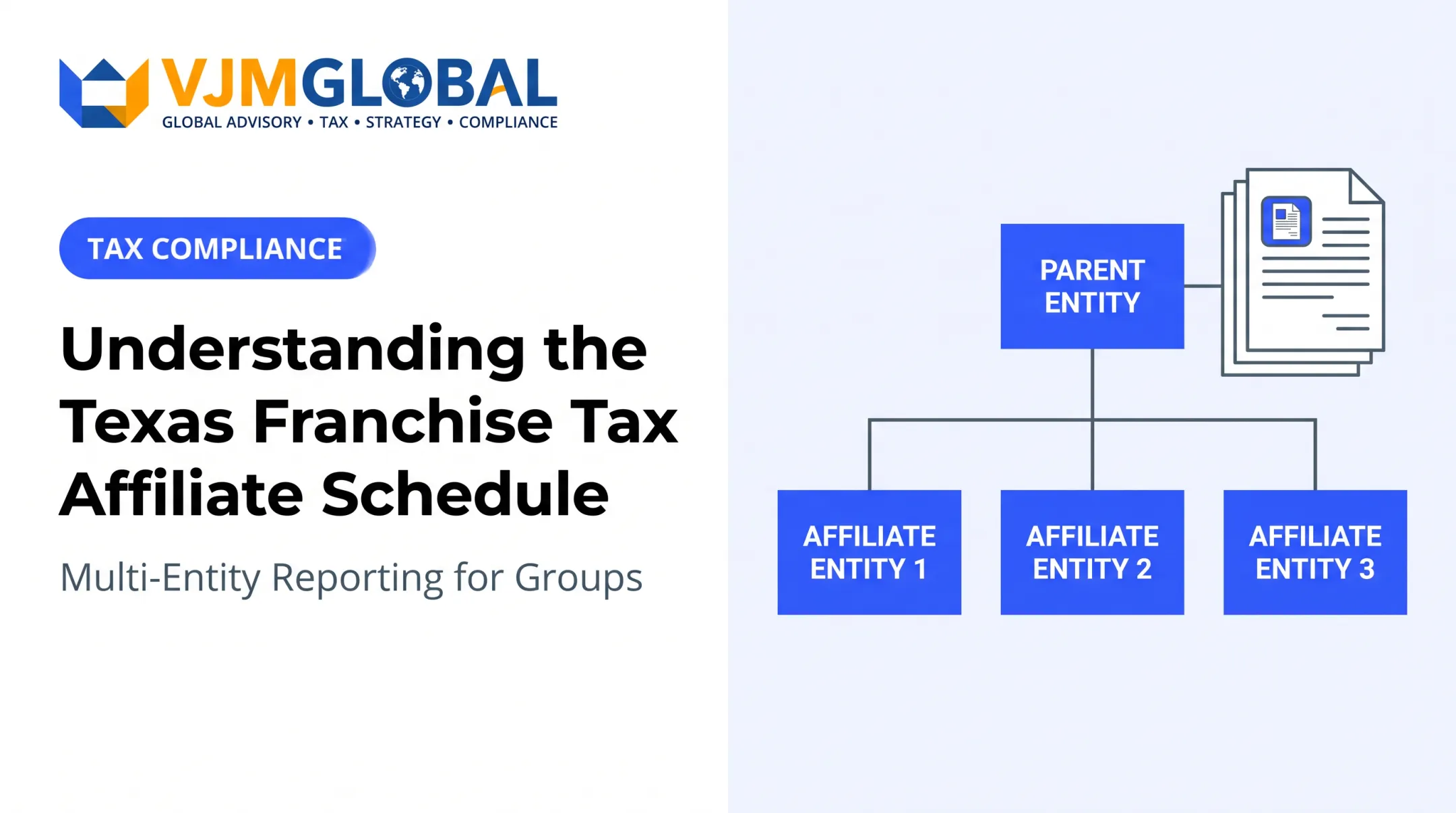
A combined group must include taxable members even if one is below the threshold. The group chooses one margin method, and COGS is computed only for eligible members. Intercompany eliminations must correspond. Tiered partnership elections can leave tax due even below normal thresholds. These areas justify professional review.
Which Costs Qualify as Texas Franchise Tax COGS?
Direct costs
Section 171.1012(c) covers:
- Labour costs
- Materials integral to production or consumed in it
- Handling, including processing, assembling, repackaging and inbound transport
- Storage within statutory limits
- Depreciation, depletion and amortisation on production assets
- Production-asset rent and repairs
- Directly related research, engineering and design
- Geological and geophysical costs
Section 171.1012(d) also allows:
- Spoilage, rework and scrap
- Insurance and production utilities
- Quality control and licensing costs
Industry examples
- Construction: qualifying contractor and subcontractor costs count.
- Oil and gas: extraction is production.
- Fulfilment centres: stocker labour counts until goods are available for sale. Later order-specific costs are selling costs.
- Restaurants: cooking labour may qualify. Waitstaff labour generally does not.
- Lenders and rental companies: special statutory rules apply.
Indirect and administrative overhead
Service costs that demonstrably relate to acquiring or producing goods may qualify, capped at 4% of total indirect and administrative overhead. Costs already deducted cannot be added again here.

Disallowed costs
Section 171.1012(e) excludes:
- Selling, advertising and outbound distribution
- Nonproduction rent or leasing
- Interest, including production-period financing
- Income-based taxes
- Officers' compensation
- Idle-facility, rehandling and bidding costs
Federal capitalisation does not override these exclusions.
Avoiding duplication
You generally cannot exclude revenue and also claim the matching expense as COGS. A contractor that treats a subcontractor payment as a flow-through exclusion cannot deduct the same payment again as COGS. Intercompany and partner-funded amounts face similar limits.
2026 Updates, Documentation, and Filing Controls
Current Comptroller guidance
STAR memo 202603002M, issued March 12, 2026, replaced and fully superseded the December 19, 2025 memo. For the 2026 report, federal amounts generally use current federal law. Where a statute or rule references the IRC specifically, the 2007 IRC applies.
For COGS, a taxpayer may use federal depreciation for assets that otherwise qualify, including bonus depreciation for assets placed in service on or after January 19, 2025. Texas eligibility rules still control.
A one-time net depreciation adjustment is available on the 2026 report only, for qualifying assets in service before the 2026 accounting period. Follow the memo's ordering and carryforward instructions.
The Rule 3.588 amendments were adopted without changes and took effect June 21, 2026.
Documentation checklist
- Invoices and inventory records
- Payroll and labour reports
- Subcontractor agreements
- Evidence of property ownership
- Equipment-use records and depreciation schedules
- Capitalisation elections
- Revenue-exclusion support
- Allocations between goods and services
Review controls before filing
- Reconcile the COGS schedule to the federal return
- Confirm you are using current forms and deadlines
- Test each deduction method
- Document your assumptions and method choices
Reports were due May 15, 2026, with extensions generally requiring payment of 90% of current-year or 100% of prior-year tax.

VJM Global supports US and cross-border businesses with accounting, tax compliance and financial reporting coordination, including state-specific nexus and compliance work.
Frequently Asked Questions
How much is franchise tax for LLC in Texas?
There is no flat LLC amount. Liability depends on revenue, exclusions, margin method, apportionment and rate. An LLC at or below $2.65 million in 2026 owes no tax but may still file information reports.
How to calculate COGS for Texas franchise tax?
Identify eligible goods-related revenue and costs, apply §171.1012, and remove disallowed or service costs. Reconcile with federal records and use the current Comptroller form.
How is franchise tax calculated in Texas?
Compute margin under the lowest permitted method, apportion it to Texas, then apply the 0.75% or 0.375% rate. EZ filers use 0.331%.
What expenses qualify for COGS under the Texas franchise tax?
Materials, direct labor, eligible subcontractor work and certain industry-specific costs qualify. Each must meet Texas statutory requirements.
Is Texas franchise tax COGS the same as federal COGS?
No. Texas definitions, exclusions and capitalization rules apply separately. The 2026 depreciation guidance only links one input to federal amounts.