That's the part many owners get wrong. Filing a report and paying tax are two separate obligations under Texas law, and missing either one triggers its own consequences.
This guide walks through why 2026 franchise tax filings get missed, how late-filing penalties differ from late-payment penalties and interest, what happens when the account goes unresolved, and the steps to fix a missed filing before it escalates into forfeiture.
Key Takeaways
- The Texas Comptroller charges a $50 flat penalty on each late report, even when zero tax is due
- Late-payment penalties (5% to 10%) and interest apply only to unpaid tax, not the flat report penalty
- Entities under the no-tax-due threshold often still owe a Public Information Report or Ownership Information Report
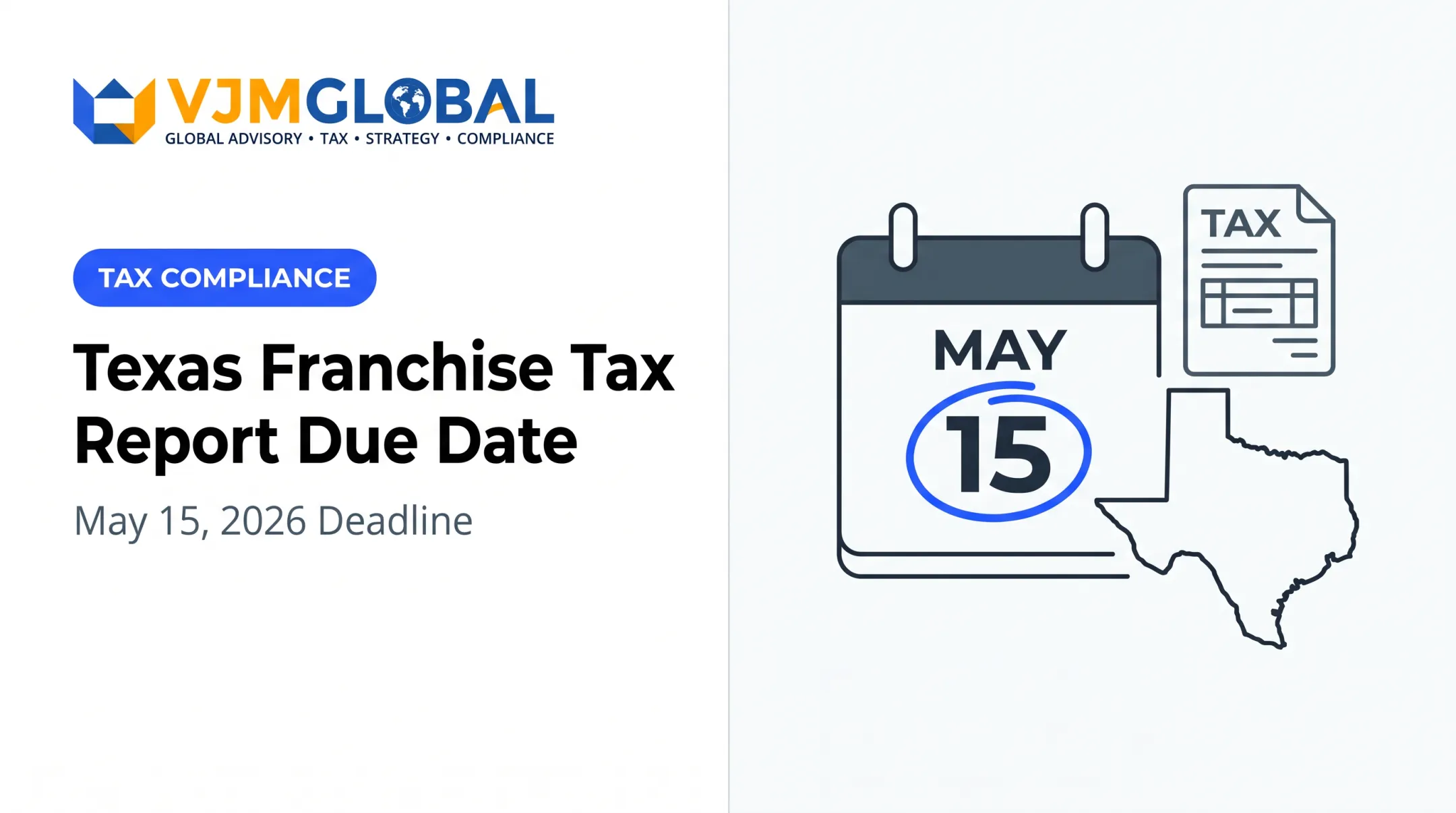
- The 2026 annual report deadline is May 15, 2026, with a separate extension process and payment test
- Continued noncompliance can lead to forfeiture of the right to transact business and require formal reinstatement
Common Causes of a Late Texas Franchise Tax Filing
Texas franchise tax is a privilege tax on the right to do business in the state, calculated on taxable margin. It's entirely separate from federal income tax, Texas sales tax, or a flat annual business license fee.
"Late filing" can mean several different things, and each has its own penalty trigger:
- A missed annual franchise tax report
- A missed Public Information Report (PIR)
- A missed Ownership Information Report (OIR)
- Another report tied to a specific entity type and reporting year
Missed Annual Deadline or Misunderstood Due Date
The 2026 annual report was due May 15, 2026. If that date lands on a weekend or holiday, the Comptroller pushes the deadline to the next business day.
Common mistakes that cause a miss:
- Assuming the franchise tax deadline matches the federal tax return deadline
- Believing a non-calendar fiscal year automatically shifts the Texas due date
- Overlooking the first report deadline entirely after forming or registering a new entity
First-year filers face extra timing rules. The accounting-year begin date is tied to the entity's Texas Secretary of State registration date (or, for out-of-state entities, when business began in Texas).
A change in accounting period can also make the report period shorter or longer than 12 months.
Believing No Tax Is Owed Means No Report Is Required
Owing zero franchise tax and having no reporting obligation are not the same thing. The 2026 no-tax-due threshold is $2,650,000 in annualized total revenue.
Entities under that threshold typically still must file a PIR or OIR, depending on entity type. Passive entities are excepted, and a qualifying new veteran-owned business gets a separate five-year exception.
Incomplete or Inaccurate Financial and Entity Information
A timely filing depends on having clean records ready:
- Total revenue and accounting-period dates
- Cost-of-goods-sold figures and compensation data
- Ownership or management details
- Prior-year filings for reference
Outdated registered-agent, officer, director, or address information can also delay or invalidate a submission. That risk rises when the Comptroller or Secretary of State can't match the filing to current entity records.
Extension Confusion or Insufficient Payment
An extension buys time to file. It does not erase the underlying tax obligation or automatically block all penalties.
To qualify using Form 05-164, a business must pay either 90% of the current year's tax due by the original deadline, or 100% of the prior year's reported tax (if that return was filed on or before May 14). Since November 15, 2026 falls on a Sunday, the extended deadline moves to November 16, 2026.

Changes Affecting 2026 Filings
Several figures shifted for reports originally due between January 1, 2026 and January 1, 2028:
- No-tax-due threshold: $2,650,000
- Compensation deduction limit: $480,000 per person
- E-Z Computation rate: 0.331%, available for annualized revenue of $20 million or less (Form 05-169)
- Form 05-181 now replaces Form 05-160 as the credits summary schedule
If you're correcting a report from an earlier year, use that year's rules and thresholds, not the 2026 figures above.
What Happens If a Texas Franchise Tax Filing Is Ignored
The Penalty Structure
The Comptroller assesses a $50 penalty on each report filed after its due date, according to the Texas Comptroller's guidance. This applies even when no tax is due and even if the report is eventually filed.
Late payment works differently:
- 5% penalty if tax is paid 1-30 days after the due date
- 10% penalty if paid more than 30 days late
- An additional 5% can apply once tax remains unpaid past 30 days, with a $1 minimum under Tax Code 171.362
Interest begins accruing on the 61st day after the due date, at the rate shown on the Comptroller's interest page: 7.75% for 2026.
Illustrative example only (not an official calculation): a business owing $800 in tax, filed and paid 45 days late, could face the $50 flat report penalty plus a 10% late-payment penalty (around $80). Interest would then accrue from day 61 onward.

Always confirm actual amounts through the Comptroller's Webfile system before paying.
Warning Signs of a Delinquent Account
Watch for:
- An overdue or delinquent status flag on the Comptroller's online account
- A penalty notice or balance-due letter
- A notice of intent to forfeit the right to transact business
- A rejected filing due to missing information
- An outstanding PIR or OIR even when the tax report itself was filed
When multiple years are missing, check both the Comptroller's tax account status and entity status with the Texas Secretary of State, since the two systems track different things.
Loss of Business Privileges and Legal Protections
Unresolved noncompliance can trigger forfeiture of the right to transact business in Texas. For a corporation, Tax Code section 171.252 denies the right to sue or defend a lawsuit in Texas courts while that forfeiture remains in effect.
Beyond litigation, forfeiture can disrupt:
- Contract enforceability and vendor relationships
- Financing and banking applications
- Licensing renewals
- Any transaction requiring proof of good standing
Escalation to Entity Termination and Personal Exposure
The Comptroller must send notice at least 45 days before forfeiting an entity's privileges, giving the business time to cure the default, as outlined in the Texas Tax Code. If the entity doesn't revive its status, the Secretary of State may separately forfeit the charter or registration roughly 120 days after the Comptroller's forfeiture.
Personal exposure isn't automatic for everyone. Under section 171.255, corporate directors and officers can become personally liable for debts the corporation incurs after a report, tax, or penalty becomes due and before privileges are revived.
The statute addresses corporate officers and directors specifically. It doesn't establish the same rule for LLC members or managers.
How to Correct a Missed Filing
- Identify every missing year across both franchise tax reports and information reports
- Determine the correct form for each year, since forms and thresholds change annually
- Prepare and submit all outstanding reports
- Pay the tax, penalties, and interest owed for each period
- Confirm processing through the Comptroller's online account
- Check whether reinstatement or a tax clearance letter is needed to restore good standing
Filing promptly stops further escalation, but it doesn't erase penalties, interest, or forfeiture that already occurred.
How to Prevent or Fix a Late Filing
Treat Texas compliance as a recurring process, not a once-a-year scramble before May.
Build a Deadline and Responsibility System
Assign someone to own Texas compliance specifically, then lock the process in place:
- Set reminders well ahead of the deadline
- Log extension dates separately from the original due date
- Keep a calendar for every entity registered or operating in the state
- Review ownership, management, registered agent, and address changes before you file
Maintain Accurate Books Throughout the Year
Timely bookkeeping makes threshold testing and margin calculations far more reliable than scrambling in April. Track revenue, payroll, and reconciliations continuously. Keep source documents and prior filings on hand so you can substantiate revenue, deductions, and compensation figures.
Confirm the Correct Report and Calculation Method
Entity type, revenue, and report year all determine whether you need a full franchise tax report, the E-Z Computation report, a PIR, an OIR, or another form. Confirm the applicable margin calculation method and the current compensation deduction limit for the specific report year before filing.
Use the Extension Correctly
Form 05-164 must be submitted on or before the original due date, paired with the 90%/100% payment test described earlier. An extension buys filing time, not payment time; don't treat it as a reason to skip estimating and paying what's owed by the original deadline.
Seek Professional Review When the Filing Is Complex
Some situations warrant outside help:
- Multiple missing years across different forms
- Foreign ownership or multistate activity
- Entity restructuring or disputed revenue figures
- Uncertain Texas nexus
- An active forfeiture notice
- Difficulty calculating taxable margin
VJM Global's accounting and tax-compliance professionals support international and US-based businesses with record review, filing preparation, deadline tracking, and compliance documentation across multiple jurisdictions. That help is especially useful when a Texas filing involves cross-border ownership or records spread across several entities.
Tips for Long-Term Prevention and Control
Build a few repeatable controls into every filing cycle so late penalties stay rare.
- Routine monitoring: After filing, paying, requesting an extension, or responding to a notice, check the Comptroller account and entity status. Keep confirmation numbers and copies of everything submitted.
- Staff training and documented responsibilities: Record who gathers financial data, who reviews the report before submission, who authorizes payment, and who monitors notices and requirement changes.
- Technology and compliance records: Accounting software, shared compliance calendars, and secure document storage reduce missed-deadline risk. Tools support preparation; they do not replace professional review or an official Comptroller filing confirmation.

Conclusion
A Texas franchise tax late-filing penalty is rarely the whole story. Unpaid tax, accruing interest, escalating notices, forfeiture, and reinstatement costs can all follow if a missed report sits unresolved.
Verify your specific 2026 filing requirements against current Comptroller guidance. File any missing reports as soon as possible. Bring in qualified tax-compliance support when the account spans multiple years or involves entity-status complications.
Frequently Asked Questions
What is the penalty for late filing the Texas franchise tax?
The Comptroller charges a $50 flat penalty on each late report, assessed per report and applied even when no tax is due. This is separate from any late-payment penalties on unpaid tax.
How much is the Texas franchise tax fee?
There's no separate flat annual franchise fee. Franchise tax is calculated as a percentage of taxable margin, using rates and thresholds that apply to the specific report year, so the amount varies by business.
How can I request a penalty waiver for late filing Texas franchise tax?
You can request a penalty and interest waiver online or using Form 89-224, explaining why the filing was late and what corrective steps were taken. All outstanding reports must be filed and tax paid first, and approval isn't automatic.
How can I get an extension for my franchise tax filing in Texas?
File Form 05-164 or request online on or before the original due date, meeting the 90% current-year or 100% prior-year payment test. This extends the filing deadline to November 16, 2026, not the payment obligation.
What is the statute of limitations for filing franchise tax in Texas?
Texas generally bars tax assessment four years after the due date, but that limit doesn't apply if no report was ever filed or a fraudulent report was submitted. Collection suits follow a separate three-year window; confirm the applicable Tax Code provision for your situation.
What triggers a penalty for Texas franchise tax?
Penalties trigger from late report submission, late tax payment, failure to file required information reports like the PIR or OIR, and failure to meet extension payment conditions. Confirm the specific rule that applied during the report year in question.