If you're running a food business, healthcare-adjacent facility, construction firm, or beauty salon, Dubai Municipality (DM) approval is a separate, mandatory step. Skip it, and you can't legally operate, no matter how valid your trade license is.
This trips up a lot of people, especially NRIs, OCIs, and foreign investors who already juggle compliance across India, the US, UK, or Australia. Adding another regulatory layer in a new jurisdiction feels overwhelming. This guide breaks down exactly who needs DM registration, the steps involved, the documents you'll need, realistic costs, and timelines for 2025-2026.
Key Takeaways
- Dubai Municipality approval applies by activity: food, construction, waste, and consumer-product businesses are the main groups affected
- The process generally follows: trade license first, then service-specific application, inspection, and fee payment
- Costs vary widely by sector; the only officially confirmed figure is AED 1,000/year for waste activity permits
- Fines range from AED 500 to AED 1 million under the 2025 Public Health Law for non-compliance
- Non-residents, including NRIs and OCIs, can register through Free Zone or mainland structures
What Is Dubai Municipality and Who Needs to Register
Dubai Municipality isn't the body that hands you a business license. That's the Department of Economic Development (DED) or your chosen Free Zone authority. DM's job is different: it oversees public health, food safety, environmental compliance, waste management, and building standards across the emirate.
Under Law No. 5 of 2025, DM's mandate covers the food chain, consumer-product safety, animal health, built-environment health, and public-health pest control, plus the power to inspect, test, and enforce compliance.
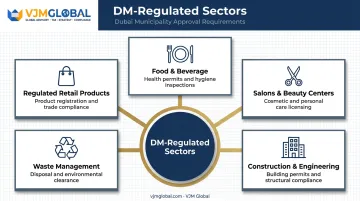
Businesses that typically need DM approval:
- Food and beverage outlets (restaurants, cafes, food manufacturers, importers)
- Salons, barbershops, and beauty centers
- Construction and engineering firms
- Waste management and environmental services companies
- Retailers handling regulated consumer products (cosmetics, personal care items, certain food products)
Not every regulated-sounding sector falls under this list, though. Take healthcare: clinics and hospitals aren't a generic DM category. The 2025 Public Health Law assigns health-service-provider regulation to the Dubai Health Authority (DHA), not DM. DM may still get involved in the building, food, waste, or pest-control aspects of a clinic, but the clinical license itself sits with DHA.
If you run a consultancy, digital agency, marketing firm, or most professional/back-office services, you likely don't need direct DM approval. Your DED or Free Zone trade license is sufficient. This guide is built for the sectors above, not for every business in Dubai.
Step-by-Step Process to Register Your Company with Dubai Municipality
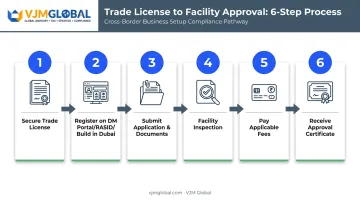
There isn't one universal DM registration form. The exact path depends on your sector, but the general flow looks like this.
Step 1: Secure Your Trade License First
You can't start DM registration without an active trade license from Dubai mainland DED or a Free Zone authority. This license is the foundation every municipal approval builds on.
Step 2: Register on the Relevant DM Portal or Service
Depending on your activity, you'll register through:
- DM's general e-services portal for food permits, product certification, and consumer-goods approvals
- RASID specifically for waste management companies (company registration, vehicle approval, GPS tracking device registration)
- Build in Dubai / Engineering Qualification System for construction and consultancy firms
You'll enter your license number, issuing authority, and administrative details to create your account. With your account active, you're ready to move on to the application itself.
Step 3: Submit Your Application and Documents
Requirements differ by sector, but commonly include:
- Trade license copy
- Facility layout plan (mandatory for food premises before construction or renovation)
- Activity description matching your license
- Tenancy or ownership evidence for the premises
Step 4: Prepare for Facility Inspection
For food, beauty, and construction businesses, inspectors will check:
- Hygiene and ventilation systems
- Safety equipment and fire compliance
- Waste handling and disposal setup
- Layout matching what was submitted
Step 5: Pay the Applicable Fees
Once documents clear review and inspection passes, you'll pay through the relevant portal (DM e-services or RASID, depending on activity).
Step 6: Receive Your Approval Certificate
This certificate or permit is often required to finalize or renew your trade license with DED, especially for regulated activities.
Sector-specific note: Waste management companies need additional RASID registration for company, vehicle, and GPS-tracking approval. Food businesses should verify current food-activity permit requirements directly with DM, since older references to a standalone "FIRS" registration may not reflect current service names.
Documents Required and Registration Costs
Document requirements are activity-specific, not universal. Don't assume every business needs the same packet.
Commonly requested across sectors:
- Trade license copy
- Passport/Emirates ID copies of owners (confirm requirement per service)
- Facility layout plan (confirmed mandatory for food premises)
- Tenancy contract or proof of premises rights
Sector-specific additions:
| Sector | Additional Documents |
|---|---|
| Food businesses | HACCP-based food safety plan; third-party HACCP or ISO 22000:2018 certification (required for outdoor caterers, manufacturers, 4-5 star hotels) |
| Construction/engineering | Soil test results, topographic maps (industrial areas), qualified technical staff records |
| Waste management | Vehicle images, GPS-device specs, TRA approval, waste manifests |
| Beauty/salons | Premises compliance documentation under DM health-and-safety guidelines |
What Registration Actually Costs
Here's the honest picture: verifiable fee data is limited outside the waste sector.
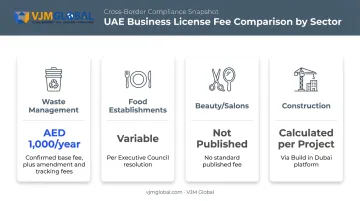
| Sector | Fee Finding |
|---|---|
| Waste management | AED 1,000/year for activity permit; AED 100 for amendments; AED 300 for tracking chip/sticker |
| Food establishments | No universal published figure; fees set per Executive Council resolution and vary by service |
| Beauty/salons | No confirmed standard fee found in current official sources |
| Construction | Calculated per project/service through Build in Dubai, not a flat registration cost |
Budget for costs beyond the base fee:
- Inspection and re-inspection charges
- Food handler medical certificates
- Pest control and waste management service contracts
- Amendment or replacement fees if details change
Because fees are revised periodically and vary by activity code, always verify current amounts directly on the Dubai Municipality e-services portal before budgeting or filing.
Timeline, Renewal, and Staying Compliant
Timelines depend entirely on which service you're applying for. The only officially confirmed figure is 5 working days for release of consumer-product consignments imported for local use or re-export. For other services, most operators report a 5-30 working day range, depending on documentation readiness and inspection scheduling.
Renewal timelines need careful attention here. The only confirmed annual term in official sources is the waste activity permit. Other approvals, food permits, building permits, product certifications, carry their own validity periods set by the specific service. Don't assume a blanket one-year cycle applies across every sector. Always check your specific approval certificate for its expiry date and renewal window.
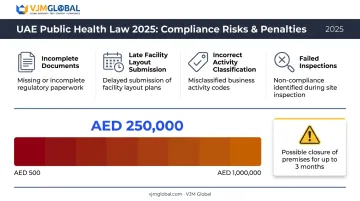
Common causes of delay or rejection:
- Incomplete or mismatched documentation
- Facility layouts submitted after construction instead of before (a documented issue in food premises)
- Incorrect business activity classification on the license
- Failed inspections due to hygiene, ventilation, or safety gaps
Getting any of these wrong carries real financial risk. Under the 2025 Public Health Law, administrative fines range from AED 500 to AED 1 million. Serious violations can also trigger closures of up to three months. Engaging an experienced local consultant to review your documentation and facility setup before submission can save weeks of back-and-forth.
Can Non-Residents and Foreign Investors Register a Company in Dubai Municipality?
Yes. Non-residents, including NRIs, OCIs, and foreign investors from the US, UK, and Australia, can register businesses in DM-regulated sectors. Most do this through:
- 100% foreign-owned Free Zone structures, or
- Mainland LLCs, which since June 2021 allow full foreign ownership for most commercial activities
A few practical considerations:
- Local service agents may still be relevant for certain mainland categories, even where foreign ownership is permitted
- DM offers online services and a mobile app, but not every step can be completed remotely. Site inspections, in particular, typically require physical presence or a representative on-site
- Power of attorney arrangements can help if you can't be physically present, though this should be confirmed as service-specific rather than assumed universal
DM registration is only half the picture for NRIs and OCIs who also hold tax residency or business interests in India. A UAE entity can trigger Indian FEMA and tax reporting obligations that need to be structured correctly from day one.
VJM Global advises NRIs, OCIs, and US, UK, and Australia-based business owners on this India-side coordination: tax residency planning, FEMA compliance, and cross-border structuring that holds up in both jurisdictions. While DM handles the UAE registration itself, getting the India tax and compliance planning right alongside it is what keeps the whole structure workable long-term.
Frequently Asked Questions
How do I register my company in Dubai Municipality?
Secure your trade license first, then register on the relevant DM service portal (general e-services, RASID, or Build in Dubai depending on activity), submit required documents, pass inspection, and pay applicable fees to receive approval.
How much does company registration in Dubai Municipality cost?
Costs vary significantly by activity; the only officially confirmed figure is AED 1,000/year for waste permits. Food, beauty, and construction fees depend on the specific service and should be verified on the DM portal directly.
How can I check if a company is registered with Dubai Municipality?
You can verify registration status through the Dubai Municipality e-services portal or by requesting direct confirmation from the relevant DM department for your business activity.
Can a non-resident register a company in Dubai Municipality?
Yes. Non-residents can register via Free Zone or mainland structures, often with remote application options, though site inspections and some steps may still require local presence or a representative.
How long does Dubai Municipality registration take?
Timelines vary by service; most fall within a 5-30 working day range depending on documentation readiness and the specific approval required.
Is Dubai Municipality registration different from a trade license?
Yes. A trade license authorizes your commercial activity through DED or a Free Zone; DM approval separately confirms facility-level health, safety, and environmental compliance. Regulated businesses typically need both.