This guide is for owners, officers, and finance teams winding down a Texas entity or ending a foreign entity's Texas activity. The workflow runs in this order: confirm the closing event, set the final period, pick the forms, calculate any tax, pay, and verify the account is resolved.
Key Takeaways
- The right final filing depends on entity status, closing event, effective date, and report year.
- "No tax due" does not always mean "no filing." Check the annual information reports too.
- Comptroller clearance and SOS termination or withdrawal are separate actions.
- Keep confirmations, payment receipts, certificates, and termination documents permanently.
What Triggers a Final Texas Franchise Tax Return?
Understanding the event that makes a filing final
The final report is tied to the date an entity stops being subject to Texas franchise tax. The events differ by entity type:
| Event | How it's treated |
|---|---|
| Domestic termination or dissolution | Final period ends on the effective termination date |
| Merger | Listed cessation trigger; successor-assumption rules also apply |
| Conversion | Taxable-to-nontaxable follows final and clearance procedures; taxable-to-taxable may need no final report if the SOS is told the resulting entity continues filing |
| Foreign withdrawal or cessation | Ends when the entity ceases Texas business or no longer has sufficient nexus |
Selling assets, going inactive, or letting a registration lapse is not clearly the same as a formal termination. The Comptroller's published guidance does not equate them, so confirm sale-specific treatment with the agency before assuming the clock has stopped.
The final period starts the day after the previous report's accounting period ended. It ends when the entity is no longer subject to tax. Revenue, receipts, and deductions inside that window belong on the final filing.
Determining whether the entity must file
Taxable entities include those formed in Texas or doing business there:
- Corporations and LLCs (including single-member and series LLCs)
- Partnerships such as LPs and LLPs
- Banks, professional associations, trusts, and joint ventures
Common exclusions include:
- Sole proprietorships (other than single-member LLCs)
- General partnerships owned entirely by natural persons
- Certain passive entities and grantor trusts
Exemptions are not automatic. Being passive or a new veteran-owned business does not by itself make an entity exempt.
Foreign entities (organised outside Texas, including in other U.S. states) can have nexus through employees, inventory, or a business location. Since 2019 accounting periods, $500,000 or more in Texas gross receipts also creates nexus without physical presence.
This filing stands apart from your federal final return, Texas sales tax account closure, payroll filings, and other state registrations. Each has its own process.
How to File the Final Return and Close the Texas Franchise Tax Account
Step 1: Confirm the legal and tax-account status
Gather these before opening any form:
- Formation or foreign-qualification records
- Termination, merger, conversion, or withdrawal documents
- Taxpayer number and registered-agent details
- The effective closing date
Then review the account for unfiled annual reports, balances, notices, and penalties. Outstanding annual reports must be filed even if a final report is also required. The Comptroller's termination checklist lists these items separately from the final report.
Step 2: Select the correct final filing
Use the 2026 report-year forms from the Comptroller's forms page:
- Final Long Form: 05-158-A/B
- Final EZ Computation: 05-169
- Conditional schedules: 05-166 (Affiliate), 05-175 (Tiered Partnership), 05-177 (Common Owner)
Entities at or below the 2026 threshold of $2.65 million in annualized revenue generally don't file a final No Tax Due Report. Above it, entities with annualized revenue of $20 million or less may elect EZ Computation. Everyone else files the Long Form.
In Webfile, a separate final period becomes available within one to two days. The published help does not document one universal "ceased doing business" checkbox, so follow the current form and Webfile instructions rather than assuming.
Step 3: Submit the final report
File through Webfile, approved tax software, or paper. Complete the report, attach any required schedules, and pay. Companies that must pay by EFT stay under that mandate regardless of filing format.
No Public Information Report (PIR) or Ownership Information Report (OIR) accompanies the final report. But annual PIR/OIR obligations for earlier periods remain.
Save the accepted-return record and payment receipt. The Comptroller's published Webfile guidance does not set a final-report confirmation standard, so keep your own screenshots and PDFs.
Step 4: Resolve the account after filing
Don't expect closure to follow automatically. The Comptroller's checklist treats the final report, payment, certificate request, and SOS documents as separate steps. It promises no uniform closure timing.
Three things are easy to confuse:
- Account status: shows the right to transact business. The printout is not the SOS termination certificate.
- Certificate of Account Status: requested through Webfile or Form 05-359. It is generally valid through December 31 of the year issued.
- SOS termination or withdrawal: a separate filing with its own requirements.
For most domestic terminations, the SOS needs the Comptroller's certificate. For foreign withdrawal (Form 608), Chapter 171 taxable entities must attach one. Foreign nonprofit corporations need not attach one.
Mergers use certificate 05-305 or a statement that the surviving or acquiring organization assumes the franchise taxes. Conversions use 05-304 or a liability statement.

An unregistered foreign entity ends its reporting responsibility by completing cessation filings and Form AP-114, the Texas Nexus Questionnaire.
Handling problems after submission
If the Comptroller rejects a return, the nonacceptance letter states why. Fix the specific defect, whether a missing schedule, information report, or tax report.
- Unpaid balance or notice: pay or respond by the deadline in the notice. Not everything can be resolved in Webfile.
- Amendment: file on paper with an explanatory cover letter and "AMENDED" written across every page.
- Report shown missing but already filed: call 800-252-7942.
- General franchise help: 800-252-1381.
- Webfile technical help: 800-442-3453.
Keep a log of every contact: date, representative, and what was said.
What to Prepare and Calculate Before Filing
Establish the final reporting period
Start with the legal event date, then work backward to the prior report's period end. For domestic entities, that is the effective termination, merger, or conversion date. For foreign entities, it's when Texas business ceased.
One wrinkle: the Comptroller's help page points to the effective legal-event date, while the termination checklist mentions an accounting end date within 60 days of termination. If the two give different dates, confirm with the Comptroller before filing.
Short periods require annualization:
Annualized revenue = period revenue ÷ period days × 365
Annualization decides threshold and EZ eligibility. It does not change the revenue actually used in the tax calculation.
Assemble financial and entity information
Pull together:
- Total revenue, Texas receipts, and receipts everywhere
- Cost of goods sold and qualifying compensation
- Other deductions and apportionment data
- Ownership details and registered-agent information
- Final balance sheet or trial balance
Reconcile the final books to the return. Document items near the closing date, such as final invoices, refunds, asset sales, intercompany transactions, and distributions. These are the entries that most often get mis-dated or dropped.
Calculate the final Texas liability
Texas franchise tax is a margin tax, not a rate applied to federal taxable income. For the Long Form, margin is the lowest of:
- Total revenue × 70%
- Revenue minus cost of goods sold
- Revenue minus compensation
- Revenue minus $1 million
Current thresholds and rates for report year 2026:
| Item | 2026 figure |
|---|---|
| No-tax-due threshold | $2,650,000 annualized revenue |
| Retail/wholesale rate | 0.375% |
| Other activities rate | 0.75% |
| EZ rate | 0.331% (annualized revenue $20M or less) |
| Compensation cap | $480,000 per person per 12 months, prorated |

EZ Computation allows no COGS, compensation, or $1 million deduction. A lower rate does not guarantee lower tax, so run both methods when eligible. The Comptroller's 2026 franchise tax instructions are the authority for current figures.
Apportionment uses a single gross-receipts factor: Texas receipts divided by receipts everywhere. Goods generally source to the delivery destination, and services to where they are performed.
Review special situations
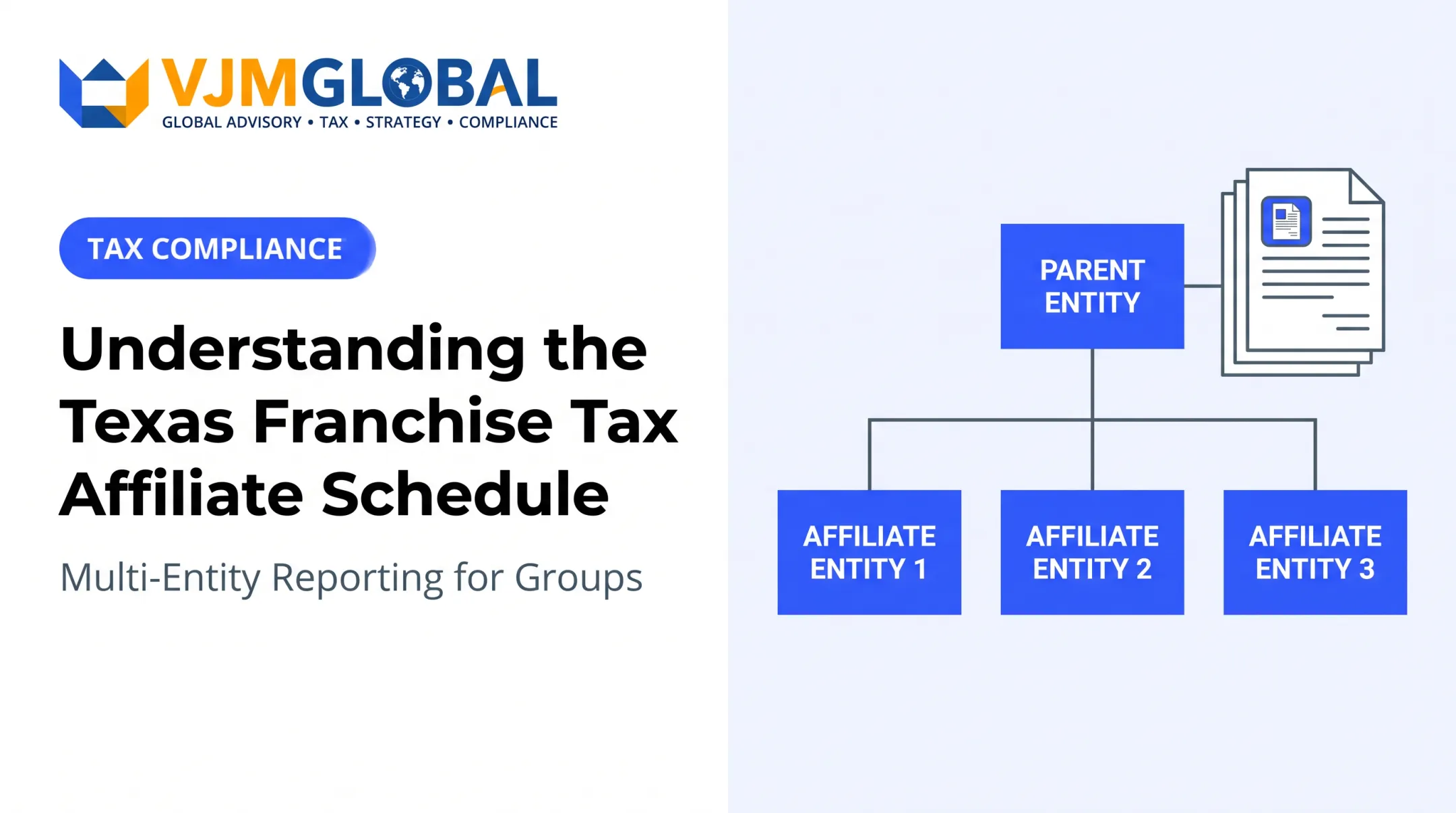
- Combined groups: unitary affiliates file together on one margin method. Departing members usually need no separate final report; pre-joining periods can still require one.
- Foreign entities: test physical presence and the $500,000 receipts rule.
- Passive and exempt entities: confirm the statutory qualification instead of assuming it.
- Cross-border entities: the statute excludes certain entities with 80% or more of property and payroll outside the United States.
Deadlines, Payments, and Penalties for a Final Texas Franchise Tax Return
The annual report is due May 15 (next business day if it falls on a weekend or holiday). A final report is due on the 60th day after the entity is no longer subject to tax. Tax clearance is also required before the Secretary of State (SOS) filing is completed.
Extensions
A final-report extension adds 45 days. It requires a timely Webfile request or Form 05-164, plus payment of at least 90% of the final tax by the original deadline. EFT filers use a TEXNET payment route. The Comptroller's extension guidance spells out the conditions.
Annual extensions work differently. Non-EFT filers extend to November 15 with timely payment (90% of current tax or 100% of prior-report tax). EFT filers face an August 15 first deadline.
An extension is not automatic. Without the required payment, it fails.

Penalties and consequences
- A late report costs $50 per required report, even when no tax is due.
- Late payment adds 5% at 1 to 30 days and 10% beyond 30 days.
- Interest starts 61 days after the due date.
- Failure to file or pay within 45 days of notice, refusal of a records examination, or a missing signed Public Information Report (PIR) can trigger forfeiture
- Forfeiture means losing the right to sue or defend in Texas courts
- Officers and directors can face personal liability for certain debts incurred after the due date and before revival, subject to statutory exceptions
Confirm current penalty figures with the Comptroller before relying on them.
Common Mistakes and Final Filing Checklist
Frequent final-return mistakes
- Assuming SOS dissolution paperwork closes the franchise tax account.
- Using the wrong report year, period dates, entity classification, form, or taxpayer number.
- Treating "no tax due" as "no filing required," especially for annual PIR/OIR.
- Skipping short-period annualization.
- Overlooking related-entity issues and Texas receipt sourcing.
Final submission checklist
- Confirm the legal closing or withdrawal date.
- Set the accounting cutoff and reconcile the books.
- Review the account for unfiled annual reports, balances, and notices.
- Select the correct final form and schedules.
- File and pay by the due date, or request a timely extension with payment.
- Request the Certificate of Account Status (or complete the merger, conversion, or AP-114 route).
- File the SOS termination or withdrawal with the required certificate.
After filing, keep these records:
- Accepted return and confirmation
- Payment receipt
- Comptroller correspondence
- Certificate or status evidence
- SOS termination or withdrawal documents
Relevant professional support
Businesses with cross-border ownership or scattered records sometimes want help. VJM Global provides tax compliance and accounting support for U.S. and cross-border reporting, including organising final-period records and coordinating compliance steps. It does not guarantee account closure.
Frequently Asked Questions
How do I close my Texas franchise tax account and file a final franchise tax return?
Confirm the legal closing or withdrawal event, file all outstanding annual and final reports, and pay or resolve balances. Then follow the Comptroller's current certificate and closure procedure before completing the SOS filing.
Do I need to file a Texas franchise tax return?
It depends on your Texas status, taxable-entity classification, activity or nexus, closing event, and current rules. No tax due does not necessarily eliminate all reporting, such as annual PIR/OIR.
When is a final Texas franchise tax return due after dissolving or withdrawing from Texas?
Generally 60 days after the entity is no longer subject to tax, with a possible 45-day extension if you pay at least 90%. Verify the date for your specific legal event rather than relying on the May 15 annual date.
Do I need a final Texas franchise tax return if my business did not owe any tax?
Not always. Entities at or below the 2026 threshold generally skip the final No Tax Due Report, but they may still owe annual PIR/OIR filings and need a certificate request. The answer turns on entity type and report year.
Is a final franchise tax return required when a Texas business never conducted operations?
Formation, registration, and the termination date can still matter without any revenue. Check the account's filing history for unfiled reports and confirm the current rules with the Comptroller.
How do I confirm that my Texas franchise tax account is closed?
Keep your accepted filing and payment evidence, and review the Comptroller's account status. Resolve any remaining notices before treating the account as closed, and keep the certificate you obtained.