Readers usually worry about three things: whether they must report it, how to find the taxable portion, and what changes if they live in Australia. US citizens and residents are taxed on worldwide income, so a Roth IRA owner in Sydney or Perth still has US reporting to handle, alongside a separate Australian analysis.
This guide covers Form 1099-R, qualified and nonqualified distributions, Forms 5498, 8606 and 5329, and reporting for US persons in Australia.
Key Takeaways
- Custodians generally issue Form 1099-R for Roth IRA distributions of $10 or more.
- Qualified distributions and returned regular contributions are not taxable income.
- Box 2a is often blank for Roth IRAs, and blank does not mean tax-free.
- US reporting and Australian tax treatment are separate questions.
Do You Get a 1099-R for a Roth IRA Distribution?
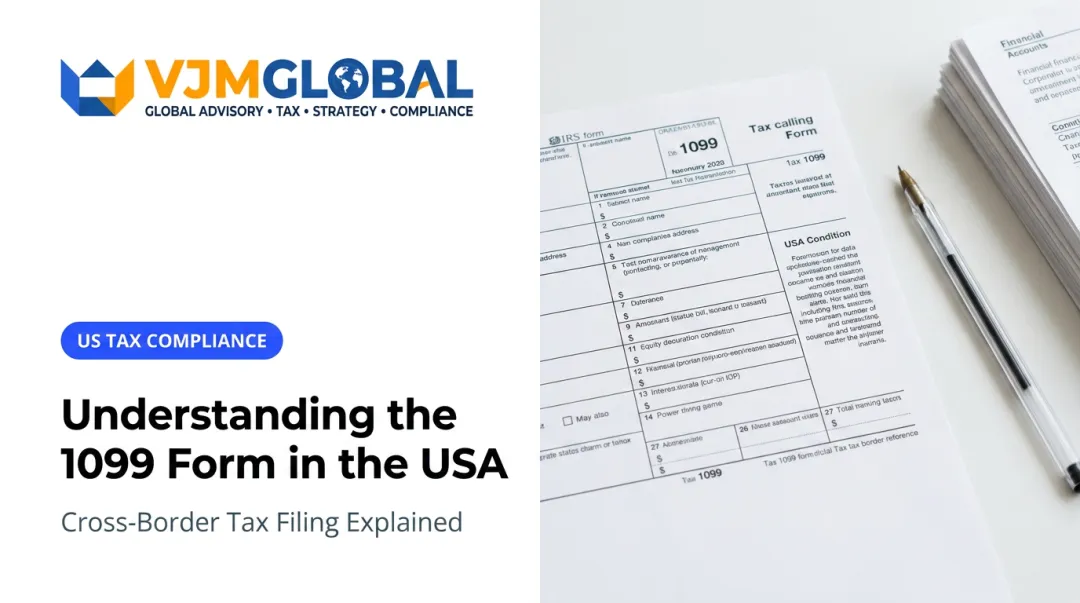
Yes, you usually receive a Form 1099-R when money leaves a Roth IRA. Under IRS Publication 1099, payers generally file and furnish it for distributions of $10 or more, including nontaxable ones.

Qualified Roth distributions and returned regular contributions stay excluded from gross income even though they are reported.
Transactions that typically trigger a 1099-R:
- Ordinary Roth IRA withdrawals
- Traditional-to-Roth conversions, even with the same trustee
- Recharacterisations
- Corrective distributions of excess contributions
A plain Roth-to-Roth trustee transfer generally isn't reported as a distribution. Owning the account, contributing, or leaving it untouched creates no 1099-R. Contributions are tracked on Form 5498 instead.
What information appears on Form 1099-R?
- Box 1: gross distribution
- Box 2a: taxable amount, generally blank for Roth IRA distributions
- Box 2b: "Taxable amount not determined" and "Total distribution" checkboxes
- Box 4: federal income tax withheld
- Box 7: distribution code
The payer often can't calculate the taxable portion because it doesn't know your contribution history, conversions, or holding periods. That calculation falls to you or your preparer.
When should the form arrive?
| Form | Recipient deadline | IRS deadline |
|---|---|---|
| 1099-R | 31 January | 28 February (paper); 31 March (electronic) |
| 5498 (contributions) | 31 May | 31 May |
Dates shift to the next business day when they land on a weekend or holiday. Delivery may be electronic if you consented.
What if the form is missing or wrong?
- Compare it against your account statements.
- Contact the custodian and request a corrected form.
- If unresolved by the end of February, contact the IRS.
- Use Form 4852 as a substitute if the correct form won't arrive before you file.
- Keep records of every contact.
Is a Roth IRA Distribution Taxable?
It depends on whether the distribution is qualified. IRS Publication 590-B says a qualified distribution requires the five-year period to be met, plus one of these:
- Age 59½
- Disability
- Death
- A first-home purchase, subject to a $10,000 lifetime limit
Qualified distributions aren't taxable. Nonqualified ones may be partly taxable, but "nonqualified" does not mean the entire amount is taxable.
How contributions, conversions, and earnings are treated
Nonqualified withdrawals come out in this order:
- Regular contributions: first out, excluded from income.
- Conversions and rollovers: first-in, first-out by year. Taxable portions come out before nontaxable ones.
- Earnings: last out, potentially taxable and subject to the 10% additional tax.

Two separate five-year clocks exist. The qualification clock starts on 1 January of the first tax year you made any Roth contribution, including a conversion. Each conversion also has its own five-year period. Withdrawing early can trigger the 10% additional tax on previously taxable converted amounts unless an exception applies.
Records matter here. Keep statements for contributions, conversions, rollovers, recharacterisations, and prior distributions, because the 1099-R won't show the full history.
What portion is taxable?
Work it out from the distribution type, your basis, conversion records, age, holding periods, and exceptions. Don't assume Box 1 is the taxable amount.
Two quick scenarios:
- Qualified: A 62-year-old whose Roth IRA is well past five years withdraws funds. None of it is taxable, though the 1099-R still arrives.
- Early: A 45-year-old withdraws more than their regular contributions. The excess comes from conversions, then earnings. Earnings are taxable, and the additional tax may apply unless an exception fits.
Form 8606 Part III calculates the taxable portion of nonqualified Roth distributions. Form 5329 handles the additional tax or an exception to it.
Common exceptions include:
- Death or disability
- Terminal illness
- Substantially equal periodic payments
- Qualifying medical expenses
- Higher education costs
- First-home purchase (within the lifetime limit)
- Birth or adoption
- Certain emergency distributions
Each exception has its own conditions.
How does the distribution code help?
Box 7 describes the transaction:
| Code | Meaning |
|---|---|
| J | Roth distribution where Q or T doesn't apply |
| Q | Payer knows five-year period is met, plus age 59½, death or disability |
| T | Payer doesn't know whether five-year period is met, but age 59½, death or disability applies |
| 1 | Early distribution, no known exception |
| 2 | Early distribution, exception applies |
| G | Direct rollover, including a direct in-plan Roth rollover |
Q and T can't be combined with other codes. Review the code against your actual facts, and never change it yourself. Ask the custodian or a tax professional if it looks wrong.
How Do You Report a Roth IRA Distribution?
Gather these first:
- Form 1099-R
- Account statements
- Form 5498 records
- Contribution and conversion history
- Prior Form 8606 filings
- Details on your age and any exceptions
On the 2025 Form 1040 or 1040-SR, line 4a takes the gross IRA distribution and line 4b the taxable amount. Per the Form 1040 instructions, code Q permits zero on line 4b. Code T permits zero if a Roth contribution was made for 2020 or earlier. Confirm line numbers for the year you file.
If the distribution is tax-free
Don't ignore it. You still report the gross amount on line 4a with zero taxable on 4b, where the instructions allow. Attach Copy B of the 1099-R to your return only if federal tax was withheld in Box 4. Otherwise keep it with your records.
If the form is missing or incorrect
Contact the payer, document the contact, and request a corrected form. If a corrected form arrives after you file and differs from what you used, file Form 1040-X. Correcting the form, amending the return, and fixing an excess contribution are separate processes.
Reporting for Australian residents or US persons abroad
Form 1099-R is a US document. It doesn't replace any Australian analysis.
On the US side:
- Citizens and resident aliens are taxed on worldwide income, and returns are in USD.
- Qualifying taxpayers abroad get an automatic two-month extension, generally to 15 June, with a statement attached. Interest still runs from the regular due date.
- Foreign accounts held in an IRA the person owns are listed as an FBAR exemption, and Form 8938 excludes domestic Roth IRAs.
On the Australian side:
- The ATO's foreign pensions guidance treats most foreign pensions and annuities as assessable, but it doesn't name Roth IRAs. Confirm any Roth-specific treatment with the ATO or a cross-border adviser.
- Convert foreign income to AUD.
- A foreign income tax offset may apply, but only for qualifying foreign tax actually paid on income you include in Australian assessable income.
- The 1982 US-Australia treaty's pension article covers periodic payments and doesn't expressly name Roth IRAs. Its saving clause lets the US tax its citizens and residents regardless.

You may owe filings in both countries. Get advice from someone who knows both systems.
Other Forms Connected to Roth IRA Activity
Form 5498 and Roth IRA contributions
The custodian files Form 5498 with the IRS. It reports:
- Regular Roth contributions in Box 10
- Rollovers in Box 2
- Conversions in Box 3
- Recharacterisations in Box 4
- Fair market value in Box 5
You keep it for your records and don't attach it to your return.
Form 8606, Form 5329, and Form 1040
- Form 8606: tracks basis and calculates taxable nonqualified Roth distributions.
- Form 5329: calculates additional tax or claims an exception, and applies the 6% annual tax on excess contributions that remain.
- Form 1040: carries the final gross and taxable figures.
Conversions, rollovers, and recharacterisations
A conversion is not a withdrawal. It generates a 1099-R from the originating account even though the money stays in retirement accounts. A direct rollover and a trustee-to-trustee transfer are generally not taxable.
An indirect rollover is different: you must redeposit the funds within 60 days. Recharacterising a conversion has been prohibited since 2018. Contribution recharacterisations are still allowed if you attach an explanatory statement.

Special Cases and Common Mistakes
Roth conversions and in-plan Roth conversions
For IRA conversions, 2026 payer codes are 2 if you are below age 59½ and 7 if you are at or above it. A direct in-plan rollover to a designated Roth account in the same employer plan uses code G. It isn't a Roth IRA transaction, so confirm the code with your plan administrator.
Common mistakes to avoid
- Assuming every 1099-R amount is taxable
- Treating Box 2a as the full answer
- Ignoring contribution and conversion basis
- Thinking you must file Form 5498
- Reporting a Roth withdrawal as 1099-NEC, 1099-MISC, or a capital gain
A Roth IRA withdrawal is a retirement distribution, not contractor pay or a brokerage sale.
When professional help is appropriate
Get a review if you have:
- Multiple conversions
- An inherited Roth IRA (most non-eligible beneficiaries must empty it by 31 December of the tenth year after death)
- Excess contributions
- Missing basis records
- Corrected forms
- Overlapping US and Australian filing obligations
VJM Global prepares US individual returns (Form 1040) and supports Australian businesses and US-linked clients with tax compliance. For a cross-border Roth question, confirm scope with a professional before filing.
Frequently Asked Questions
Do I get a 1099-R for a Roth IRA?
Generally yes, if you took a distribution of $10 or more. The form doesn't make the money taxable.
Do I have to report my Roth IRA on my tax return?
Not for owning it or contributing to it. Distributions, conversions, and corrective transactions generally need reporting.
How do I report a Roth IRA withdrawal on my tax return?
Enter the gross and taxable amounts from Form 1099-R on Form 1040 lines 4a and 4b. Add Form 8606 or 5329 where they apply.
Do you get a Form 5498 for a Roth IRA?
Yes, the custodian files one reporting contributions and related activity. It's for your records, so keep it.
How do I determine the taxable amount on my 1099-R?
It depends on qualified status, basis, ordering rules, holding periods, and exceptions. Box 1 alone won't tell you.
What form do I report Roth IRA contributions on?
Form 5498 reports contributions to the IRS, and you don't attach it to your return. Form 1099-R covers distributions only.