This guide is written for local and foreign investors planning to establish industrial operations in Abu Dhabi. Getting this licence right matters for more than compliance alone. It affects which premises you can lease, which approvals you'll need before production starts, and how quickly you can get machinery running.
The process is often summarised in a sentence or two online, which hides how many moving parts are actually involved. Below, we break down eligibility, documentation, the approval stages, realistic cost drivers, and what happens after you're licensed.
Key Takeaways
- Industrial licences cover manufacturing, assembly, and raw-material transformation; your activity code sets the approval path.
- Expect scrutiny beyond paperwork: facility, machinery, environmental impact, and technical capability.
- You need genuine industrial premises—not a commercial office or residential address.
- Costs vary by activity, premises size, equipment, and external approvals; treat flat-fee quotes with caution.
- Licence issuance is a milestone, not the finish line; production approval usually comes later.
What Is an Industrial Licence in Abu Dhabi?
An industrial licence is the Abu Dhabi economic licence category for approved production and transformation activities. The Abu Dhabi Department of Economic Development (ADDED) issues it, with its Industrial Development Bureau (IDB) regulating the sector.
Applications run through TAMM's Industrial Leader company service, the emirate's digital government platform.
Activities That Typically Qualify
Industrial activities commonly include:
- Manufacturing and assembly of goods
- Food and beverage processing
- Textile and garment production
- Chemical and pharmaceutical manufacturing
- Metalworking and machinery fabrication
- Production of building materials and packaging
IDB maintains activity-specific codes (medicament manufacturing, for example, sits under a distinct code from general chemical processing), so always confirm your exact activity against the current official list rather than assuming a broad sector label covers you.
How Industrial Licences Differ—and What They Don't Cover
A commercial licence covers trading and resale. A professional licence covers specified services, such as consultancy. An industrial licence is specifically for production or transformation, where raw materials become finished or semi-finished goods.
Running a factory under a commercial licence, even informally, tends to create problems down the line with inspections, insurance, and banking.
Here's the part many applicants miss: the industrial licence permits your listed activity, but it doesn't replace other required permissions. You'll typically still need separate approvals for:
- Environmental impact and waste management
- Fire and civil defence compliance
- Construction and building permits
- Municipal and, where applicable, sector-specific product approvals
Mainland vs Free Zone
Abu Dhabi mainland licensing through ADDED differs from industrial setups in designated zones such as KEZAD. Each path has its own authority, application channel, premises rules, and incentive structure.
- Mainland licences generally allow broader market access across the UAE
- Free zone setups often offer streamlined land leasing and infrastructure, with a separate compliance layer
Industrial Licence Requirements and Application Process
Before anything else, nail down your activity classification:
- What products are you making?
- What raw materials and processes are involved?
- What is your intended production capacity and target market?
This determines everything downstream, including your legal structure and premises choice.
Legal Structure and Premises
Most industrial investors set up as an Limited Liability Company (LLC), though branch structures and other permitted forms exist depending on ownership requirements. Some activities carry special ownership or regulatory conditions, so confirm this early rather than after signing shareholder documents.
Your premises need to support the actual production process, not just house a desk and a signboard. That means:
- Confirming zoning compatibility for industrial use
- Securing a tenancy or land-use arrangement (industrial land leases are typically required before the under-construction stage, as Industrial Development Bureau (IDB) construction-stage guidance outlines)
- Verifying the site can handle your utility loads, waste output, and machinery footprint
Documents You'll Typically Need
- Passport and identity documents for shareholders and managers
- Trade-name reservation and initial approval
- Constitutional documents, such as the Memorandum of Association
- Tenancy or facility documents
- Business plan or feasibility study
- Activity details and, where applicable, evidence of technical or financial capability
A feasibility study matters more here than for a trading business. Authorities want to see your production model, machinery plan, staffing, utility needs, environmental controls, and projected output, not just a revenue forecast.

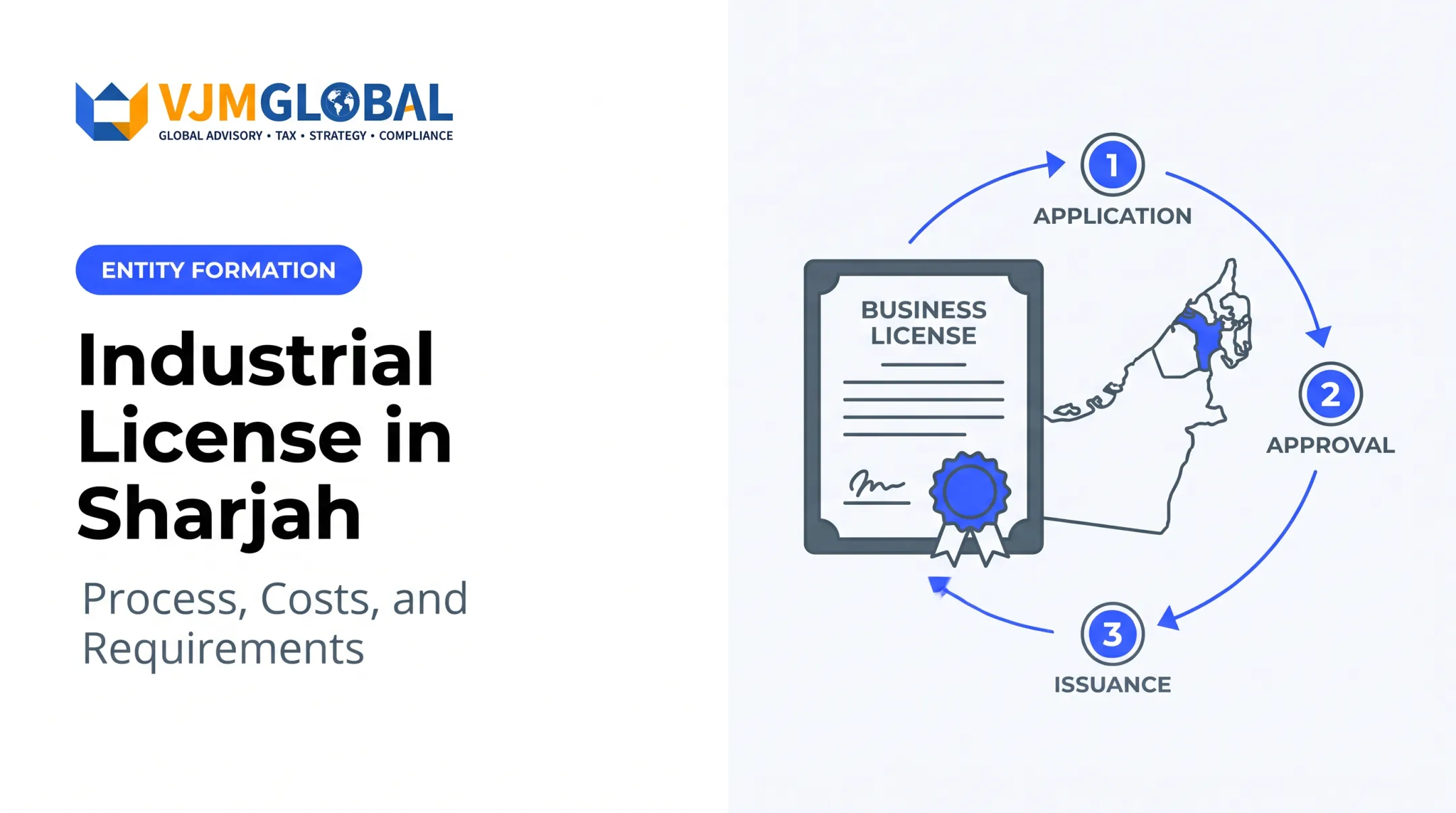
The Application Journey, Step by Step
- Run a feasibility and activity check before signing a lease or ordering equipment. Confirm your activity, premises, and ownership structure are acceptable upfront.
- Reserve your trade name and choose a legal structure, then submit the initial application through TAMM (Abu Dhabi’s government services platform) for preliminary approval.
- Secure industrial premises and prepare your facility layout, machinery plans, and utility documentation.
- Obtain external approvals relevant to your activity. This could mean environmental clearance, civil defence sign-off, health or food authority approval, or energy-sector clearance.
- Submit the full application with supporting approvals, pay the applicable government fees, and receive your industrial licence.
- Clear production-stage approvals. Licence issuance usually isn't your green light to start manufacturing. Expect inspection, building completion, and commissioning steps before commercial production begins.
Pre-Application Checklist
Before you commit financially, confirm you've addressed:
- Approved activity code
- Legal structure
- Industrial premises and facility plan
- Machinery and utility requirements
- Environmental assessment needs
- Safety and civil defence approvals
- Technical staffing
- External sector clearances
- Realistic budget covering all of the above
Costs, Validity, and Ongoing Compliance
There's no single honest answer to "how much does this cost?" Costs depend on activity type, legal structure, premises, facility size, equipment, and which external approvals apply. Anyone quoting a flat figure without knowing your specifics is guessing.
What Drives the Cost
Expect to budget across these categories:
- Trade-name, application, and licence issuance fees, plus legal document preparation
- Premises or industrial land costs, plus tenancy registration
- Fit-out, utilities, and machinery
- Environmental and technical studies
- Inspections, visas, and insurance
- Professional or PRO assistance
A small workshop and a large manufacturing facility face dramatically different cost structures. Floor area, power requirements, waste controls, and staffing scale together.
For context, KEZAD recently signed a 50-year land lease for an 83,177-square-metre Jotun manufacturing facility valued at AED 450 million. That figure shows how industrial-scale investment differs from a modest processing unit. Always request a current quotation from ADDED or your chosen industrial-zone authority rather than relying on published averages.
Licence Validity and Renewal
Industrial licence validity periods vary by status. ADDED has adjusted timelines over recent years, including extending construction-stage windows. Confirm current validity periods directly with ADDED or IDB rather than assuming a fixed one-year cycle.
Renewal typically requires:
- An updated or valid industrial-land lease
- Current environmental and safety certificates
- Any required chamber membership
- A clean compliance record with no unresolved inspection findings
Letting approvals lapse, particularly environmental or civil defence certificates, can mean your licence renewal stalls even if the core licence itself is fine.
Staying Compliant After Licensing
Compliance doesn't stop at issuance. You'll need to:
- Maintain the approved activity and premises exactly as licensed
- Renew environmental and safety permissions on schedule
- Keep accurate records for labour, tax, and production
- Register for UAE Corporate Tax (9% above AED 375,000 in annual profit) and VAT (5%, above the mandatory registration threshold)
- Meet Economic Substance Regulations and Ultimate Beneficial Owner filing requirements
- Notify ADDED of changes to ownership, address, activity, or machinery
Enforcement is real. In early 2025, the Environment Agency – Abu Dhabi temporarily suspended two industrial facilities and fined another after repeated environmental violations, including unreported technical changes. That's the kind of outcome early compliance planning is meant to prevent.

This is where VJM Global typically supports foreign investors: organising formation documents, coordinating application steps across ADDED and external regulators, and planning accounting, tax, and ongoing compliance once you're operational.
We're not an Abu Dhabi government representative and don't maintain a local office there. We help structure the paperwork and compliance calendar so nothing slips.
Common Issues, Misconceptions, and Alternatives
A few misconceptions trip up new investors applying for an Abu Dhabi industrial licence.
"Getting the licence means I can start production." Not quite. Premises, environmental, construction, fire, and production-stage approvals often come after licence issuance, not before.
"Every industrial business needs the same documents and timeline." Also false. Requirements scale with your activity, facility size, technology, and risk profile. A small packaging unit and a chemical plant face entirely different regulatory paths.
Why the Wrong Licence Category Causes Trouble
- Operating a factory under a commercial licence invites inspection and insurance problems
- Running production from an unsuitable office creates renewal headaches
- Performing activities outside your licensed scope risks fines or suspension
If the industrial path is not the right fit, another licence type may serve you better.
When Another Route Fits Better
- Pure trading, without manufacturing, usually suits a commercial licence
- Consultancy or technical services, with no production activity, fit a professional licence
- Free zone structures, such as those in KEZAD, may suit businesses wanting serviced industrial land, specific logistics access, or export-focused operations
If your activity involves chemicals, food, pharmaceuticals, energy, or hazardous materials, confirm your route and required clearances before signing a lease or importing equipment. Reworking a facility after the fact is far costlier than getting the classification right upfront.
Conclusion
An Abu Dhabi industrial licence is the starting point for a legitimate industrial operation, not the entire approval framework. Facility, environmental, safety, and technical clearances all sit alongside it.
Getting the foundations right early saves real time and money:
- Get the activity classification right
- Secure suitable premises
- Prepare complete technical documentation
- Coordinate early with ADDED and relevant regulators Skipping these steps rarely speeds things up; it just moves the delay to a later, more expensive stage.
Verify current requirements and fees directly with ADDED or your chosen industrial-zone authority before committing capital. Bring in professional guidance if foreign ownership, regulated products, or multiple external approvals are involved.
Frequently Asked Questions
How much does an industrial licence in Abu Dhabi cost?
Total cost depends on your activity, legal structure, premises, facility size, equipment, and required external approvals. Request a current quotation from ADDED or the relevant industrial-zone authority rather than relying on a generic figure.
Can I get a trade licence in Abu Dhabi without setting up an office?
Standard commercial licences sometimes allow flexible arrangements, but manufacturing or processing businesses generally need an approved industrial facility, even if the initial application is submitted online.
What documents are required for an industrial licence in Abu Dhabi?
Expect to provide identity and shareholder documents, activity details, constitutional documents like the Memorandum of Association, premises information, a feasibility study, and any sector-specific environmental or safety approvals.
How long does it take to obtain an industrial licence in Abu Dhabi?
Timing varies based on activity classification, document readiness, premises status, and required external approvals. Licence issuance and permission to begin production are usually separate milestones, not the same date.
Do I need environmental approval for an industrial licence in Abu Dhabi?
It depends on your activity, materials, emissions, and facility scale. Confirm directly with the Environment Agency – Abu Dhabi whether an assessment, permit, or waste-management approval applies to your project.