Introduction
Setting up an industrial facility, infrastructure project, or large development in the UAE involves more than trade licensing and land allocation. Before construction or operations can begin, many projects need an environmental clearance certificate.
Setting up an industrial facility, infrastructure project, or large development in the UAE involves more than trade licensing and land allocation. Before construction or operations can begin, many projects need an environmental clearance certificate.
That approval confirms the proposed activity has addressed applicable environmental requirements.
Federal Law No. 24 of 1999 sets the baseline. No project that may affect environmental safety can start operations before obtaining the required licence. That often includes an environmental impact assessment where applicable, according to the UAE Legislation Portal.
This matters for foreign investors, developers, industrial businesses, and infrastructure operators. Incomplete environmental approval can delay construction, licensing, and operational sign-off.
The catch: "environmental clearance certificate" is convenient shorthand, not a single uniform product. The formal name, application route, and technical depth vary by emirate, free zone, and project type.
This guide covers how the process typically works, who's usually involved, when a full environmental impact assessment (EIA) applies, and how to avoid the delays that trip up most applicants.
Key Takeaways
- The responsible authority depends on your emirate, mainland or free zone status, activity, and project stage.
- An EIA is a technical study; environmental clearance is the authority's formal decision based on it.
- Expect to submit site plans, process details, baseline data, mitigation measures, and monitoring commitments.
- Inspections, reporting, and renewal obligations continue after approval through construction and operation.
- Always verify current requirements with the relevant authority or a qualified UAE environmental consultant before filing.
What Is an Environmental Clearance Certificate and Why Is It Used in the UAE?
Terminology shifts depending on where you're applying in the UAE:
- Dubai Municipality: Environmental Clearance (EC), issued once applicable EIA requirements are met, per its 2024 guidance
- Abu Dhabi Environment Agency: environmental licence for industrial facilities
- Sharjah Municipality: environmental permit to practise an activity
Same underlying purpose, different labels.
Don't confuse the approval with the study behind it:
- EIA (Environmental Impact Assessment): the technical report that identifies likely impacts and proposes mitigation.
- Environmental clearance, permit, or licence: the authority's formal decision, issued after reviewing that study, or confirming one isn't needed.
The outcome authorities want is straightforward: spot potential harm before it happens, require fixes where needed, and retain a regulatory hook (conditions, monitoring, inspections) over the project afterwards.
Which Projects Typically Need Review
Common candidates include:
- Industrial and manufacturing facilities
- Waste and wastewater treatment activities
- Major infrastructure, ports, and utilities
- Large construction and development projects
- Projects near coastlines, wetlands, or sensitive habitats
Always verify the exact activity classification with the relevant authority. Don't assume your project falls outside scope just because it seems small.
Address this early. Environmental approval works best when it's folded into site selection and design, not treated as paperwork to chase once construction has already started. Fixing a design to satisfy conditions issued late costs far more than designing around them from day one.
How Does the Environmental Clearance Process Work in the UAE?
There's no single national workflow in the UAE. The process depends on your emirate, land jurisdiction, mainland or free zone status, and activity type. Most applications, however, follow a similar rhythm.
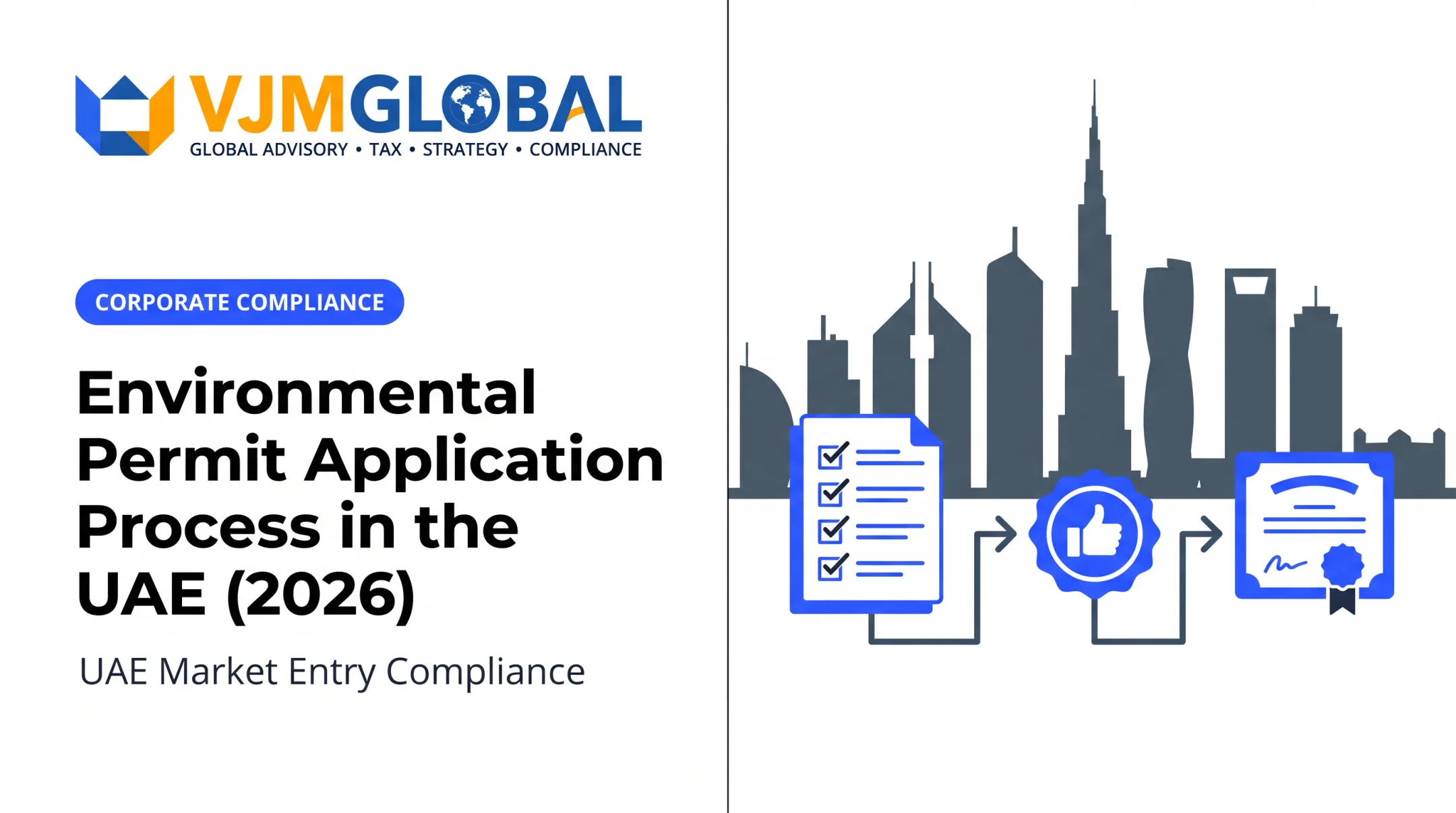
- Identify the right authority. This could be an emirate-level environmental department, a municipality, a free zone regulator, or a port or industrial-zone authority.
- Submit preliminary project information for classification. Describe the activity, site, scale, technology, emissions or discharges, resource use, and nearby sensitive receptors.
- Determine what level of assessment applies. Lower-impact projects may get a simplified review; higher-impact or sensitive projects may need a full EIA with baseline surveys and specialist modelling.
- Prepare the application package. This typically includes the application form, project and trade details, site plans, masterplan information, process descriptions, technical drawings, the EIA or environmental study, and proposed monitoring arrangements.
- Submit and respond to clarification requests. Keep project data consistent across your environmental, planning, construction, and licensing submissions. Mismatched figures are a common cause of delay.
- Go through technical review and possible inspection. Authorities may request design changes, additional studies, or stronger mitigation commitments before deciding.
- Receive the decision. Check validity period, approved activities, site boundaries, conditions, and reporting duties carefully before proceeding.

How Dubai and Abu Dhabi Structure the Assessment
Dubai Municipality's published guidance sorts industrial projects into three tiers:
- Category A: major activities requiring a full EIA report
- Category B: medium activities requiring an EIA summary
- Category C: light industrial activities using an EIA checklist
Category C still does not mean automatic exemption from clearance.
Abu Dhabi's Environment Agency screens projects differently and may require a Preliminary Environmental Review, Strategic Environmental Assessment, or full EIA before issuing construction and operating permits. A registered environmental consultant typically prepares the required study.
Note: Dubai Municipality announced in August 2026 that environmental permit services for both industrial and development/infrastructure projects transferred to the Dubai Environment and Climate Change Authority. Confirm the current submission channel before relying on older Municipality procedures.
Where Does the Process Apply and What Factors Affect It?
Jurisdiction changes the rulebook. Mainland projects typically deal with an emirate or municipal authority, while free zone, port, and industrial-area projects often have additional or alternative requirements layered on top.
By emirate or zone, the lead authority commonly differs:
| Location Type | Typical Lead Authority |
|---|---|
| Dubai mainland | Dubai Municipality / Dubai Environment and Climate Change Authority |
| Abu Dhabi | Environment Agency – Abu Dhabi (EAD) |
| Sharjah | Sharjah City Municipality / Environment and Protected Areas Authority |
| Ajman | Municipality and Planning Department |
| Ras Al Khaimah | Environment Protection and Development Authority |
| Fujairah | Fujairah Environment Authority |
| Free zones / ports | Zone-specific regulator, such as Trakhees or KEZAD |
Treat this as a starting point, not a fixed nationwide rule. Always confirm the current authority against official sources for your specific project.
Factors That Change the Depth of Review
- Scale of activity: footprint, production capacity, energy and water use, emissions, effluent, and waste volumes.
- Location sensitivity: proximity to residential areas, coastlines, wetlands, groundwater, or protected habitats.
- Operational risks: dust, noise, hazardous materials, soil disturbance, and cumulative impacts.
- Project status: new build, expansion, relocation, technology change, or a shift from construction into operation.
- Management plan requirements: Environmental Management Plans, Construction Environmental Management Plans, monitoring, and periodic reporting.

Documents Commonly Requested
- Application form and project or owner details
- Site plan, masterplan, or plot information
- Process flow diagrams and technical drawings
- EIA report, summary, or checklist, as applicable
- Proposed mitigation and monitoring measures
- Trade licence or industrial licence copy
Confirm the exact list with your authority or free zone before filing—requirements vary by project type and location.
International lenders, investors, or corporate sustainability frameworks may also expect stakeholder engagement or monitoring beyond the local minimum, especially when foreign financing is involved.
Common Issues, Misconceptions, and When the Process May Not Be Appropriate
A few misunderstandings cause most of the friction applicants run into.
Clearance doesn't replace other approvals. You'll still need separate planning, building, waste-management, hazardous-materials, or civil-defence permissions depending on the project. Dubai's own guidance flags this directly, citing dangerous-goods-storage permits as one example.
Not every project follows the same format. EIA requirements, processing routes, validity periods, and reviewing authorities vary by jurisdiction and project type. What worked for one site may not apply to another.
Approval locks in what was approved, not what you might do later. Expansion, equipment changes, increased capacity, new discharges, or a change in site use can trigger an amendment or fresh review. Dubai's 2024 guidance specifically asks owners to request changes well ahead of implementation, not after the fact.
Common causes of delay include:
- Applying to the wrong authority
- Inconsistent site or process details across submissions
- Underestimating baseline data requirements
- Missing mitigation commitments in the application
- Using outdated forms or templates
- Incomplete responses to technical review comments
Beyond filing mistakes, full clearance is not always required. A simplified route or exemption may apply to lower-impact projects, but only the regulator can confirm that—self-assessing and skipping the process is not a safe shortcut.
Enforcement is active. Abu Dhabi's Environment Agency suspended two industrial facilities in early 2025 over repeated breaches, including unreported technical modifications, according to its own media statement.
Don't treat a submitted application as approval to start construction, installation, or discharge activities. Wait for the formal decision.
Conclusion
Getting an environmental clearance certificate in the UAE is jurisdiction-specific: identify the right authority, match the assessment level to your project, assemble consistent documentation, and plan for ongoing compliance after approval.
Stay on track with these priorities:
- Confirm the authority and assessment level early
- Align your EIA and technical submissions with the actual project design
- Budget time for inspections, monitoring, and renewal—these obligations continue after the certificate is issued
VJM Global supports foreign investors with the broader business setup, compliance planning, and documentation coordination around this process. Technical environmental studies and regulatory submissions should be handled or validated by qualified UAE environmental professionals.
Frequently Asked Questions
How do I get an environmental clearance certificate in the UAE?
Identify the correct emirate or free zone authority and confirm your project's environmental classification. Prepare the required documents, submit your application, respond to review comments, and comply with approval conditions once issued.
How do I get an environmental clearance certificate from Dubai Municipality?
Confirm which body currently has jurisdiction. Dubai Municipality transferred environmental permits for development, infrastructure, and industrial projects to the Dubai Environment and Climate Change Authority in August 2026. Follow that authority's application and EIA requirements.
What is an environmental clearance certificate in the UAE?
It's a regulatory approval or authorisation confirming a project has met applicable environmental requirements before proceeding. It's distinct from the EIA report, which is the technical study used to assess impacts and propose mitigation.
Does every UAE project need a full EIA?
No. Lower-impact projects may qualify for a simplified review or checklist-based assessment instead of a full EIA report. Only the relevant authority can confirm which category applies.
Can I start construction once I've submitted my application?
No. Submitting an application isn't approval. Starting construction, installation, or operations before receiving formal clearance risks enforcement action and project delays.