Many filers add the same dividend twice or send it to the wrong schedule. This guide covers four things: which 1099-DIV boxes to use, how to transfer amounts without double-counting, when extra schedules apply, and how to confirm the numbers against current-year IRS instructions.
Key Takeaways
- Line 3a holds qualified dividends; line 3b holds total ordinary dividends.
- Qualified dividends are already inside the ordinary total, so never add them again.
- Schedule B lists dividend payers; Schedule D handles capital gains and capital gain distributions.
- Always use the instructions for your tax year, not an old threshold.
Where Do Qualified Dividends Go on Form 1040?
Form 1040 line 3a: qualified dividends
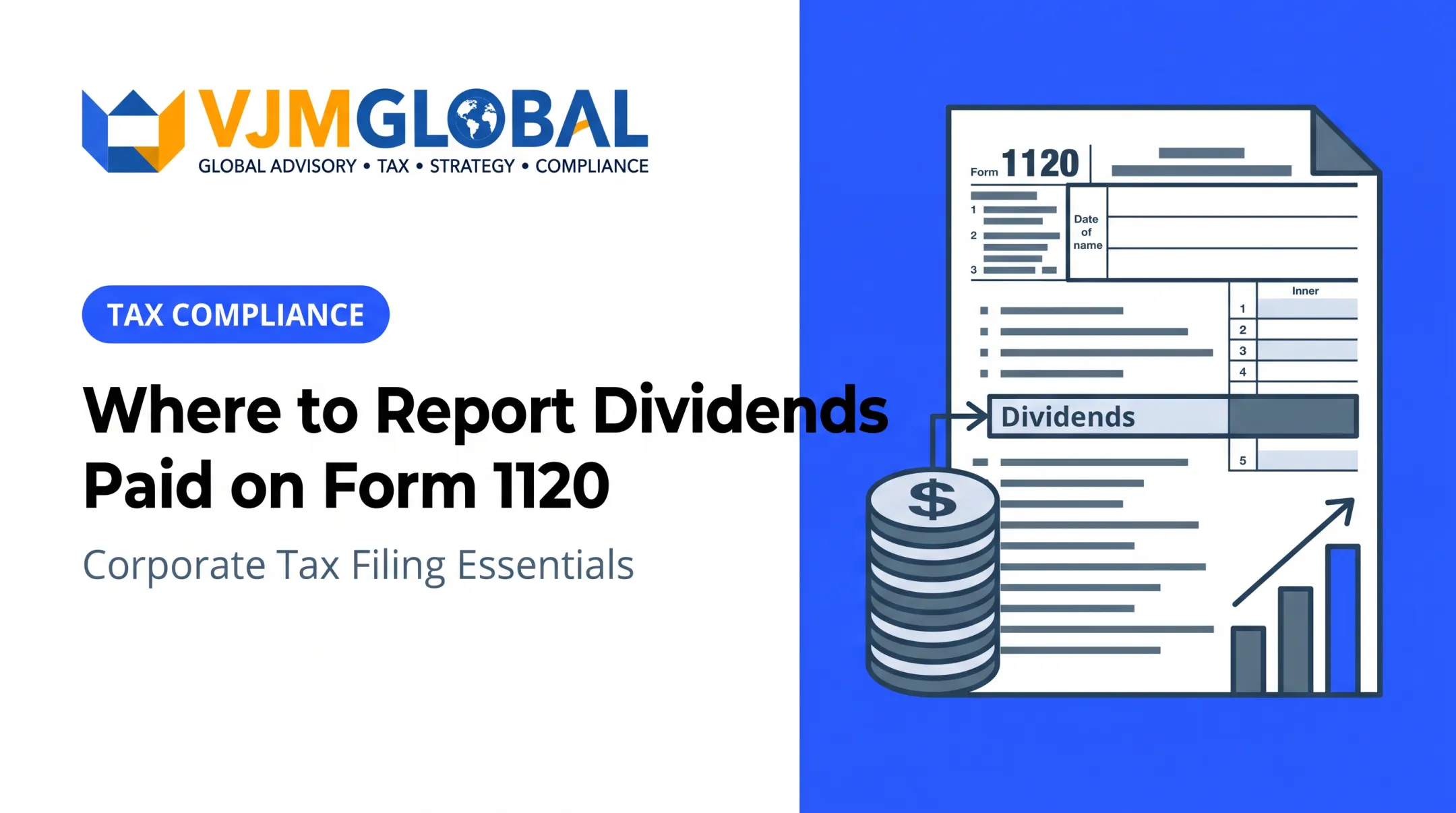
The 2025 Form 1040 instructions say to enter your total qualified dividends on line 3a. The amount generally comes from Box 1b of Form 1099-DIV, after you reconcile every brokerage and financial institution statement.
Line 3a doesn't mean you received a separate kind of payment. It simply flags the portion eligible for qualified-dividend tax treatment.
Form 1040 line 3b: total ordinary dividends
Line 3b takes the total from Box 1a, which includes reinvested dividends and the Box 1b amount. The instructions state that qualified dividends are also included in the ordinary dividend total on line 3b.
The error to avoid: adding your line 3a figure on top of the full line 3b amount.
How the two lines work together
Here's a hypothetical 1099-DIV:
| Box | Amount |
|---|---|
| 1a, total ordinary dividends | $1,200 |
| 1b, qualified dividends | $900 |
You enter $900 on line 3a and $1,200 on line 3b. Total dividend income is $1,200, not $2,100. The $300 difference is simply ordinary (non-qualified) dividends.

Line 3b feeds your income reporting. Line 3a tells the tax calculation which part gets the preferential rate.
How Do Form 1099-DIV, Schedule B, and Schedule D Fit Together?
Start with Form 1099-DIV
These boxes matter most:
- Box 1a: total ordinary dividends, to line 3b
- Box 1b: qualified dividends, to line 3a
- Box 2a: capital gain distributions, generally to Schedule D, line 13
- Box 5: Section 199A dividends, which are not the same as qualified dividends
- Box 7: foreign tax paid
- Box 12: exempt-interest dividends, which go to line 2a
With several 1099-DIVs, total each box across forms. Don't count a corrected form and its original together. Don't add a brokerage's consolidated statement on top of the underlying forms.
Schedule B: listing dividend sources
Schedule B isn't a substitute for line 3a or 3b. For 2025, you need it when ordinary dividends exceed $1,500, when you received nominee dividends, or when certain foreign account or trust triggers apply. See the Schedule B instructions for detail, and confirm the threshold for your tax year.
Schedule D: capital gains and related calculations
Qualified dividends don't go on Schedule D just because they're taxed at long-term capital gain rates. Capital gain distributions in Box 2a are different. They generally go to Schedule D, line 13.
One exception applies if you have no capital losses, your only gains are Box 2a distributions, and Boxes 2b to 2d are empty. In that case, you can report Box 2a on Form 1040, line 7a and check the "Schedule D not required" box.
A practical document-to-form workflow
- Collect every 1099-DIV, including corrected versions.
- Reconcile Boxes 1a and 1b across all of them.
- Enter totals on lines 3a and 3b.
- Complete Schedule B if a trigger applies.
- Review Box 2a, Box 7, Box 12, and Box 5 for other forms.

Before filing, confirm that:
- Line 3b equals the sum of all Box 1a amounts
- Line 3a equals the sum of all Box 1b amounts, adjusted for any amounts that fail qualified-dividend rules
- Line 3a is not larger than line 3b
- Reinvested dividends are included
How Do You Know Whether Dividends Are Qualified and How Is the Tax Calculated?
Use Form 1099-DIV as the starting point
Box 1b is the payer's reported qualified amount, but it isn't conclusive. IRS rules still apply to you personally. If the payer issues a corrected 1099-DIV, use the latest version, since it can change Box 1b.
Holding-period and investment eligibility rules
Per IRS Publication 550, a dividend generally needs to come from a U.S. corporation or qualified foreign corporation, and you must meet a holding period:
- Common stock: hold more than 60 days during the 121-day period beginning 60 days before the ex-dividend date
- Certain preferred stock: more than 90 days during the 181-day period beginning 90 days before the ex-dividend date, for dividends covering periods over 366 days
Hedges, short sales, and options can exclude days from the count, so it isn't a simple purchase-date test. The IRS's own XYZ Corp. example shows $500 in both Boxes 1a and 1b with no qualified dividends because the 60-day test failed.
Qualified versus ordinary dividends
Ordinary dividends are the broad category. Qualified dividends are the portion meeting the requirements for preferential treatment. Some REIT dividends, passive foreign investment company payouts, and certain foreign corporation dividends may not qualify. Check the 1099-DIV details and current IRS guidance.
The qualified-dividends tax calculation
Qualified dividends are taxed at 0%, 15%, or 20%, using the same rates as net capital gain. The rate depends on taxable income and filing status. Selected 2025 ceilings for the 0% and 15% bands:
| Filing status | 0% ends at | 15% ends at |
|---|---|---|
| Single | $48,350 | $533,400 |
| Married filing jointly | $96,700 | $600,050 |
| Head of household | $64,750 | $566,700 |

Higher earners may also owe the 3.8% Net Investment Income Tax once modified AGI passes $200,000 (single), $250,000 (joint), or $125,000 (married filing separately).
Finding the correct IRS worksheet
- Qualified Dividends and Capital Gain Tax Worksheet: the usual choice when you have qualified dividends and don't need the Schedule D Tax Worksheet
- Schedule D Tax Worksheet: used when Schedule D lines 18 or 19 are positive and lines 15 and 16 are gains
Follow the current Form 1040 and Schedule D instructions for the exact sequence.
Common Mistakes and Special Situations to Review
Frequent errors include:
- Entering Box 1b as extra income instead of a subset of Box 1a
- Ignoring corrected 1099-DIVs
- Leaving out reinvested dividends, which are still taxable
- Assuming every dividend from a well-known company is qualified
- Reporting nominee dividends as your own
Keep other amounts out of line 3a. These items follow separate routes:
- Capital gain distributions
- Section 199A dividends
- Exempt-interest dividends
- Foreign tax amounts
Nonresident filers follow different rules. Effectively connected dividends go on Form 1040-NR lines 3a and 3b. Other U.S.-source dividends generally go on Schedule NEC at 30% or a lower treaty rate.
If you're reconciling several brokerage statements or dealing with a complicated situation, VJM Global's U.S.-trained tax professionals prepare Form 1040 returns and can help review dividend classifications.
Frequently Asked Questions
Where do qualified dividends go on Form 1040?
Line 3a. Total ordinary dividends go on line 3b. Qualified dividends are already part of the 3b total, so don't count them twice.
Do I report qualified dividends on Schedule B or Schedule D?
Schedule B may list your dividend payers when a filing trigger applies, such as ordinary dividends over $1,500. Schedule D handles capital gains and capital gain distributions, not qualified dividends.
How do I report 1099-DIV on my tax return?
Box 1a flows to line 3b and Box 1b to line 3a. Box 2a, Box 7, and other boxes may need Schedule D, a foreign tax form, or other reporting.
How do I know if my dividend is qualified or ordinary?
Start with Box 1b on your 1099-DIV. Holding period, issuer type, hedging, and investment-specific rules can still change the final result.
Do I have to pay taxes on qualified dividends?
Generally yes, in a taxable account. They may get 0%, 15%, or 20% federal rates depending on your taxable income and filing status.
Where can I find the IRS worksheet for calculating qualified dividends?
It's in the current Form 1040 instructions and the Schedule D instructions. Which one applies depends on whether you need Schedule D.