This guide covers who must pay, the 2026 due dates, how to calculate each installment, how to avoid underpayment penalties, and when to adjust mid-year.
Key Takeaways
- South Carolina estimated tax is separate from federal Form 1040-ES; paying the IRS does not satisfy SCDOR.
- The 2026 trigger is $100 or more of expected SC tax after nonrefundable credits and SC withholding.
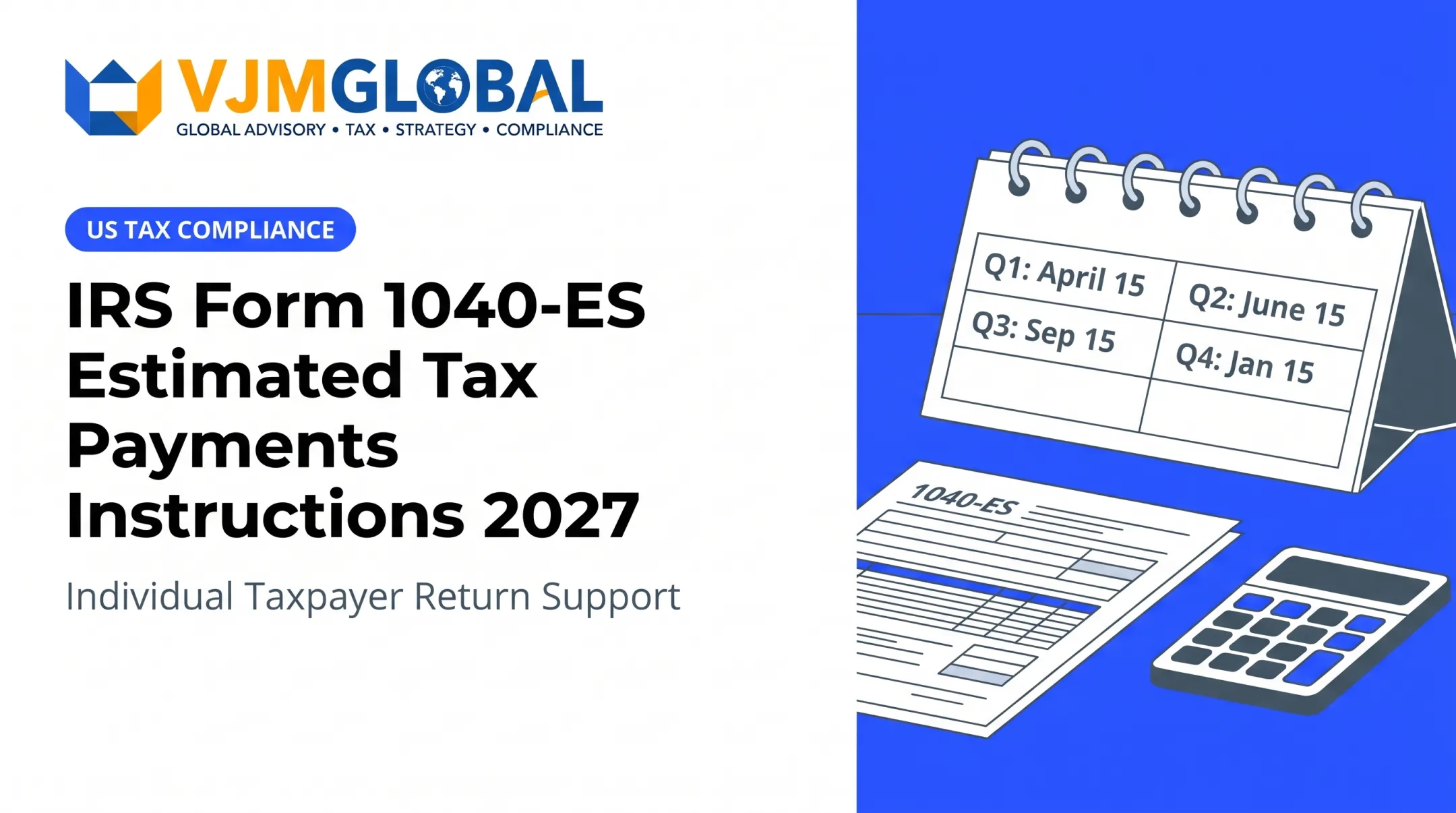
- 2026 installments are due April 15, June 15, September 15, and January 15, 2027.
- Safe harbors can limit penalties, but timing of each payment matters.
- Confirm current figures with SCDOR before paying.
Who Must Pay South Carolina Estimated Tax in 2026?
The $100 threshold
Per the 2026 SC1040ES instructions, you must make estimated payments when your expected SC tax, after nonrefundable credits and expected SC withholding, is $100 or more. Below that, no payment is required. Withholding from wages, pensions, and annuities counts.
People who commonly cross the line:
- Freelancers and independent contractors
- Sole proprietors and single-member LLC owners
- Partners and S-corporation shareholders
- Landlords and investors with large interest, dividend, or gain income
- Retirees with taxable pension or investment income
- Employees with significant side income
The state test is separate from the federal one. The IRS threshold is $1,000, SC's is $100, so you can owe SC estimates while owing none federally.
Exceptions
SCDOR lists several situations where installments aren't required or penalties don't apply:
- Your prior-year SC tax liability was $0 for a full 12-month year.
- At least two-thirds of your gross income in 2025 or 2026 came from farming or commercial fishing. You can then pay everything by January 15, 2027, or file and pay by March 1, 2027.
- Nonresidents working under SC contracts above $10,000 with 2% withheld from each payment.
- Underpayment caused by personal-service income earned in another state is not penalized when that state withheld tax.
Withholding may be simpler
If you have a job plus side income, you may not need quarterly vouchers at all. The SC W-4 has a line for additional withholding per paycheck, and SCDOR's instructions offer it as an alternative for substantial non-wage income such as interest and dividends.
Withholding is generally treated as paid evenly across the year, which can help with penalty timing.
2026 South Carolina Estimated Tax Due Dates and Payment Methods
The 2026 schedule
| Income period | SC due date | Federal due date |
|---|---|---|
| Jan 1 – Mar 31, 2026 | April 15, 2026 | April 15, 2026 |
| Apr 1 – May 31, 2026 | June 15, 2026 | June 15, 2026 |
| Jun 1 – Aug 31, 2026 | September 15, 2026 | September 15, 2026 |
| Sep 1 – Dec 31, 2026 | January 15, 2027 | January 15, 2027 |
The state dates come from the SC1040ES form. The income periods follow the IRS schedule, which South Carolina adopts with modifications. When a date lands on a weekend or holiday, SCDOR guidance moves it to the next business day.
Special timing rules:
- Mid-year start: First payment is June 15 if the requirement arises after April 1 and before June 1; September 15 if after June 1 and before September 1; January 15, 2027 if after September 1.
- Fiscal-year filers: Payments fall on the 15th day of the fourth, sixth, and ninth months, and the first month of the following fiscal year.
- Skipping the last installment: You can omit the January payment if you file your return and pay the full balance by February 1, 2027.

Equal installments
The default is four equal payments, or the full amount by April 15. Change the amounts if you've had a prior-year overpayment applied, changes in withholding, or income that starts late.
How to pay
Online through MyDORWAY:
- Go to dor.sc.gov/pay and choose Individual Income Tax Payment.
- Enter your taxpayer identification and legal name.
- Select Individual Income Tax, then Estimated Payment (not Return Payment).
- Enter the 2026 tax year, amount, and payment method.
MyDORWAY accepts ACH debit and major credit cards. Check the portal's period wording on screen. SCDOR's 2025 example used December 31 for every installment.
By mail:
- Send a check payable to SCDOR with the SC1040ES voucher to SCDOR, IIT Voucher, PO Box 100123, Columbia, SC 29202
- No cash; don't mail a voucher after paying online
- Put your SSN, tax year, and "SC1040ES" on the check
- Valid postmark needs the proper address, prepaid USPS postage, and a legible mark within the deadline
Electronic mandates and joint filers
If you owe $15,000 or more in connection with any SCDOR return, electronic filing and payment is required.
Joint filers enter both spouses' names and SSNs on the voucher. Separate filers leave the spouse out of the identification and note the spouse's SSN beside the filing-status box on the return.
If you've divorced or switched to separate filing, ask SCDOR how to allocate prior joint payments.
Federal and state payments are separate
A payment through IRS Direct Pay or EFTPS never reaches your SC account. Save confirmation numbers, dates, amounts, and tax-year selections. SCDOR does not mail an annual statement of estimated payments, so your own record is the evidence.
How to Calculate South Carolina Estimated Tax on SC1040ES
Project your full-year income
Estimate everything you expect in 2026: wages, self-employment profit, K-1 income, rents, interest, dividends, capital gains, and pensions.
For business owners:
- Use year-to-date books and a realistic full-year forecast, not last year's revenue divided by four.
- Work from net income after documented expenses, not gross receipts.
The 2026 rule change to watch
This is where it gets tricky. SCDOR's Information Letter 26-20 says South Carolina's 2026 calculation starts with federal adjusted gross income. South Carolina also decouples from:
- Federal standard and itemized deductions
- Federal deductions for QBI, seniors, qualified tips, overtime, car-loan interest, and nonitemizer charitable gifts
The printed 2026 SC1040ES worksheet still begins with federal taxable income. Because it predates the new guidance, follow the AGI-based approach in the information letter and confirm with SCDOR or a tax professional if the two disagree.
2026 rates and the new deduction
| SC taxable income | Tax |
|---|---|
| $0 – $29,999 | 1.99% of taxable income |
| $30,000 or more | 5.21% of taxable income minus $966 |
The rate table doesn't vary by filing status. Filing status instead drives the new South Carolina Income Adjusted Deduction (SCIAD):
| Filing status | Full SCIAD | Full through AGI | Zero at AGI |
|---|---|---|---|
| Single / married filing separately | $15,000 | $40,000 | $95,000 |
| Head of household | $22,500 | $60,000 | $142,500 |
| Married filing jointly / surviving spouse | $30,000 | $80,000 | $190,000 |
Between those points the deduction phases out using fractions in the information letter. Nonresidents prorate SCIAD by SC AGI divided by federal AGI.
A marginal rate isn't your tax bill. It applies only to taxable income after deductions, and credits then reduce the result.
Credits and subtractions
- The SC earned income credit is 125% of the federal credit, capped at $200.
- Other nonrefundable credits go on SC1040TC and related schedules.
- The dependent exemption was $4,930 per dependent for 2025; check SCDOR for the 2026 amount.
- Qualified retirement income is deductible up to $3,000, rising to $10,000 from the year you turn 65, subject to conditions. Military retirement included in SC income is deductible.
Don't copy federal figures into the worksheet unless the instructions say to.
From annual tax to installments
- Compute expected annual SC tax.
- Subtract nonrefundable credits.
- Subtract expected SC withholding.
- Subtract any 2025 overpayment credited to 2026 and payments already made.
- Divide the remainder by the installments left.

Hypothetical example
This is an illustration, not advice. Assume a single filer, no dependents, self-employed, with 2026 federal AGI of $40,000, no SC withholding, no credits, no other SC subtractions, and no prior payments.
- SCIAD at this AGI: $15,000 (full)
- SC taxable income: $40,000 − $15,000 = $25,000
- Tax: $25,000 × 1.99% = $497.50
- Above the $100 threshold, so estimates are required
- Four equal installments: about $124.38 each
Higher income, phaseouts, or other subtractions change this.
Self-employment and pass-through income
Federal self-employment tax is separate from SC income tax. It isn't a line on the SC1040ES worksheet, but it still takes cash, so budget for it separately.
Pass-through owners should coordinate with the entity's books before estimating. Partnership distributions, S-corporation income, guaranteed payments, and K-1 projections all feed the personal estimate.
South Carolina also has an owner-level 3% election for qualifying active business income, and a related exclusion when the entity pays tax under an entity-level election. Both differ from the federal QBI deduction, which SC no longer follows.

South Carolina Safe Harbors, Underpayment Penalties, and Mid-Year Changes
Safe harbors
| Method | Rule |
|---|---|
| Current-year | Pay 90% of current-year tax on time |
| Prior-year | Pay 100% of prior-year SC tax (prior return must cover 12 months) |
| Higher income | 110% if prior-year AGI exceeded $150,000 |
The 2025 SC2210 instructions also mention a $75,000 threshold for married filing separately, while the 2026 SC1040ES omits it. The boundary treatment of exactly $150,000 differs between SCDOR publications. If you're near the line, confirm before relying on 100%.
A safe harbor protects against penalty, not against owing money when you file.
How penalties work
Form SC2210 tests each installment period separately. Paying the full amount late doesn't erase an earlier shortfall. Interest is simple, not compounded. SCDOR's published 2026 annual rates are 7% for January–March, 6% for April–June, and 7% for July–December.

Possible waivers, which are conditional and not automatic:
- Casualty, disaster, or unusual circumstances where a penalty would be inequitable
- Retirement after age 62 or disability, with reasonable cause
SCDOR's emergency page identified no blanket postponement of 2026 installments.
Adjusting when income changes
A large contract, property sale, or bonus means raising later installments. A decline in income means lowering them, but redo the full-year calculation first. Substantial changes in income, dependents, or withholding call for an adjusted declaration by the next payment date.
Seasonal or lumpy income
SC2210 allows an annualized method. You complete federal Schedule AI for South Carolina purposes, attach it, and write "Annualized" beside line 9. Keep supporting records such as:
- Monthly revenue and expense records
- Bank and payroll statements
- K-1s and investment statements
- Payment confirmations
Withholding versus estimates
Extra paycheck withholding is treated as spread evenly across the year unless you prove otherwise. That makes it a useful fix if you underpaid early. Ask a tax professional whether it suits you.
SC1040ES Filing Checklist, Common Mistakes, and Professional Support
Checklist
- Prior-year SC1040 and federal return
- 2026 income projections and year-to-date profit-and-loss reports
- Withholding records and prior estimated-payment confirmations
- Expected deductions, credits, and K-1 information
- Calendar reminders before each due date
Common mistakes
- Confusing federal 1040-ES with SC1040ES, or paying only the IRS
- Choosing Return Payment instead of Estimated Payment
- Selecting the wrong tax year
- Omitting prior payments or overpayment credits
- Using outdated tables or the old federal-taxable-income starting point
- Ignoring withholding
- Not updating after a big income change
- Using a flat "set aside 25%" rule that ignores filing status, deductions, and self-employment tax
When to get help
VJM Global provides accounting and tax compliance support to U.S.-based business owners, including organizing records, projecting income, reviewing estimated-tax calculations, and keeping payment documentation. Support is delivered from the firm's New York office; VJM Global does not maintain a South Carolina office or South Carolina-specific licensure.
This article is educational. Tax rules change, so confirm current instructions with the South Carolina Department of Revenue or a qualified tax professional.
Frequently Asked Questions
How do I pay my estimated taxes in South Carolina?
Use MyDORWAY and choose Individual Income Tax, then Estimated Payment, or mail a check with the SC1040ES voucher. Select the correct tax year, and save your confirmation.
What are the South Carolina state income tax tables for 2026?
SCDOR's 2026 computation is 1.99% on taxable income up to $29,999, and 5.21% minus $966 at $30,000 or more. Filing status affects the SCIAD deduction, not the rate.
Who needs to make estimated tax payments in South Carolina?
Anyone whose expected SC tax after nonrefundable credits and SC withholding is $100 or more. Exceptions include a $0 prior-year liability and certain farmers and fishermen.
When are South Carolina estimated tax payments due in 2026?
April 15, June 15, and September 15, 2026, and January 15, 2027. Weekend and holiday dates move to the next business day, and mid-year starters and fiscal-year filers follow different schedules.
How can I avoid an underpayment penalty on my South Carolina estimated taxes?
Pay on time, and meet a safe harbor: 90% of current-year tax or 100% of prior-year tax (110% for higher-income filers). Use SC2210 to check each period.
Can I change my South Carolina estimated tax payments during the year?
Yes. Recalculate your full-year tax and file an adjusted declaration by the next due date. If income is uneven, the annualized method on SC2210 may reduce early installments.