This guide walks through the entire process, choosing a business structure, registering with the state, sorting out licenses, and staying tax-compliant. If you're a founder based outside the US, we've flagged the extra steps you'll face, including EIN applications without a Social Security Number, appointing a registered agent, and foreign qualification paperwork.
Key Takeaways
- Montana has no state sales tax and some of the lowest LLC/corporation filing fees in the US ($35 domestic)
- Choose an LLC, corporation, or sole proprietorship based on liability, tax, and paperwork needs
- Foreign founders need a Montana registered agent and an EIN before they can operate
- Annual reports (due April 15), licenses, and tax registrations must stay current after formation
Why Montana Is Worth Considering for Your Business
Montana's appeal isn't just the absence of sales tax. The state's 6.75% flat corporate tax rate comes with a modest $50 minimum tax, which keeps the entry cost predictable for small operators. Real estate and utility costs remain well below coastal-state averages, letting founders stretch early-stage capital further.
Growth sectors worth watching:
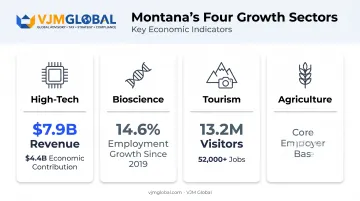
- High-tech: $7.9 billion in 2024 revenue, adding $4.4 billion to the state economy
- Bioscience: reports 14.6% employment growth since 2019, per the Montana BioScience Alliance
- Tourism: drew 13.2 million visitors in 2025, supporting over 52,000 jobs
- Agriculture: remains a core employer and a steady base for food, ag-tech, and export-linked businesses
Support is built in. The Montana Small Business Development Center network runs 10 regional centers with free one-on-one counseling. The Department of Commerce also offers onboarding resources for new operators.
Step-by-Step Guide to Starting a Business in Montana
Steps 1-2: Validate and Plan
Before filing anything, confirm there's demand. Research your competitors already operating in Montana, define your target customer, and sketch a business plan covering:
- Executive summary
- Market analysis specific to Montana's regional demand
- Financial projections, including startup and first-year operating costs
This isn't a box-ticking exercise. A weak market read is the most common reason new Montana businesses stall in year one.
Step 3: Choose Your Business Structure
Your structure determines liability exposure, tax treatment, and how much paperwork you'll manage long-term.
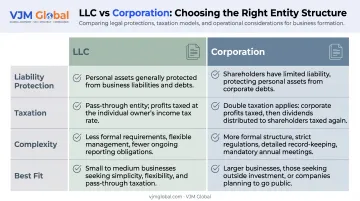
| Factor | LLC | Corporation |
|---|---|---|
| Liability protection | Personal assets shielded from business debts | Same shield, stronger for outside investors |
| Taxation | Pass-through by default (members report profit/loss on personal returns) | Subject to 6.75% corporate income tax, plus potential double taxation on dividends |
| Complexity | Fewer formalities, no required board meetings | Requires bylaws, board structure, more recordkeeping |
| Best fit | Small teams, service businesses, single-owner ventures | Businesses raising outside capital or planning to scale fast |
Not every LLC is automatically pass-through. A single-member LLC is disregarded by default. Multi-member LLCs default to partnership treatment unless they file Form 8832 to elect corporate taxation.
Steps 4-6: Name, File, and Get Your EIN
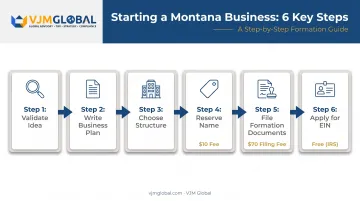
- Reserve your name through the Montana Secretary of State's online portal. Reservations cost $10 and last 120 days with no renewal option.
- File your formation documents. Articles of Organization (LLC) or Articles of Incorporation (corporation) cost $35 for domestic entities. You must appoint a Montana registered agent with a physical in-state address, regardless of where you or your business is based.
- Apply for an EIN with the IRS. This is required before opening a US bank account or handling payroll.
Need it faster? The state offers 24-hour processing for $20 and 1-hour processing for $100.
Licenses, Permits, and Local Compliance
Montana has no statewide general business license. Instead, licensing happens at two levels:
- City/county level: requirements vary by municipality, so check your local government office before opening
- State professional/industry boards: liquor, contractors, healthcare, and similar trades license through agencies such as the Department of Revenue or Department of Labor & Industry
Use the state's eStop Business Licenses portal to confirm what applies to you. It consolidates registrations and licenses from seven partner agencies in one system.
Taxes, Banking, and Ongoing Compliance
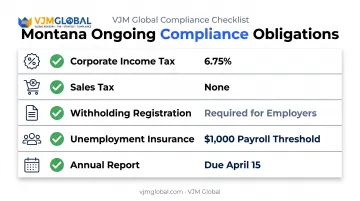
Once formed, Montana businesses face a handful of recurring obligations:
- Corporate income tax: 6.75% standard rate for C-corps; LLCs typically pass profit and loss through to owners' personal returns
- Sales tax: None on most goods, which keeps point-of-sale compliance simple
- Withholding registration: required with the Department of Revenue if you're issuing Montana wages or 1099s with withholding
- Unemployment insurance: registration triggers once payroll hits $1,000 in the current or preceding year
- Annual report: due April 15 each year; late filings incur a fee (confirm the current amount before you file)
Alongside these filings, open a dedicated business bank account early. Mixing personal and business finances is one of the fastest ways to undermine your liability protection, even with a properly formed LLC.
Special Considerations for Foreign and Non-Resident Founders
Montana places no residency requirement on LLC members, managers, or corporate owners. Your principal office can legally be "wherever located," according to state statute. That said, a few friction points consistently trip up international founders:
- Registered agent is still mandatory. A foreign address doesn't substitute for an in-state agent with a physical Montana street address.
- Foreign qualification. If your company is already formed elsewhere and expanding into Montana, you'll need a Certificate of Authority ($70 for both foreign LLCs and foreign corporations).
- EIN without an SSN. Without an SSN or ITIN, write "foreign" or "N/A" on Form SS-4, line 7b. Fax the form or apply by phone; the online application is not available.
- Remote bank account opening. Banks may accept alternative ID for non-US persons, but a fully remote process is not guaranteed and some require extra verification.
This is where the paperwork tends to compound. Coordinating US entity formation with your home-country tax obligations, especially around double taxation and foreign tax credits, is rarely straightforward without someone who's done it before.
VJM Global works with founders on this kind of cross-border formation. Operating across 16+ markets including the US, the firm assists with US entity registration, EIN acquisition, registered agent coordination, and ongoing multi-jurisdiction tax compliance.
US services cover LLCs, C-corps, and branch registrations, quoted by the state and structure you need.
Frequently Asked Questions
How much does it cost to start a business in Montana?
Domestic filing fees cost $35 for Articles of Organization or Incorporation. Add optional costs like a $10 name reservation or registered agent service fees, which vary by provider.
Is Montana a good state for an LLC?
Yes, largely due to no sales tax, low filing fees, and a favorable tax climate. It may suit service and remote-first businesses better than those needing dense urban foot traffic.
What licenses does a new business need in Montana?
There's no statewide general license. Requirements depend on your city/county and industry. Check the eStop portal to confirm what applies to your business.
Do I need to be a US resident to form a business in Montana?
No residency requirement exists for owners or managers. You still need a Montana registered agent with a physical in-state address.
How long does it take to register a business in Montana?
The Secretary of State doesn't publish a fixed turnaround time; processing depends on filing volume. Expedited options cost $20 (24-hour) or $100 (1-hour).
What ongoing compliance is required after forming a Montana business?
An annual report is due April 15 each year. If you hire employees, register for withholding and unemployment insurance as well.