Introduction
A US LLC is not a one-time filing. Each state sets its own rules for what happens after formation, and those rules depend on where the LLC is formed, where it operates and what it does.
For Australian founders and investors, the risk is real. Delaware charges a $400 annual tax even though it has no LLC annual report. California generally charges $800 a year to LLCs organised or doing business there. Treating "no report" as "no obligation" is an expensive mistake.
This guide covers formation documents, registered agents, governance, recurring filings, taxes, licences, foreign qualification, federal duties and Australian cross-border issues. Rules change, so verify current requirements with official authorities and qualified advisers.
Key Takeaways
- Compare each state’s annual or biennial reports, franchise taxes, licences and deadlines before you form.
- Forming in one state does not remove obligations in states where you operate.
- Stay in good standing by tracking filings, paying fees and keeping your registered agent current.
- Australian owners also need US federal filings, ATO reporting and cross-border tax compliance.
What LLC Compliance Requirements Apply After Formation?
Formation documents, business name and registered agent
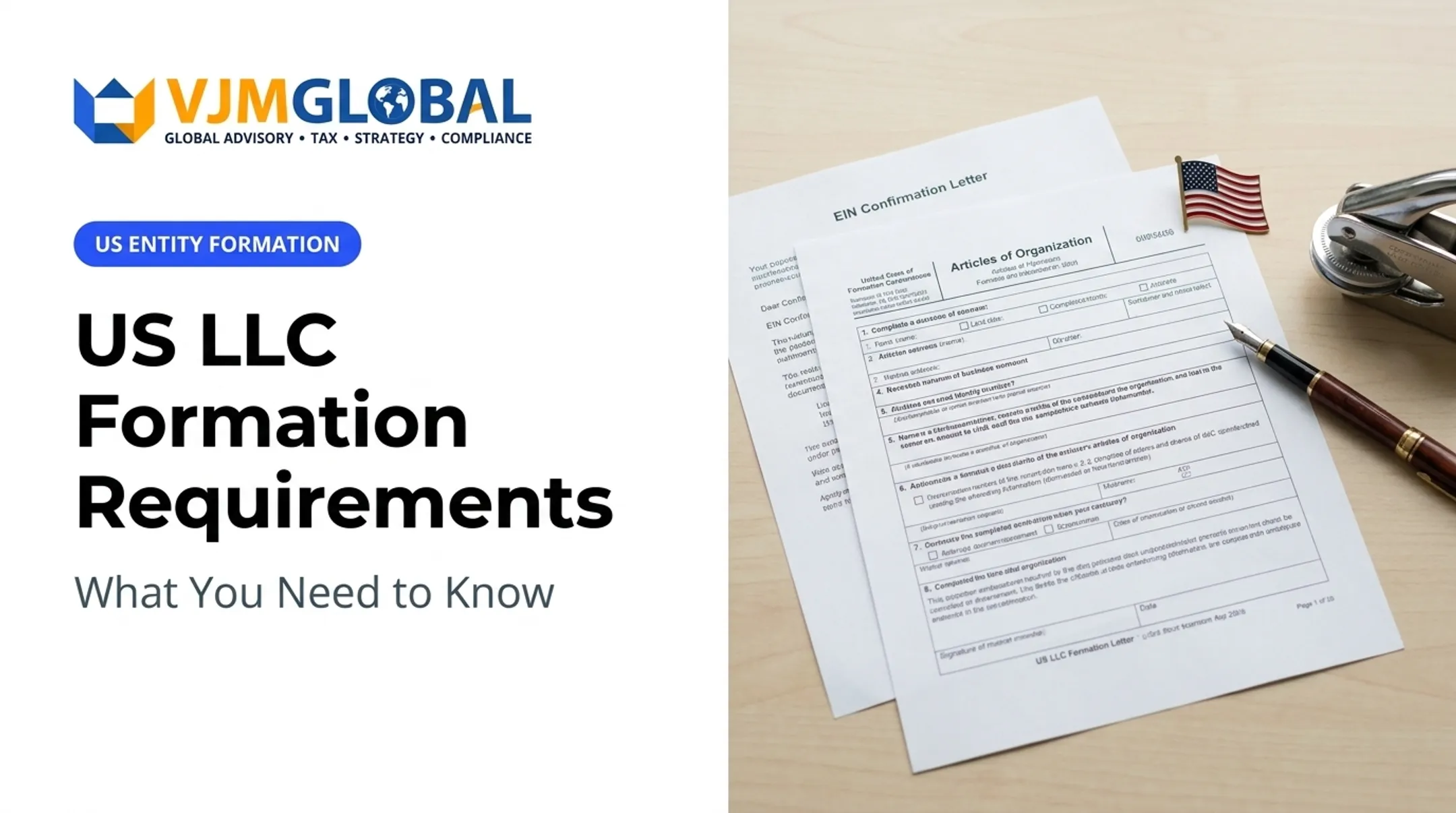
The filing that creates an LLC is called Articles of Organization in many states and a Certificate of Formation in others. It typically names the LLC, its registered agent and its principal business details, and may state the management structure.
Naming rules, restricted words, suffixes and registered-agent requirements vary. Check terminology with each state's official business registry. Delaware, for example, requires every entity to maintain an in-state registered agent whose business office matches the registered office, according to the Delaware Division of Corporations.
Operating agreement and internal governance
Most states do not require you to file an operating agreement, but every LLC should have one. Missouri's statute goes further and expressly requires members to adopt one. A solid agreement covers:
- Ownership and capital contributions
- Voting and management authority
- Profit distributions
- Changes in membership
- Dispute resolution and dissolution
Keep records as well:
- Document major decisions
- Track ownership and contributions
- Keep business and personal finances separate
- Update the agreement after material changes
Annual, biennial and initial reports
These reports keep the state's record current: addresses, managers, members and registered-agent details. Kentucky's annual report, for instance, confirms principal-office and agent details.
Deadlines follow different patterns. Some tie to the formation anniversary (Massachusetts, Wyoming), some to a fixed date (Kentucky, 30 June) and some to a state cycle. Fees and late rules differ, so confirm them with the state.
State taxes, licences and permits
Entity-level fees and franchise taxes are not the same as income tax. Further layers include:
- Sales-tax registration
- Employer registrations
- Local business licences
- Industry permits and zoning
Forming an LLC does not authorise regulated activity, hiring, collecting sales tax or operating from particular premises. Confirm with the relevant state, county, city and industry agencies.
Good standing and consequences of non-compliance
Missed reports, unpaid state charges, an invalid registered agent or lapsed licences can lead to late fees, loss of good standing and administrative dissolution.
Kentucky domestic entities that miss the 30 June deadline face administrative dissolution. Florida's deadline is the third Friday in September. Loss of good standing can also complicate banking and contracts.
Keep these two issues distinct. Administrative status is a state matter. Whether a court disregards limited liability is a separate legal test, and one missed filing does not automatically expose personal assets.
State-by-State LLC Compliance Requirements
How to compare requirements consistently
Use the same checklist for every state:
- Formation document name and filing fee
- Registered-agent rules
- Initial report and recurring report frequency
- Due date
- Franchise or annual tax
- Publication rule
- Operating-agreement rule
- Business licences and foreign LLC requirements
This guide uses selected states, not a full 50-state schedule, and does not cover US territories. The District of Columbia requires a $300 biennial report, first due 1 April of the following calendar year.
Group states by compliance pattern
| Pattern | Examples (ordinary domestic LLC) |
|---|---|
| Annual report | Florida ($138.75), Kentucky ($15), New Jersey ($75), Pennsylvania ($7), Massachusetts ($500) |
| Biennial report | New York ($9), Indiana ($32 online), Iowa ($30 online), Alaska ($100) |
| Annual tax, no report | Delaware ($400, due 1 June) |
| Annual tax plus other filings | California ($800), Arkansas ($150 franchise-tax report), Tennessee ($300 minimum report fee) |
| No annual report | Arizona |
Fees are USD, based on state sources as of October 2026, and may have changed. Having no annual report does not mean having no tax, licence, local or federal obligations.

Important exceptions and variations
- California: An extra LLC fee scales with California income from $900 ($250,000 to $499,999) to $11,790 ($5 million+). A Statement of Information is due within 90 days, then every two years.
- New York: An IT-204-LL filing fee applies separately from the biennial statement.
- Texas: Entities at or below the 2026 threshold of $2.65 million in annualised revenue need not file a No Tax Due Report, though information reports remain separate.
- Arizona: Publication details and county exceptions need checking locally.
None of these rules applies nationwide. Verify each against the state's current official page before relying on it.
The total cost of compliance
Separate the cost layers:
- One-time formation filing
- Recurring state fees and franchise taxes
- Registered-agent charges
- Local licences
- Foreign qualification
- Professional filing fees
Government fees are only part of the budget. Label every figure with its source and date checked, and avoid reusing old numbers.
Make it actionable
- Identify your formation state.
- Confirm your registered agent.
- Find the next filing deadline.
- Check state and local tax registrations.
- Review licences.
- Save every official filing confirmation.
Cite or link the Secretary of State, Department of Revenue and licensing authority pages for each state you use.
How Formation State and Foreign Qualification Affect Compliance
Formation state versus operating state
The domestic state is where the LLC is created. A foreign LLC is one registered in a state other than where it was formed.
California requires registration before transacting intrastate business. That means repeated and successive transactions other than interstate or foreign commerce, per the California Secretary of State.
To judge whether qualification is required, look at physical offices, home offices, employees, contractors, inventory, warehouses, property and recurring in-person activity. Customer location alone is not the test. California's statute excludes some activities, such as maintaining bank accounts or isolated transactions completed within 180 days, but those are qualification exclusions, not tax exemptions.
Foreign LLC registration process
- Decide whether registration is triggered.
- Obtain any certificate of existence or good standing.
- Appoint an in-state registered agent.
- Submit the foreign registration application.
- Complete state tax and licence registrations.

Documents, fees, name rules and ongoing reports differ by destination state. Confirm each one directly.
Ongoing obligations in multiple states
A multi-state LLC may carry separate agents, reports, taxes, licences and renewal dates in every state where it is qualified. Build one calendar recording:
- State and entity number
- Registered agent
- Filing type, due date and fee
- Renewal frequency
- Source link and proof of filing
Choosing a formation state
Weigh these factors before you file:
- Operating footprint and likely expansion
- Five-year compliance cost
- Investor expectations and privacy needs
- Legal predictability and tax treatment
- Banking requirements
For a local business, the home state is often simplest.
A low-fee state does not eliminate obligations where owners or operations are located. A Delaware LLC operating in California still faces California rules, and the $800 tax applies to LLCs doing business there, according to the California Franchise Tax Board.
Recovering from missed filings
- Identify the delinquent filings.
- Contact the state authority.
- File overdue reports.
- Pay fees and penalties.
- Restore the registered agent.
- Apply for reinstatement if needed.
Cure periods, reinstatement steps and effects on licences, tax accounts and good-standing certificates vary by state, so confirm them before acting.
Federal and Australian Considerations for Australian LLC Owners
US federal compliance for foreign-owned LLCs
Federal duties depend on classification, ownership, transactions, income, employees and US activity. A multi-member LLC defaults to partnership treatment, and a single-member LLC to disregarded status, unless a Form 8832 election changes it.
- EIN: Applicants without an SSN or ITIN can enter "foreign" or "N/A" on line 7b of Form SS-4. Without a US address they cannot apply online, but telephone, fax and mail routes exist.
- Form 5472: Foreign-owned disregarded LLCs file Form 5472 with a pro forma Form 1120 for reportable related-party transactions (including contributions and distributions). Incorrect filing attracts a $25,000 penalty per the IRS Form 5472 instructions.
- Beneficial ownership: FinCEN's final rule took effect on 14 August 2026. US-created companies remain exempt, according to FinCEN's BOI page. Do not follow older domestic filing guides.
Confirm withholding, payroll filings and information returns with a US adviser.

Australian tax and cross-border review
The ATO does not treat US LLCs as automatically pass-through. Points to review:
- Whether the LLC qualifies as a foreign hybrid (TD 2017/25) and is taxed as a partnership
- Controlled foreign company rules for Australian residents with a substantial interest
- Foreign income tax offsets for US tax paid
- Residency, source of income, GST and transfer pricing
US classification may not match Australian treatment, so get coordinated US and Australian advice before choosing an ownership or tax structure.
Practical support and compliance administration
Keep these records in one controlled repository:
- Formation documents and operating agreements
- IRS correspondence and state filings
- Invoices, ownership records and intercompany agreements
- Currency-conversion records
VJM Global supports Australian and other international businesses with US business setup coordination, accounting, tax compliance and cross-border back-office support. State-specific legal questions should go to qualified US counsel.
Conclusion
Work in order: identify where the LLC is formed, map every state where it operates, list initial and recurring obligations, confirm federal and Australian requirements, then build a deadline calendar.
The cheapest formation filing is not always the cheapest structure. Foreign qualification, agent fees, state taxes, licences and cross-border compliance add up. Verify current rules before you file.
Frequently Asked Questions
What is the best state to have your LLC in?
It depends on your operating footprint, compliance costs, investor goals, privacy needs and expansion plans. For a local business, the home or operating state is often simplest.
Do all states require LLC annual reports?
No. Terminology and frequency vary, and some states use biennial statements. Delaware has no LLC annual report but charges an annual tax. Check the relevant state authority.
What happens if I miss an LLC compliance deadline?
Possible outcomes include late fees, loss of good standing, administrative dissolution and reinstatement filings. Licences, banking and contracts can also be affected.
Do I need to register my LLC in another state where I do business?
Possibly. Foreign qualification is usually triggered by offices, employees, property or recurring in-person activity. "Doing business" is defined differently by each state, so confirm locally.
Can an Australian resident own a US LLC?
Generally yes, since most states do not restrict LLC ownership. Eligibility and compliance are separate questions, though. Registered agent, EIN, federal tax, banking and ATO issues need professional review.
What ongoing federal and Australian tax filings might a foreign-owned LLC require?
It depends on tax classification, ownership, transactions and activities. Confirm current IRS and ATO requirements with coordinated cross-border advisers.