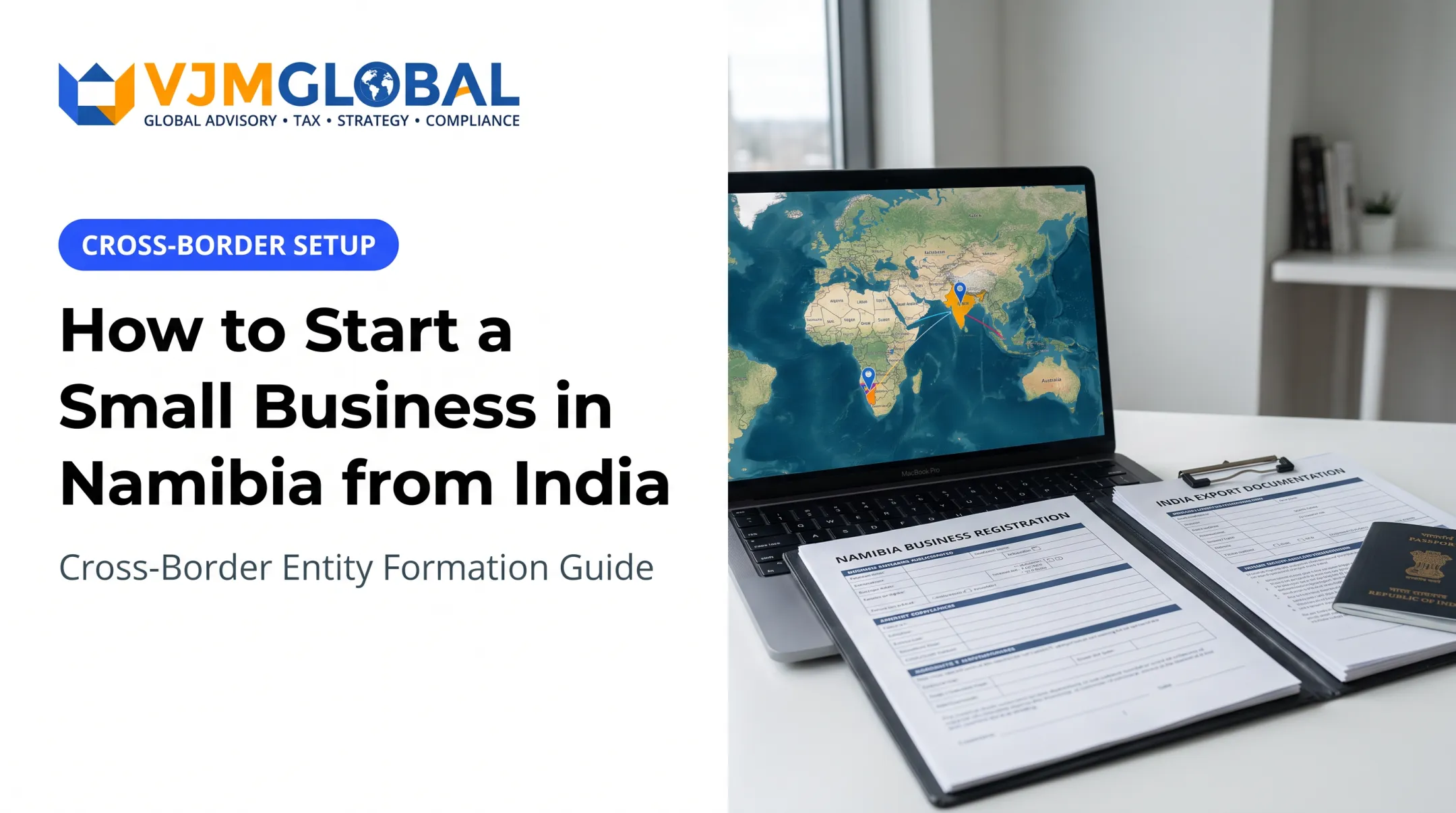
But interest doesn't always translate into action. Many foreign investors struggle to understand Namibia's registration process, tax obligations, and licensing requirements before they even get started. This guide breaks down the legal structures, registration steps, costs, taxes, and the sectors currently generating the most attention from investors.
Key Takeaways
- Foreigners can own 100% of most Namibian companies, with exceptions in agricultural land and select resource sectors
- Register via BIPA (name reservation, then incorporation), followed by NamRA tax and Social Security sign-up
- Priority opportunity sectors: tourism, mining services, agriculture, and renewable energy
- Corporate tax is 32%; VAT is 15% once turnover exceeds N$500,000
Why Namibia Is an Attractive Destination for Foreign Entrepreneurs
Namibia offers something rare in the region: political stability paired with genuine economic potential. The country acts as a logistics gateway into the wider Southern African Development Community (SADC) region, backed by well-maintained ports and road networks that support trade-focused businesses.
The Namibia Investment Promotion and Development Board (NIPDB) has flagged several sectors as priorities for foreign direct investment, including:
- Mining and minerals: uranium, rare earths, and lithium exploration
- Tourism: listed among NIPDB's top five priority sectors
- Agriculture: nearly 70% of the population depends on it directly or indirectly
- Renewable energy: solar, wind, and green hydrogen projects gaining traction
Namibia's economy grew by an estimated 3.78% in 2024. Inward foreign direct investment reached roughly US$1.93 billion, or about 14.2% of GDP, according to World Bank data. That's a substantial share for an economy of Namibia's size, and it signals real investor confidence.
While the Namibia Investment Promotion Act was passed in 2016, available records indicate it had not yet formally come into force as of recent legal review. Investors should verify current incentive frameworks directly with NIPDB rather than assuming statutory tax breaks apply automatically.
Can I Start a Business in Namibia as a Foreigner?
Yes. Namibia's Companies Act does not impose a blanket local-ownership requirement, meaning foreign nationals can generally hold 100% equity in a Namibian company or register an external (branch) company instead.
That said, ownership freedom comes with some practical conditions.
Registered Address Requirements
BIPA requires every company to file a notice of postal and registered address (Form CM22) as part of incorporation. This applies regardless of where the shareholders or directors are based.
Sectors With Extra Scrutiny
A handful of industries carry additional rules:
- Agricultural land — Section 58 of the Agricultural (Commercial) Land Reform Act restricts foreign-majority acquisition; a tourism-farm exception allows up to 49% foreign participation
- Mining — foreign entities can hold mineral rights via a Namibian-registered company; the Ministry of Mines and Energy may add case-by-case conditions, including Namibian participation on some licence transfers
- Fisheries and other regulated industries — subject to ministerial consent or fit-and-proper assessments
Work and Business Visas
If you plan to be physically present and manage operations, you will also need a work or business visa.
NIPDB guidance suggests employment permits for business owners are often processed within a few weeks. Official Ministry of Home Affairs material focuses mainly on short-term permits of up to six months, so confirm current timelines before you apply.
Step-by-Step Process to Register a Business in Namibia
Setting up a company in Namibia follows a linear path, though foreign applicants should expect a few extra document requirements along the way.
Choose your legal structure. Options include sole proprietorship, close corporation, or private company (Pty Ltd). A Pty Ltd offers limited liability and is the most common choice for foreign investors, since it separates personal and business risk.
Reserve your company name with BIPA. Submit Form CM5. BIPA states this step takes three working days, and foreign nationals must provide certified or notarised passport copies.
File incorporation documents. This includes the Memorandum and Articles of Association (in triplicate, with two copies notarised), director and officer details, registered address (CM22), and beneficial ownership records.
Receive your registration certificate. For a private company, this includes Forms CM1 and CM46, confirming your company registration number.
Register with NamRA. Once incorporated, register for income tax and, if applicable, VAT. VAT registration is mandatory above N$500,000 in annual turnover; voluntary registration is available from N$200,000.
Register with the Social Security Commission and secure sector permits. If you're hiring staff, SSC registration is required. Certain activities also need a municipal fitness certificate or sector-specific licences (mining, agriculture, tourism operations).
Open a Namibian business bank account. Banks typically request your certificate of incorporation, proof of registered address, and certified identification for non-resident directors.

Documents, Costs, and Timelines for Business Registration
Before you start, gather these core documents:
- Certified or notarised passport copies (for foreign directors/shareholders)
- Proof of registered/postal address in Namibia
- Memorandum and Articles of Association (notarised, in triplicate)
- Completed BIPA forms (CM5, CM22, CM29, CM31, and related filings)
- Business plan (helpful for banking and visa applications; not always required for registration)
Typical Costs
BIPA's published fee schedule shows some inconsistencies between its "effective 2020" and "current" columns, so treat these as indicative rather than final:
| Form | Purpose | Fee (approx.) |
|---|---|---|
| CM5 | Name reservation | N$50–75 |
| CM2 | Incorporation | N$100–150 plus share capital value |
| CM22 | Registered address notice | N$20 |
| CM46 | Certificate issuance | N$100 |

Budget additional funds for notarization, translation (if documents aren't in English), and professional or agent fees if you're using a local advisor.
Timelines
BIPA states name reservation takes three working days, while full company registration takes around 25 days. Foreign applicants often face longer waits due to document verification, especially when paperwork must be notarised abroad first.
Common delays include:
- Incomplete forms
- Missing proof of address
- Untranslated foreign documents
Taxes and Compliance Obligations for Foreign-Owned Businesses
Once registered, ongoing compliance becomes the real test of running a Namibian business smoothly.
Corporate income tax sits at a flat 32% for non-mining companies, according to NamRA's business tax guidance. Companies must submit annual financial statements and appoint a public officer to handle tax matters.
VAT is charged at 15%, with mandatory registration above N$500,000 in annual turnover. Returns are due by the 25th of the following month.
For foreign directors and shareholders, withholding tax applies in specific scenarios:
- Dividends to non-resident shareholders: 10% (if holding at least 25% of capital) or 20% otherwise
- Interest, royalties, and management fees paid to non-residents: 10%, due within 20 days of the month the tax was withheld

Annual filings matter too:
- Two provisional tax payments each year
- A self-assessment return within seven months of year-end
- BIPA annual returns (CM23) to stay in good standing
Miss the BIPA return and you risk deregistration.
Namibia's rules also interact with your home-country tax position, especially on profit repatriation and dividend withholding. Map both sides before you move funds. VJM Global supports international clients on multi-jurisdiction tax and compliance workflows so filing obligations in one country are planned alongside exposure in another.
What Is the Most Profitable Business in Namibia?
"Profitable" is a loaded word here. Namibia's official 2025 national accounts data tells a more nuanced story than the marketing brochures suggest.
- Mining and quarrying: Real value added declined 9.4% in 2025, after a 3.4% drop in 2024 (NSA annual report). NIPDB still cites active exploration in uranium, rare earths, and lithium—repricing, not collapse.
- Agriculture contracted 3.3% in 2025. NIPDB still flags value-added processing (meat, specialty exports) as underexploited.
- Electricity and water, tied to renewable expansion, grew 12.6% in 2025; generation alone rose 14.9%. This is the standout performer right now.
- Tourism has no clean GDP line in the latest accounts, but NIPDB still ranks it in the top five priority sectors on desert and wildlife appeal.

For entrepreneurs choosing a sector, renewable energy has the strongest recent growth trajectory. Tourism and mining-support services remain the more established, lower-volatility options.
Don't chase a "hottest sector" headline without the latest NSA figures. That data shifts faster than most guides admit.
Frequently Asked Questions
Can I start a business in Namibia as a foreigner?
Yes, foreigners can own 100% of most Namibian companies. You'll need a registered local address and, if you plan to manage operations on the ground, a work or business permit.
What is the most profitable business in Namibia?
Renewable energy currently shows the strongest growth (electricity value added up 12.6% in 2025), while tourism and mining-support services remain reliable, established options.
How long does it take to register a company in Namibia?
Name reservation takes three working days, with full incorporation typically taking around 25 days. Foreign applicants may face longer waits due to document verification and notarization.
Do I need a local partner to start a business in Namibia?
No, most sectors allow full foreign ownership. Exceptions include agricultural land purchases and certain mining licence transfers, which may require local participation.
What taxes will my Namibian business need to pay?
Expect a 32% corporate income tax rate, 15% VAT above N$500,000 turnover, and withholding tax (10-20%) on dividends, interest, or fees paid to non-residents.
Is a work permit required to run a business in Namibia as a foreigner?
Yes, if you'll be physically managing operations. Short-term employment permits cover up to six months; longer-term options exist but require separate application through Namibia's immigration authorities.