Most readers hit the same four questions. Is the schedule required? How does book income differ from tax income? What goes in Parts I, II and III? And how do you keep figures consistent across the whole return?
This guide covers the filing triggers, adjusted total assets, the three parts, temporary and permanent differences, tie-outs, records and common errors. Thresholds below follow the 2025 IRS instructions, so check the form version for your own tax year before filing.
Key Takeaways
- Schedule M-3 is a book-to-tax reconciliation attached to Form 1065, not a tax calculation.
- Any one of four tests can trigger it: assets, adjusted assets, receipts or Reportable Entity Partner status.
- Parts II and III split each item into book, temporary, permanent and tax-return amounts.
- Final figures must tie to Form 1065, with statements kept for unusual items.
What Schedule M-3 Is and Who Must File It
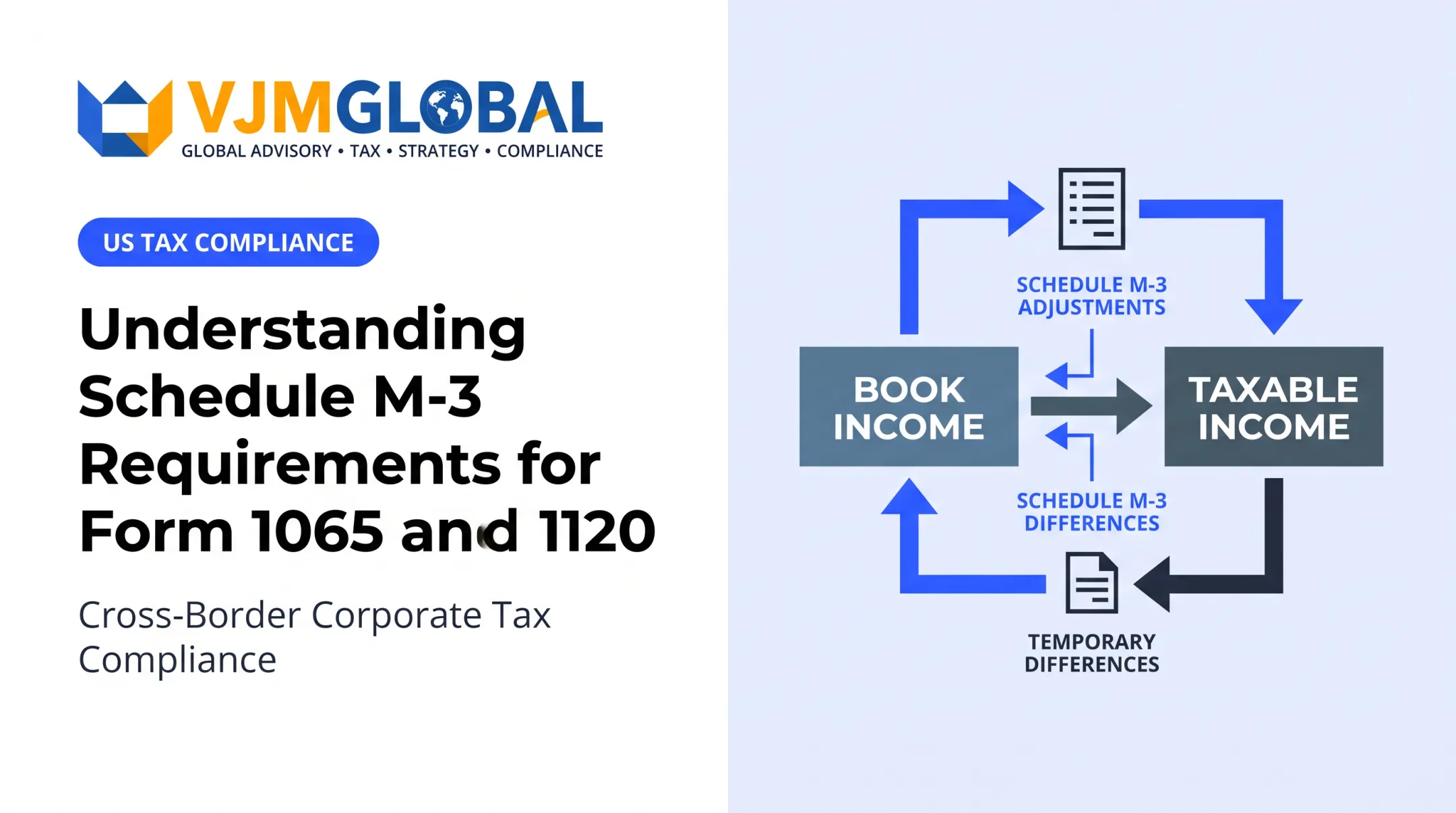
Schedule M-3 is the detailed net income (loss) reconciliation that certain partnerships file with Form 1065. Part I reports financial statement information. Parts II and III then reconcile that net income to the income reported for US federal tax purposes, according to the IRS Schedule M-3 instructions.
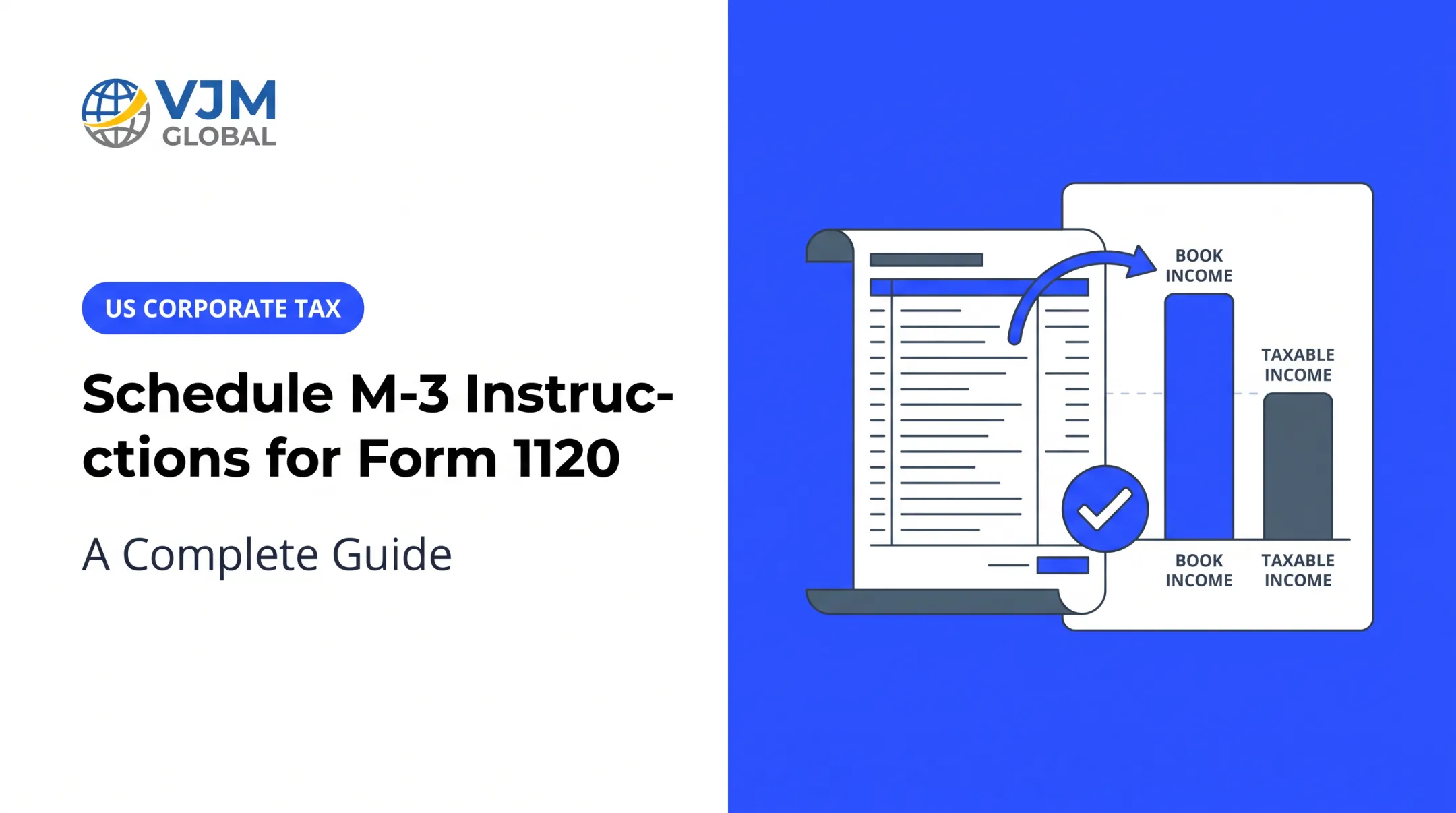
Form 1065 and Form 1120 each have their own Schedule M-3. Do not carry line numbers, thresholds or directions from the corporate version to a partnership. A common slip is applying Form 1120 rules to a partnership return.
Current filing triggers
For tax year 2025, a partnership must file if any one of these applies:
- Year-end total assets are $10 million or more (Schedule L, line 14, column (d)).
- Adjusted total assets are $10 million or more.
- Total receipts are $35 million or more.
- A Reportable Entity Partner (REP) holds, or is deemed to hold, a direct or indirect 50% or greater interest in capital, profits or losses on any day of the year.
Total receipts include Form 1065 page 1 line 1a, lines 4 to 7, and specified Schedule K and Form 8825 income and gain lines. An REP is a partner that was itself required to file Schedule M-3 on its latest return.
Ownership attribution runs through:
- Consolidated group parents
- Disregarded entity owners
- 50%-plus voting owners of corporations
- 50%-plus partners and 50%-plus trust beneficiaries
The REP must report to the partnership within 30 days of becoming an REP and within 30 days of any change. The partnership keeps those reports.
Adjusted total assets
Adjusted total assets are not always the same as Schedule L assets. The worksheet works like this:
- Start with Schedule L, line 14, column (d).
- Adjust for Schedule M-2 distributions (lines 6a and 6b), loss (line 3), and the specified adjustments on lines 7 and 4.
- Compare the result with combined recourse and nonrecourse liabilities from Schedule K-1, Part II, item K.
- Use the greater amount.
Partnerships with tiered ownership, complex liabilities or large distributions should document this calculation and get specialist review.

Completion alternatives and voluntary filing
A required filer with $50 million or more of year-end total assets must complete the whole schedule. A required filer below $50 million, or a voluntary filer, may complete the whole schedule or complete Part I and Schedule M-1 instead of Parts II and III.
| Feature | Schedule M-3 | Schedule M-1 |
|---|---|---|
| Detail | Line-by-line income and expense categories | Short reconciliation |
| Differences | Split into temporary and permanent columns | Not split |
| Use | Required or voluntary | Alternative with Part I where permitted |
How to Complete Parts I, II, and III of Schedule M-3
Before entering figures, download the current-year Schedule M-3, the Form 1065 instructions and any forms they reference.
Part I: financial information and net income reconciliation
Part I identifies the financial statement used. The instructions set a priority order:
- Form 10-K for a period ending with or within the tax year, if filed.
- Otherwise, a certified non-tax-basis income statement.
- Otherwise, an unaudited non-tax-basis income statement.
Where several statements apply, use this further order:
- GAAP
- IFRS
- Other international standards
- Regulatory accrual
- Other accrual
- Section 704(b) book
- Fair-value and cash-basis statements
Tax-basis statements are allowed only when no non-tax-basis statement was prepared for any purpose and the books are kept solely on a tax basis.
Part I can start from consolidated information, then adjust to isolate the partnership. Typical adjustments:
- Remove nonincludible foreign-entity earnings
- Add disregarded-entity income included on the return but not the statement
- Reverse specified consolidation entries
The result is standalone book net income, which anchors Parts II and III.
Part II: income and gain items
Parts II and III share one column structure:
- Column (a): financial statement amount
- Column (b): temporary difference
- Column (c): permanent difference
- Column (d): amount on the tax return
Part II walks through income, gain and loss categories line by line. Typical areas include:
- Dividends, interest and pass-through income
- Accrual-to-cash differences, inventory and deferred revenue
- Long-term contracts, asset dispositions, hedging and mark-to-market items
Schedule D capital losses go to line 21c and Form 4797 gains or losses to line 21d.
Detailed statements are required for line 22, the catch-all line. Differences on the same item may be combined, but never net unrelated items just to make the reconciliation balance.
Part III: expense and deduction items
Part III applies the same framework to expenses. Review these common items:
- Taxes and compensation
- Meals and entertainment (line 6)
- Fines and penalties (line 7)
- Pensions and charitable contributions
- Depreciation (line 25), interest (line 27) and research and development
Verify treatment under the law for the filing year. For 2025, the Form 1065 instructions say business interest under section 163(j) is generally limited to business interest income, 30% of adjusted taxable income and floor-plan financing interest.
Domestic research costs paid in tax years beginning after 2024 may be deducted currently, or capitalised and amortised over at least 60 months.
Part III, line 30 needs a detailed statement. Part III, line 31 carries to Part II, line 24 with the signs reversed, so check signs carefully.

How to Prepare, Reconcile, and Review Schedule M-3
Work in this sequence:
- Confirm the filing obligation.
- Gather records.
- Select the financial statement basis.
- Identify book-to-tax differences.
- Populate the schedule.
- Attach statements.
- Run the tie-outs.
- Get an independent review.
Build a book-to-tax workpaper
Keep one workpaper line for every material difference. For each line, record:
- Source account
- Book amount and tax amount
- Temporary or permanent label
- Expected reversal
- Related tax form and supporting documents
Maintain the workpaper through the year rather than rebuilding it after the books close.
Recurring schedules worth keeping:
- Depreciation and amortisation
- Accruals and reserves
- Inventory
- Interest limitations
- Asset disposals
- Partnership investments
Classify temporary and permanent differences
A temporary difference affects book and tax income in different periods and reverses later. A permanent difference never reverses. Per the IRS illustration, different book and tax amortisation of an intangible is temporary. A goodwill impairment in book income that is not deducted for tax is permanent.
Other typical cases include unpaid accruals (temporary) and penalties or non-deductible expenses (permanent). When classification is unclear, rely on the current instructions and professional review, not prior-year habits.
Complete the required tie-outs
- Part I book income agrees with the statement basis used, and with Schedule M-1 where that alternative applies.
- Part II, line 26, column (a) agrees with Part I, line 11.
- Part II, line 26, column (d) agrees with line 1 of the Form 1065 Analysis of Net Income (Loss).
- Expense totals flow correctly between Parts II and III.
- Figures reconcile with Schedules L, K and K-1 and Forms 4797 and 4562 where relevant.
Signs, parentheses and rounding can break an otherwise correct tie-out.

Attachments, checklist and records
Schedule M-3 filers must also file Schedule C (Form 1065). Form 8916-A is required for filers meeting the instructions' asset-size rule and optional for smaller eligible or voluntary filers.
Before filing, confirm:
- Partnership name, EIN and tax year
- Current form version and filing boxes
- Supporting statements attached
- Signatures
- E-filing: required for partnerships filing 10 or more returns of any type, or with more than 100 partners
- Consistency across the full Form 1065 package
Keep the trial balance, financial statements, workpapers, adjustment schedules, ownership analysis and REP statements. The IRS says to retain records as long as needed to substantiate items, so there is no single universal period.
VJM Global supports Australian businesses with accounting records, book-to-tax workpapers and coordination of US partnership compliance. A qualified US tax professional should still review final filing positions.
Common Errors, Related Schedules, and Filing Considerations
Frequent errors include:
- Using Form 1120 instructions
- Relying on an outdated form
- Missing a filing trigger
- Misclassifying temporary and permanent differences
- Netting unrelated items
- Omitting required statements
- Failing to reconcile column (d) to the rest of Form 1065
Schedule M-3 does not replace international reporting. Schedules K-2 and K-3 may still be required separately.
The small-partnership exception needs receipts under $250,000, assets under $1 million, timely K-1s, and no M-3 filing or requirement. An M-3 filer therefore cannot use that exception.
Filing mistakes carry real cost. A late or incomplete return can trigger a section 6698 penalty of $255 per partner per month, up to 12 months, unless there is reasonable cause. Under the BBA regime, corrections generally go through an administrative adjustment request on Form 1065-X, usually within three years. Discuss amendments and relief with a qualified tax professional.
Filing Form 1065 Schedule M-3 Accurately
Accurate filing starts with the right eligibility analysis, current IRS instructions, reliable financial statements and a documented reconciliation.
For Australian businesses with US partnership interests, line up accounting records, ownership information and US reporting early. Seek professional review where there are complex investments, foreign reporting, tiered ownership or large reconciling items.
Frequently Asked Questions
What are the instructions for completing IRS form M-3?
Confirm the current eligibility tests, then complete Parts I to III or the permitted M-1 alternative. Classify differences, attach required statements and reconcile to the full return.
What is m3 in 1065?
It is the detailed reconciliation of a partnership's financial statement income or loss with its tax-return income or loss. The corporate version is filed separately with Form 1120.
How do I calculate the adjusted total assets for Schedule M-3?
Start with Schedule L, line 14, column (d), and apply the worksheet adjustments. Compare with Schedule K-1 liabilities, use the greater figure and document the work.
Does every Form 1065 filer need to file Schedule M-3?
No. It applies only when an asset, adjusted-asset, receipts or REP test is met, or when a partnership files voluntarily.
How does Schedule M-3 differ from Schedule M-1?
M-3 is line-by-line with temporary and permanent columns. M-1 is shorter, and some partnerships may pair Part I with M-1 instead of Parts II and III.